

ruin of fortified church Fortified church
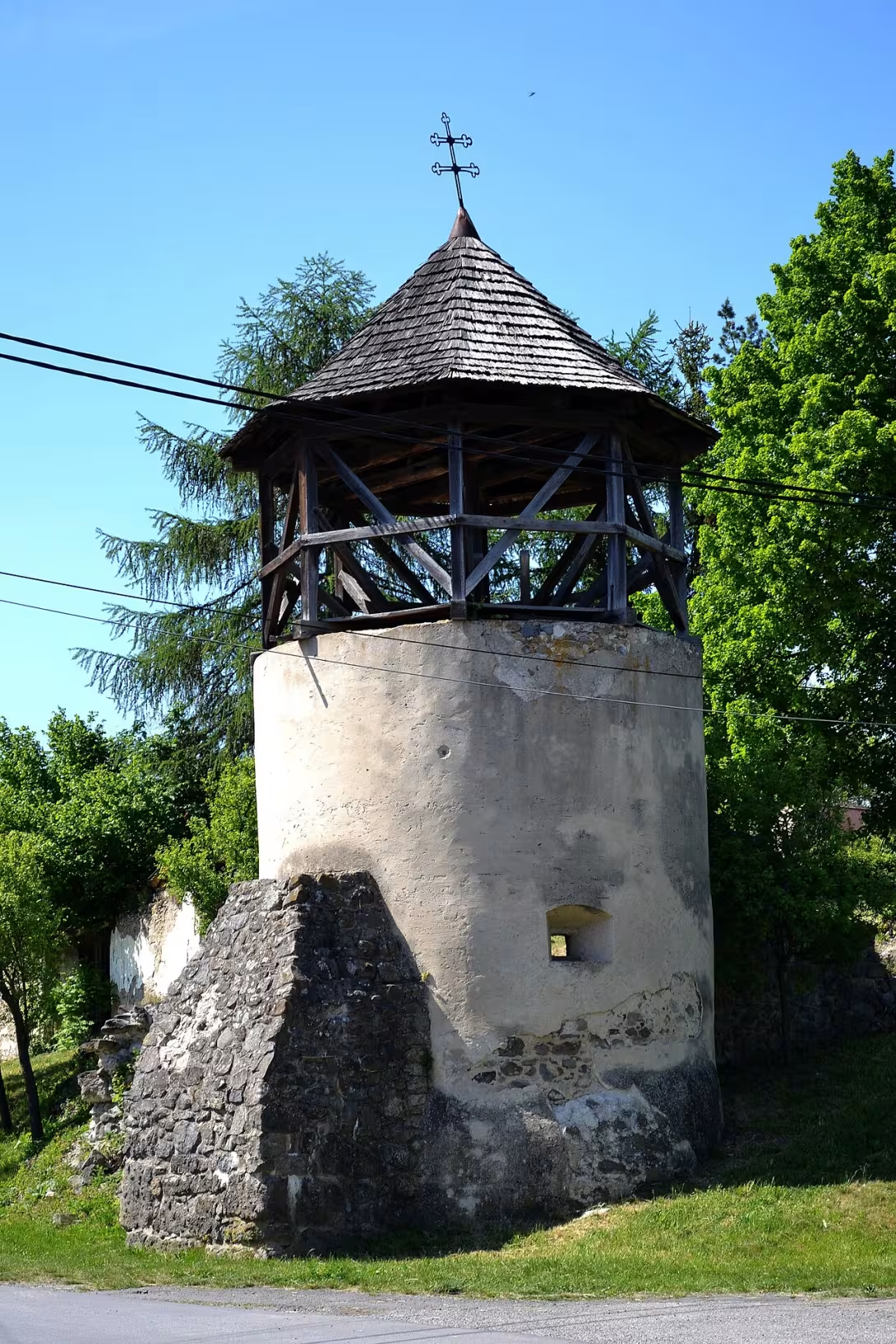
The ruin of the fortified church in the village of Žibritov in Banská Bystrica region is a national cultural monument from the 16th century. The object combines sacral architecture with Renaissance defence elements.
According to the register the church was established in 1576, although the experts determine its establishment for the 14th or 15th century. Protestants took over the building during the Reformation period.
The church was a small single-ship with a polygonal presbytery. In 1582 or 1586 it was fortified by the Turkish danger. The fortress wall was connected to the east wall of the presbytery and the western wall of the ship; on the north side they directly used the church building. In the southeastern part, they built a cylindrical bastion that later served as a bell tower.
Later, Catholics took over the church. The owners of the Koháry estate probably made a bell from 1680. The visitor from 1692, reports that the memory carries the patrocinium of St. The church stood until 1855.
Protestant services were held in a circular bastion. The six - sided baptismal suite from this church is now exhibited in the Mining Museum in the Old Castle.
The building has been declared a National Cultural Monument since 1963 (ZZPF number 1147). The building remained just a cylindrical bastion with the remains of the defense wall. Round bastion was renovated in the 1980s.
Ruina in Žibritov preserved the elements of Renaissance fortification from the time when sacral buildings also performed a defensive function.
Tehdy a dnes
Drag the slider and compare how the monument might have looked when it was built with the view today.
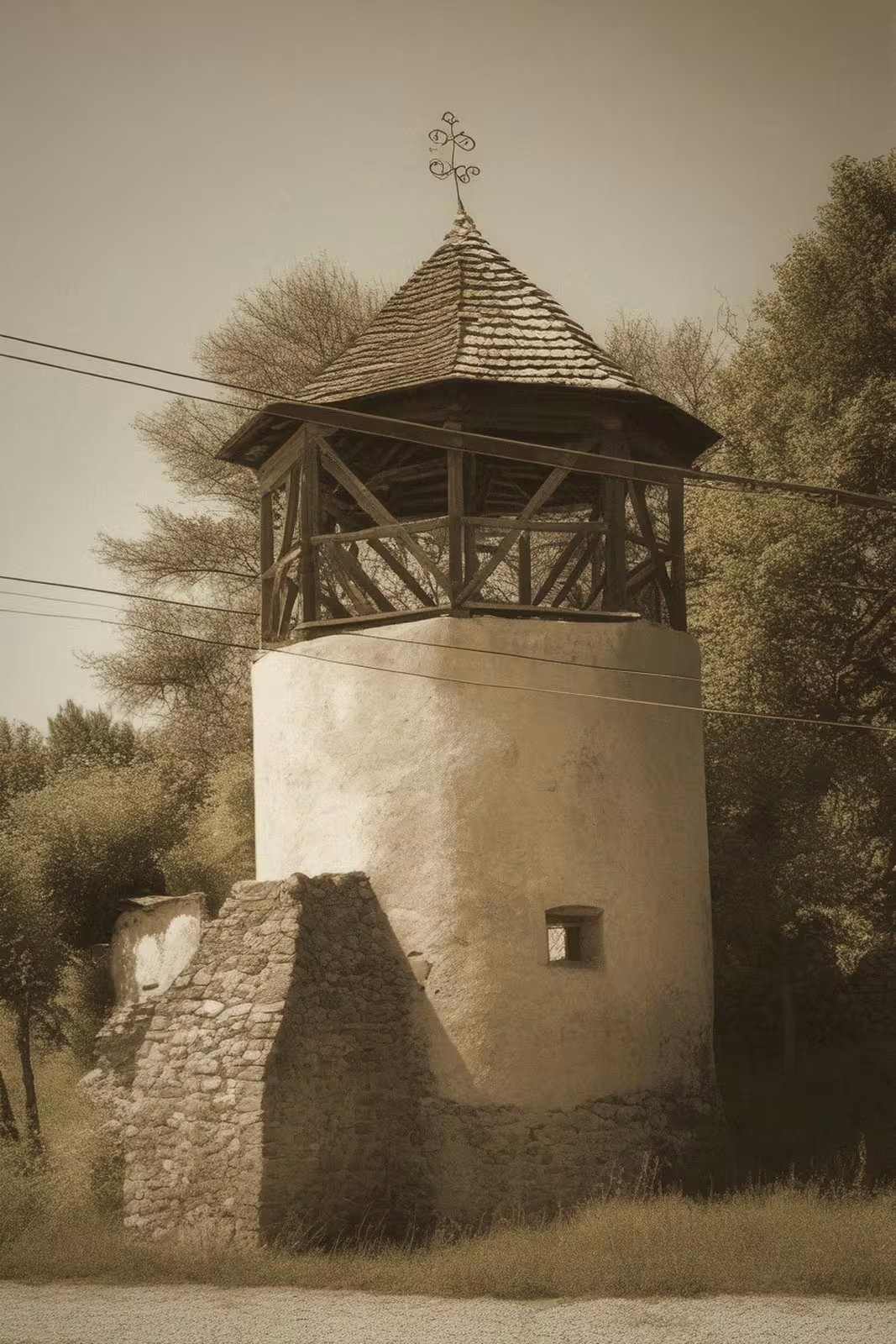
The historical view on the left is a visualisation generated by artificial intelligence and serves as inspiration.
Historical Milestones
- 1582
- Fortification of the church in connection with Turkish danger (also mentioned year 1586).
- 1680
- Making a bell probably by the owners of the Koháry estate when retaking the church by Catholics.
- 1855
- The year the church stood.
- 1963
- Declaration as a national cultural monument.
Interesting facts
- The object combines sacral architecture with renaissance defence elements and is declared a national cultural monument. - Although the register mentions the year 1576, experts determine the establishment of the church for the 14th or 15th century. - In 1582 or 1586 the church was fortified in connection with Turkish danger. - The roller bastion in the southeastern part later served as a bell tower and held Protestant services. - The six-by-side baptist from this church is now exhibited in the museum in the Old Castle in Banská Štiavnica.
Guide
The guide was voiced by a synthetic voice created by artificial intelligence.
Show guide text
The text was prepared by artificial intelligence and has not been editorially reviewed. It may contain inaccuracies.
Welcome to the village of Žibritov, in the heart of the Banská Bystrica region, where there is a quiet and mysterious witness of ancient times. You stand before the ruins of a fortified church, a place that combines the sanctity of temple architecture with the harsh reality of defence buildings. Now, when you look at these remains, you may see at the first moment only the stone walls and traces of ancient glory, but in fact you are faced with a unique example of how faith had to be protected by the power of weapons and strategic planning in the past. Feel the atmosphere of this place, where the silence of the present day contrasts with the unrest that existed hundreds of years ago.
Let's now join together in the history of this object. Although some registers feature a date from 1576, experts believe that the church itself is much older. It is estimated to reach the 14th or 15th centuries. Imagine what generations of people came here, what prayers polluted the air, and what events took place within the community. The church in Žibritov was not only a place of spiritual attack but also became a strategic point in the countries that were then threatened by the bell of war.
It is in this context that we come to one of the most significant changes that this object has undergone. In 1582, possibly according to some sources in 1586, the church was fortified. It was not for aesthetic reasons, but for necessity. During this period there was a major Turkish danger in the area. The Ottoman troops went deep into European countries, and city dwellers had to find ways to defend themselves effectively. Churches, often built in elevated places or with solid walls, have thus become natural refuges. Note how sacral architecture in this case has been linked with Renaissance defence elements. This meant that the temple no longer served as a place of worship but turned into a small fortress where the locals could find refuge and protection from the enemy.
When you now walk around the ruins, try to imagine what these walls looked like at the time of their greatest strength. Feel the detailed composition of an object that was designed to resist attacks. Although we see only fragments today, it is evident that it is an object that should have been functional and durable. It is fascinating to see in one place the need for spiritual peace meets the need for physical defense. It is this contrast that makes ruins in Žibritov such an extraordinary monument.
Let's move on to the next period related to this place. The history of this church is closely linked to the religious and property changes in the region. An important milestone is the year 1680. At this time, the church was likely to be regained by Catholics. With this recovery came a significant monument, which was then heard in the temple. It's a bell that was made this year. It is believed that its production was financed by the owners of the estate, the Koháry family. The Koharys were then an influential family whose tracks can be traced back to many monuments of the region. The bell in the church was not just an instrument for calling at Mass, but a symbol of power, faith, and stability at a time when the country was slowly recovering from previous conflicts.
However, it is a sad fact that nothing is eternal. If you look at the current state of the object, you will see that we are faced with only ruins. According to historical records, the church stood until 1855. After this date, it is no longer mentioned as a functional object, which means that in the middle of the 19th century it finally ceased to perform its ursprüng function and gradually began to fall apart. It is strange to think that the building, which survived the Turkish invading and centuries of change, eventually undermined time and natural decay.
Despite the fact that we can no longer see the whole building, its historical and architectural value remained recognised. In 1963 this building was officially declared a national cultural monument. This step ensured that these stones were not just forgotten in the grass, but remained for us, the descendants, as a reminder of the past.
Now I'd like to invite you to one brief consideration. There is a certain element of mystery that experts are still discussing. It's the date of creation. As I mentioned, the register mentions 1576, but expert analyses have moved us much deeper into the past until the fourteenth or fifteenth centuries. This division of divergences on dates reminds us how it is sometimes difficult to accurately determine the age of buildings that have not been documented in detail at every period of their existence. So you stand before an object that may be one hundred or two hundred years older than some official lists say. This uncertainty gives the place some charm and makes us think about how many other secrets these walls are still guarding.
Note also the details mentioned in the backgrounds, such as cylinders. These elements witness a renaissance approach to defence construction. When you look at them, try to imagine the soldiers who stood on patrol here watching the horizon to record the arrival of the enemy army in time. There was no place for romance at the time, just for survival and protection.
Today there is no longer any fear of Turkish troops or struggle for the possession of rulers. There is only a peaceful ruin that teaches us humility before time. It is a place where history meets nature and every stone tells its story. The defensive elements, through the bell of the Koháry family, until the moment when the building stopped in 1855, it all forms a mosaic of the local act.
Before I say goodbye to you, I recommend you bypass the ruins around, perceive their dimension and imagine how light was lazy in this space hundreds of years ago. Let your intuition guide you and try to feel connected to the people who lived here before us. This object is proof that even what remains destroyed can produce something beautiful and informative.
Thank you for your attention and for devoting time to this historical monument in Žibritov. I hope this short trip to the past has helped you to better understand the meaning of this fortified church. Now I'll leave you in the silence of this place so you can enjoy it in your own rhythm. I wish you a pleasant next day and a pleasant journey through the beautiful places of Banská Bystrica region. Goodbye.
Tips for visitors
Visit the ruins of the fortified church in spring or autumn months. The pleasant temperatures and colors of the landscape then enhance the appearance of the building.
We recommend shoes with fixed soles suitable for the terrain, plenty of drinking water and repellent.
For photos we recommend to come during the -Golden clock-- shortly before sundown. Low light highlights the texture of the stone and details of the fortification. Images from angles capture the contour of the building in the context of nature.
Families with children can combine the visit with a walk during which children can look for signs of fortification and learn that churches served as refuges in the past.
Frequently asked questions
Can the monument be visited?
Religious buildings are usually open mainly during services; at other times a visit is normally arranged with the parish or the operator. We have not verified specific times. According to the heritage register the structure is in poor condition – do not enter it and take care nearby.
Where is the monument?
Location: Žibritov, Banskobystrický kraj. The map on this page shows the exact spot.
Why is the monument protected?
It is listed in the Central List of the Monuments Fund of the Slovak Republic as a national cultural monument (ÚZPF no. 325-1147).
For children
Pull tighter shoelaces and close your eyes. You hear that? Sounding metal armor, quiet whispering in the streets and tension in the air. Imagine you're moving back about 450 years now. You travel to a world where there were no cell phones or Internet, but something unknown and dangerous could be lurking around every corner. Welcome to Žibritov, where there is a building that is not just a house for the prayerers but a true stone fortress.
Nearby
🏰 Historic sites (207)
- Kostol Sv. Ladislava kráľa 0.0 km
- Ing. Albert Macko 1.4 km
- Pomník padlým partizánom 2.6 km
- Pamätná tabuľa partizánskej brigády Karasiova Stepanova 2.8 km
- Samaritánka 3.8 km
- Eugen Neuenschwander von Tonnay 4.0 km
- Michal Buzalka 4.0 km
- Jozef a Theresia Willmonn 4.1 km
- Joachim Jakub Petrík 4.1 km
- Park kaštieľa vo sv. Antone 4.2 km
- ThDr. Michal Buzalka 4.2 km
- sv. Vendelín 4.2 km
- SNP 4.2 km
- Zámocká viecha 4.3 km
- Trojičný stĺp 4.3 km
- Michal Buzalka 4.5 km
- Mário Bobek 4.7 km
- sv. Florián 4.7 km
- Samuel Stankoviansky 4.8 km
- Dedinské múzeum 5.4 km
🍽️ Restaurants and dining (126)
- Kafé Madeira 3.4 km
- Penzion Starý hostinec 4.2 km
- Profile 4.3 km
- Kafé na Rínku 4.5 km
- Kaviareň Dream3 5.3 km
- U Boldoka 5.8 km
- Bufet 6.0 km
- U Luptáka 6.5 km
- Pod lipou 6.7 km
- Family Pizza 6.9 km
- Pizzeria Vito 7.4 km
- Charisma 7.4 km
- Galaxia 7.4 km
- Noodles&Rice Vietnamské Bistro Krupina 7.5 km
- Fresh Snack Bar 7.5 km +421 915 830 046
- U Gazdu 7.6 km Trate mládeže 1969/12 +421 0918 241 237
- Profile 7.6 km +421 918 104 930 web
- Denný bar 7.6 km
- Bufet 7.7 km
- Impresso cafe 8.2 km
🏨 Accommodation (80)
- Poľovnícka chata Rázdiel 1.4 km +421918 334 033 web
- Chata Šváb 2.7 km +421 911 155 378 web
- Chata Anka 4.1 km +421 45 55 81 620 web
- Kremenisko 6.0 km
- Penzión Kremenisko 6.0 km web
- Camping Studenec 6.1 km +421 907 418 033 web
- Chata Sofia 6.9 km Jazero 416 web
- Hanišberg 7.7 km
- Slovan club 7.8 km
- Krupinkovo 8.0 km +421 905 063 296 web
- Nebo nad Štiavnicou - Biela v Nebi 8.4 km +421904312050 web
- Nebo nad Štiavnicou - Oranžová v Nebi 8.5 km +421904312050 web
- Nebo nad Štiavnicou - Zelená v Nebi 8.5 km +421904312050 web
- Nebo nad Štiavnicou - Modrá v Nebi 8.5 km +421904312050 web
- Apartmán ajaj 8.6 km +421905757296 web
- Alaska zrub 9.0 km +421905455123 web
- Hotel Kerling 9.1 km Dolná 1755/12A
- Chalupa Žofia 9.1 km +421 905 360 307 web
- ForRest Glamping 9.1 km
- Ubytovanie u Betky 9.1 km
🚲 Rentals and sport (13)
- OFK Štart Prenčov 5.2 km
- bicykle Mama šport 7.5 km
- Tepličky 7.7 km
- Tanad sport 8.6 km
- BS-Rent 9.0 km +421 948 908 737 web
- Ortler sport 9.2 km
- ŠK Lesy Banská Belá 9.3 km
- Diana poľovnícke potreby 9.3 km
- MK bike service 9.3 km +421 904 494 573
- Požičovňa vodných bicyklov 9.4 km
- Pontónová plaváreň na Klingeri 9.8 km
- Bikepro - Hotel Salamandra 11.9 km web
- OFK Sebechleby 13.3 km web
🥾 Hiking and nature (527)
- Viničný vrch 0.5 km
- Línia zákopov z 2. svetovej vojny 0.7 km
- Zákopy z 2. svetovej vojny 0.7 km
- Línia zákopov z 2. svetovej vojny 0.8 km
- Žliabok 0.9 km
- Buzalkov vrch 1.5 km
- Hrubá hora 1.6 km
- Bukovina 1.6 km
- Stráň 1.6 km
- Káčerky 1.7 km
- Štangarígeľ 1.8 km
- Štangarígel 1.9 km
- Gergeľská 2.1 km
- Sásky vrch 2.2 km
- Šváb 2.3 km
- Slnný vrch 2.4 km
- Hrubá hora 2.4 km
- Račnov 2.6 km
- Ostrý vrch 2.7 km
- Havran 2.7 km
Thematic route
As there are no other sites in the area, I propose a thematic route focused on the main monument.
Route in the area of fortified church in the village Žibritov
1. Church with fortification - main goal of the visit. You can explore the ruins of a former sacral object and its defensive elements. 2. Fortified wall and courtyard - Walk around the church. The place in the past served as a refuge for the locals. 3. Interior of the temple building - View of architecture and preserved parts of the masonry. Focusing on elements that determine the original size of the building.
Seasonal recommendations
In spring, the ruins of the fortified church in Žibritov will wake up to life. The first green grass and flowering trees contrast the stone walls. It is recommended to visit the ammonia in the morning when light is naturally softer. Due to variable spring weather, it is advisable to dress with layers and wear non-waterproof footwear, as the terrain around the building can be wet.
Summer season brings strong sunlight, which highlights the texture of the stone and the details of the fortification. The surrounding countryside is decorated with dense vegetation. The ideal time to visit is early in the morning or later in the morning to avoid a glow. It is essential to take enough drinking water, a head covering, and to choose light, breathable clothing.
Autumn in the Banská Bystrica region brings rich colors of leaves that surround the ruins with golden and red tones. Moths in the valley add a melancholy touch to the sacral structure. Sunny days are ideal for photography in October. It is practical to put on a warmer sweater and tight shoes with anti-slip soles to help you walk on fallen leaves.
Winter works the ruins of the fortified church harder, especially if the walls are covered with snow. Quiet and freezing air create an atmosphere of peace. Visiting this period requires quality winter clothes, including warm gloves and hats. Because of the short days, you need to plan your journey so that you are in place before the darkness occurs.
Visualisations and artistic views


The visualisations are generated by artificial intelligence and serve as inspiration.
Photographs from the area
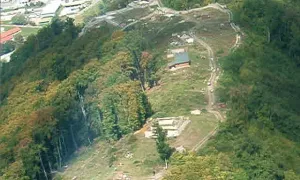
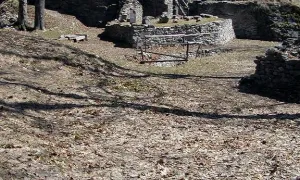
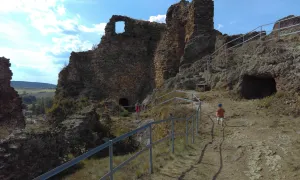
Real photos taken near the monument


Source and licence are given for each image.
Visitor Tips
No tips yet. Be the first!
Log in and add your tip.
Location on Map
More monuments – Žibritov
Show all in the town

Visitor photos
No photos yet. Be the first to add a photo from your visit!
Log in and add your photo or leave a rating.
You get more points for a visit verified in the app — we can tell from the GPS that you are there.
Reviews and comments