








sídlisko Settlement
Sídlisko v Skrabských
Sídlisko v Skrabských je kultúrna pamiatka, evidovaná pod číslom ÚZPF 41D-2000. Nachádza sa v obci Skrabské, Prešovský kraj.
Tento areál tvorí jeden objekt, sídlisko, datované do bronzovej doby a pravekého obdobia. Sídlisko je skúmané čiastočne.
Nachádza sa v katastrálnej zóne obce Skrabské.
Sídlisko tvorí súčasť histórie obce Skrabské.
Pamiatka môže byť navštevovaná pre svoju architektonickú hodnotu.
Village Settlement in Skrabské
The village settlement in Skrabské is a cultural heritage site, registered under the number ÚZPF 41D-2000. It is located in the municipality of Skrabské, Prešov Region.
This area comprises one object, a settlement dating back to the Bronze Age and Neolithic period. The settlement has been partially studied.
It is situated within the cadastral zone of the municipality of Skrabské.
The settlement forms part of the history of the village of Skrabské.
The site can be visited for its architectural value.
Historical Milestones
- Bronze Age
- Establishment of the settlement
- Iron Age
- The settlement exists
Guide
Show guide text
The text was prepared by artificial intelligence and has not been editorially reviewed. It may contain inaccuracies.
Welcome to the village of Skrabské, where today you are greeted by silence and the unique atmosphere of the local architecture. You are standing before a residential estate that has become a witness to history and the daily lives of the people in this region. As you put on your headphones and let my voice guide you, take a look around. Before you lies a space that is not just a collection of buildings, but a living environment shaped by time, human needs, and the architectural approaches of its era. Although housing estates are often perceived as anonymous and massive, in a smaller setting like Skrabské, they take on a different dimension. Here, they are closer to nature, to neighbors, and to the history that unfolded here.
Let your gaze wander across the facades and streets. Although the exact chronology of this specific estate's origin is not clearly fixed to a specific year in our records, we can assume that its development is linked to the general trend of urbanization and the need to provide housing for the growing population in the Prešov Region. In many villages in Slovakia, including Skrabské, there has been a transformation from traditional village layouts to more modern forms of living, which brought new standards as well as new challenges for the community. This estate is, therefore, the result of a search for balance between tradition and modernity, between the need for space and respect for the existing landscape.
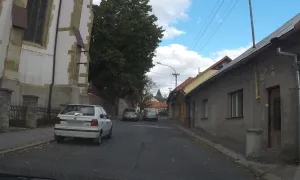
Pay close attention to the architecture surrounding you. Although we do not know the names of the specific architects behind the design, we can analyze their decisions. It is important to perceive how the buildings are arranged in space. Look at the height of the structures, their orientation toward the sun, and how they intertwine with the surrounding vegetation. In many cases, these are panel or masonry constructions that were, in their time, symbols of accessible housing. Notice the windows, balconies, and entrances. These details tell us how people wanted to live. Balconies served as an extension of the interior into the outside world—a place for flowers, for conversations with neighbors, and for watching the activity on the street. The facades, even if they may already bear the traces of time, carry within them the aesthetic imprint of their era. Colors, textures, lines—all of this together forms the visual identity of this place.
If you look closer, you might notice how the estate connects with the surrounding village. It is not an isolated island, but part of a larger whole. In Skrabské, where various cultural influences historically met and where people lived in close-knit communities, such an estate has a specific character. It is not an anonymous metropolis, but a place where faces are recognized and people greet each other on the street. This is the key difference compared to large-city housing estates. Here, architecture becomes part of the social fabric. Every building, every courtyard, every hallway has its own history and its own stories that unfolded behind these walls. The families who lived here, the children who grew up here, the elderly who found peace here in retirement—all these people are the invisible architects of this place. Their lives shaped the space and contributed to its atmosphere and its soul.
Even though our records do not contain the names of specific historical figures directly connected to this estate, it is important to realize that history is not just about famous names. History is also about the ordinary people who lived, worked, and loved here. It is their everyday experiences that form the authentic face of this place. Imagine what a morning looks like in this estate. How windows are opened, how the scent of coffee and breakfast spreads, how children get ready for school. Imagine the evening, when lights turn on in the apartments and the streets quiet down. These moments are part of the estate's identity, even if we do not see them directly. They are the invisible layers that layer upon the physical architecture and make it come alive.
An interesting point that may capture your interest is the very process of transforming a village into a municipality with a residential estate. In many cases, traditional village housing was gradually replaced by new buildings, leading to a change in the character of the place. Some residents saw this as progress, while others saw it as a loss of identity. This conflict between the old and the new is typical for many Slovak villages. In Skrabské, this process took place within the context of broader social and economic changes that affected all of Slovakia. The estate is thus not only an architectural object but also a historical artifact that tells us how society changed, how values shifted, and how the concept of good living evolved.
Look at the details that may not catch your attention at first glance. For example, how the public spaces are designed. Are there places for rest, for children to play, or for meetings? How are they integrated into the whole? These spaces are important for social life and for building communities. If well-designed, they become the heart of the estate—a place where people meet and where relationships are formed. If neglected, they can become places of isolation and anonymity. In Skrabské, it is important to perceive how these spaces have evolved and how they are perceived by the residents today.
Allow yourself to soak in the atmosphere that reigns here. It is a quiet, peaceful atmosphere that differs from the noise and chaos of large cities. Here, time flows more smoothly, more slowly. Here, you have space for reflection, for observation, and for perceiving details. This is a place where you can stop, take a deep breath, and appreciate the beauty hidden in the ordinary. The housing estate in Skrabské is not just a collection of buildings, but a place where the past, present, and future meet. It is a place where history happens, where stories are created, and where life is lived.
When you look up at the sky, you might realize how connected this place is to nature. The surroundings of Skrabské are rich in natural beauty, with forests, meadows, and rivers. The estate is just one element in this landscape, not its master. It is part of a whole that must be respected and protected. Perceiving this relationship between architecture and nature is essential to understanding the identity of this place. In many cases, housing estates were built regardless of natural conditions, leading to ecological problems and a decline in the quality of life. In Skrabské, it is important to observe how this relationship evolves and how we strive to find a balance between the needs of people and the needs of nature.
In conclusion, I would like to invite you to linger at this place for a little while longer. Stroll along
Frequently asked questions
Can the monument be visited?
According to the heritage register the site is not presented to the public – there are no accessible remains or information on site.
Where is the monument?
Location: Skrabské, Prešovský kraj. The map on this page shows the exact spot.
Why is the monument protected?
It is listed in the Central List of the Monuments Fund of the Slovak Republic as a national cultural monument (ÚZPF no. 41D-2000).
For children
This settlement is located in the Prešov Region. Slavs lived here almost a thousand years ago. It was like a large town with a market square, where the grandest market celebrations were held.
The Slavs were great hunters. Imagine how they boasted of their adventures and stories. They were also skilled traders and craftsmen.
One of the oldest tombstones in Slovakia was found in this settlement. Who lies there? That is a mystery that remains unknown to us. Today, you can see this monument and take a glimpse into the past.
Come and explore it for yourself!
Thematic route
Settlement – destination
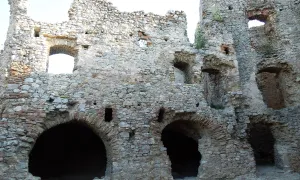
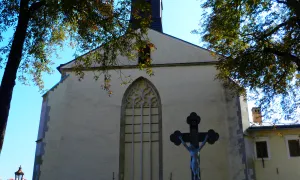
1. Skrabské – the village where the settlement is located. In the center of the village, you can explore its history. 2. Church of Saint Nicholas – an 18th-century Baroque church in the center of Skrabské. 3. Castle – located near the village; information about its history is available on-site.
The route is easily accessible, with a length of approximately 5 km.
Seasonal recommendations
In spring, nature around Skrabské comes to life and the light becomes softer, creating ideal conditions for capturing the monument's details. The weather can still be unpredictable, so we recommend wearing layers to adapt to rapid temperature changes. Visitor numbers are lower during this period than in summer, allowing for peaceful observation without large crowds.
Summer brings the longest days and intense sunlight, which highlights the historical character of the site. During the peak season, you may encounter more tourists, so it is advisable to arrive in the morning to avoid the afternoon heat and the largest groups. Don't forget sun protection, a hat, and plenty of fluids.
Autumn offers a tranquil atmosphere, complemented by the golden hues of the vegetation and occasional morning mists over the landscape. The light is deep and soft. We recommend comfortable footwear and a waterproof layer, as winds can be more frequent and cooler.
In winter, the site feels quiet and remote, especially when the landscape is covered in frost or snow. Days are shorter and the light changes rapidly, so plan your visit to make the most of the daylight. Since temperatures can be low, it is essential to bring warm, windproof clothing. There are fewer visitors during the winter season.
Visitor Tips
No tips yet. Be the first!
Log in and add your tip.

Visitor photos
No photos yet. Be the first to add a photo from your visit!
Log in and add your photo or leave a rating.
You get more points for a visit verified in the app — we can tell from the GPS that you are there.
Reviews and comments