








burgher's house Burgher house
Townhouse in Banská Štiavnica is a building that represents a type of historical urban dwelling. According to the data of the Monument Office of the Slovak Republic, the object has a registered number of the ÚZPF 2563 and its origin is estimated by the first half of the 16th century, with the documented year 1600. The architecture reflects the effects of the Renaissance and the Baroque.
The building was created at a time when the city architecture developed according to the available materials, the method of heating and solvency of owners. In the 17th and 18th centuries there was increased interest of nobility in staying in cities, which led to the rebuilding of burgher houses to representative settlements. The noble families bought neighboring parcels, creating city palaces with increased architecture.
The architecture of the burgher houses adapted to the field configuration. The objects from the Square of the Holy Trinity are three- to four-storey buildings, where the last floor can serve as a ground floor in the back alley. The original cellars are dug into the rock subsoil and are often fed from older shades.
Specifically, the townhouse on Andrei Kmeť 5 represents the type of late Renaissance and Baroque. This object is an end corner building in micronámestie and fixes the older urban situation. The architectonic concept of the facade was altered by the modification of the parter, which affected the material expression of the object.
In the 19th century, the population increased in cities, leading to the construction of higher population density rental houses. These objects were built on the traditions of city palaces through passages provided with metal gates. Various types of houses were created, ranging from spider buildings with a central courtyard to houses of poverty at the walls.
Today burgher houses in Banská Štiavnica are part of the historical stop, where the function of housing was preserved after the modernisation of the partners. These objects are part of the city, which preserved its historical characteristics and urban structure. Visiting these houses allows you to know the formation of the urban environment and the adaptation of architecture to the field situation.
Tehdy a dnes
Drag the slider and compare how the monument might have looked when it was built with the view today.
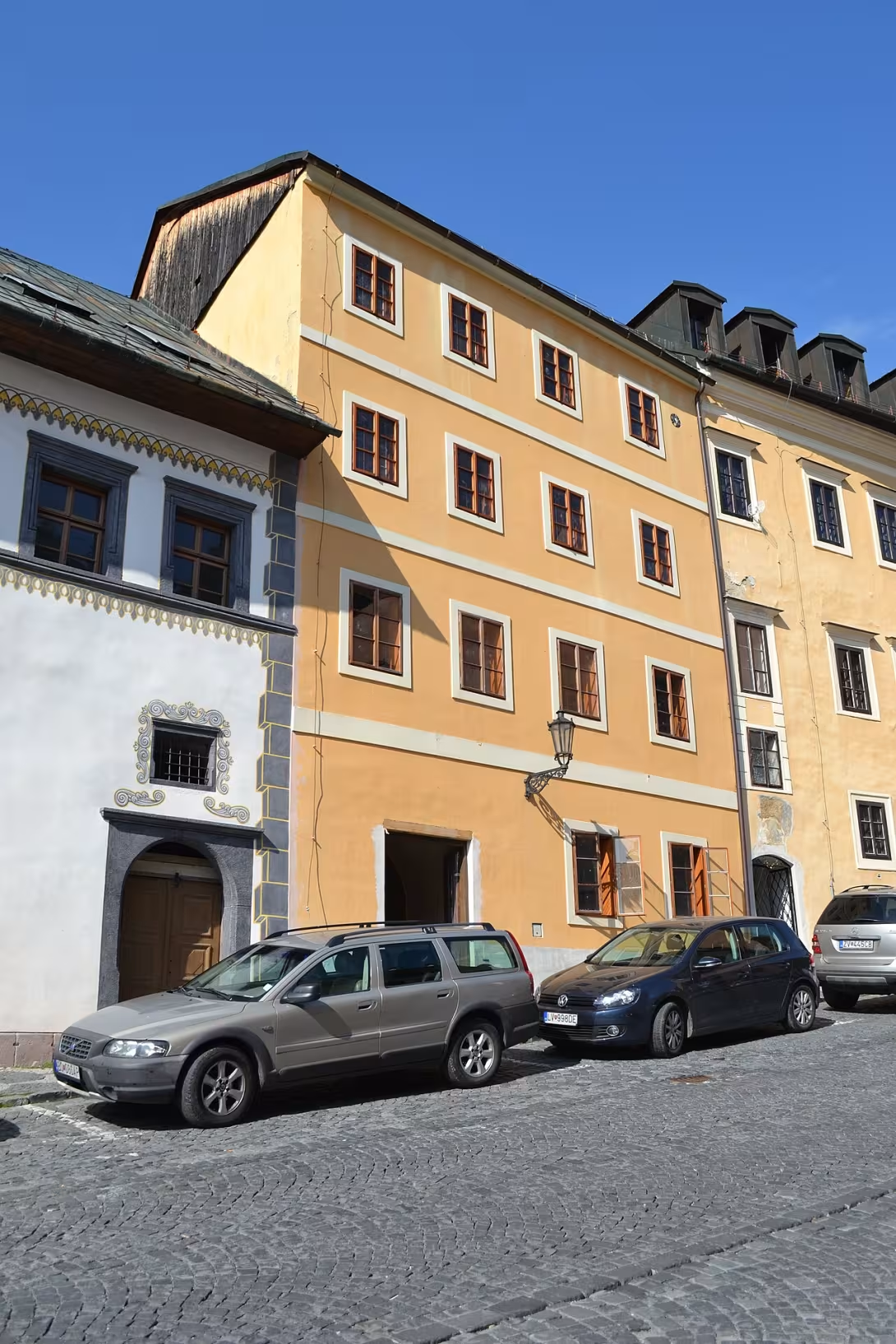

The historical view on the left is a visualisation generated by artificial intelligence and serves as inspiration.
Historical Milestones
- 1600
- The townhouse in Banská Štiavnica.
- 17th to 18th century
- The increased interest of nobility in urban settlements leads to the rebuilding of burgher houses in representative palaces.
- 17th to 18th century
- Noble families buy neighbouring parcels, create city palaces with increased architecture.
- 19. 0
- The establishment of rental houses with higher population density in Banská Štiavnica.
Interesting facts
- Townhouse in Banská Štiavnica represents a type of historical urban dwelling. - According to the data of the Monument Office of the Slovak Republic, the object has a registered number of the ÚZPF 2563 and its origin is estimated by the first half of the 16th century, with the documented year 1600. - Architecture reflects the effects of the Renaissance and the Baroque. - The townhouse on Andrei Kmeť 5 represents a type of late renaissance and baroque. - Today burgher houses in Banská Štiavnica are part of the historical stop, where the function of housing was preserved after the modernisat
Guide
Show guide text
The text was prepared by artificial intelligence and has not been editorially reviewed. It may contain inaccuracies.
Welcome to the heart of Banska Stiavnica, a city that is a lively museum of architecture and history. You stand by one of those objects that make up the very essence of this city - there is a burgher's house in front of you. Perhaps at first glance, it does not act as a monumental palace, but it is in its walls and in its quietly insistent duration that there is a story of urbanisation, social change and aesthetic development that shaped the face of this region over the centuries. Look at this building and try to imagine what generations of people here have lived their daily lives, from humble craftsmen to representative residents who have changed urban panoramas.
When you look at this house, you perceive the atmosphere of a place that has its roots very far in the past. Although the exact details of its complete origin are sometimes obscured in the mists of time, historical records allow us to estimate that the origin of this place dates back to the first half of the sixteenth century. A documented year a thousand times forty tells us that there was already a solid structure that was part of a growing and prosperous city. At that time, burgher houses were the cornerstone of urban life - they served as dwellings but also often as places of commerce and work.
However, do not be mistaken for its original functionality. The history of this house, like the history of many other buildings in Banská Štiavnica, is not static. It's a story of constant transformation and growth. In the seventh and eighteenth centuries the social structure began to change in our region. Note how the city's character changed at the time. Nobleness, which in these times became very interested in urban settlements, began to see the city streets as ideal places for its representation. This trend has led to a fascinating architectural transformation. The townhouses, which were more modest before, began to be gradually rebuilt into representative palaces.
This process was not just about aesthetics, it was the process of expanding urban prestige. The noble families didn't just end up at one house; they started buying neighboring parcels and connecting them to larger units, creating monumental city palaces with increased architecture. This house you are facing is a direct reflection of this dynamic. It is a witness to the time when the border between ordinary urban dwellings and aristocratic residence began to blur and when architecture became an instrument of expressing power and wealth.
Now that you are standing right in front of the building, pay attention to its appearance and how it works across the street. Although the details of the facade are the result of several periods, in its overall form you can see the connection of two key architectural styles - Renaissance and Baroque. Renaissance to architecture brought about harmony, symmetry and balance, which was often reflected in the geometrical layout of the openings and the overall structure of the building. Later came the Baroque era, which brought more dynamism, wealth, and more complex shapes to the city. It is this combination of influences that makes burgher houses in Banská Štiavnica so unique. It's not just one style, it's a dialogue between different eras that pushes through in this one building.
If you look at the historical development of the city even further, you will see another change that came in the nineteenth century. In this period, the urban architecture changed again, this time under the influence of the growing need for housing. Rent houses with higher population density were created. The city became denser, more overflowing and more functional. So this house was not just a static object, but part of a constantly changing organism that had to respond to the new economic realities and needs of the population.
You may have wondered who exactly lived in these walls. Although the names of particular owners or celebrities directly associated with this particular house are not clearly preserved in our archives, its meaning is unquestionable. It is a representative example of a typical historical urban dwelling that defines the identity of Banská Štiavnica. Every such house is like a chapter in the city book - even if we do not know the name of the author of every sentence, the overall story is clear and fascinating.
An interesting thing to remember is that this object is not just a building. It is a protected cultural monument, which is carefully recorded under the number ÚZPF 2563. This registration is not just a dry number in official documents; it is a guarantee that this piece of our common history has immense value and that its protection is a priority for future generations. When you look at the facade, you see something that we have to protect together so that we can tell this same story about a century or two.
In front of the building you're standing by, stop for a moment in silence. Feel the atmosphere. Imagine the lights, sounds, and people changing over the centuries. From the time the horse-drawn cars moved on the streets to the time when tourists from all over the world are walking around. This bourgeois house is a silent observer of all that has happened in this city.
We believe that this short look at the history of this place has helped you to better understand what is the uniqueness of Banská Štiavnica. Get carried away by another part of your tour. Every street, every house and every stone stone you encounter has its own voice. Continue exploring, looking for details, and enjoy the beauty of this city. Thank you for your journey together in time and we wish you a pleasant rest of your stay.
Tips for visitors
Best visit time: Best visit time The burgher's house in Banská Štiavnica is in the autumn, when the weather is calmer and less juice. This allows you to get high quality photos without sharp lighting modifications.
Public transport: Public transport is a convenient way to reach the heart of the city.
What to take with you: When visiting we recommend having a protective coat or jacket, especially in colder months. It is also appropriate to have a camera for capturing architectural details and city panoramas.
Photography - the best places and light: The photo is recommended morning or evening hours when light is soft. The best perspective on the House burgher is located from the center of Banská Štiavnica.
What to visit nearby (30 min from place): Nearby you can visit the historical museum of Banská Bystrica region, which offers a view of the mint and metallurgical heritage of the area. It is also recommended to cross the historical centre of Banská Štiavnica.
Tips for families with children: It is interesting for children to visit the Mint Museum, where they can learn more about the history and technology of minting. It offers various interactive exhibitions.
Frequently asked questions
Can the monument be visited?
This is a residential or farm building, not a museum with opening hours. Please view it from public space and respect the owners' privacy. We have no information about access to the interior.
Where is the monument?
Location: Námestie sv. Trojice 17/13, Banská Štiavnica, Banskobystrický kraj. The map on this page shows the exact spot.
Why is the monument protected?
It is listed in the Central List of the Monuments Fund of the Slovak Republic as a national cultural monument (ÚZPF no. 322-2563). It is part of a UNESCO World Heritage Site.
For children
Hello, dear adventurers! Have you never asked what it was to live in the 17th century? How did everybody live there when the first phone wasn't even mentioned? Some 426 years ago, when Banská Štiavnica was a city full of adventures and secrets, one of the most interesting homes in the world was created. As everywhere at that time, all the moments of story revolved around one fascinating building - the burgher house. This house was like a little queen palace for the city. It was like a grave where every floor and wall has its own historical chapter.
Nearby
🏰 Historic sites (227)
- Galéria Jozefa Kollára 0.0 km +421 918 990 449 web
- Sándor Petőfi 0.0 km
- Andrej Sládkovič 0.1 km
- Kalmán Mikszáth 0.1 km
- Morový stĺp 0.1 km
- Cesta v čase 0.1 km web
- Galéria u Bindera 0.1 km
- Starý zámok 0.1 km web
- SNP 0.1 km
- Mariánsky stĺp 0.1 km
- Dom Maríny 0.1 km
- sv. Ján Nepomucký 0.2 km
- Galéria Schemnitz 0.2 km
- Rodný dom Deža Hoffmanna 0.2 km +421 902 477 085 web
- Dežo Hoffmann 0.2 km
- Vzbura baníkov v roku 1852 0.3 km
- Židovská synagóga 0.3 km
- Andrej Kmeť 0.4 km
- Banské múzeum 0.4 km web
- Hugo Heincz 0.4 km
🍽️ Restaurants and dining (164)
- Barcadam 0.0 km
- Gavalier 0.0 km +421 903 802 226 web
- Na Trojici 0.1 km
- Reštaurácia Gallery 0.1 km +421 45/692 12 52
- RUINbar 0.1 km web
- Penzión Príjemný oddych 0.1 km web
- Cukrkandel 0.1 km
- Pizzeria Black M 0.1 km +421 45 692 0202 web
- Eleuzína 0.1 km web
- Coburg coffee & burger 0.2 km
- Lemberg 0.2 km Radničné námestie 10 +421 911 220 126 web
- Bansky Dom 0.2 km
- Archanjel Cafe Bar 0.2 km web
- U Jašteríc 0.2 km
- Svätá Barborka 0.2 km
- Reštaurácia Monarchia 0.2 km web
- OPERA Prosecco Bar 0.2 km
- Stará škola 0.2 km
- Divná pani 0.2 km +421 45 679 09 45 web
- Pasta per-te v opere 0.2 km +421 907 841 794
🏨 Accommodation (108)
- BARCADAM 0.0 km Námestie sv. Trojice 17/13 +421 908 965 202 web
- Gavalier Design Rooms 0.0 km +421 903 222 309 web
- Penzión Na trojici 0.1 km Námestie sv. Trojice 21/17
- Skautský dom 0.1 km web
- Skautský dom 0.2 km Antona Pécha 69/2 +421905382885 web
- Black M 0.2 km Kutnohorská 603/1 +421 910 947 187 web
- Penzión Rozália 0.2 km +421 948 221 213 web
- Boutique Hotel ERB 0.2 km +421 456 789 555 web
- Apartmán Zlatý dvor 0.3 km
- Bristol 0.3 km Andreja Kmeťa 123/11
- Penzión Resla 0.3 km
- Penzión Cosmopolitan II 0.3 km web
- Subyt 0.3 km
- Penzión Matej 0.4 km
- Penzión Tomino 0.4 km
- Hotel Grand Matej 0.4 km
- Penzion Nostalgia 0.5 km Ing. Štefana Višňovského 208/3
- Villa Botanica 0.5 km web
- Salamander 0.5 km
- Ubytovanie Tatiana 0.6 km
🚲 Rentals and sport (18)
- Diana poľovnícke potreby 0.8 km
- Ortler sport 0.8 km
- BS-Rent 1.0 km +421 948 908 737 web
- MK bike service 1.1 km +421 904 494 573
- Pontónová plaváreň na Klingeri 1.1 km
- Tanad sport 1.5 km
- Bikepro - Hotel Salamandra 2.9 km web
- ŠK Lesy Banská Belá 4.2 km
- Požičovňa vodných bicyklov 6.7 km
- Sedací bazén 7.6 km
- Detský bazén 7.6 km
- Rekreačný bazén 7.7 km
- Jaskynný parný kúpeľ 7.7 km
- OFK Štart Prenčov 11.1 km
- Lodenica Hliník nad Hronom 12.5 km
- Cyklosport 3000 13.1 km Májová 280/3
- Plážové kúpalisko Žiar nad Hronom 14.2 km
- Bazén Ďuricov majer 14.3 km
🥾 Hiking and nature (587)
- Michal štôlňa 0.1 km
- Z Lichardovej 0.1 km
- Banka lásky 0.1 km web
- História mesta (reliéf) 0.1 km
- Z Vodárenskej 0.1 km
- Od Červeného kríža 0.1 km
- Cherubín dedičná štôlňa 0.2 km
- Banskoštiavnicky betlehem 0.2 km web
- Kaufhaus šachta 0.2 km
- Z Hornej ružovej 0.2 km
- Z Dolnej ružovej 0.3 km
- Na centrum 0.3 km
- Z Vodárenskej 0.3 km
- Z Katovej 0.5 km
- Na kalváriu 0.6 km
- Glanzenberg dedičná štôlňa 0.6 km web
- Glanzenberg 0.6 km
- Nad Reslou 0.6 km
- Cisterna 0.7 km
- Park SNP 0.7 km
Thematic route
Thematic cruise route from Banská Štiavnica
1. House bourgeois (City House) Type: Historical object The Baroque House, a settlement of rich townsmen, is one of the monuments of Banská Štiavnica. Its architecture and interior with the construction from 1753 reveals the history of the city, closely connected with Štiavská ore activity.
2. Štiavnica Museum (Museum) Type: Museum centre The museum offers exhibitions focused on the historical importance of Banská Štiavnica as one of the most famous ore towns. You can visit it for knowledge of the technology and culture that has developed in the area of Rudnictva.
3. Štiavnické deep-water (Downs) Type: Historical area Part of the world's heritage, the complex offers a view of the techniques of the ore region from the 18th and 19th centuries. You can visit it by walking underground, where you will learn about the lives of the Rudarian workers and their technical innovations.
4. Štiavnica Square (Square) Type: Local area The historical square is the heart of Banská Štiavnica, where you can enjoy a quiet environment and refresh yourself in one of the surrounding cafes.
5. Old Town Hall (Radnica) Type: Historical object The Baroque building complex is part of the World Heritage Site and represents the architectural beauty of Banská Štiavnica. Its facade and interior with rich decorations are an important element of the city.
This route offers an overview of the historical and cultural heritage of Banská Štiavnica, focused on its past in the area of Rudnictva.
Seasonal recommendations
Jaro: In the spring season, greenery appears on trees and grasses in Banská Štiavnica, raising it to live light. Sunny papers illuminate the facade of the burgher house, undermining architectural details. When visiting it is advisable to wear lightweight clothes with a scarf on your hand or head due to changing weather and temperature. The best time for a walk is morning or evening when crowds are low. Léto: Summer offers long days full of light that emphasize the architectural beauty of the burgher's house in Banská Štiavnica. The warm sunlight illuminates the facade and creates strong seams. During this period it is advisable to wear lightweight clothes and a protective sun hat. The best time for a walk is morning or evening when crowds are low. Podzim: Podzim brings variable weather in Banská Štiavnica, where greenery turns into a gray palette of cuttings. During this period it is appropriate to wear multi-layered clothing and protective gloves or scarf. The best time for a walk is morning when the weather is usually dry. Winter: Winter Banska Štiavnica offers views of snowy streets and illuminated facades of buildings. The townhouse can be decorated with candles or other decorations. It is advisable to wear warm clothing, including fur and protective gloves, when visiting. The best time for a walk is morning or evening when crowds are low.
Visualisations and artistic views


The visualisations are generated by artificial intelligence and serve as inspiration.
Photographs from the area
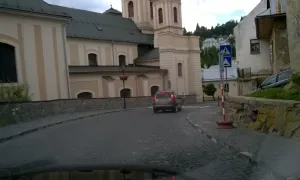
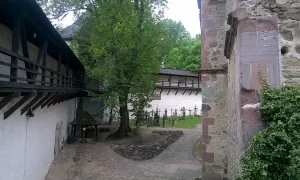
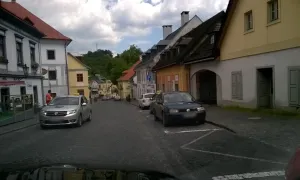
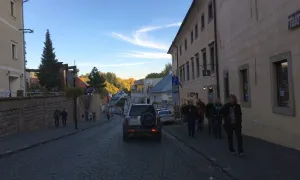
Real photos taken near the monument


Source and licence are given for each image.
Visitor Tips
No tips yet. Be the first!
Log in and add your tip.
Location on Map
More monuments – Banská Štiavnica
Show all in the town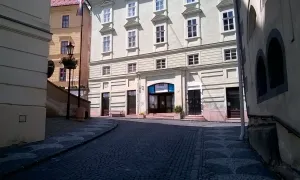

Visitor photos
No photos yet. Be the first to add a photo from your visit!
Log in and add your photo or leave a rating.
You get more points for a visit verified in the app — we can tell from the GPS that you are there.
Reviews and comments