

st. Anne's chapel Chapel
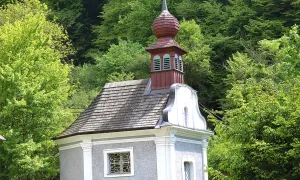
St Anna Chapel in the village Kremnica in Banská Bystrica region is a national cultural monument from 1773. It is a Baroque building with rococo artistic details and interior equipment.
The building was established in 1773 and belongs to the second half of the 18th century. The Slovak Monument Office registers it under number ÚZPF 1238. The chapel is located in the locality Partizánska dolina.
The exterior of the building consists of smooth, single-colored walls, broken down only by entrance and windows. Inside is a rococo wall painting. In its centre is depicted God-Father with a triangular halo, surrounded by clouds and angels. On the painted railings in the dome runs are depicted figures of saints: Saint Joseph, St Joachim, Saint Anton Paduan and St John Nepomuk.
The inside of the chapel contains an altar menza with a picture of St. Anna with little Mary. This rococo menza is equipped with a tabernacle and a pair of candlesticks with a rococo motif. On the walls are located console single-arm candlesticks.
St. Anna's chapel is a preserved example of Baroque sacral architecture and rococo artistic decoration from the late 18th century.
Tehdy a dnes
Drag the slider and compare how the monument might have looked when it was built with the view today.
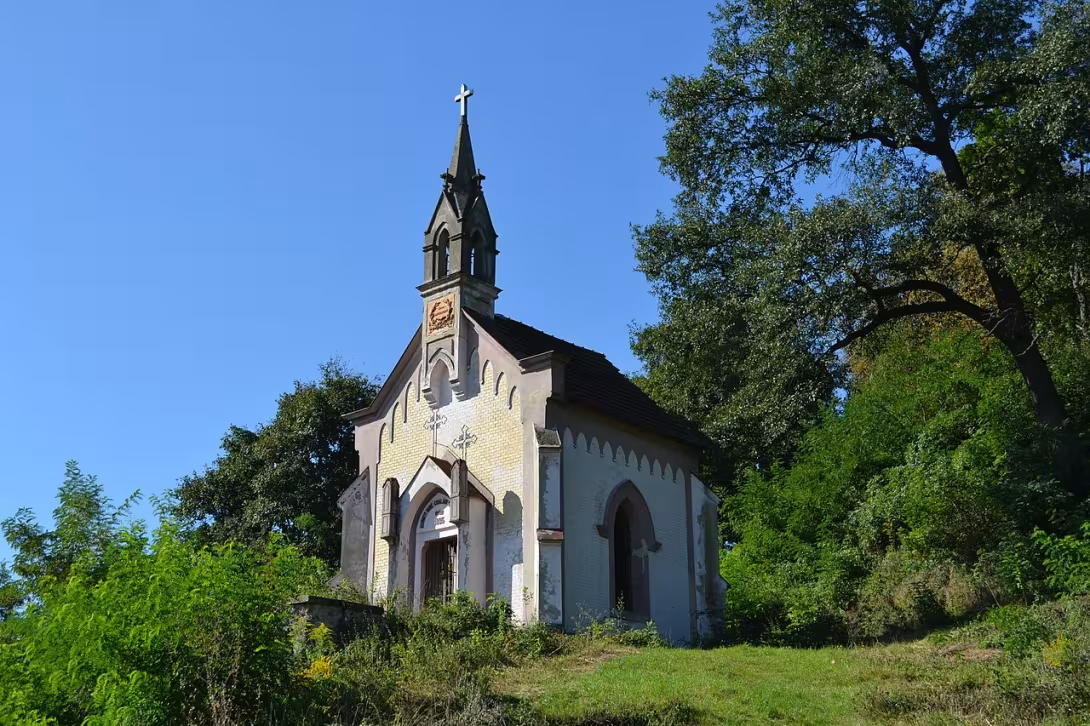
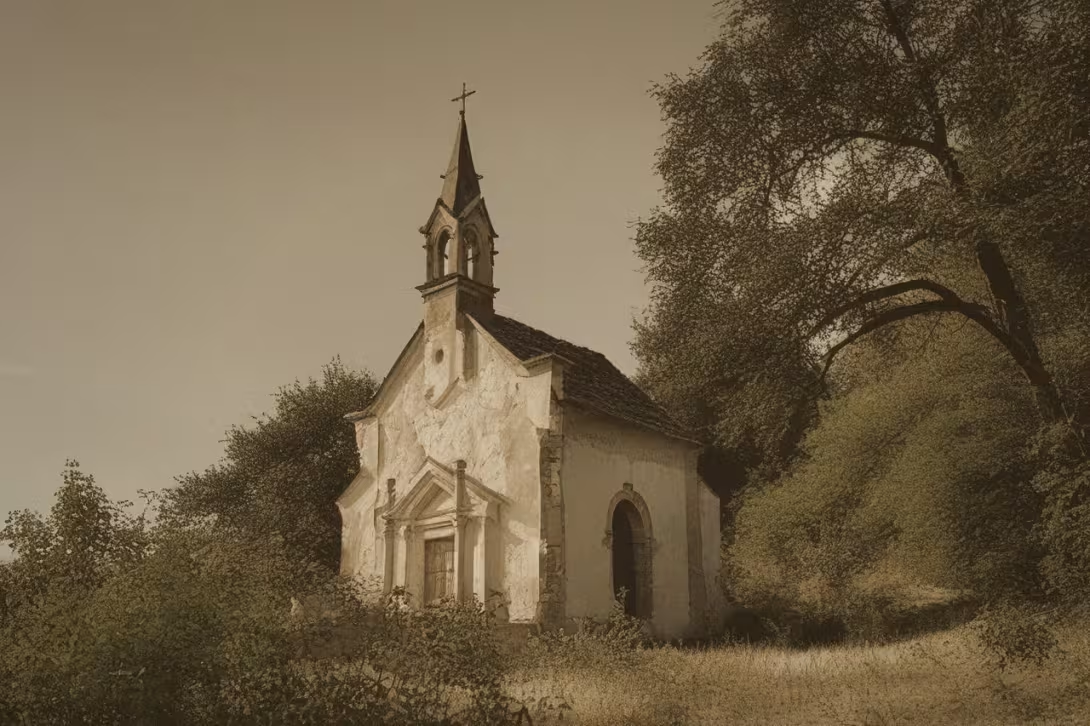
The historical view on the left is a visualisation generated by artificial intelligence and serves as inspiration.
Historical Milestones
- 1773
- creation and construction of the Baroque Chapel of St. Anna
- 1773
- interior furnishings rococo detail and wall painting
Interesting facts
- It is a Baroque building from 1773 with rococo artistic details and equipment. - In the interior there is a rococo wall painting depicting God-Father in the center. - The painted rails depict the figures of St. Joseph, Joachim, Anton Paduan and John Nepomuk. - Oltar menza contains an image of St. Anna with a small Mary and is equipped with a tabernacle and candlesticks with a coy motif. - The chapel is located in the locality Partizánska dolina in the village Kremnica.
Guide
The guide was voiced by a synthetic voice created by artificial intelligence.
Show guide text
The text was prepared by artificial intelligence and has not been editorially reviewed. It may contain inaccuracies.
You can see in the heart of Kremnica, a city that has been proud of its rich history and unique architectural face for centuries. You are faced with a small but significant structure that at first glance may seem modest, but at a closer look it will reveal deep layers of artistic expression and spiritual significance. Before you, the bars of the chapel of St. Anna, a baroque monument that has been guarding prayers and miracles here since the second half of the eighteenth century. You may notice how her facade, although not overcrowded with excessive ornamentation, carries the typical elegance of its time. The atmosphere around you is a quiet, invitation to the insinuation, and it is in this silence that the spirit of this place is best perceived. Let yourself be carried away by the feeling that you have just entered a space where time would stop and where every detailed line of construction asks for your attention.
This chapel has had an interesting story that began in 1773. It was this year that it was created and built, which is situated in the period when Baroque architecture was manifested in its full beauty and maturity in Hungary and Slovakia today. It is not only a simple building, but the result of a deliberate decision to create a place for the cult of St. Anna, a patron saint, who was especially loved in Catholic tradition for her role as the ancients of Christ and the guardians of family and mothers. The context of the formation of the chapel is thus deeply linked to the spiritual life of Kremnica citizens in the second half of the eighteenth century. Although the names of architects who stood behind its concept and realization were not preserved in historical records, their work survived and still bears witness to the artistic taste and craft skills of the time. It is an anonymous work that deserves full respect and admiration, as it proves that even smaller sacral buildings could have been carriers of a high artistic standard.
Now look carefully at the exterior and see the overall shape of the chapel. The Baroque style in which it was built manifests itself in smooth lines and harmonious ratio of individual parts of the building. Although we cannot ask about the specific names of construction masters, we can admire the result of their work. The 1773 building carries a strong Baroque identity, but it is not a dry, strict baroque. On the contrary, in 1773 there was also the interior equipment, and here begins to show the influence of the next style, rococo. This means that although the structure and basic form of baroque, artistic details and interior furnishings are directed towards the lightness, playfulness and softness that are typical of the rococo. Look at the facade, see how the lines overlap and how the overall composition works in a balanced way. You don't have to look for complicated statues or massive domes that are not documented here. On the contrary, the strength of this chapel lies in its cleanliness and how it can be engraved in memory with its unique atmosphere. It's a building that doesn't yell, but it's inviting you to approach it and discover its secrets.
If you have the possibility to perceive the atmosphere of the interior or if you are just at the entrance, pay attention to what you have inside. The evidence tells us that the interior is enriched with rococo artistic details and wall painting. This is the key element that distinguishes this chapel from other simple Baroque buildings. Rokoko in sacral architecture usually means lighter tones, softer ornaments and a feeling of airiness. The wall painting that is part of this equipment is not just a decoration but a central point of spiritual experience. In the center of this painting is depicted God-Father. This composition is typical for certain periods of sacral painting, where the display Trinitas or individual persons of the Holy Trinity alternate. The depiction of God-Father in the center symbolizes his primary role as Creator and Protector. It is an invitation to prayer and to set up for heavenly power.
Another artistic programme is developing around this central motive. On painted railings, which is likely to separate the space of the altar from the chapel boat, are depicted figures of several saints. These are Saint Joseph, Joachim, Anton Paduan, and John Nepomuk. Each of these saints has its specific place in Catholic tradition and its meaning to believers. Holy Joseph, a nanny of Christ, symbolizes fatherly protection and loyalty. Joachim, the father of the Virgin Mary, represents the ancient law of faith and the expectation of salvation. Saint Anton The Paduan is known as the patron of lost things and people, and his presence here can symbolize the hope and hope of finding a way. And Saint John Nepomuk, the Czechoslovak saint, is often associated with the secret of confession and protection from floods, which may have had a practical meaning for the inhabitants in the past. The presence of these characters on the rail creates some kind of spiritual chorus that surrounds the central scene with God-Father. It is the visual expression of a community of saints praying with believers.
An interest that deserves your attention is the altar menza itself. According to the available information, the altar menza contains something exceptional, although the exact description of this element is not completely divorced in the documents. In sacral architecture there is the altar menza, the upper plate of the altar, the place where the Eucharist takes place, and often there are relics of saints inserted. The presence of relics would increase the spiritual value of the place and make it a stronger prayer. Although we do not know exactly which relics are here, the very fact that the altar menza is specifically mentioned indicates that it is an important element of the cult. You can imagine how believers in the past stood before this altar and felt the presence of the saints who were saved in them. This is one of those elements that gives the chapel a depth and mystical dimension.
Looking at the whole chapel of St. Anna in Kremnica, remember that it is a place where two artistic eras meet. The Baroque construction of 1773 provides a solid and dignified framework, while the Rococo details and paintings of the interior bring light, softness and personal approach to God. This alignment is typical of transition periods in art when old
Tips for visitors
We recommend visiting St. Anna's Chapel late in spring or autumn. The pleasant temperatures and colors of the landscape around Kremnica then complement the atmosphere of the building.
We recommend taking comfortable shoes and drinking water to the ground. Since it is a sacral object, we recommend a suitable cloth.
We recommend morning or evening hours to photographers. Low sun creates a game of shadows on the facade and provides soft light. Images are suitable from angles that capture the construction in the context of nature.
Families with children can connect the visit with educational walk. Children can observe the architecture of the chapel and learn about the history of Kremnica.
Frequently asked questions
Can the monument be visited?
Religious buildings are usually open mainly during services; at other times a visit is normally arranged with the parish or the operator. We have not verified specific times.
Where is the monument?
Location: Partizánska dolina, Kremnica, Banskobystrický kraj. The map on this page shows the exact spot.
Why is the monument protected?
It is listed in the Central List of the Monuments Fund of the Slovak Republic as a national cultural monument (ÚZPF no. 32D-1238).
For children
Close your eyes and imagine you're passing through time. It's 1773. The surroundings of Kremnica look completely different than today. No cars, no cell phones, just quiet roads people walked in black shoes and big hats. About 253 years ago, a small, but amazing, building was created that looked so elegant that kings could feel in it. It's St. Anne's Chapel.
Nearby
🏰 Historic sites (71)
- Pomník padlých Kremničanov v 1. svetovej vojne 0.1 km
- Pomník Jána Vaja 1.6 km
- Múzeum gýča 1.7 km web
- Múzeum mincí a medailí 1.8 km
- Morový stĺp Najsvätejšej Trojice 1.8 km
- Pomník obetiam SNP 1.8 km
- Muzeum Mincovne 1.8 km
- Pamatnik Karola Roberta IV 1.8 km
- Múzeum Geocachingu 2.5 km
- Banské múzeum 2.5 km web
- Balanciér 2.6 km
- Baníkom 2.8 km
- 1928 4.1 km
- Memorial 4.6 km
- Görgey memorial 6.1 km
- sv. Ján Nepomucký 6.3 km
- Pamätník pádu lietadla 7.4 km
- Hrob neznámeho vojaka 9.2 km
- Pamätník Prof. Klementa Hubača 9.8 km
- Pršiansky hrádok 9.8 km
🍽️ Restaurants and dining (170)
- Toliar 0.6 km
- Florén 1.7 km web
- Incité 1.7 km
- N caffé 1.8 km
- Fontána u Bomela 1.8 km
- Ncaffe 1.8 km
- Fidenza 1.8 km
- Korzo kafe 1.8 km
- Čajovňa 1.8 km
- jedáleň pod Brezovým vrchom 1.8 km
- Gramo galery 1.8 km
- Labyrint 1.8 km
- Tereza 1.8 km
- Central 1.8 km
- Modrý kocúr 1.9 km
- Silvánus 1.9 km
- Gluck auf 1.9 km
- Zlatý Sivoň 1.9 km Jurka Langsfelda 693/3
- Reštaurácia Jeleň 1.9 km +421 907 808 527 web
- Veterník 2.0 km
🏨 Accommodation (52)
- Zlatý dukát 0.6 km
- Penzion Veža 1.9 km +421 45 6744 231 web
- Penzión Krahule 2.1 km web
- Penzion Kôlnička 2.1 km
- Hotel Golfer 2.6 km +421 45 674 37 67 web
- Stefanshof 2.7 km +421 456 74 40 97; +421 915 984 451; +421 915 984 453 web
- Chalúpka pod Lipkami 2.9 km +421905153692 web
- Chata Skalka 4.6 km Partizánska dolina 530/19 +421 905 611 986 web
- Minciar 4.7 km Partizánska dolina 531/21 +421 45 6743 933 web
- Chata na Skalke 4.8 km Partizánska dolina 532/23 web
- Penzion Guldiner 5.2 km web
- Chata nad Králikami 6.2 km Martinová 13341/1 +421 917 253 521 web
- Penzión Horec 6.4 km web
- Penzion Králiky 7.2 km
- Dom Tiesňava 7.7 km
- Ortútskie zrubčoky 7.9 km +421 908 651 755 web
- Chata Junior 8.2 km
- Chata nad Tajovom 8.2 km
- Chata Fatra 8.2 km
- Chata Zvonček 8.3 km
🚲 Rentals and sport (31)
- Cyklo-Santé 1.7 km Pavla Križku 386/11
- Telocvičňa 2.2 km Jula Horvátha 884/61
- Lanový park Pod Borovicou 11.4 km
- Plaváreň mesta Handlová 13.1 km 1. mája 1925/99
- Šport Peleton 13.5 km web
- Motokros Lovčica 13.5 km
- Peleton - bicykle, šport, servis 13.6 km web
- Hutira 13.6 km
- Bicykle Kubiš s.r.o. 13.6 km Spojová 19 +421908921899
- Sportisimo 13.8 km
- Detský bazén 14.0 km
- Z 14.2 km
- Old I 14.2 km
- L 14.2 km
- I 14.2 km
- Yonex aréna 14.3 km
- Trekbikes 14.3 km
- Cykložiar 14.3 km Vansovej 4
- Plaváreň Štiavničky 14.3 km Cesta olympionikov 1624/4 +421 48 423 04 01 web
- Športová hala 14.4 km Tajovského 719/30
🥾 Hiking and nature (325)
- Jubilejný háj RČS 1918-1928 Kremnica - Partizánska dolina 0.1 km
- Körmendyho jaskyňa 0.2 km
- Lesný prameň 0.3 km
- Prameň Prvý grantík 0.3 km
- Prameň Permoník 0.6 km
- Krahuľský vrch 1.2 km
- Turistická rozhľadňa Krahulský vrch 1.2 km
- Kremnický štít 1.6 km
- Kremnický štós 1.7 km
- Ulička slávnych nosov 1.7 km
- Prameň Veterníček 1.9 km
- Kalvária 2.2 km
- Cyklo prameň 2.4 km
- Javorník 2.5 km
- Kalvária 2.5 km
- Kalvaria 2.5 km
- Prameň Zigalky 2.5 km
- Banícky prameň 2.5 km
- Šibeničný vrch 2.6 km
- Zígalky 2.6 km
Thematic route
1. St. Anne's Chapel - Main Monument. Visit this building with its characteristic architecture. 2. Chapel area - Outdoor area. Go around the building overlooking the surrounding landscapes.
Seasonal recommendations
In spring, the neighborhood of St. Anna's Chapel in Kremnica will wake up to life and the landscape will be covered with light green shades. The sun during this period provides a fine light suitable for photographing the exterior of the building. It is recommended to shoes into nature, because the terrain can be wet after rains. A visit in the morning is appropriate.
Summer months bring intense lighting and flower vegetation, creating contrast with the architecture of the chapel. Thanks to long days it is advisable to come early in the morning or later in the evening to avoid high temperatures. Light, breathable clothing and sun protection are recommended.
Autumn in the Banská Bystrica region brings color changes, when the leaves of the trees around the monument will acquire golden and red tones. Practical is layered clothes for cooler morning and evening temperatures and use of the golden hour before sunset.
Zimą gets the chapel of St. Anna a different form, especially if the landscape covers the snow. Peace and meditation prevail in Advent time. Due to the low temperature and the possible ice, it is necessary to wear a very cross and wear non-slip shoes with good grip.
Visualisations and artistic views


The visualisations are generated by artificial intelligence and serve as inspiration.
Photographs from the area
Real photos taken near the monument


Source and licence are given for each image.
Visitor Tips
No tips yet. Be the first!
Log in and add your tip.
Location on Map
More monuments – Kremnica
Show all in the town

Visitor photos
No photos yet. Be the first to add a photo from your visit!
Log in and add your photo or leave a rating.
You get more points for a visit verified in the app — we can tell from the GPS that you are there.
Reviews and comments