

st. John Nepomuk's Church Church
St. John Nepomuck's church in the village of Štós in the Košice region is a Roman Catholic church with elements of Renaissance and classicism. The building is related to the tolerance patent of Joseph II. and contains artistic elements from the 18th century.
The history of the object includes several stages. In 1542, the building was rebuilt and rebuilt by the eastern boat, where Renaissance style prevails. Between 1786 and 1788 locals, Antonius and Johann Georg Kreutzer and carpenter Georg Heida, a classicistic toleration church, built. The construction was completed by Master Mattias Haberland of the Pitch. The church was completed and consecrated in 1788.
It is a rectangular hall structure with a chorus and a hipped roof. The space has a flat ceiling and smooth facades with segmented windows. The building has a high tower with an onion roof, in which the bell is from 1753. The area is registered by the Monument Office of the Slovak Republic under the number ÚZPF 445.
The interior contains a baroque altar from 1727. In 1791 Joseph Sinai painted the central altar painting from the life of St. John Nepomuk. Another variant of the altar has as its main motive an image with the praying Christ in the garden of Gethsemane. The right side altar contains the oil painting of Immaculata and the left side altar of oil painting The vision of St John the evangelizer, both from the end of the 18th century. Ceiling decorated frescoes from 1937 made by the owner of the foot factory Jozef Wlaszlovits.
The equipment is complemented by a polychrome woodcarving pulpit from the second half of the 18th century, with the acanta and the coat of arms of Štós. The metal baptistery from 1780 with a petal shop and the decor of the acanto contains a record of the tolerance patent of Jozef II. The chorus is a functional organ purchased by the Gospels from the Catholic Church in 1790.
The current state of the church is good. For tourists, the church is inaccessible and open only during worship. From spring to autumn it is possible to look into the interior through the decorative grid of an open wooden gate.
Tehdy a dnes
Drag the slider and compare how the monument might have looked when it was built with the view today.
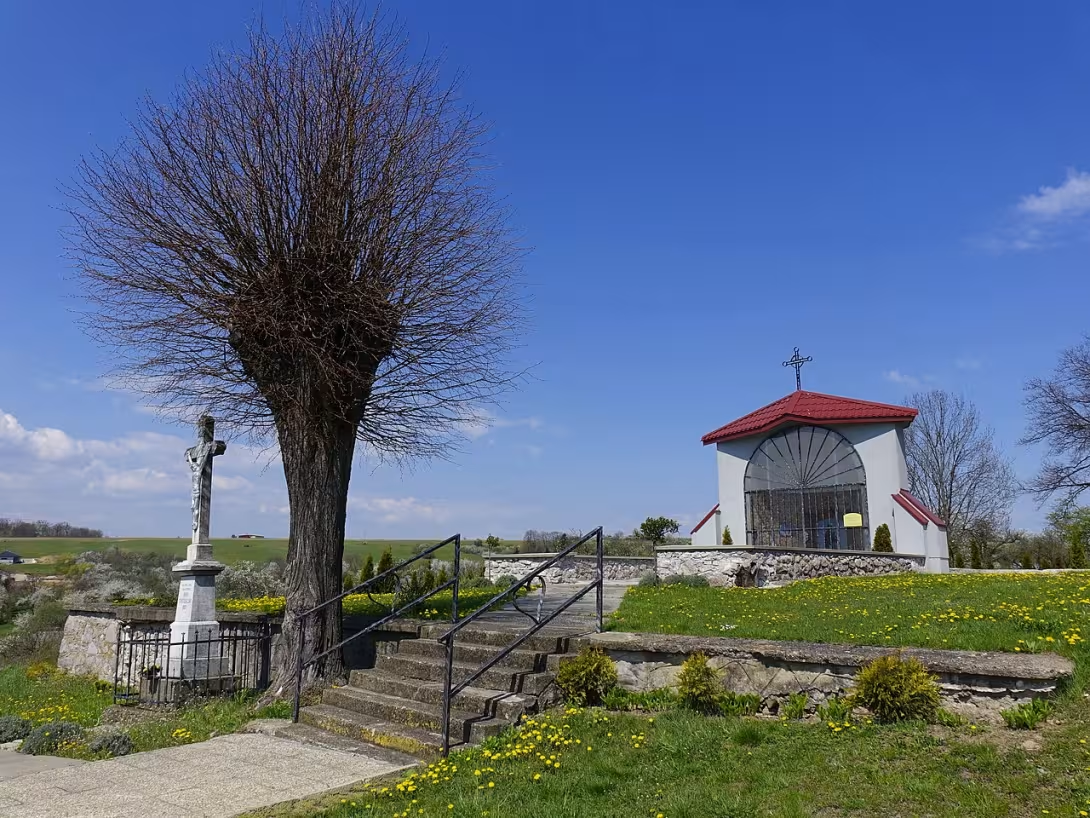
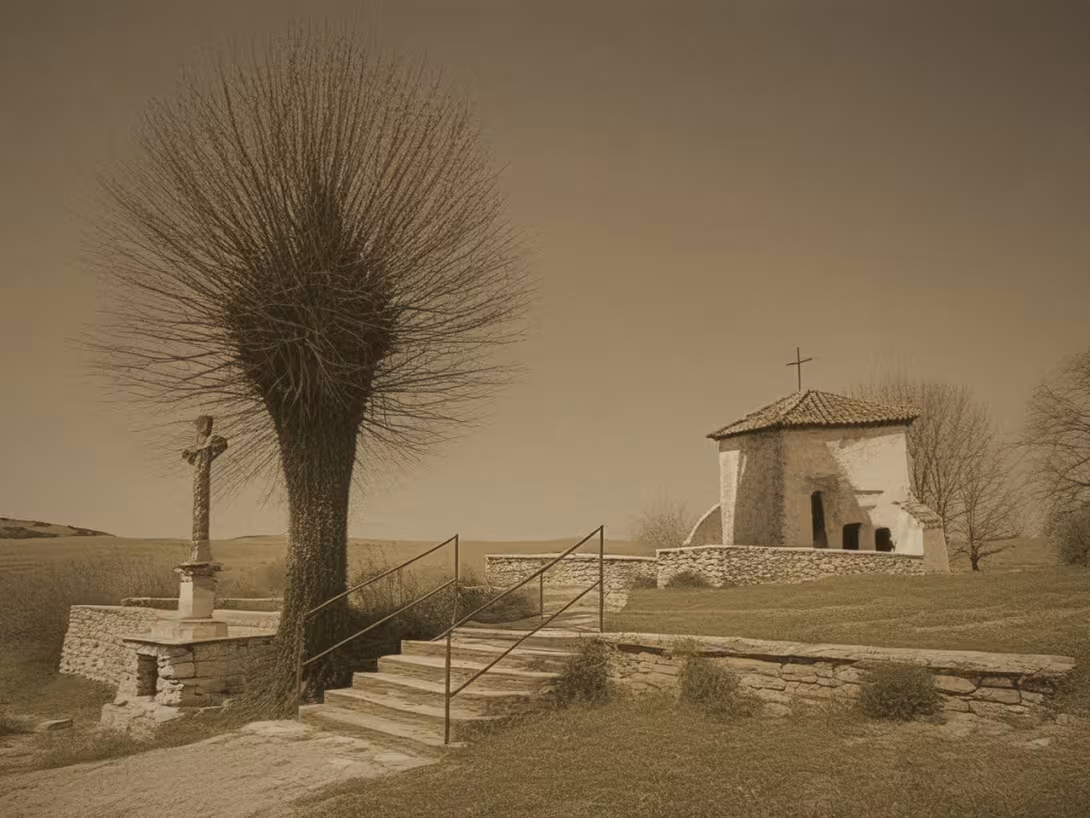
The historical view on the left is a visualisation generated by artificial intelligence and serves as inspiration.
Historical Milestones
- 1786
- The beginning of the construction of a tolerance church.
- 1788
- Complete the construction and consecration of the church.
- 1790
- Purchase of historical organ from Catholic church.
Interesting facts
- The church was built between 1786 and 1788 by local inhabitants and the building is related to the tolerance patent of Joseph II. - In the high tower with an onion roof there is a bell from 1753. - The interior is decorated with frescoes from 1937 made by the owner of the foot factory Jozef Wlaszlovits. - Polychrome woodcarving pulpit from the second half of the 18th century contains the coat of arms of Štós. - The chorus is a functional organ purchased by the Gospels from the Catholic Church in 1790.
Guide
The guide was voiced by a synthetic voice created by artificial intelligence.
Show guide text
The text was prepared by artificial intelligence and has not been editorially reviewed. It may contain inaccuracies.
Welcome to the picturesque village of Štós, where history meets the spiritual atmosphere in the silence of the mountain nature. Right now you are standing in front of the church of St. John Nepomuk, which dominates the local picture. When you look at it, you will see a building that carries a trace of ancient times and testifies to the perseverance of the people who lived here and formed a community. Feel the peace that this temple will take, and allow yourself to stop for a moment so that you can feel fully the brilliant place you are in. Let's now look at how this church originated and in what historical context it was built. If he returns almost two hundred and fifty years ago, we will reach the end of the eighth century. The construction of the temple began in 1786. To understand why it came about at this very time, we must mention an important historical document, which was the tolerance patent of Emperor Joseph II. This document has fundamentally changed the religious situation in the Habsburg country because it has allowed Confesias other than the dominant in the area to build their own prayer houses under certain conditions. It was thanks to this patent that local residents in Stockholm could start building their own church. It is fascinating to realize that the building was not the work of large architects from large cities, but it led to the end the efforts and work of the local inhabitants themselves. The whole process of construction lasted two years and in 1788 the church was officially completed and consecrated, making it a spiritual center for the local community. Now that you're standing in front of the building, pay attention to its external form. Look up on the high tower, which is a characteristic feature of this temple. Note her onion roof, which is typical for many historical buildings in our boilers and adds its unique profile to the church. It is in this tower that there is one of the most valuable items the church has kept. It is a bell that dates back to 1753. Interestingly, the bell is older than the church building itself, suggesting that it was probably moved from the previous prayer room or forced from another source to mark the time in the new temple and summon the believers to worship. When we move on to further details, let's stop by the musical page of this place. In 1790, just two years after the consecration of the church, there was an important enrichment of the interior. A historical orgon was purchased into the temple, who had previously served in a Catholic church. It is the organ that gives space to depth and ambition, and it is witness to many generations of people who have sought comfort and peace in these walls. If we move now to the inside of the temple, we recommend that you take the attention of the walls. The interior is decorated with beautiful frescoes, but they are not from the church construction period. These works of art dates back to 1937. Their origin is related to the personality that left a deep mark in Stockholm. It's about Jozef Wlaszlovits, the owner of the foot factory. He had these frescoes made, turning the interior into a place full of colors and spiritual symbols. It is a beautiful example of how the local businessman and citizen helped decorate the common temple and leave their oddruck in the history of the village. It is fascinating to think about how this church developed. From the simple toleration temple, which built the hands of local residents, to the addition of an old bell and organ, to the artistic touch of the city in the twentieth century. Each of these elements casts a story about the faith, responsibility and care of the common heritage. By the time you say goodbye to this place, we recommend you once again bypass the building and perceive its simplicity and majesty in the context of surrounding nature. St John's Church Nepomuk is not just a building made of stone and wood, but a symbol of the community that has met in it for centuries. We hope that this short trip to the past has helped you to better understand the meaning of this temple. Now we invite you to further explore the beauty of Štós and its surroundings. Let yourself be guided by the quiet mountains and discover the other secrets of this region. Thank you for your attention and we wish you a pleasant crush and a peaceful day.
Tips for visitors
For a visit we recommend autumn, when the colors of nature around Štós are most striking and form the background for the church of St. John Nepomuk. To this location you will transport by car or public transport; check the current links in the internet search engine.
We recommend shoes suitable for mountain terrain. Since it is sacral construction, we recommend decent clothing in accordance with the nature of the place.
They are suitable for early mornings or before sundown, when soft light highlights the details of the facade. Pictures from a high view will capture the church in the context of the surrounding country.
Families with children can explore local history and architecture in a quiet environment of nature.
Frequently asked questions
Can the monument be visited?
Religious buildings are usually open mainly during services; at other times a visit is normally arranged with the parish or the operator. We have not verified specific times.
Where is the monument?
Location: č. 144, Štós, Košický kraj. The map on this page shows the exact spot.
Why is the monument protected?
It is listed in the Central List of the Monuments Fund of the Slovak Republic as a national cultural monument (ÚZPF no. 426-445).
For children
Imagine being teleported to a time when there were no computers or electricity. It is the end of the eighteenth century, and something big is about to begin in the village of Stockholm. Everywhere around you, you hear hammering, whistling, and the loud voice of local people. They all work together because they want to build something beautiful. It's like building a big secret fortress, just instead of modern machines, they only use wood, stone and their own strong hands.
Thematic route
As there are no other objects in the surrounding area, I propose a thematic route aimed at exploring the monument and its area:
1. St. John Nepomuck's church - sacral building in the village Štós. 2. Interior of the church - Space with artistic details, altar and interior equipment. 3. Church area - Courtyard, from which various angles of the building are visible.
Seasonal recommendations
In the spring, the dressing around St. John Nepomuk's church will awaken into life and the country will be surrounded by fresh greenery. The sun in this period gently illuminates the details of the facade. We recommend putting on suitable wet terrain and layered clothing, as in the mountain area it is cold in the morning. Premier hours are a good time to visit.
Summer season brings the most visitors to this part of Košice region. The surrounding nature is in full bloom. It is practically appropriate to choose morning or late afternoon terms to avoid a strong glow. Remember light, breathable clothing and sun protection.
Autumn in the 16th century is characterized by a color change of leaves. Golden and soft lighting creates suitable conditions for photographing the exterior of the church. We recommend warm sweater and waterproof shoes because in the mountains there are frequent fogs and morning dews.
Winter changes the surroundings of St. John Nepomuk's church into a snowy landscape. The contrast of white snow and the walls of the building creates a distinctive visual composition. Due to frost and snow it is necessary to put on with thick soles and warm winter clothes. Visiting in advent time brings a quiet atmosphere.
Visualisations and artistic views

The visualisations are generated by artificial intelligence and serve as inspiration.
Visitor Tips
No tips yet. Be the first!
Log in and add your tip.

Visitor photos
No photos yet. Be the first to add a photo from your visit!
Log in and add your photo or leave a rating.
You get more points for a visit verified in the app — we can tell from the GPS that you are there.
Reviews and comments