

st. Michael's parish church Church
The parish church of St. Michael in Zlaté Moravce (Nitra region) is a monument from the second half of the 18th century and was built in 1785 in early classicism. The area of the monument is the only building - the Roman Catholic Church of St. Michael, which was built in 1785 in early classicism. The church is located at Bernolákova 490/2 in Zlaté Moravce and is registered in the ÚZPF under the number 1585. The monument in Zlaté Moravce presents an example of classical architecture from the end of the 18th century.
Tehdy a dnes
Drag the slider and compare how the monument might have looked when it was built with the view today.
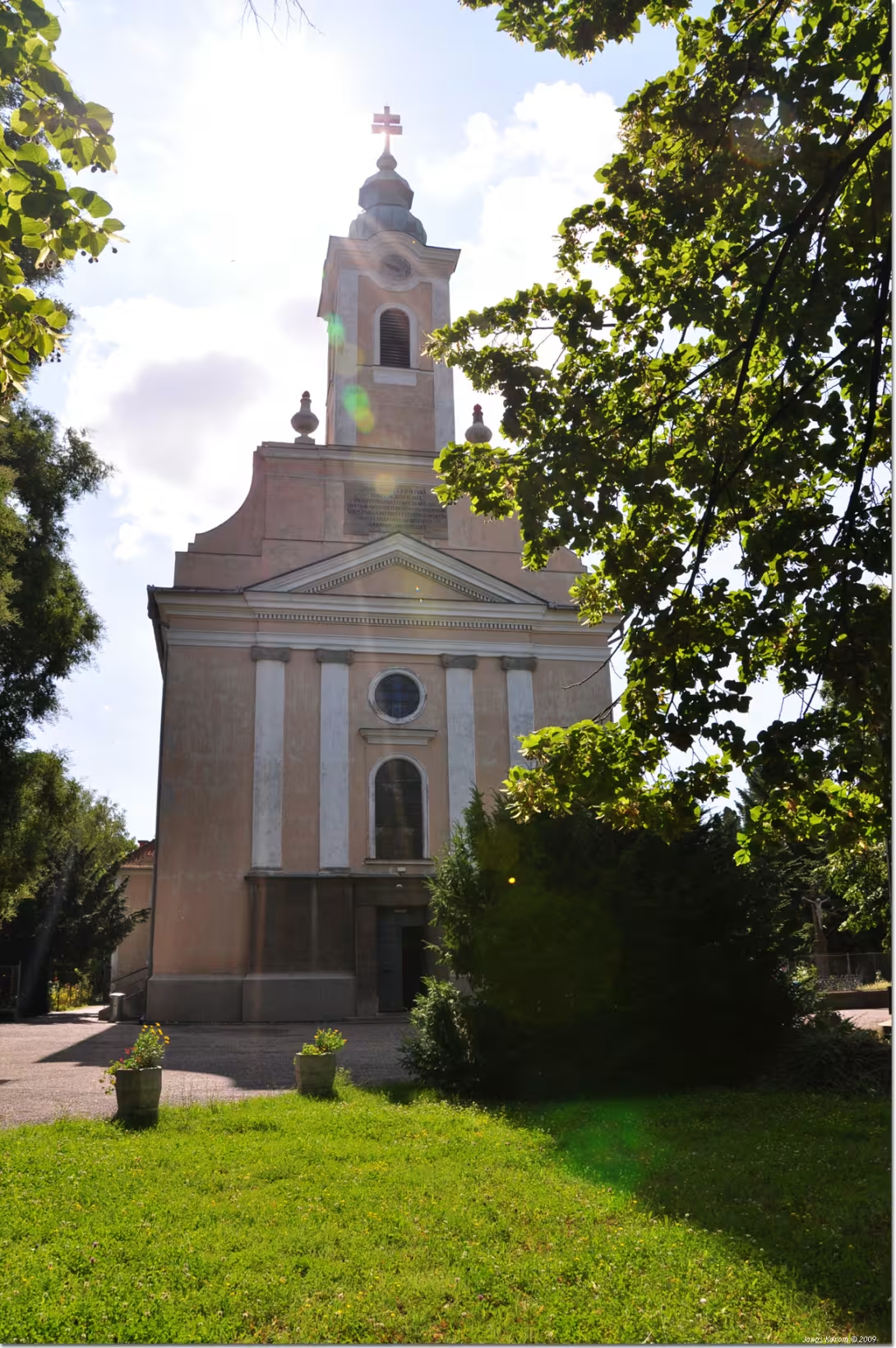
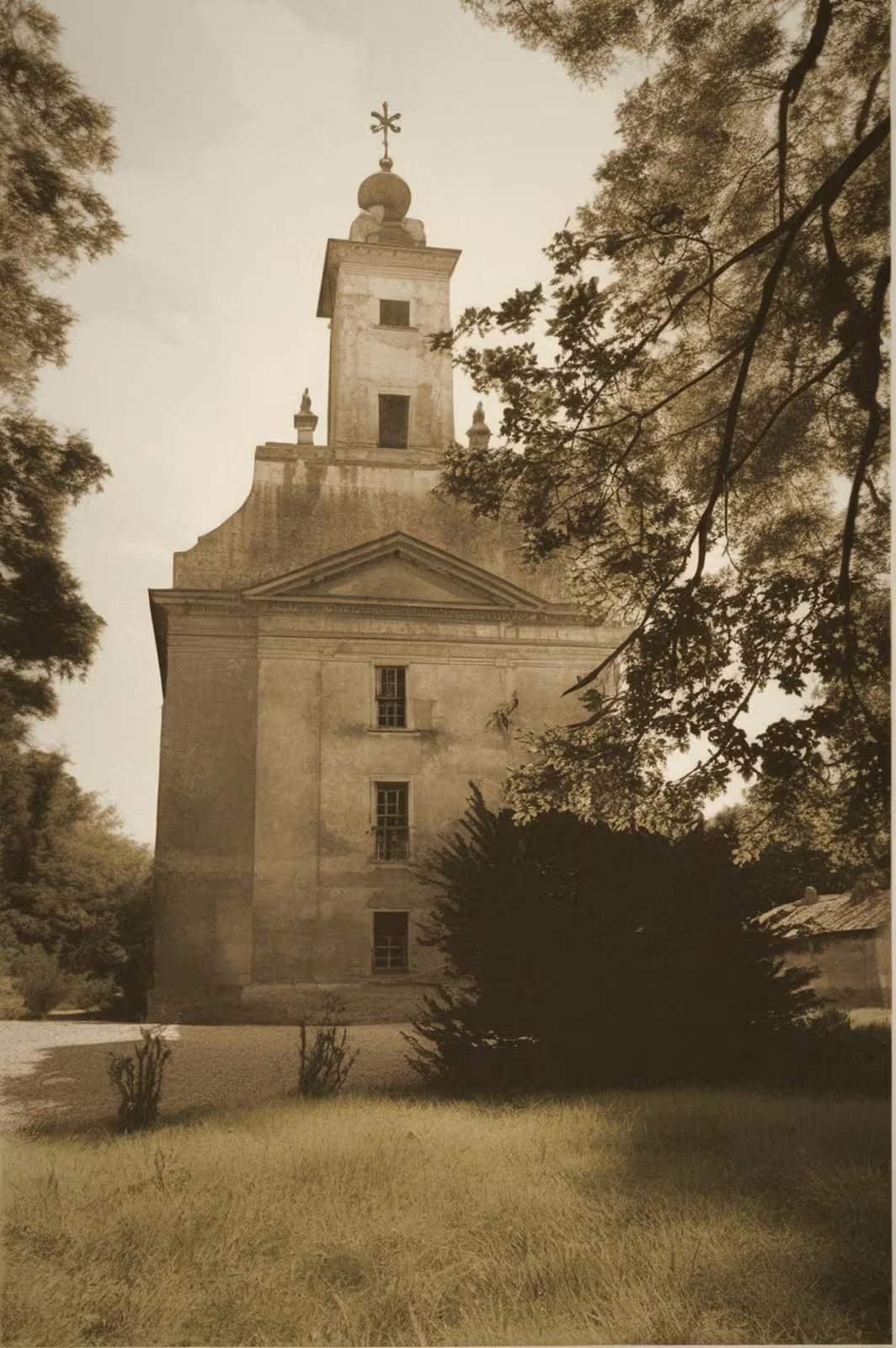
The historical view on the left is a visualisation generated by artificial intelligence and serves as inspiration.
Historical Milestones
- 1785
- Construction of the Roman Catholic parish church of St. Michael in early classicism.
- 1785
- Inclusion of the object in the records of monuments as an example of classicistic architecture.
Restoration history
| Years | Type | Extent | Condition after restoration |
|---|---|---|---|
| 2011–2012 |
Obnova a reštaurovanie
farský kostol sv.Michala |
Čiastočná | dobrý |
Source: Monuments Board of the Slovak Republic — open data, licence CC BY 4.0
Interesting facts
- The monument comes from the second half of the 18th century and was built in 1785 in early classicism. - The area of the monument is the only object, which is the Roman Catholic church of St. Michael. - The church is located at Bernolákova 490/2 in Zlaté Moravce. - The monument is registered in the SEZPF under number 1585. - It represents an example of classical architecture from the late 18th century.
Guide
Show guide text
The text was prepared by artificial intelligence and has not been editorially reviewed. It may contain inaccuracies.
Welcome. You are standing right in front of the parish church of St. Michael in Zlaté Moravce, in the Nitra country. This sacral structure is one of the oldest evidences of faith in the region and still today it is a living part of the local community. Look at it for a second. Notice how it affects you - whether you are attracted to his mildness, whether he invites you to reflect on how many generations have been coming here for centuries. The air around the church is full of silence, which is not empty, but filled with stories written here. Any view of its externality can be the beginning of a journey to the past that still lives in the memory of local people. Feel the atmosphere of a place that was the center of religious life for many inhabitants of this city. The church stands as a silent witness to the time that passed by, and its presence in the country invites you to stop and see. Look at how the building is written into the city's panorama and see how it affects your feelings. You may feel respect, maybe peace, or just quiet interest. Everyone feels differently, and that's okay.
The exact date of creation of this church is unknown. The chronology of its construction consists in archival silence, so we do not know who had it built or exactly when it happened. The changes of builders or architects were not preserved. Even so, we know that the parish church was always more than just a building. He was a place where people met, where the most important moments of life - baptism, weddings, funerals - were celebrated, and where peace and understanding were sought during difficult times. St. Michael's church is dedicated to the archangel Michael, who in tradition belongs among the protectors and warriors against evil. His name reminds us that this place should have been not only a refuge for the soul but also a symbol of security for the entire community. In the past, he was the center of religious life, a place where ringtones were rang, calling residents to church services and announcing important events. Imagine how the building was invented by people many years ago, what hopes and fears they brought here, and how their generations saw before us the same walls that you see today. This unknown past makes the church a place that calls for thinking about what it means to assemble something permanent without keeping the name of the creator recorded. It is evidence that the value of the building is not always accompanied by the names of its authors.
Now pay attention to its external form. Look at the front of the building. Note the rhythm of the windows, the way the church is sitting in the country, and the details you can see about it right now. We cannot tell which verse it belongs to, because this information is not in the available documents, but you can see how light is reflected on its walls, how shadow surfaces change during the day and how the overall composition of the building affects your perception. Let's go one step closer and look at the surroundings carefully. Notice how the church communicates with the street or square on which it stands and how you feel about it from this perspective. You may notice how his silhueta rhymes against the sky or how people and cars move around it, creating a contrast between history and the present. Also note the surface of the pavement or lawn around, if any, and see how the sounds of the city are distinguished from the silence that prevails at the building itself. Every element you see is part of the overall impression you have of this place. Look at how light changes on its surfaces, and see how the perception of construction changes at every step. Perhaps you will notice some detail that will personally bind you up, and that is exactly what makes this walk a special experience.
Since we don't know anything concrete about specific historical personalities immersed in this place, let's focus on who St. Michael represents. In popular faith, the archangel Michael is seen as a protector from danger and as a leader of heavenly armies. His festivities were held with great respect in many regions, and in Zlaté Moravce it was certainly an important event in the annual parish calendar. Imagine how the ringing rang in the past, how people came here on Sunday morning, how communities gathered here to pray and to support each other. Each part of this building bears a reflection of these ordinary and extraordinary moments that have taken place. Although the names of specific people who have served or prayed here are not known, their presence is felt in the atmosphere of the place. Think of the clergymen who preached here, the families who attended church services here, and the individuals who sought comfort in this church. Their stories are part of this place, even if we don't know their names anymore. Their message is that this place still exists and still serves people. Even if we don't know their names, their presence is part of what you see today.
One of the greatest attractions of this place is his secret. Given that the chronology of origin is unknown and the archival springs are silent, the question remains what stories the walls of this church could tell if they could speak. This unknown past is not a shortcoming, but an invitation to your own reflections. You can imagine what events were taking place here at different times, what changes went through the town of Zlaté Moravce and how the church survived years of peace and years difficult. This mystery makes visiting this place a special experience, because you are not only spectators of history, but also its performers. Perhaps this very silence and unknown past is what makes this church such a fascinating place. Get carried away by the idea that standing where the past is partially hidden is unique in itself. This uncertainty is not an obstacle, but an invitation to establish your own relationship with this place. Maybe that's why the church visit is so authentic.
In conclusion, I invite you to sit or stand in peace for a while. If the church is open, you can step inside and perceive the silence that exists there. If not, at least enjoy the view of its outsideness and surroundings. If you have time, take a walk around and see how the church involves the past with the presence of this city. Golden Moravce has many other places worth discovering, and this church is one of their quiet guards. Thank you for making time for this stop. I wish you a peaceful walk and much inspiration in the next discovery of the Nitra region. Goodbye.
Tips for visitors
St. Michael's parish church in Zlaté Moravce is recommended to visit early in the morning or late in the afternoon. Soft light at this time makes it easier to capture details of the facade and surroundings without sharp shadows. Since it is a sacral building, decent clothing is recommended, especially when entering the interior. When taking photos, focus on architectural features that stand out in different seasons, such as the winter leafing of trees. In the surroundings you can focus on the historical center of Golden Moraviac.
Frequently asked questions
Can the monument be visited?
Religious buildings are usually open mainly during services; at other times a visit is normally arranged with the parish or the operator. We have not verified specific times.
Where is the monument?
Location: Bernolákova 490/2, Zlaté Moravce, Nitriansky kraj. The map on this page shows the exact spot.
Why is the monument protected?
It is listed in the Central List of the Monuments Fund of the Slovak Republic as a national cultural monument (ÚZPF no. 237-1585).
For children
Close your eyes and imagine pressing a secret button on an invisible time machine. Boom! He drove you deep into the past, just 241 years back. Do you feel the strange air?
The Golden Moravce looked completely different then. Forget cars, asphalt roads, smartphones or electric lights. The streets were dusty, and instead of the noise of engines, you only heard the rhythmic knocking of horses about the road and the crackling of wooden cars. Imagine people in strange hats and long dresses who stopped to look at something big just growing toward the sky.
Nearby
🏰 Historic sites (87)
- Ján Čikkel 0.0 km
- Kaštieľ Zlaté Moravce 0.1 km Námestie A. Hlinku 435/1 web
- Mestské múzeum Zlaté Moravce 0.1 km web
- Golgota 0.1 km
- Janko Kráľ 0.1 km
- Viliam Kudry 0.2 km
- Mauzóleum rodiny Migazziovcov 0.2 km
- Dom Janka Kráľa 0.3 km
- sv. Ján Nepomucký 0.5 km
- SNP 0.5 km
- Pamätník II obetiam svätovej vojny 1.1 km
- Hipologické múzeum národného žrebčína 3.9 km Hlavná 68
- Popravení partizáni 4.0 km
- Štefan Čepček 4.0 km
- Národopisné múzeum Topoľčianky 4.1 km
- Trojičné súsošie 4.2 km
- Sv. Florián 4.5 km
- Poľovnícky zámoček 4.5 km Parková 243/2 web
- Mlyn 5.2 km
- žltý mlyn (ruiny) 5.2 km
🍽️ Restaurants and dining (102)
- Eminent 0.1 km web
- Oregon pub 0.2 km Námestie A. Hlinku 2152/20 web
- Hostinec u mnícha 0.2 km
- Nominos Kebab 0.2 km Janka Kráľa 441/1A
- Pizza & Pasta Župný dom 0.2 km +421 907 771 222 web
- Reštaurácia U Petyho 0.2 km Prílepská 485/2A
- Bagetka 0.3 km
- RIO 0.3 km Sládkovičova 1872/37
- Jäger 0.3 km
- P bar 0.3 km
- Club 107 0.3 km Robotnícka 1124/21
- Čínska reštaurácia 0.4 km
- Olajos cukráreň 0.4 km
- Zoy caffé 0.4 km
- Gurmán u HOFFERA 0.4 km Župná 42 web
- Saha Bar 0.4 km Župná 16
- Bistro Panda 0.4 km
- Minimarket BALI 0.5 km
- Arizona 0.7 km
- Mc.Kebab 0.7 km Hviezdoslavova 3 +421 904 486 803
🏨 Accommodation (24)
- Hotel Eminent 0.1 km web
- Penzión Byron 0.2 km web
- Penzión HOBEX 0.3 km
- Penzion Arizona 0.7 km Mlynská 3654/8 web
- ViOn 1.8 km Továrenská 2127/57A
- Penzión pod kalváriou 2.2 km Tehelná
- Motel Tribeč 3.7 km web
- Gazdovský hostinec 4.1 km
- Národný dom 4.2 km Hlavná 57/122
- Hotel Hradná stráž 4.3 km Parková 252/11 web
- Poľovnícky zámoček 4.5 km +421 905 444 747 web
- Apartmány Stará Škola 4.5 km +421 905 249 084 web
- Motel Šofér 7.0 km Olichov 637/47
- Rekreačné stredisko Calex 7.2 km
- Apartments Čaradice 7.9 km +421 910 553 333 web
- Hotel Tartuf Beladice 9.9 km +421376330680 web
- Stanovisko 10.3 km
- Areál zdravia 11.8 km
- Vinum Vivo 12.0 km web
- Drozdovo 12.6 km
🚲 Rentals and sport (10)
- Tribo šport 0.3 km Janka Kráľa 45 web
- SKI Servis DUVI ŠPORT 0.3 km web
- Street sport 0.3 km
- tenisový klub HANAKA 0.5 km Robotnícka 49
- Kúpalisko 0.7 km
- MAJÁK (Ing. Mášik) 0.8 km
- Dostihová dráha v Topoľčiankach 5.1 km web
- Požičovňa E-bike Zlatno 11.2 km
- Bike Centrum Psiare 12.9 km web
- Telocvičňa 13.0 km Topoľová 166/6
🥾 Hiking and nature (151)
- Park Janka Kráľa 0.1 km
- Park pri hrobke Migazziovcov 0.3 km
- Mestský park 0.4 km
- Park mládeže 1.1 km
- Čertov vrch 3.1 km
- Studnička Vršky 3.3 km
- Národný žrebčín Topoľčianky 4.2 km web
- Kamenné vráta 5.5 km
- Kamenec 5.8 km
- Benát 5.8 km
- Čierny vrch 5.8 km
- Človečí vrch 6.2 km
- Mačací vrch 6.3 km
- Mačací vrch 6.3 km
- Rebrík do neba 6.3 km
- Krivá 6.5 km
- Za hradskou 6.7 km
- Richtárova studnička 6.8 km
- Drieňová studnička 6.8 km
- rúra 6.9 km
Thematic route
1. The exterior of the parish church of St. Michael - the facade and architecture of the building. 2. Interior of parish church of St. Michael - Oltár and interior fittings. 3. The tower of the parish church of St. Michael - a sightseeing point overlooking the Golden Moravce. 4. The parish church of St. Michael - Courtyard.
Seasonal recommendations
Spring return to Golden Moravia brings greenery and light to the surroundings of the parish church of St.Michael, which highlights the architectural details of the building. During this period the trees bloom and the air is fresh. For visitors are suitable noon hours when light is most intense and temperatures allow for comfortable walks. Clothes should be layered because spring weather is variable. The atmosphere is quiet and peaceful, without disturbing influences of mass tourism.
Summer brings long days and strong sun to the Nitra region, which creates clear contrasts between light and shadow on the church facade. This period is characterized by the highest temperatures of the year, so it is appropriate to plan a visit in the morning or evening to avoid glowing. Clothes should be light, loose and breathable materials, with sun protection, including hat and sunglasses. Nature in the surroundings is full of flower with rich vegetation. Although the summer season brings more visitors, the sacral building retains a peaceful atmosphere.
Autumn in the Goldens Moravce is a time when the country dresses into golden and red shades, creating a visual contrast with the stone structure of the church. The light is softer and warmer in this period. Temperatures fall, so it is advisable to wear layered clothing, including sweaters, jacket and scarf. Nature is losing leaves that brings silence. It is a good time for those who seek a quieter environment without summer rush.
Winter brings cold, snow and shorter days to the area. White snow highlights the architectural lines of the building and adds silence to the landscape. Light is weaker, so it is best to visit the monument in the midday, when the brightest and temperatures are relatively highest. The clothing shall be warmer and waterproof, including winter jackets, gloves, cap and warm shoes. Nature is in sleep, allowing you to focus on the quiet environment. Winter visit is for those who appreciate the peace of the winter landscape surrounding historical monuments.
Visualisations and artistic views


The visualisations are generated by artificial intelligence and serve as inspiration.
Photographs from the area
Real photos taken near the monument


Source and licence are given for each image.
Visitor Tips
No tips yet. Be the first!
Log in and add your tip.
Location on Map
More monuments – Zlaté Moravce
Show all in the town

Visitor photos
No photos yet. Be the first to add a photo from your visit!
Log in and add your photo or leave a rating.
You get more points for a visit verified in the app — we can tell from the GPS that you are there.
Reviews and comments