

st. Nicholas Church Church and parish cemetery
St. Nicholas church and church cemetery in the village of Licince in Banská Bystrica region are classicistic sacral buildings from 1829 to 1830. The monument is registered in the Central List of the Slovak Monument Fund under the number 10 118/1.
The present church was brought out on the site of the medieval temple. Historical records mention the existence of a previous building between 1332 and 1337. The repairs later took place in 1893 and 1913.
It is a single-shiped structure with segmented cap, spring vaults and built-in sacristy. Facades are divided by lizenes. There is a tower built into the shield facade with bell helmet and lateral. The complex consists of a church and a church cemetery, which dates back to the 14th century.
In the interior there is a classicistic pulpit with festons from the first half of the 19th century. The main altar is neogothic from the beginning of the 20th century. There is a picture of St. Nicholas' bishop from the early 19th century.
The church stands in the center of the village, is in good condition and underwent reconstruction.
Tehdy a dnes
Drag the slider and compare how the monument might have looked when it was built with the view today.
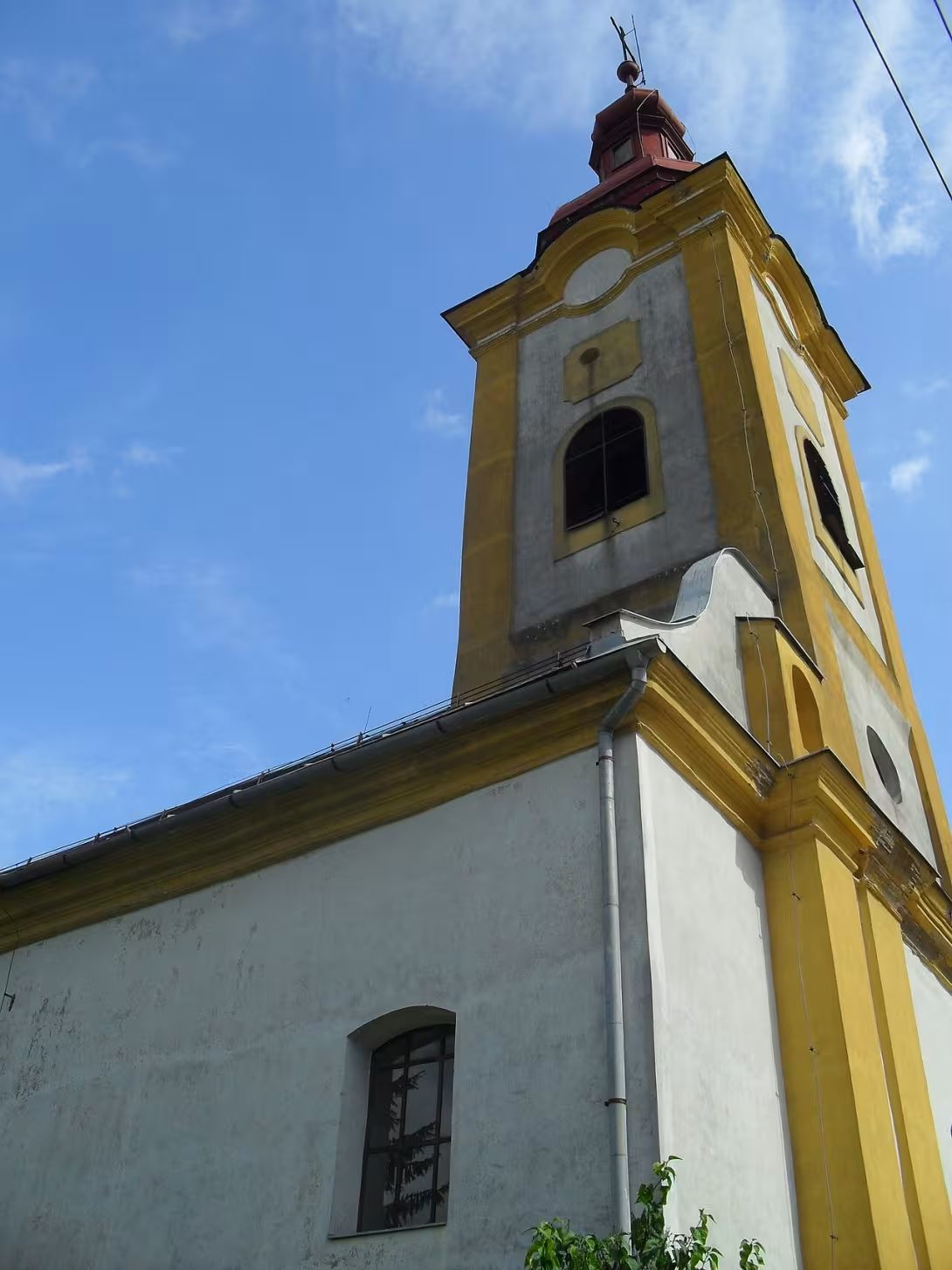
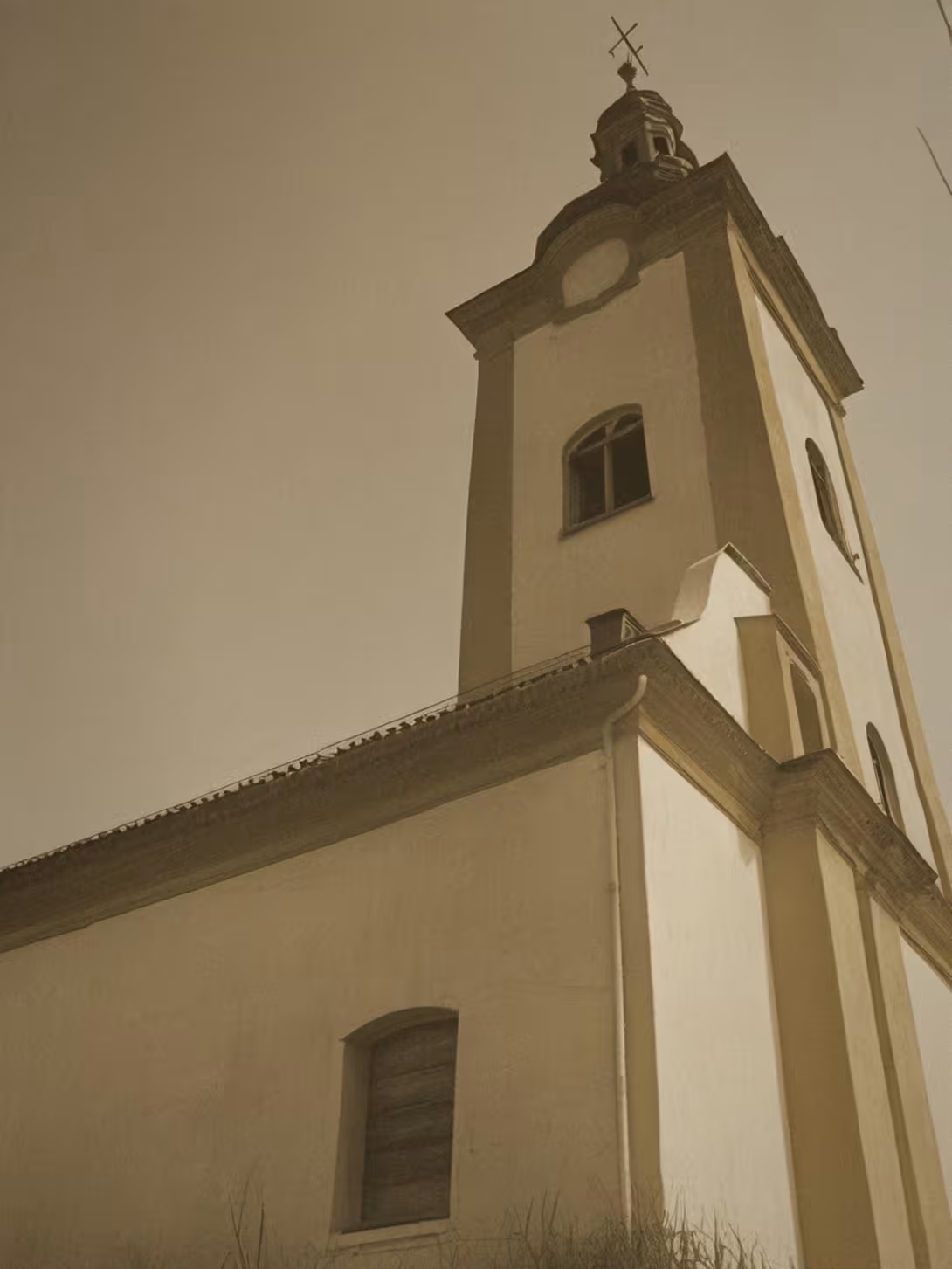
The historical view on the left is a visualisation generated by artificial intelligence and serves as inspiration.
Historical Milestones
- 1332-1337
- mentioned old medieval church on the site of contemporary construction
- 1829-1830
- construction of a classicistic church
- 1893
- repair of church
- 1913
- repair of church
Interesting facts
- St. Nicholas church in the village of Licince is a classicistic building from the years 1829 to 1830. - The present church was brought to the place of the medieval church, which historical records mention between 1332 and 1337. The church cemetery, which forms part of the complex, dates back to the 14th century. - In the interior there is a classicistic pulpit with festons from the first half of the 19th century. - The Neogothic main altar from the beginning of the 20th century bears the image of Saint Nicholas bishop from the early 19th century.
Guide
Show guide text
The text was prepared by artificial intelligence and has not been editorially reviewed. It may contain inaccuracies.
Welcome to Licince. You stand in front of St. Nicholas' church, which dominates the space around you and invites you to stop and think about the history of this place. Now that you are looking at this building, you see a witness in front of you for centuries of local faith and community life. Feel the calm atmosphere surrounding this area and let the voice of this guide guide guide you deeper into the history of this building. Let us now look at when and how this temple was formed. Although the building you see in front of you is harmonious and balanced, its story began much earlier than we could assume only from the perspective of its present appearance. Historical records return us to the fourth century. In particular, between 1332 and 1337 old medieval church was mentioned in the sources, which stood in exactly the same place where the current building is now standing. Imagine that at a time when cities and castle complexes were formed in Europe, there was already a place in Licince for prayer and spiritual comfort. The first medieval temple served local inhabitants for centuries until the need for renewal and modernisation came. It was this need that led to the construction of a new church between 1829 and 1830. This temple, which you see today, is brought up in the style of classicism. Classicism is characterized by its purity, simplicity and return to the principles of antiquity, which is reflected in the overall balance of the building. Although we do not know exactly who the architects who designed this project, it is obvious that they wanted to create a space that will restore peace and stability. The building has undergone several repairs over time to maintain its beauty and functionality. Significant repairs were made in 1893 and later in 1913, which shows that the inhabitants of the village respected and cared for this object. Pay attention to the details you see right in front of you. Look at the overall facade and perceive the classicistic lines that define the character of the building. Note how the building is naturally associated with the neighbor. As you move around the area, note the harmony between the building and the surrounding area. Classicism does not seek excessive ornament, but rather the depth and purity of the form, which you can feel when looking at the walls and the overall composition of the temple. However, if we look beyond the walls of the church itself, we will reach one of the most fascinating parts of this area. Surround yourself now with a sense of silence and look at the church cemetery. This cemetery is not only part of the complex, but is actually a key historical element. According to historical data, this burial area dates back to the 14th century. This means that while the church itself in its present form comes from the 19th century, the ground beneath your feet and surrounding tombs are much older. It is a place where the fates of generations of the inhabitants of Licince are intertwined. The cemetery is a silent witness to all the changes that have taken place in this area over the last almost seven centuries. It is fascinating to think that although the building was built from the ground up again in 1830, the place remained sanctified and preserved. This continuity is very valuable in our country. Imagine the thousands of people who have crossed these gates over the centuries, who have celebrated the increase of family members and who have said goodbye to those whom they loved. It is this church cemetery that creates with the church a unit that tells us about the cycle of life and death within a small community. Note, too, how different epochs are associated in this area. We have medieval roots from the first church and cemetery, classicistic elegance from the nineteenth century and a trail of care from the turn of the century in the form of repair from years 1893 and 1913. It all creates a unique atmosphere that you can now perceive. Now that you're looking around, you might wonder what secrets this place holds. Although we do not know the names of specific architects or personalities associated with this place in written sources, each brick and every tombstone in the cemetery tells its own story. The exact appearance of the first medieval church standing here in the fourteenth century remains a mystery. We can only imagine what he looked like, what materials were used, and how different he was from today's classicistic structure. Now that you have learned about the history and characteristics of St. Nicholas' church and its church cemetery, we invite you to the next transition. Go through the entire area slowly, stop by the older tombstones and give yourself a moment of silence. Feel the contrast between the medieval energy of the cemetery and the classical purity of the temple. We hope this short trip to history has helped you to better understand the importance of this place for the village of Licince and the entire Banská Bystrica region. Thank you for your attention and we wish you a pleasant next day to discover the beauty of our country. Let yourself continue your curiosity and enjoy the peace of this historic place.
Tips for visitors
St. Nicholas church in the village of Licince is recommended to visit early in the morning or late in the afternoon. At this time the sun's rays illuminate the facade and the church cemetery. You can reach the Banská Bystrica region by car or public transport according to the current timetable. We recommend comfortable shoes, drinking water and camera. The best exterior images come from the south side, where the silhouette of the church stands out in contrast with nature. There are no other attractions nearby, so we recommend to enjoy the peace of this locality and the country of Banská Bystrica region.
Frequently asked questions
Can the monument be visited?
According to the heritage register the site is not presented to the public – there are no accessible remains or information on site.
Where is the monument?
Location: Licince, Banskobystrický kraj. The map on this page shows the exact spot.
Why is the monument protected?
It is listed in the Central List of the Monuments Fund of the Slovak Republic as a national cultural monument (ÚZPF no. 328-10118).
For children
Imagine that you were in time about 197 years ago, just about 1829. In the small village of Licince in Banská Bystrica region, something extraordinary is just starting to grow. Around the sound of carpenter axes, fresh wood and mortar smell in the air. The locals sit on benches and tensely watch a new church of St. Nicholas grow up in front of their eyes. It's like when you click on the new building position in your favorite building video game and she grows right in front of us.
Nearby
🏰 Historic sites (58)
- Kaštieľ Hucín 2.7 km
- Obecné múzeum Leváre 4.1 km
- Dr. Ujváry Zoltán 4.1 km
- Turul 4.1 km
- Stará huta 5.3 km
- Kúria 6.4 km
- Rozprávková kancelária Meseiroda 6.5 km
- Šivetický hrad 6.8 km
- Vysťahovaným obyvateľom obce 7.0 km
- Kubinyi Geza 7.4 km
- Blum Samuel Istitute hospital condita 7.6 km
- Synagóga v Plešivci 7.6 km
- Plešivský hrad 7.7 km
- Tichy Kálmán 7.7 km
- Samu Kati 7.7 km
- František Rákoczi II. 7.7 km
- Dénes Gyorgy 7.7 km
- Rudnay Gyula 7.7 km
- Petőfi Sándor 7.8 km
- Kövi malom 7.8 km
🍽️ Restaurants and dining (34)
- Krčma 5.9 km
- Kongó 6.2 km
- Retro pub 6.7 km
- Micio 7.8 km +421905993311
- Poniklec 7.8 km
- Kebab Plešivec 7.8 km
- Pizza Piazza Grill Bar 7.9 km +421 911 214 033 web
- Bus bufet 7.9 km
- Bistro 7.9 km +421 918 033 305
- Acapulko 8.0 km
- Daxnerka Burger 8.0 km +421 911 865 265 web
- Bikers caffé -GP 8.2 km
- Pohostinstvo u rusa 8.9 km
- Cent-Rum 10.1 km
- Hubert 10.1 km
- Bella Piazza 10.7 km +421 907 804 854
- Mandevilla 12.7 km
- Fresh Corner 12.9 km
- Jedáleň Salute 12.9 km
- Hostinec Buck 12.9 km
🏨 Accommodation (16)
- Penzión Skalná ruža 6.2 km +421 587 921458;+421 905 718 046 web
- Hôrka 6.2 km
- Bed & breakfast Hugo 7.8 km
- Diana vadászház 9.1 km
- Rarmen 10.4 km
- Penzión Poľovný dom 10.6 km Kúpelná 196/7
- Erika 10.8 km
- chata Ondrejka 10.9 km
- Ferdi rancs 12.7 km
- Kemping Gombasek 12.8 km web
- poľovnícka chata Rusnák a Maďari 13.0 km
- Chalupa Ida 13.4 km +421 907 047 280 web
- Zelený dom 13.4 km
- Hotel Hrádok 13.6 km +421584860220 web
- Tornaľa 14.6 km
- Chata Lujza 14.7 km Červenej armády 68/25 web
🚲 Rentals and sport (2)
- Veronika 6.2 km
- Hotel Hrádok 13.6 km web
🥾 Hiking and nature (306)
- Hámor 1.5 km
- Kozí chrbát 1.7 km
- Viničník 1.9 km
- Jabloňový vrch 2.1 km
- Krčma 2.2 km
- Studnica 2.8 km
- Skalný vrch 2.8 km
- Stredný vrch 3.1 km
- Čiernik 3.3 km
- Dlhšie 3.3 km
- Egrešový vrch 3.4 km
- Suchá hora 3.4 km
- Bartov vrch 3.8 km
- Skalická jaskyňa 3.9 km
- Guba 4.1 km
- Sovia jaskyňa 4.2 km
- Markuškiná 4.3 km
- Slaný vrch 4.4 km
- Ohrady 4.6 km
- Drienok 4.9 km
Thematic route
As there are no other objects in the area of the area, I propose a thematic route in the area of the main monument:
1. Church of St. Nicholas - tour of architecture and interior of sacral building. 2. Church cemetery - old grave memorials and examples of local funeral art. 3. Church area - walk around the building in the village of Licince.
Seasonal recommendations
Spring In March and April, sunny papers fall through old stains and create a game of stone walls of St. Nicholas church in Licince. The surrounding area is wet after winter rains, but among gravestones the cemetery is already growing first flowers and greening leaves. The church is suitable to visit early in the morning when the air is clean. Layered clothing is recommended because spring temperatures are unstable. Due to the wet ground after melting snow or rain, comfortable shoes are suitable.
Summer In the summer months, St. Nicholas' church stands in the shade of shrouded trees. The cemetery is surrounded by dense grass and wild flowers. Visit the church in the morning or before sunset when it is not too hot. Clothing should be easy, but suitable for covering from the wind, because in the upper part of Banská Bystrica region there are cold evenings. We recommend comfortable sandals or shoes into uneven terrain.
Fall In the autumn, the surroundings of St. Nicholas' church turn into a mosaic of yellow-green to dark-brown shades. The air is clear and cold. The ideal time to visit are sunny days when rays penetrate trees and illuminate stone walls. Clothes should be warmer and comfortable. Due to the wet ground and the risk of slippery roads, warm socks and stable shoes are appropriate.
Winter In winter months the snow covers the walls of the cemetery and dampens the sounds around the church of St. Nicholas. Visit it on bright days when the sun's rays are reflected in snow. Clothing should be warm and protect from wind, as winter in the upper part of Banská Bystrica region can be sharp and dry. Warm gloves, hats and shoes with good grip due to snow or ice on the road are essential.
Visualisations and artistic views


The visualisations are generated by artificial intelligence and serve as inspiration.
Photographs from the area
Real photos taken near the monument


Source and licence are given for each image.
Visitor Tips
No tips yet. Be the first!
Log in and add your tip.
Location on Map
More monuments – Licince
Show all in the town

Visitor photos
No photos yet. Be the first to add a photo from your visit!
Log in and add your photo or leave a rating.
You get more points for a visit verified in the app — we can tell from the GPS that you are there.
Reviews and comments