

st. Nicholas's fortified church Fortified church
The fortified church of Saint Nicholas in the village Balog nad Ipľom in the Banská Bystrica region is a national cultural monument from the second half of the 13th century. The building combines Gothic architecture with later Renaissance fortification. On top of the tower is located a model of Hungarian royal crown.
The church was established in the second half of the 13th century, although the scheme of the Catholic Church dates back to 1100. It is a Late Romanesque one-ship church with quadratic presbytery, northern sacristy and modern western annexation. The building has undergone Gothic modifications, the north wall of the Presbytery has grown sacristy and in the 18th century a Baroque rebuilding took place. At that time a brick hall was created before the southern entrance, which was removed during the repair in 1926.
The southern portal, which is now bricked, is preserved, parts of the scissor-windows on the south side of the ship and the original window in the eastern wall of the presbytery. The Presbytery has an original rib-cross vault. In the interior there is a gothic portal connecting the presbytery with sacristy and a simple gothic pastophorium in the northern wall of the sanctuary. The main altar is rococoque with the image of Saint Nicholas bishop from the mid-18th century. The reliefs of the 12 apostles and Christ from the early 18th century are on the parapet of the organ's empora. There are still statues of Piety, Madonna and Christ the King and engravings of Hungarian artist József Nagy.
Fortification from the period of late Renaissance and manorism originated in the late 16th or during the 17th century. It is made up of a defense wall with guns, which was later rebuilt. The carved wooden doors from 1896 led to the area, created by the local carver Imre Rados. The church with fortification belongs to the local parish of the Roman Catholic Church. Since 1963 it has been declared a national cultural monument. In the Central List of Monument Fund of the Slovak Republic is registered under the number 422, church under the number 422/1 and fortification under the number 422/2.
On top of the tower there is a model of the Hungarian royal crown, which replaced the cross. According to the records, a copy of the crown was to be placed at the top of the tower in 1464 on the orders of King Matthias Corvinus. The current copy was inserted into the opening in 2005 from funding from sponsors and citizens.
Tehdy a dnes
Drag the slider and compare how the monument might have looked when it was built with the view today.
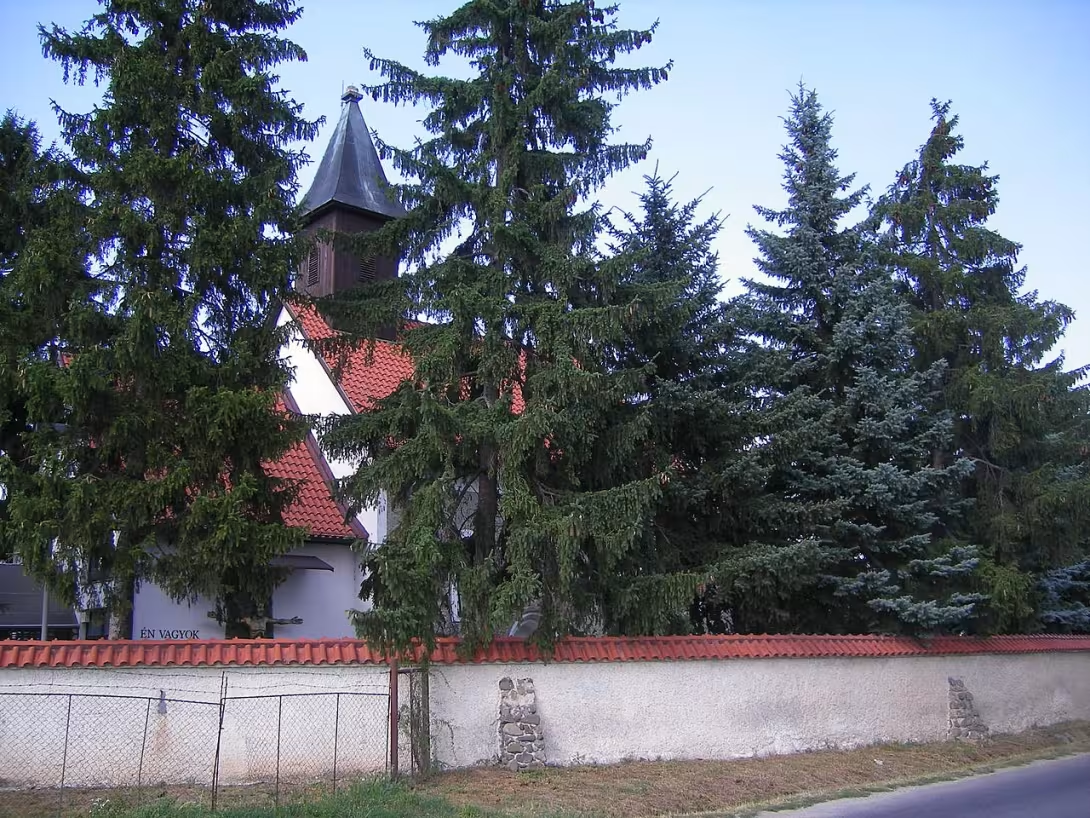
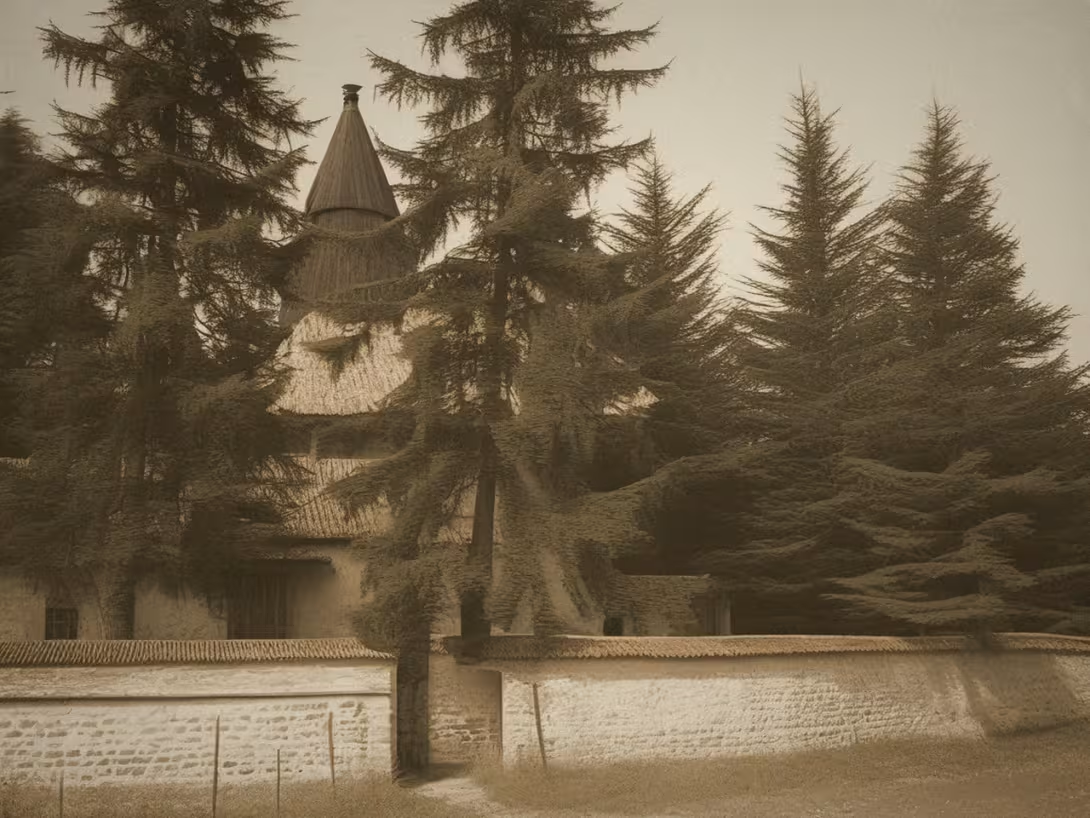
The historical view on the left is a visualisation generated by artificial intelligence and serves as inspiration.
Historical Milestones
- 1926
- Removal of the brick hallway while repairing the church.
- 1963
- The church together with the Renaissance fortification is declared a national cultural monument.
- 2005
- A copy of the Hungarian royal crown was inserted in the hole at the top of the tower.
Interesting facts
- On top of the tower there is a model of the Hungarian royal crown, which replaced the cross. - According to the records, a copy of the crown was to be placed at the top of the tower in 1464 on the orders of King Matthias Corvinus. - The carved wooden doors from 1896 led to the area, created by the local carver Imre Rados. - The building combines Gothic architecture with later Renaissance fortification from the end of the 16th or the 17th century. - In the interior there is a Rococo main altar with an image of St. Nicholas bishop from the mid-18th century.
Guide
The guide was voiced by a synthetic voice created by artificial intelligence.
Show guide text
The text was prepared by artificial intelligence and has not been editorially reviewed. It may contain inaccuracies.
Welcome to the village Balog nad Ipľom. Right now you are facing one of the most significant monuments of this region, which is the fortified church of St. Nicholas. When you look at it, you will immediately notice that it is not an ordinary temple. It is a building that combines a spiritual function with a defensive character, making it a fascinating example of architecture that should protect not only the souls, but also the lives of local residents in times of uncertainty and danger. Feel the atmosphere of this place where history meets the peace of the current environment of the Banská Bystrica region.
Let's now look at the historical context and the origin of the work. Although the exact names of architects are not known, the very form of the building convinces about the need to create a safe haven. The church, along with its Renaissance fortification, represents an epoch when religious buildings in our parts were often supplemented with walls and towers to serve as refugias in the event of an attack. This strategic approach to construction was common at the time, but in this particular case it was preserved until today in such a way that in 1963 the church was declared a national cultural monument with its fortification. It's a testimony to how the community in Balog over the Ipel tried to survive and protect its most valuable values.
Pay attention to the details you see right in front of you. If you look at the entrance to the area, your eyes will attract carved wooden doors. It is not an ordinary door; it is a work of art from 1896 created by the local carver Imre Rados. Note the precision of details and craft skills that have been preserved in them for over a hundred years. This door is the first contact of the visitor with a monument and at the same time reminds of local creativity and talent, which remained in the village of Balog nad Ipľom in recent events.
When you move on and start exploring the building itself, note the overall layout of the area. It is important to mention that the appearance of the church changed over time. For example, in 1926, during repairs, the brick hall was removed, which slightly changed the original appearance of the building, but also helped maintain its stability and functionality for future generations.
Now I'm asking you to raise your eyes and look all the way up to the top of the tower. Here is one of the most interesting elements of the whole complex. Instead of a traditional cross there you will see a model of the Hungarian Royal Crown. This detail can be skipped at first sight, but it hides an interesting story. A copy of the crown was not inserted until 2005, but its presence here has deep historical roots. According to the records, a copy of the crown was to be placed on top of the tower as early as 1464. This was to take place on the direct order of King Matthias Corvinus, which adds a fascinating dimension to the building and connects it with one of the most prominent rulers in the history of Hungary. The idea that such a long time ago, the symbolism of kingly power was to be found gives this place a certain mystery and nobles.
Stop for a moment and think about what stories these walls can testify to. From the Renaissance fortification, which was supposed to deny enemies, to the artistic touch of the carver Imre Rados to the symbolism of the Hungarian crown at the top of the tower. It is a place where the fates of ordinary people from the village of Balog over the Iple with great politics of kings and religious devotion intersect.
Notice how harmoniously this fortified church fits into the landscape around it. It is a monument that teaches us endurance and the ability to protect our inheritance. Whether you are interested in the architecture of the Renaissance, craft from the late 19th century or royal legends, this object offers something unique to everyone.
In conclusion, I will invite you to go through the entire area in peace, to go around the building around and to look again at the details of carvings on the door and the crown high above you. Let yourself be drawn into the silence of this historical space and feel the connection to the past that is still alive here. Thank you for your attention and we wish you a pleasant further exploration of beautiful places in Banská Bystrica region. We say goodbye to you at this fascinating fortified church of St. Nicholas.
Tips for visitors
We recommend a visit in spring or autumn, when the nature around the village Balog nad Ipľom contrasts with the stone fortification of the church. A good time for photography is early in the morning or before sundown, when light highlights the texture of the walls.
When visiting we recommend shoes with fixed soles. When taking photos, focus on the details of the fortification and views from high, which capture the disposition of this sacral object.
For families with children, visiting St. Nicholas' church is an opportunity for a short lesson on the defensive functions of churches. Children can identify the elements of the fortification that used to protect the inhabitants in the past.
We recommend to focus on researching the architecture of the church and surrounding landscape in Banská Bystrica region.
Frequently asked questions
Can the monument be visited?
Religious buildings are usually open mainly during services; at other times a visit is normally arranged with the parish or the operator. We have not verified specific times.
Where is the monument?
Location: Hlavná, Balog nad Ipľom, Banskobystrický kraj. The map on this page shows the exact spot.
Why is the monument protected?
It is listed in the Central List of the Monuments Fund of the Slovak Republic as a national cultural monument (ÚZPF no. 32A-422).
For children
Imagine a secret portal just opened up in the past. You're not in your room anymore, but long ago, when the world was completely different. You're not in a modern city with cars and phones. You're standing in the village of Balog above the Iple and there's silence around you that only interrupts the sound of the wind. Suddenly you see something incredible. What stands before you is not just a church. It's a real stone fortress!
Nearby
🏰 Historic sites (152)
- Obetiam 2. svetovej vojny 0.1 km
- sv. Róchus 0.3 km
- sv. Alžbeta Uhorská 0.3 km
- sv. Ján Nepomucký 2.5 km
- Trojičný stĺp 4.2 km
- Kaštieľ Sečianky 4.3 km web
- sv. Ján Nepomucký 4.4 km
- sv. Štefan I. Uhorský 4.4 km
- János Esterházy 4.5 km
- Tájház 4.9 km Szabadság útja 59
- Szent Flórián szobor 5.0 km
- Luspay Kálmán 5.2 km
- Szentháromság 5.2 km
- Pieta 5.2 km
- Millenniumi emlékmű 5.3 km
- Obetiam 1. a 2. svetovej vojny 5.3 km
- Mikszáth Kálmán dombormű 5.5 km
- sv. Vendelín 5.7 km
- Obecné múzeum 5.7 km
- Szondi kiállítóterem 6.2 km Fő utca 22 +36 35 300 392 web
🍽️ Restaurants and dining (79)
- Hostinec Ria 0.4 km
- Söröző 2.2 km
- Dajana Pohostinstvo 2.4 km
- Putyi Pub 3.6 km
- Hullám Söröző 5.2 km Ifjúság útja 1
- Pod lipou 5.3 km
- Andi Presszó 5.6 km Fő út 2
- Andi Presszó 5.6 km
- Italbolt 6.4 km
- Várkapitány Étterem 6.5 km
- Kőhíd Italbolt 6.6 km
- Becsali kocsma 6.7 km
- Fehér gyöngy presszó 8.2 km
- Miller's Inn 8.5 km
- Lipi kertsöröző 8.7 km
- Butik büfé 8.7 km
- Hostinec Ruža 8.7 km
- Fortuna falatozó 8.7 km
- U Mórica 9.2 km
- Penzión U Huberta 9.6 km
🏨 Accommodation (31)
- Híd 5.2 km
- Ipoly Vendégház 6.3 km Vasút út 11
- Kövirózsa Vendégház 6.4 km Kossuth utca 9
- Nepomuki Szent János Vendégház 6.4 km
- Vendégház 6.7 km
- Szent Kristóf Motel és Kemping 8.0 km Tó utca +36 35 374 267
- Drégelyvár Nomád Tábor 8.1 km Külterület +36 35 367 409;+36 30 914 9895 web
- Horpácsi Európa Pihenő Központ 8.5 km
- Kolping erdei ház 9.8 km web
- Szent Borbála vendégház 10.3 km Rákóczi út 152 web
- Tóvidéki Kisház Nyírjes 11.4 km Fenyves utca 3
- Nyírjesi Házikó 11.5 km Tópart utca 11 web
- Tó kincse vendégház 11.6 km Tópart utca 14 web
- Börzsöny Wellness Vendégház 11.6 km Petőfi Sándor utca 107
- Sztár Motel és Étterem 11.6 km Kóvári út 12 web
- Nyírjesi Gátőrház 11.6 km web
- Napraforgó Turistaház 11.7 km +36 30 655 4215 web
- Nyírjes Vendégház 11.8 km Fenyves utca 46 web
- Börzsöny turistaház 12.0 km +36 20 412 5820
- Fenyvesi Vendégház 12.0 km Széchenyi utca 2 web
🚲 Rentals and sport (12)
- Dejtár SE öltöző 5.5 km
- Gróf Ferenc Stadion 5.6 km
- Nyírjes Trails 10.9 km
- Balassagyarmati strand 11.4 km Kóvári út 11
- Gyermekmedence 11.4 km Kóvári út 11
- Golyán Kerékpár Szaküzlet és Szerviz 12.2 km Civitas Fortissima tér 1 +36 70 336 0768;+36 35 300 941 web
- Révész László Tanuszoda 12.2 km Ipolypart utca 10 +36 35 368 925 web
- Döme sportbolt 12.6 km
- Adidas 12.7 km
- Honvédelmi Sportközpont 12.7 km
- Szent-Györgyi Albert Gimnázium Tornaterem 12.9 km
- BSSE sportcsarnok 13.1 km Fáy András utca
🥾 Hiking and nature (135)
- Ipolyvece, Lengőhíd 1.9 km
- Ipolyvece, NP álattartó telep 2.8 km
- Starý vrch 3.3 km
- Starý vrch 5.3 km
- Pustý kostol 6.0 km
- Leklinec 6.1 km
- Rozhľadňa Stráž 6.3 km
- Stráž 6.4 km
- Kozí vrch 6.4 km
- Háromlyukú kőhíd 6.5 km
- Rozhľadňa Vrabčia hora 7.1 km
- Vrabčia hora 7.2 km
- Povojná 7.3 km
- Kohút 7.3 km
- Porga 7.3 km
- Rataj 7.4 km
- Ryžovisko 7.6 km
- Klokoč 7.9 km
- Bukovina 8.0 km
- Medvedia studňa 8.0 km
Thematic route
As there are no other locations in the area of the area, I propose a thematic route focused on the main monument.
Route within the area of the fortified church of St. Nicholas
1. Fortified church of St. Nicholas - Connecting sacral architecture and defence elements. 2. Defence wall and courtyard - Fortification built to protect the inhabitants of the village from attacks. 3. Church Tower - The point of the area, which served as a ringtone and strategic view of the surrounding area. 4. Interior and exposition - Spiritual artistic equipment and information about the history of the building in Balog nad Ipľom.
Seasonal recommendations
In spring, the surroundings of the fortified church of St. Nicholas in the village Balog nad Ipľom will awaken into life. Green grass and flowering trees contrast the building stone. The place is recommended to visit in the morning when light is suitable for photographing the details of the fortification. Due to variable weather we recommend layered clothing and strong shoes.
Summer season brings intense sunlight, which highlights the texture of the walls and the architecture of the church. The neighborhood is full of flowers. Visit the place early in the morning or late in the evening to avoid the strongest heat. Don't forget enough water and a hat.
In the autumn, nature around the church turns into golden and red shades. The low sun creates long shadows that enhance the depth of the fortification. We recommend choosing days with clear skies and wear a warmer sweater or jacket.
Winter over the area of Balog above Iplem will be quiet. Snow cover changes the perception of construction. When visiting this period it is necessary to dress very warmly, including waterproof shoes and gloves.
Visualisations and artistic views


The visualisations are generated by artificial intelligence and serve as inspiration.
Photographs from the area
Real photos taken near the monument


Source and licence are given for each image.
Visitor Tips
No tips yet. Be the first!
Log in and add your tip.
Location on Map
More monuments – Balog nad Ipľom
Show all in the town

Visitor photos
No photos yet. Be the first to add a photo from your visit!
Log in and add your photo or leave a rating.
You get more points for a visit verified in the app — we can tell from the GPS that you are there.
Reviews and comments