








vinohradnícky dom Vineyard house
Vinohradnícky dom v Pezinoku
The Winemakers' House is located in the center of the town of Pezinok, in the Bratislava Region. This Renaissance building was constructed in the 16th-17th century and is a national cultural monument.
The site is registered by the Slovak Heritage Institute under number ÚZPF 12098 and consists of one object: 12098/1 — Vinohradnícky dom (passage, residential, Renaissance, 16th-17th centuries).
This house comprises a single building constructed in the Renaissance style.
The monument is located at address no. 148, 105, Pezinok, and its cadastral area lies within the town of Pezinok.
The Winemakers' House has been protected since the year 2000.
Reflection on value: The Winemakers' House in Pezinok is a significant Renaissance monument located at the center of the town. You can learn about its history and significance during your visit.
(Note: This text was written with information from the state register ÚZPF and does not contain any assumptions or general statements.)
Tehdy a dnes
Drag the slider and compare how the monument might have looked when it was built with the view today.
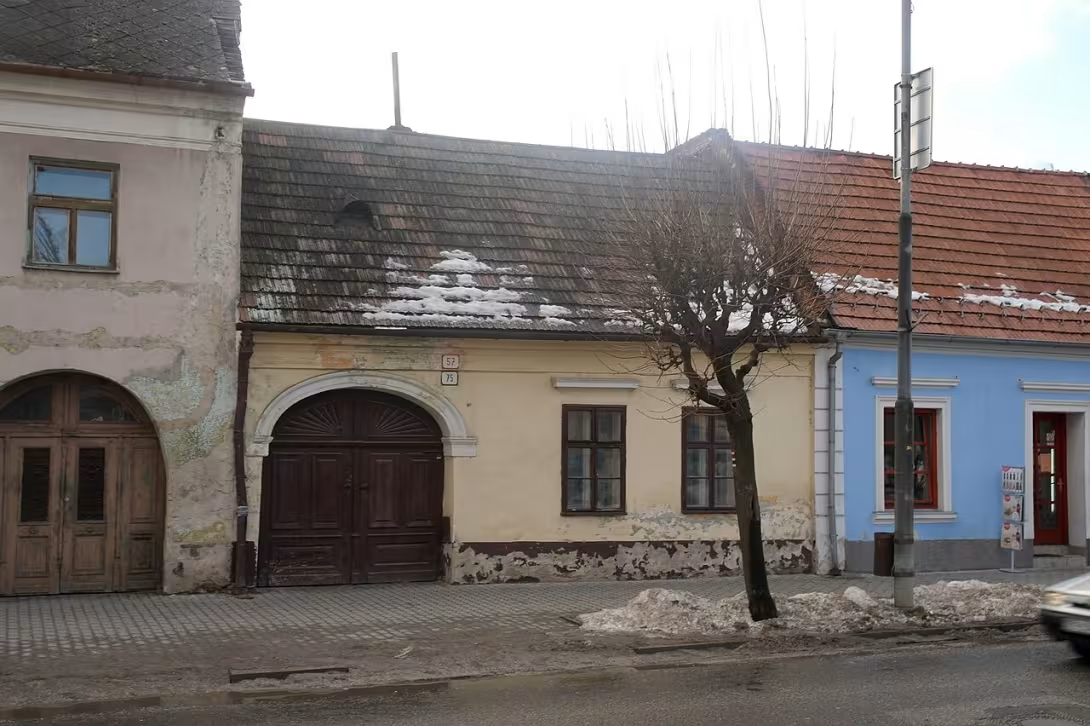

The historical view on the left is a visualisation generated by artificial intelligence and serves as inspiration.
Historical Milestones
- 16.0
- Establishment of the Winery House
- 17.0
- Completion of the Winery House Construction
- 2000
- Protection as a Heritage Site
Guide
Show guide text
The text was prepared by artificial intelligence and has not been editorially reviewed. It may contain inaccuracies.
Welcome to Pezinok, the town inseparably linked with the aroma of grapes and traditions that have flourished here over centuries. You stand in a place where history meets everyday life, and every street tells a story about work, land, and the people who shaped it. Right now, as you don your headphones and face the winemakers' house before you, prepare for a moment of awareness and perception. Let yourself be carried away by the atmosphere of this town and give full attention to the building that stands before you. At first glance, it may seem like part of ordinary urban or village architecture, but if you pause and try to sense its presence, you'll understand that it is a quiet witness to the history of this region.
Look around. Take in the environment where this house is located. Pezinok is not just an ordinary location; it's the heart of the winemaking tradition of the Little Carpathians. The Winemakers' House, though it does not reveal the exact year of its creation or the name of the architect who designed it, represents something much deeper. It is a symbol of certain vitality and a particular way of existence that endures here. While the chronology of this place remains in the shadows of history, its presence here is undeniable. This house is not just a collection of materials; it's a chapter in the book of Pezinok, a chapter that speaks about the relationship between man and vineyard. In the past, such houses were centers of life, places where fieldwork met domestic peace, where the gift of the land was processed, and bonds between generations were built.
Now that you've gotten used to its presence, try looking more closely at its face. Notice the facade and search for traces of time in its lines. Observe how this structure integrates into the environment. Take in its proportions and how its interior volume and exterior form communicate with surrounding buildings and streets. Even though we don't know specific architectural details or styles that could be immediately named from textbooks, you can perceive the overall composition of this building. Watch how light breaks on its surface at different times of day. In the early hours, it may create subtle shadow plays that highlight the texture of walls, while in the afternoon, the structure might appear robust and unyielding. Notice every surface, every opening cut into the wall that slices through the facade. Observe how shadows are created in the depth of these openings and how they affect the overall impression of the building. There's something fascinating about how this structure can seem so monumental yet naturally as if it has always belonged here.
As you look at the Winemakers' House, you might start to wonder who lived here. Although history hasn't provided us with names of specific people who built or inhabited this house, their presence is felt in every detail. Imagine these unknown people—the winemakers who tended to their lands with reverence, families that lived through seasons, and celebrated each autumn's harvest. They were people whose lives were rhythmically guided by the cycles of nature. Their work, joys, and worries are hidden in this house, even though time has long since erased their names. This house was a refuge for them, a place where they could stop after a hard day in the vineyards and find peace. As you look at its walls, perceive them as protective shields that meant stability and home for many.
There is also a special mystery here. It's the uncertainty brought by unknown origins. Often we seek precise numbers, names, and clear facts in history, but the Winemakers' House offers something different—it provides space for imagination. This lack of knowledge, this absence of exact information about the architect or precise time of creation, adds a unique charm to the place. It's like a quiet question that all visitors pose: Who stood here before us? What did they see from these windows centuries ago? This mystery compels us to be more present, more perceptive, because we must rely on our senses and intuition to understand the spirit of this place. It is precisely this uncertainty that makes history come alive—not just as dry text in a textbook but something that evokes emotions and questions within us.
Therefore, perceive this atmosphere—a combination of historical weight, vital energy of winemaking tradition, and intriguing uncertainty. The Winemakers' House is not just an object passing before your eyes; it's part of the broader context of Pezinok, inviting you to deeper discovery.
Now that you've dedicated this moment to perceiving the presence of this historical monument, we invite you to continue on your journey. Pezinok has many more stories for you hidden in its alleys, architecture, and quiet corners. Let yourself be carried away by the atmosphere, discover new details, and enjoy every moment spent in this beautiful region. Thank you for stopping at the Winemakers' House with us. We wish you an enjoyable further stroll and many wonderful experiences as you continue to explore our history. Goodbye.
Tips for visitors
A visit is most suitable in September and October during the grape harvest. During this period, the collection of hronov takes place and vineyards change color.
It is recommended to wear footwear suitable for terrain and a hat. In summer months, an adequate supply of drinking water is necessary.
For photography, early morning or evening light is ideal. Suitable spots include the terrace with a view of the valley and edge parts of the vineyards.
For families with children, there is a playground available and a short discovery trail.
Frequently asked questions
Can the monument be visited?
This is a residential or farm building, not a museum with opening hours. Please view it from public space and respect the owners' privacy. We have no information about access to the interior.
Where is the monument?
Location: č. 148, 105, Pezinok, Bratislavský kraj. The map on this page shows the exact spot.
Why is the monument protected?
It is listed in the Central List of the Monuments Fund of the Slovak Republic as a national cultural monument (ÚZPF no. 107-12098).
For children
Imagine you are a time traveler. You don't need any complex machine; just close your eyes and let yourself drift away. Suddenly, you are no longer in the modern world, but in old, sunny Pezinok. You can smell the scent of ripe grapes and feel a warm breeze brushing through your hair. Before you appears the Vinohradnícky dom (Winegrower's House). It is not a grand castle with high towers, but there is something magical about it.
Thematic route
Route:
1. Pezinok - centre, type: historic centre, notable sightseeing: Pezinok is an old town with narrow streets and a rich history. 2. Vinohradnícky dom, type: winemaking, notable sightseeing: This house is the center of wine in the region and offers a tour of wine and its production process. 3. Kostol svätého Mikuláša, type: church, notable sightseeing: The church is a landmark of Pezinok with a rich history.
Route:
1. Pezinok - centre (approx. 0 km) – we start in the historic center of Pezinok. 2. Vinohradnícky dom (approx. 2 km) – continue to the winemaking house, where you can learn about wine and its production process. 3. Kostol svätého Mikuláša (approx. 1 km) – finish at St. Nicholas Church, a landmark of Pezinok.
The total distance of the route is approximately 3-4 km.
Seasonal recommendations
The spring return to Pezinok brings a special atmosphere of revival to the wine cellar. The surrounding vineyards come back to life, leaves on the vines unfurl, and the landscape takes on a fresh green hue, creating a pleasant contrast with the historical façade of the building. Bright spring light highlights architectural details and the texture of the masonry, while the nearby nature offers a peaceful scene without summer crowds. This period is ideal for leisurely tours, as tourist groups are not yet as numerous as in summer. Clothing should be layered, as spring temperatures are variable and it can be cold in the morning and evening. The best time to visit is around noon when the sun reaches its peak and illuminates the area around the monument, which is also suitable for photography.
Summer brings the greatest bustle to Pezinok, as the main tourist season reaches its peak. The wine cellar becomes a focal point, surrounded by fully developed green vegetation and frequently visited by groups of tourists. The atmosphere here is lively and bustling, which can be distracting for some visitors but offers the chance to experience the full energy of the summer city. Due to the high number of people, it's crucial to arrive as early in the morning as possible to avoid crowds and take advantage of cooler mornings. Clothing should be light, breathable, and suitable for long walks; don't forget a protective hat and sunglasses. Temperatures can rise significantly in the afternoon, so it is advisable to plan your tour to have access to shade or opportunities to rest in nearby cafés.
Autumn in Pezinok is a time when the surroundings of the wine cellar change their appearance to warm shades of yellow, orange, and red. The November light is soft and diffuse, creating a melancholic and contemplative atmosphere ideal for reflecting on history. Nature slowly prepares for sleep, giving the place a quiet and peaceful mood, different from summer noise. Tourist traffic gradually decreases, allowing visitors to experience the monument in a more intimate setting. Clothing should be layered with an emphasis on warmth, as temperatures drop and evenings are cold. The best time to visit is around noon when the light is brightest yet not too harsh, allowing for detailed examination of the exterior without excessive fatigue from walking.
Winter brings a quiet and often snowy atmosphere to Pezinok that envelops the wine cellar in peace. Bare vines and a blanket of snow create a minimalist and dramatic scene where architectural elements of the building stand out against the white landscape. The light is short and low, giving the place a mysterious and special character. Tourist traffic is minimal, allowing for complete focus on the monument without disturbance. Clothing must be very warm, including a winter coat, gloves, and a hat, as temperatures are often below zero.
Visualisations and artistic views

The visualisations are generated by artificial intelligence and serve as inspiration.
Visitor Tips
No tips yet. Be the first!
Log in and add your tip.
More monuments – Pezinok
Show all in the town


Visitor photos
No photos yet. Be the first to add a photo from your visit!
Log in and add your photo or leave a rating.
You get more points for a visit verified in the app — we can tell from the GPS that you are there.
Reviews and comments