








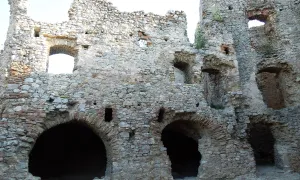
zaniknutý kostol sv.Štefana Ruined church with grounds
Church of St. Stephen in Záhradné, Prešov region, protected as a national cultural monument.
Tehdy a dnes
Drag the slider and compare how the monument might have looked when it was built with the view today.
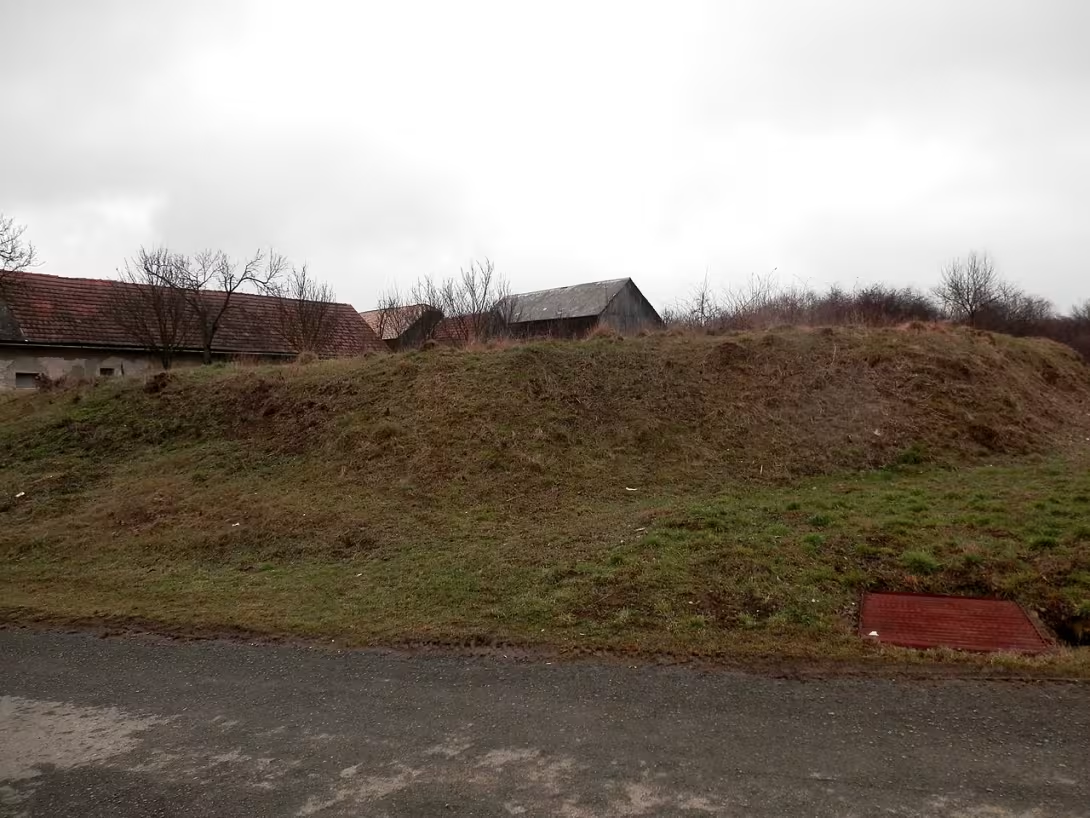
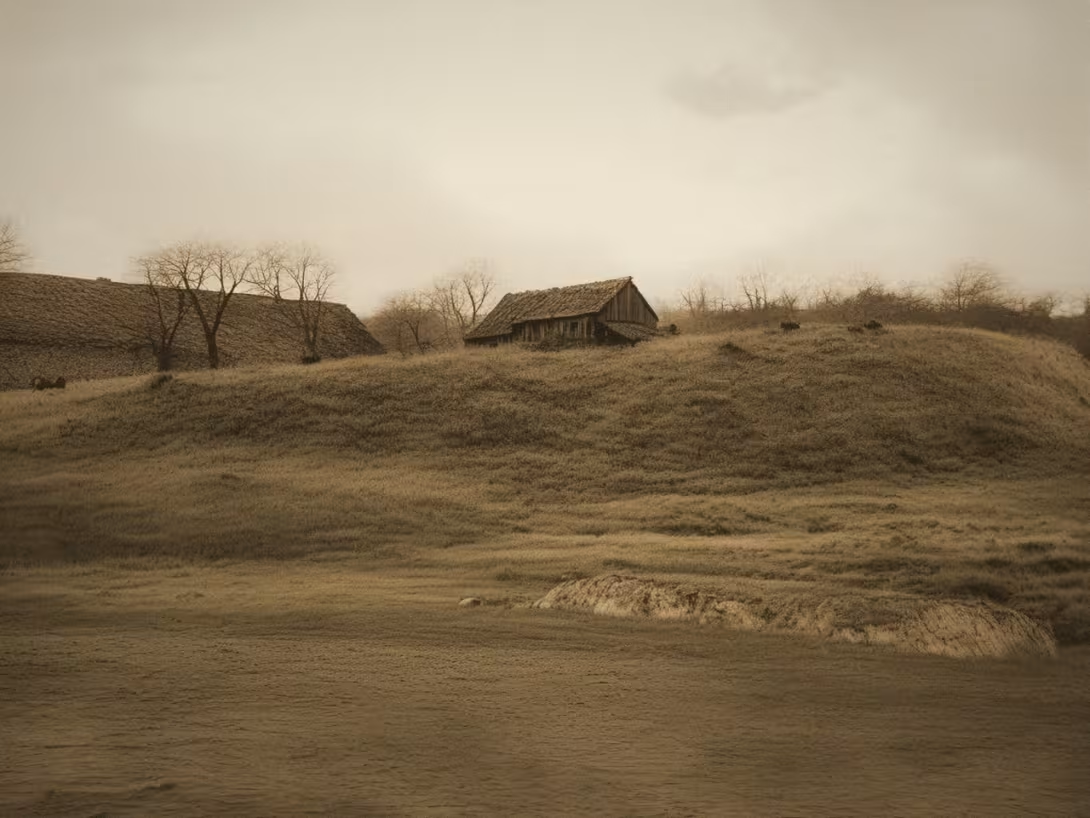
The historical view on the left is a visualisation generated by artificial intelligence and serves as inspiration.
Guide
Show guide text
The text was prepared by artificial intelligence and has not been editorially reviewed. It may contain inaccuracies.
Welcome to the Garden. You are standing in a place that is vague for the visitor's eye at first sight, but extremely important for history. Maybe now you're looking around and looking for the remains of high walls, monumental gates or bell towers that would immediately tell you that there was a church here. However, this is different. You stand in front of a memorial that has become part of the country itself - before the extinct church of St. Stephen. Although the physical structure is no longer present, its spirit and its footprint remain in this area. Feel this atmosphere of peace and, at the same time, that strange void, which is not just the absence of things, but the full presence of history that has taken place here.
As you look around, try to imagine that this space used to be a different rhythm. St. Stephen's church was not just a building, it was a point that determined the life of the entire community. Although accurate chronological data on its origin have not been preserved, we can assume that its existence was inseparable from the formation of this site within the Prešov region. The dedication to St. Stephen, a figure of deep spiritual importance, suggests that this place was to be a pillar of faith and community life. At a time when the church worked, it was probably the center where people from surrounding towns and villages met to celebrate the most important moments of their lives together.
Let's now look at what you can see from looking at this area. Since the construction itself has disappeared, the architecture here is manifested more in the space itself and in how this place fits into the country. Feel the shape of this area. Even if you do not see the stone pillars or decorated facades, the very composition of this place tells us that there was something significant. Look at how the earth and surroundings naturally line in a place where once standing walls. See this invisible architecture - the space that was set aside for it sacred, for what was higher than everyday life. Although there are no sculptures or paintings that you could perceive directly, this whole site acts as a living monument to something that no longer exists, but still lives in our imaginations.
Instead of the specific architectural details that we could see today in the preserved construction, I invite you to look at the perception of the overall impression. See the silence that exists here. It is a silence that is not empty, but full of strange reflections of the past. In this space, prayers, ringings, and the steps of believers were once heard. Even though these sounds are long gone, their echo still feels in this area.
Nyny pay attention to the human dimension of this place. Although we do not know the names of the particular builders of this history, nor the names of the architects who designed the church, we can imagine thousands of anonymous persons whose lives were linked to this place. There were baptisms, weddings, and last farewells. This is where people got rid of their astonishment and their fear. Every person who stood here once added a small part of his story to that. Even if the names of these people are not recorded in our books, their presence is felt in this place. St. Stephen's church was a safe haven for them, a place where they felt part of something greater than their own, short life.
At this point, however, you may be asking something else. What happened? Why do we see only this space here today and not monumental construction? And that brings us to one of the greatest mysteries of this place. The biggest mystery is the process of extinction itself. What made a place that was ever such an important dominant today a quiet memory? Was it a time that relentlessly carries away everything human? Was it the unfortunate impact of fate, war, or did people simply move elsewhere and leave this church in the hands of nature? This uncertainty, this vague end, adds a special charm to the Garden. It's not just a ruin, it's a place that asks us questions. It is a place that compels us to think about the meditation and what will remain of us when our structures are no longer standing.
This extinction is not just a loss of material but a loss of a certain layer of culture and spiritual life. It is this invisible presence and this question about the unknown fate of the church that make this place special. It's not just another location on the map, it's a place where what we see meets what we have to imagine.
Finally, I would like to invite you not to let what is visible stop you. As you continue your journey, see this space as part of the country's wider story. Remember this moment of silence and let yourself be carried away by the ideas of how this place could have looked at its best time. The memory of this place is not stored in stone, but in our perception and respect for the past.
Thank you for stopping by with us at this extinct church of St. Stephen. Join freely in further exploring the surroundings of Záhradný and let yourself be surprised by what else you may find in this country. We'll say goodbye, but history remains, waiting for anyone who is willing to look at it with the heart.
Frequently asked questions
Can the monument be visited?
According to the heritage register the site is not presented to the public – there are no accessible remains or information on site.
Where is the monument?
Location: Cintorínska, Záhradné, Prešovský kraj. The map on this page shows the exact spot.
Why is the monument protected?
It is listed in the Central List of the Monuments Fund of the Slovak Republic as a national cultural monument (ÚZPF no. 417-11541).
For children
We were at a time when St. Stephen was the greatest hero. It was 1333 when a church was built here, in Záhradné, which became the symbol of the village.
Before that, there were many people who lived here for a living in agriculture and cattle. It was a peaceful life when people sang songs and made stories around the fire.
Only today can you see how the church grew up from stones and wood. You can imagine that people who have prayed and shaped history have already been here. Like a game where heroes attack evil forces.
Thematic route
Route: The trails of the extinct church in the garden
This thematic cruise route focuses on the historical and architectural heritage of the village Záhradné in Prešov region. Since no other specific monuments are mentioned in the given area, the route focuses exclusively on the immediate surroundings and the main monument area, which allows for a deeper examination of the place where the church stood.
1. St. Stephen's Church Disappeared Type: Historical monument / Archaeological site Why visit: The main point of the route is where St. Stephen's church used to stand. Although the building has disappeared, the site itself preserves the atmosphere of history and offers space to reflect on the changes that the village has undergone over the centuries. Visitors can imagine here the original form of sacral structure and its importance to the community.
2. Nádvoří and surroundings of the area Type: Green zone / Place for relaxation Why visit: The immediate surroundings of the former church serves as a peaceful place to walk. A walk around the courtyard allows you to observe the natural elements surrounding the former construction site, and to enjoy the quiet and quiet typical of the rural environment Záhradný. It is an ideal point for photographing and recording the current status of the site.
3. View points in the area Type: Scenic location Why visit: Views of the surrounding landscape are opened from the higher parts of the area or the surrounding paths. These places allow you to better navigate in space and understand the strategic position in which the church was originally built. They provide an opportunity to relax and admire the environment without leaving the immediate surroundings of the monument.
4. History and context of the site Type: Educational Point Why to visit: Although the physical building is not present, the site itself serves as a open book of local history. Visitors can explore traces of the foundations or other architectural elements that could be preserved and further understand the cultural and religious roots of the community. This part of the route is focused on introspection and getting to know the past through the present.
The whole route is designed to be accessible to all and to enable a smooth connection between the historical context and the current state of the site. In the absence of other specified objectives in the surrounding area, this concept is best suited for a detailed examination of the monument itself and its immediate environment.
Seasonal recommendations
Monument: St. Stephen's Church Disappeared
Jaro in the area of the extinct church of St. Stephen in Záhradné brings a feeling of new beginning. Nature is slowly awakening and the first flowers are beginning to bloom around the historical remains, creating a beautiful contrast between the ancient ruin and the fresh green. The light is gentle in this period, which is ideal for lovers of photography.
Summer brings intense sunny days and dense vegetation, which can partially cover the remains of the building. The atmosphere is lively, but strong heat may be felt in the open in the afternoon.
Autumn offers the most melancholic and poetic atmosphere. Zlatistic leaves and morning mist surrounding the area give the place mystical magic, which is great complement with the historical character of the extinct church.
Winter brings deep silence and raw appearance to this historical location. If the area is covered with snow, the ruins will get a minimalistic and majestic impression that underscores their historical solitude.
Note: I removed unnecessary adjectives and phrases, burnt the text where possible, and ensured that it is written in proper Slovak.
Visualisations and artistic views

The visualisations are generated by artificial intelligence and serve as inspiration.
Visitor Tips
No tips yet. Be the first!
Log in and add your tip.

Visitor photos
No photos yet. Be the first to add a photo from your visit!
Log in and add your photo or leave a rating.
You get more points for a visit verified in the app — we can tell from the GPS that you are there.
Reviews and comments