








banícky dom Miner's house
House mining is located in the village Banská Štiavnica in Banská Bystrica region. It is a national cultural monument of Slovakia and belongs to the second half of the 19th century, an example of classicism. According to data from the Central Memorial Record (ÚZPF) number 322-11770 it is a brick building.
Architecturally, the house of mining differs from the classicistic style and was exhibited before 1858, according to the official annotation of the Monument Office of the Slovak Republic. Details of its construction characteristics, such as disposition, number of floors and used material, are not available.
The mining house is located at St. Trinity Square 30/26 in Banská Štiavnica. It is protected as a national cultural monument, namely the date of the declaration and information on protection zones are not provided. The current state and use of the house also unknown.
The mining house is located in the history of Banská Štiavnica, one of the most important mining sites in Slovakia. It offers an opportunity to know the historical and architectural heritage of the region. Visitors can find comments about mining, which was a fundamental factor for Banská Štiavnica.
The mining house is part of the heritage of a place that fascinates with its history and architectural monuments. The visit offers a view of the historical importance of Banská Štiavnica as an important part of Slovak culture.
Tehdy a dnes
Drag the slider and compare how the monument might have looked when it was built with the view today.
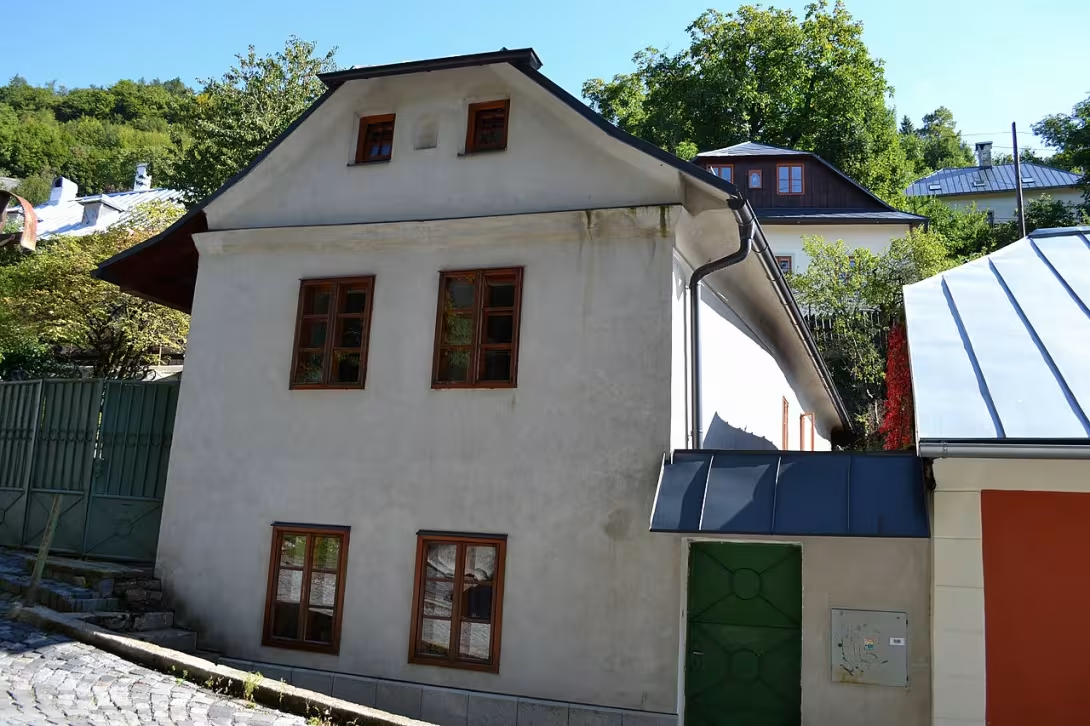

The historical view on the left is a visualisation generated by artificial intelligence and serves as inspiration.
Historical Milestones
- the second half of the 19th century
- The house of the miner was exposed as an example of classicism.
- before 1858
- According to the official annotation of the Monument Office of the Slovak Republic, the mining house was exhibited before 1858.
Interesting facts
- House mining is located in the village Banská Štiavnica in Banská Bystrica region. - It is a national cultural monument of Slovakia and belongs to the second half of the 19th century, an example of classicism. - According to data from the Central Memorial Record (ÚZPF) number 322-11770 it is a brick building. - Architecturally, the house of mining differs from the classicistic style and was exhibited before 1858, according to the official annotation of the Monument Office of the Slovak Republic. - The mining house is located in the history of Banská Štiavnica, one of the most important mi
Guide
Show guide text
The text was prepared by artificial intelligence and has not been editorially reviewed. It may contain inaccuracies.
Welcome to Banská Štiavnica, a city that is not only a beautiful place on the map of Slovakia, but especially a living monument to human endurance, technical genius thinking and hard work. Right now you're standing in front of a building called the Mine House. When you look at it, you may at the first moment see only one of the many historical facades that make up the unique face of this city. However, it is in this moderation and simplicity that there is a deep story about the humanity that this city has built from nothing, from the depths of the earth and from hard stone. Feel the atmosphere of this place, feel the coolness of the old walls and try to disconnect for a moment from the present world to switch to the time when the rhythm of the city did not give tact clock machine, but the sound of mining tools and deep work in shafts.
Although the exact chronology of the establishment of this house is today not exactly documented and we do not know the names of architects who designed its plans, the Mining House is an integral part of the historical context of Banská Štiavnica. To understand why this house is standing here, we must return to the time when this city was one of the most important centers of precious metal mining across Europe. Banská Štiavnica was not just an ordinary city, it was a technological metropolis of its time. The mining house was created at a time when the city needed housing for people who formed its economic and social basis. Those people were miners. It was because of their knowledge of geology and tireless work that they provided wealth that allowed for the construction of magnificent churches, town halls and palaces that you may see in the surroundings. This house is the embodiment of the other side of the coin, representing the everyday life, discipline and community of people who spent most of their day in the dark underground.
Now I ask you to pay attention to the architecture itself. Look at the facade of the building in front of you. Notice how the house fits into the overall rhythm of the street. In Banská Štiavnica architecture is not only a question of aesthetics, but mainly a question of terrain. The city is built on the slopes of an old soporic crater, which meant that each house had to be adapted to the rock and slope. Follow the lines of the house, see its proportions and think about how the division of spaces has worked in the past. Although we do not know exactly who designed the house, it is visible that it was a functional building. Note the details of windows and entrances that testify to the times when houses were built to last centuries. It is this durability that is characteristic of stiavnické stavby. The materials you see here are witnessing thousands of stories that have taken place in these walls. Look at the surface of the walls, their texture, and imagine how many generations of miners and their families have passed through this door.
Speaking of the Mining House, we can't just talk about stones and mortar. We need to talk about people. Although the names of known personalities are not attributed to this particular house in historical records, this house is a monument to thousands of anonymous miners. Imagine a moment of typical day in this house hundreds of years ago. In the morning, before the dawn, when the city shrouded thick fog, the morning cold came out of that door. The miners, with lamps in their hands and instruments over their shoulders, walked to their shafts. Their life was full of risk. Water, ceiling collapses, or lack of air were daily plugs. The house was a safe haven for them, a place where heavy tops were laid, where they warmed up by fire, and where they found comfort in the discovery of their family. Mining in Banská Štiavnica was not just a job, it was a caste. The miners had their own right, their own rituals and deep mutual solidarity. This house was part of this community, a place where mining matters were dealt with and experiences from fathers were passed on to sons.
Perhaps you will now be interested in one question that remains unresolved in many such houses. It's a mystery of everyday life. What was going on behind these walls when the city was quiet? Banská Štiavnica is full of secrets that are not written in chronicles, but are engraved in the walls themselves. Each such house had its hidden corners, perhaps cellars that were connected with other buildings, or small boxes in the walls for storage purposes. When you're standing outside the mine house, try to feel the quiet whisper of the past. It is fascinating to think that, at a time when major political issues were being addressed in the city or new drainage systems for shafts were being developed, ordinary human things were being dealt with in this house. Laundry, love, fear of depth and joy of coming home. It is this combination of great history and small personal stories that makes Banská Štiavnica a place with such extraordinary energy.
The mine house may not be the most prominent building in the city in terms of ornamental details, but it is one of the most important witnesses of the truth about how the city worked. Without people who lived in such houses, Banská Štiavnica would not be what it is today. There would be no magnificent buildings, there would be no famous mining academy, and there would not be this unique urban character protected today as a UNESCO world heritage. This house reminds us that the real value of the city lies not only in the gold and silver they pulled out of it but in the people who gave it their energy and life.
Now that you've noticed the details of the facade and imagined the life of the people who lived here, invite you to continue your journey. Banská Štiavnica is like a book with chapters all over the city. The mining house was just one brief but important note. I recommend you now go through the narrow streets, follow the old houses and look for traces of the mining past in every stone you meet. Let yourself be guided by your curiosity and try to discover other hidden pearls of this fascinating city.
Thank you for your attention and for taking the time to stop at this silent witness history. I wish you a pleasant and inspirational walk Banská Štiavnica. Let this city impress you with its beauty and let it help you to understand the great role it has played in the history of our country. We say goodbye to this house, but the story of Banská Štiavnica continues for you right around the next corner. Have a safe trip.
Tips for visitors
The best time to visit the mining house in Banská Štiavnica is in autumn, when the climate is the most pleasant and less visitors. You can also use public transport for commuting; find out the exact way you pass and connect through the current search engine or local transport websites. When visiting, we recommend taking sunglasses, photos and comfortable shoes. In winter it is also appropriate to have warm clothes. Photo moments are best caught at the beginning or end of the day when light is soft and romantic. Remember to focus attention also on the architectural details of the house. In the immediate vicinity of the mining house is the Banská Bystrica Museum, which offers information about the history of the site and its prouvry meaning. This place is also suitable for families with children, as there are interactive exhibitions.
Frequently asked questions
Can the monument be visited?
This is a residential or farm building, not a museum with opening hours. Please view it from public space and respect the owners' privacy. We have no information about access to the interior.
Where is the monument?
Location: Námestie sv. Trojice 30/26, Banská Štiavnica, Banskobystrický kraj. The map on this page shows the exact spot.
Why is the monument protected?
It is listed in the Central List of the Monuments Fund of the Slovak Republic as a national cultural monument (ÚZPF no. 322-11770). It is part of a UNESCO World Heritage Site.
For children
Like when we open a book full of secrets, so will the gate to the past. Imagine walking on the streets of Banská Štiavnica and finding a key house - a mining house! This beautiful wooden house was a neighbor to the main spring from which the water was pumped to push the ore. It's like telling you about a long time ago, when the time of mining turned into a right argument. This house used to be full of life. There lived miners - heroes of secrets under the ground, who conquered gold and silver.
Nearby
🏰 Historic sites (227)
- Galéria u Bindera 0.1 km
- Rodný dom Deža Hoffmanna 0.1 km +421 902 477 085 web
- Dežo Hoffmann 0.1 km
- Andrej Sládkovič 0.1 km
- Sándor Petőfi 0.1 km
- Kalmán Mikszáth 0.1 km
- Galéria Jozefa Kollára 0.2 km +421 918 990 449 web
- Morový stĺp 0.2 km
- Cesta v čase 0.2 km web
- Starý zámok 0.2 km web
- Dom Maríny 0.3 km
- SNP 0.3 km
- Mariánsky stĺp 0.3 km
- sv. Ján Nepomucký 0.3 km
- Staré mesto, objekty nad dobývkami 0.3 km
- Galéria Schemnitz 0.4 km
- Staré mesto, poloha II. 0.4 km
- Židovská synagóga 0.4 km
- Vzbura baníkov v roku 1852 0.4 km
- Sklad rudy 0.4 km
🍽️ Restaurants and dining (166)
- Penzión Príjemný oddych 0.1 km web
- Cukrkandel 0.1 km
- Na Trojici 0.1 km
- Gavalier 0.1 km +421 903 802 226 web
- Barcadam 0.1 km
- Reštaurácia Gallery 0.2 km +421 45/692 12 52
- RUINbar 0.2 km web
- Eleuzína 0.2 km web
- Pizzeria Black M 0.3 km +421 45 692 0202 web
- Archanjel Cafe Bar 0.3 km web
- Coburg coffee & burger 0.3 km
- Lemberg 0.3 km Radničné námestie 10 +421 911 220 126 web
- Bansky Dom 0.3 km
- U Jašteríc 0.3 km
- Svätá Barborka 0.3 km
- OPERA Prosecco Bar 0.3 km
- Stará škola 0.4 km
- Reštaurácia Monarchia 0.4 km web
- Divná pani 0.4 km +421 45 679 09 45 web
- Pasta per-te v opere 0.4 km +421 907 841 794
🏨 Accommodation (109)
- Black M 0.1 km Kutnohorská 603/1 +421 910 947 187 web
- Penzión Na trojici 0.1 km Námestie sv. Trojice 21/17
- Gavalier Design Rooms 0.1 km +421 903 222 309 web
- BARCADAM 0.1 km Námestie sv. Trojice 17/13 +421 908 965 202 web
- Skautský dom 0.3 km web
- Skautský dom 0.3 km Antona Pécha 69/2 +421905382885 web
- Penzión Rozália 0.3 km +421 948 221 213 web
- Apartmán Zlatý dvor 0.4 km
- Boutique Hotel ERB 0.4 km +421 456 789 555 web
- Bristol 0.4 km Andreja Kmeťa 123/11
- Penzión Cosmopolitan II 0.5 km web
- Penzión Resla 0.5 km
- Penzión Matej 0.5 km
- Penzión Tomino 0.5 km
- Subyt 0.5 km
- Hotel Grand Matej 0.5 km
- Villa Botanica 0.6 km web
- Penzion Nostalgia 0.6 km Ing. Štefana Višňovského 208/3
- Salamander 0.6 km
- Ubytovanie Tatiana 0.7 km
🚲 Rentals and sport (21)
- Diana poľovnícke potreby 0.9 km
- Ortler sport 0.9 km
- BS-Rent 1.1 km +421 948 908 737 web
- MK bike service 1.2 km +421 904 494 573
- Pontónová plaváreň na Klingeri 1.3 km
- Tanad sport 1.6 km
- Bikepro - Hotel Salamandra 2.9 km web
- ŠK Lesy Banská Belá 4.2 km
- Požičovňa vodných bicyklov 6.8 km
- Sedací bazén 7.5 km
- Detský bazén 7.5 km
- Rekreačný bazén 7.5 km
- Jaskynný parný kúpeľ 7.6 km
- OFK Štart Prenčov 11.3 km
- Lodenica Hliník nad Hronom 12.3 km
- Cyklosport 3000 13.1 km Májová 280/3
- Plážové kúpalisko Žiar nad Hronom 14.0 km
- Bazén Ďuricov majer 14.4 km
- Domäsko 14.9 km Š. Moysesa 425 +421901767549
- Alpsport 14.9 km Š. Moysesa 427/75 +421948012114 web
🥾 Hiking and nature (589)
- Cherubín dedičná štôlňa 0.0 km
- Z Lichardovej 0.1 km
- Z Vodárenskej 0.1 km
- Z Vodárenskej 0.2 km
- Od Červeného kríža 0.2 km
- Michal štôlňa 0.2 km
- Banka lásky 0.3 km web
- História mesta (reliéf) 0.3 km
- Z Hornej ružovej 0.3 km
- Kaufhaus šachta 0.3 km
- Banskoštiavnicky betlehem 0.4 km web
- Z Dolnej ružovej 0.4 km
- Na centrum 0.5 km
- Glanzenberg 0.5 km
- Cisterna 0.5 km
- Štiavnica z nadhľadu 0.6 km
- Z Katovej 0.6 km
- Hybalka 0.6 km
- Na kalváriu 0.7 km
- Glanzenberg dedičná štôlňa 0.7 km web
Thematic route
Thematic cruise route from the village Banská Štiavnica
1. House of Mines Type: Historical monuments and museum expositions. Why is it worth visiting: The mining house is one of the oldest sources, which preserved the history of mining space. Expositions offer insight into mining past Banská Štiavnica. 2. Štiavnica deep lakes Type: Historical engineering works. Proč is worth a visit: The lakes are an example of the technical skills and mental progress of the miners of the 16th to 19th centuries, which served to drain mining valleys. 3. Ancient Road Type: Historical tourist route. Proč is worth a visit: The road offers a view of historical mining institutes and natural beauty areas. It is an opportunity to explore Banská Štiavnica foot. 4. Štiavnica mines Type: Historical mining area. Proč is worth visiting: The complex is part of the world heritage and offers an overview of technical history of the need. Visitors can see preserved mining machines and objects. 5. Štiavnica Chapel Type: Historical sacral monument. Proč is worth a visit: The chapel is located in a small mining village and represents the way of life of miners. It's a place to curse and rest. This route offers travellers the opportunity to explore the mining heritage of Banská Štiavnica and its surroundings, which is characterized by technical and historical value.
Seasonal recommendations
Jaro: In spring, the mining house in Banská Štiavnica shows life. The light of sunshine enlightens the architectural details of the building, thus highlighting their beauty. Spring greenness of the surrounding area adds to the atmosphere of climates and peace. It is best to visit this historical monument in the early hours of the morning when the crowds are still minimal. Practical advice includes wearing warm clothes on colder vomit.
Leto: In summer, the mining house in Banská Štiavnica is the most popular and densely visited period. Sunny days add to historical walls the construction of a cold of heat, which can be a long day uncomfortable. It is best to visit the memorial quickly after the opening when there are no big crowds yet. Practical advice includes wearing supple clothing and sunglasses.
Podzim: In the foothills is a mining house in Banská Štiavnica surrounded by gray greenness and morning frosts. This time of year offers lighting conditions that emphasize the dramatic line of construction. The background atmosphere is more relaxed and ideal for a quiet moment with history. Practical advice includes wearing warm clothes and shoes on wet soil, as rainy days are more frequent.
Winter: In winter the mining house in Banská Štiavnica is shown as a complete contrast to summer heat. Winter light and the possibility of seeing the structure under the snow cover add romanticism to the atmosphere. Open hours may be limited, so it is important to check the current opening times. Practical advice includes wearing warm clothes and protective trousers on freezing days that are common this season.
Visualisations and artistic views


The visualisations are generated by artificial intelligence and serve as inspiration.
Photographs from the area
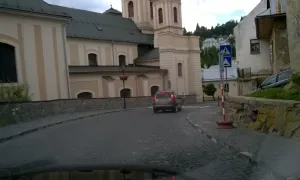
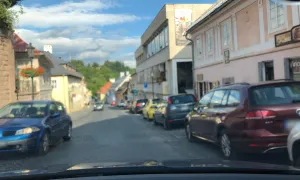
Real photos taken near the monument

Source and licence are given for each image.
Visitor Tips
No tips yet. Be the first!
Log in and add your tip.
Location on Map
More monuments – Banská Štiavnica
Show all in the town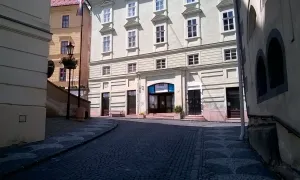


Visitor photos
No photos yet. Be the first to add a photo from your visit!
Log in and add your photo or leave a rating.
You get more points for a visit verified in the app — we can tell from the GPS that you are there.
Reviews and comments