

blacksmith's fire Forge
The Kováč Exhibition in Moldava nad Bodvou is a national cultural monument from the mid-19th century. It is a craft house with exposition of historical tools, registered in the register of ÚZPF under number 4383/1.
One-storey stone building from 1850 has six spaces and a rolling roof. There is a shelter in front of the shed, which served to inflate horses.
In front of the building there is a double focal blacksmith's extermination with a wide open chimney. It is equipped with blacksmith tools, sets of pliers, droplets and tools for horseshoes. The exposition uses tools and tools from the Technical Museum in Košice.
The interior also includes representation of other crafts. In one of the rooms there is a shoe guild, in the back there are tools of hating, tailoring and ginger guild. Archaeological findings of PhMr. Gustav Sibranyi are also displayed in the building. In a small picture room there are period paintings, photos of the city and functional weaver condition. The rear part of the building consists of a bow for cattle and a place for storing agricultural machinery.
The exposition belongs to the Central Slovakia Museum of Košice. Because of the disturbed static, the object was closed to the public. From 13 March there is a comprehensive repair of the roof, which includes the dismantling and assembly of the roof and replacement of damaged parts.
Tehdy a dnes
Drag the slider and compare how the monument might have looked when it was built with the view today.
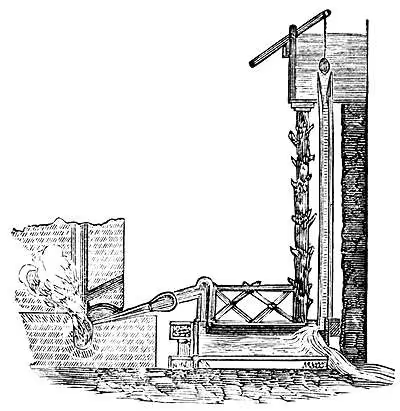

The historical view on the left is a visualisation generated by artificial intelligence and serves as inspiration.
Historical Milestones
- 1850
- Building a stone structure for blacksmithy.
- 20th century
- Registration of the object in the register of monument protection.
- present
- Start a comprehensive roof repair on 13 March.
Interesting facts
- It is a national cultural monument from the mid-19th century, namely a stone building from 1850. - In front of the building there is a shelter, which served to inflate horses. - In front there is a two-deck blacksmith exile with exhibits from the Technical Museum in Košice. - The interior also includes footwear, hating, tailoring and gingerbread, as well as functional weaver condition. - In the building are exposed period paintings, photos of the city and archaeological findings PhMr. Gustav Stibranyi.
Guide
The guide was voiced by a synthetic voice created by artificial intelligence.
Show guide text
The text was prepared by artificial intelligence and has not been editorially reviewed. It may contain inaccuracies.
We welcome you to Moldava nad Bodvou, in the heart of the Košice region, where you will come to see one of the fascinating witnesses to the crafts past of this region today. You stand right in front of the building, which bears the name House craftsmanship, but by its nature and history it is a blacksmith's extortion. Now that you're looking at it, you may be experiencing the calm atmosphere of the present, but many years ago, this place was rumbled with the noise of hammers, the glow of fire, and the smell of hot iron. It is a place where the power of human hands was associated with the precision of craft skills to produce the tools and objects needed for life then and today.
Now let's rush into the past and see when and how this building was created. You are in front of the building, which was built in the middle of the 19th century. In particular, in 1850 this stone building of blacksmithy was created. At that time, the blacksmith in each village was the key point of social and economic life. The blacksmith was not just a artisan, it was a man without whom economics, transport, or agriculture did not work. Just in 1850 when the building was completed, Moldava was a place where craft played an important role in the development of the local community. The stone material from which the building is built testifies to the pursuit of durability and resistance to high temperatures, which are a natural part of the blacksmith's workshop.
Now that you are close to your memory, pay attention to the details that define the functionality of this place. Note one very practical detail that you may skip at first sight. There's a shelter that used to be used for horses. Imagine the cognacs coming here from the surrounding farm and fields, as a smith with professional care controlled the hooves and mounted horseshoes so that the animals could easily continue their hard work. This shelter is a direct proof of how important this space was for every traveler or farmer in the nineteenth century.
Now let's move deeper to the building itself. Something awaits you in front of you that is the heart of the entire object. It's a two-pitch blacksmith. What you see today is not just an empty room, but a space enriched with valuable exhibits from the Technical Museum in Košice. These items help us to visualize exactly how the blacksmith worked, what tools he used, and what technique he had to control to make a useful object out of a raw piece of iron. The perception of these exhibits in their natural environment, or historical excavation, gives the entire experience a depth that you might not feel in a typical museum exhibition. The interior of the building presents other elements that complement the image of the blacksmith craft and allow you to feel the authenticity of this historical space.
Although there are no specific names of architects or known personalities in the historical records that would operate in this area, the building itself speaks for itself. It is the creation of unknown but clever builders who knew how to build functional space for such a demanding craft. It is this anonymity that gives the site a kind of mystic. Who were all those blacksmiths? What stories did they tell while in rhythm they shaped metal? Every hammer punch in the corset was part of the rhythm of life in Moldava nad Bodvoa.
Now take an important interest in protecting this place. The building is not just an old house, but a national cultural monument. Its value was recognised and was officially registered in the Monuments Protection Register during the twentieth century. This means that the State recognised its historical, technical and architectural value and decided to preserve it for future generations. It is a testimony that craftsmen's buildings are also an important part of our common identity and cultural heritage.
However, constant care is needed to preserve the monument in good condition. You may notice that the building has undergone or is experiencing certain changes. At present, great attention is being paid to its technical security. Specifically, on the 13th of March, complex roof repairs began. This is an important step, because the roof is the first line of defence against nature. Without a high-quality cover, moisture and time could irretrievably damage stone walls and valuable interior with exhibits from Košice. These repairs are an expression of consideration so that you, and the people after you, can visit and admire this object.
Looking around, try to imagine the contrast between today's silence and the noise that prevailed over a hundred forty years ago. The sound of burning coal, hissing water while hardening iron and rhythmic hammer blows. It all happened right here in this stone building from 1850. It is a place that teaches us humility to work hands and respect the trade that has now almost disappeared in its original form.
The blacksmithy building in Moldava nad Bodvou is a small but significant corner of history, which combines technical skill with the architecture of its time. From a shelter for horses to a two-deck exile with museum objects, every detail here makes sense. It is a place where the past meets the present and where the spirit of the old craft is preserved thanks to proper care and repair.
We're telling you now to go over the whole object in peace, see the texture of the stone walls, and think about how much the world has changed since 1850. Let yourself be guided by the curiosity and details we have mentioned to you today. Thank you for sharing this short trip with us into the blacksmith world. We wish you a pleasant next day in Moldava nad Bodvou and pleasant discovering of other gems of Košice region. Goodbye.
Tips for visitors
Visit spring or autumn when pleasant temperatures allow a detailed overview of the exterior of the building without summer maxWidths. You can reach Moldava nad Bodvou by car or public transport; check the current links in the internet search engine.
We recommend shoes with fixed soles, because in a technical monument the terrain may be uneven. If you are planning to document the state of reconstruction, we recommend using a wide lens.
The details of blacksmith's equipment and structure of the building are more interesting in terms of photos. The most suitable light for exterior images is during the ♦ Golden Clock" shortly before the sun closes, when metal elements and walls get warm tone.
Families with children can avoid explaining the principles of old craft and show how metal was processed.
Frequently asked questions
Can the monument be visited?
This is a technical monument. Some are open as exhibitions, others are out of use or on private land. We have not verified whether this one is accessible.
What are the opening hours and admission?
We have not verified the opening hours or admission. Current information is published by the operator.
Where is the monument?
Location: Hlavná 113/130, Moldava nad Bodvou, Košický kraj. The map on this page shows the exact spot.
Why is the monument protected?
It is listed in the Central List of the Monuments Fund of the Slovak Republic as a national cultural monument (ÚZPF no. 426-4383).
For children
Close your eyes for a while and imagine you're moving on with time. You travel deep into the past, exactly 176 years back. The air around you suddenly smells like smoke, hot iron and horses. You're not in a modern city with cars, but in Moldava nad Bodvoa, where you're entering a world that looks like an adventure movie.
Thematic route
As there are no other objects listed in the area of the area of the main objective, I propose a thematic route:
Kováčska expatriation (House craftsmanship) in the village Moldava nad Bodvou
1. Exposition of crafts - a tour of interior spaces with examples of traditional techniques and tools of local craftsmen. 2. Blacksmith's Exhibition - space for monitoring work with fire and iron and for learning about the function of historical exile. 3. Courtyard House craftsmanship - space for demonstration of crafts in open air and interaction with exposed objects.
Seasonal recommendations
In the spring in the vicinity of Moldava nad Bodvou the flower nature. The rich green landscape contrasts with blacksmith's forges. We recommend visiting the site in the morning when light is natural and gentle. Due to the variable weather and wet terrain around the House of Craftsmen, it is advisable to wear waterproof shoes and take a lightweight coat.
Summer season brings long days and strong sunlight, which highlights the architecture of this technical monument. Due to high temperatures it is advisable to visit the place early in the morning or later in the evening. We recommend light, breathable clothing from natural materials and sun protection.
It turns the surrounding area into golden and brown tones. Common milk in this area can create a dramatic visual effect when shooting an object. We recommend layered clothing suitable for colder wounds and firm leaf footwear.
Zimą is a blacksmith's fireman. Snow can cover the terrain details and increase the visual purity of the area. The raw atmosphere underlines the nature of the craft environment. It is essential to wear warm clothing, including gloves and hats. For a short day we recommend a quick detour around the monument.
Visualisations and artistic views

The visualisations are generated by artificial intelligence and serve as inspiration.
Visitor Tips
No tips yet. Be the first!
Log in and add your tip.
More monuments – Moldava nad Bodvou
Show all in the town
Visitor photos
No photos yet. Be the first to add a photo from your visit!
Log in and add your photo or leave a rating.
You get more points for a visit verified in the app — we can tell from the GPS that you are there.
Reviews and comments