








burgher's house Burgher house
Townhouse in the village Bratislava-Staré The city represents the transition from the 19th to the early 20th century. This type of building is characterized by its functionality and adaptation to the growing needs of the urban population in the period of industrialization.
The creation of this house is taking place in the context of increasing population density in cities. In the 19th century there was a remarkable increase in the population, which led to the need to create higher population density residential houses. Architecturally, these houses followed the traditions of city palaces, which meant the use of similar tectonic and artistic elements. Significant features were crossings, which were often provided with handy metal gates.
Architecturally, the burgher's house is focused on classicalism and passover construction. This type of house was a standard form of pass-by, row-buildings that were designed to allow efficient use of space on narrow urban plots. The house contains elements typical for this period - for example a parter house was often modernized and served as a commercial area, while the function of housing was preserved in higher floors.
Historically, there is no specific information about individual owners or administrators and the fate of this house. Such houses were often part of a dynamic city life, where they became a place for various shops and services.
The key aspect of this monument is its architectural value. The house preserved the original expression and spatial composition, which are representative elements for the period of late Renaissance and Baroque. Although some modifications have been made, such as a change in the parter, the overall architectural concept has been preserved.
Today the burgher house in Bratislava-Old Town is available for visitors and serves as an example of the historical heritage of the city. Its current state makes it possible to get an offer about life in cities in the early 20th century.
This monument is an important part of the cultural heritage of Bratislava. His visit offers an opportunity to understand how urban life has evolved and adapted to the changing needs of the population. Townhouse in the Old The city is not only an architectural monument, but also a witness to the history of Bratislava.
Tehdy a dnes
Drag the slider and compare how the monument might have looked when it was built with the view today.
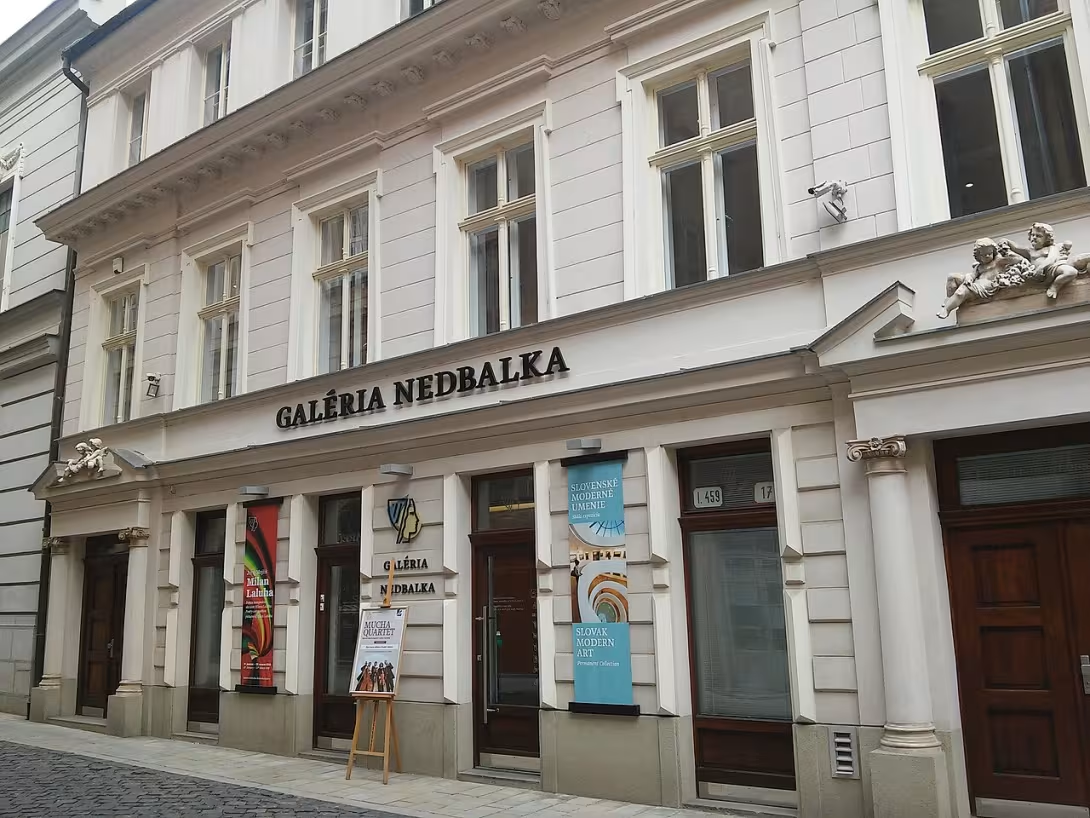
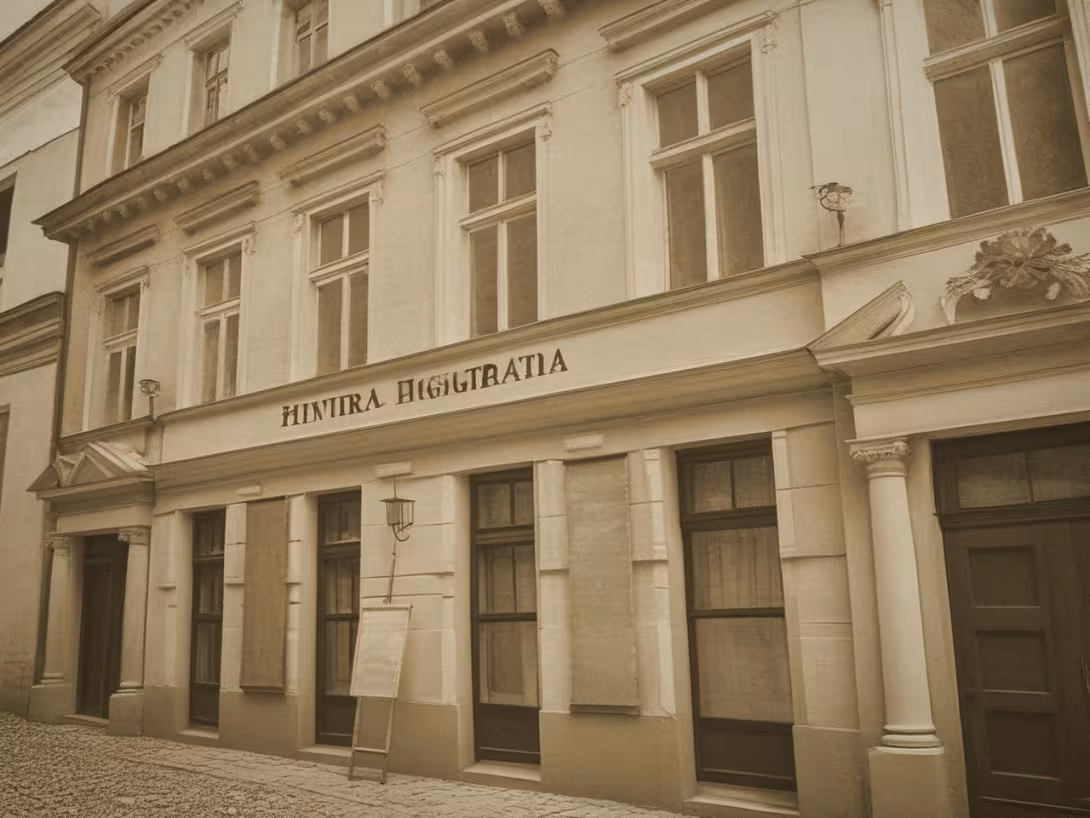
The historical view on the left is a visualisation generated by artificial intelligence and serves as inspiration.
Historical Milestones
- the end of the 19th century
- The increasing population density in cities leads to the need to create higher density residential rental houses.
- 1900
- The creation of a burgher's house in Bratislava-Old Town, representing the transition from the 19th to the early 20th century.
- early 20th century
- The townhouse serves as an example of adaptation to the growing needs of the urban population in the period of industrialization.
- early 20th century
- The house preserves architectural features of the Renaissance and Baroque, despite modificatio
Interesting facts
- The townhouse represents the transition from the 19th to the beginning of the 20th century and is characterized by its functionality and adaptation to the growing needs of the urban population in the period of industrialization. - Architecturally these houses followed the traditions of city palaces, which meant the use of similar tectonic and artistic elements.
Guide
Show guide text
The text was prepared by artificial intelligence and has not been editorially reviewed. It may contain inaccuracies.
Welcome to the historical heart of our capital, Bratislava-Star Town. Right now, you are standing in front of a building that at first glance may seem subtle, but it actually bears a fascinating story of how the city you are in has changed. In front of you lies the Meštianský dom, the diner of urban development and the witness of the turn of two millennia. Stop for a moment, breathe in the atmosphere of these narrow streets and see the architecture that surrounds you. This house is not only a set of walls and windows, but a materialized picture of the ambitions and needs of people who lived in Bratislava more than hundreds of years ago.
To understand why this house was created and what meaning it had, we must return to our minds a little further, by the end of the 19th century. At that time Bratislava experienced a period of intense changes. The city grew, the population grew, and a new challenge came up. The density of settlement in the city centre grew so fast that it was not enough to build only large family residences for the richest. There was an acute need to create new types of housing, namely higher density residential rentals. This means that more people had to live on a similar area, leading to more efficient use of the premises. It was in this context, in the year thousand nine hundred, that this burgher house was created.
Imagine this period as a bridge. The year thousand nine hundred is not just a date, it is a symbolic point of transition from the nineteenth century to the beginning of the twentieth. This house represents exactly this transition. It is the moment when old traditions began to meet the new needs of the modern world. Now when you look at the overall form of the building, see it as a transitional element. On the one hand, it shows respect for the past, but on the other hand, we feel the pressure of industrialisation, which has changed the lives of thousands of people. Industrialization has brought to the cities a new layer of residents, new employees, traders and craftsmen who needed to live near their workplaces, while wishing to maintain a certain standard of housing.
Now I would like to ask you to pay attention to the details. Look at the facade and note its rhythm. Although the building has undergone various modifications over time, it still retains architectural features that bring us back to a deeper zone of history. Note the traces of the Renaissance and the Baroque. These styles, dominated by European architecture in previous centuries, are reflected in this house as fine echoes of the past. It is fascinating that even at a time when the world was heading towards modernism and functionalism, architects still drew on these classic patterns. These elements provided the house with dignity and a sense of stability.
However, if you look below, on a parter house, you will notice something else. Here are the most visible changes. Parter of the burgher houses was almost always the most dynamic part of the building. This is where privacy and the public intertwined. The changes in the parter that you see today are the result of adapting the house to the changing needs of the city. In many cases, shops, workshops, or offices were established to serve the surrounding inhabitants. It is this ability to adapt is one of the strongest aspects of this house. It's not a dead monument, it's a living organism that's changed with the city.
You may now wonder who designed this house. Here we refer to one of the many mysteries of historical centers. The names of the architects who created this particular house remained forgotten in time. They are not recorded in chronicles or engraved in stone. Paradoxically, though, this is a certain beauty. This house does not belong to one famous creator, but it is the result of collective experience in the then builders and craftsmen. It represents the anonymous but extremely important work of people who built the face of our Bratislava. It is a celebration of the burgher spirit, where not only the glory of one name was important, but the functionality and aesthetics of the whole space.
Let's go now and stop at one thing that will help you to better understand the nature of this place. The townsmen's houses, like the one you're facing, were in essence built on the traditions of magnificent city palaces. This means that although these were rental houses intended for the wider population, their creators tried to use similar principles as those used to build palaces for the aristocracy. They wanted to give the townspeople a sense of prestige and luxury, even on a smaller and more functional scale. So this house is basically a democratisation of palace architecture. It is an expression of how the social hierarchy changed during the period of industrialisation and how aesthetics previously reserved only for the chosen ones became available to the emerging middle class.
Now take this thought when you look again at the building as a whole. This house is characterized by its functionality. In every detail, in every window layout, or space distribution, you feel the effort to get the most out of the available area. It is an architecture of pragmatism, but it did not remember beauty. It is this balance between what is useful and what is aesthetic that makes the Town House such a valuable example of the historical heritage of Bratislava.
Today, this house no longer serves as a place of housing but is an open witness for all visitors. It is a reminder of the time when Bratislava was a burning hub of shops and culture, when the streets were filled with the sounds of carriages and the call of people from the whole Habsburg reign. When you look at the building, try to imagine how many generations of people have passed through this door, how many stories have been born in these walls, and how many dreams of a better life in the new century have found their home here.
The townhouse reminds us that the history of the city is not just about the great royal palaces or monumental churches. History is primarily about people, their everydayness, how they lived, how they worked, and how they adapted to new swords. It is these houses that make up the city's fabric and give it its unique identity. Without them, the Old Town would lose its human face and its authenticity.
Before we say good-bye and you go further to the new discoveries, I urge you to go around the building again in peace. Note how the light changes on its surface, perceive the texture of the walls, and think about the way this house has gone since its creation in the year thousand nine hundred to today. It is the way from a rental house for a growing city to a recognised symbol of historical heritage.
Thank you for paying attention to me and for coming with me to this fascinating witness of time. I hope this short trip to the past has helped you see the Town Hall in a new light. Now I invite you to continue your research into the beauty of Bratislava-Old Town. Let yourself be guided by your curiosity, follow the details on the facades of other buildings and look for stories that are hidden in every stone in this old part of town. I wish you a pleasant and inspiring walk. Goodbye.
Tips for visitors
We recommend a visit in the autumn months. Temperatures are lower and light is suitable for shooting architectural details. At this time there are fewer tourists in the locality.
To place you will transport by car or public transport.
Pack your food, drinking water, and sunscreen. To capture the details of the house, we recommend a camera or smartphone.
For photography is the most suitable morning and evening light, which creates distinctive sine. Also focus on the architectural details of the house visible behind the solar world.
In the vicinity of the Old Town you can visit Palffy Palace, St. Nicholas Church or SNP Square with a statue. The Museum of Slovak Mint and Banking History is suitable for families with children.
Frequently asked questions
Can the monument be visited?
This is a residential or farm building, not a museum with opening hours. Please view it from public space and respect the owners' privacy. We have no information about access to the interior.
Where is the monument?
Location: Nedbalova 459/17, Bratislava-Staré Mesto, Bratislavský kraj. The map on this page shows the exact spot.
Why is the monument protected?
It is listed in the Central List of the Monuments Fund of the Slovak Republic as a national cultural monument (ÚZPF no. 101-651).
For children
Imagine having the key to the time machine in your hand. It's not a metal machine, it's a way of your own imagination. We're going back to a time when the world around you was changing faster than you could imagine. Exactly 126 years ago, around 1900, a major change began in Bratislava. The streets were not full of buzzing cars and smartphones. Instead, you heard the cricket of horses, the sound of carriages, and the voices of people in elegant hats. Then, in this fascinating time, this burgher's house was established.
Nearby
🏰 Historic sites (825)
- Galéria Nedbalka 0.0 km Nedbalova 459/17 web
- kaplnka sv. Jakuba 0.1 km
- Ján Langoš 0.1 km
- Palác Motešických 0.1 km
- sv. Ján Nepomucký 0.1 km
- úľuv 0.1 km
- Vysielanie ČS rozhlasu v auguste 1968 0.1 km
- Dom umenia Kunsthalle Bratislava 0.1 km web
- 3D LAND 0.1 km +421 940 511 639 web
- Národný pochod za život 0.1 km
- Tripland 0.2 km web
- Múzeum dejín mesta 0.2 km Radničná 1 +421 259 100 812;+421 259 100 811 web
- Dni Kyjeva 0.2 km
- Národný salón vín Slovenskej republiky 0.2 km web
- Florián František Rómer 0.2 km
- Múzeum historických interiérov, Apponyiho palác 0.2 km web
- Apponyiho palác 0.2 km Radničná 577/1 web
- Múzeum mesta Bratislavy 0.2 km Radničná 1 web
- Bývalý mestský špitál s kostolom sv. Ladislava 0.2 km
- Franz Schmidt 0.2 km
🍽️ Restaurants and dining (2412)
- Snack bar MECHECHE 0.0 km
- Zen 0.0 km
- Café Studio Club 0.0 km
- Bodega 0.0 km
- Čiary 0.0 km Laurinská 138/11
- The Cuba Libre Rum & Cigar House 0.0 km +421905535693 web
- SOHO 0.0 km Laurinská 17 +421 948 380 530 web
- Curry 0.0 km
- Luana Lounge Bar 0.0 km
- Bistro Vanesa 0.1 km
- Viecha malých vinárov 0.1 km +421 905 736 956 web
- KeP’s 0.1 km
- Lab 0.1 km Námestie SNP 25 web
- La Putika 0.1 km
- Foodstock Bratislava 0.1 km Klobučnícka 6 web
- Urban House 0.1 km Laurinská 14 web
- Gastro u Jakuba 0.1 km
- SUSHI MUSHI 0.1 km +421 902 666 333 web
- Archa 0.1 km Uršulínska 440/6
- Bukowski Bar 0.1 km web
🏨 Accommodation (219)
- Art Hotel William 0.0 km Laurinská 141/17 web
- Grémium 0.1 km Gorkého 201/11 web
- Hostel Manderla Bratislava 0.1 km
- Urban Elephants 0.2 km Kolárska 8 web
- ARCADIA Hotel 0.3 km Františkánska 424/3 web
- Roset Hotel & Residence 0.3 km +421 917 373 209 web
- Wild Elephants Hostel 0.3 km web
- Folks 0.3 km
- Apart-Hostel ZERO 0.3 km
- Skaritz Hotel & Residence 0.3 km +421 2 5920 9770 web
- Aplent City Hotel Perugia 0.3 km web
- We Stay Apartments 0.3 km Michalská 2 web
- Marrol's 0.3 km +421257784600 web
- Avance Hotel 0.3 km Medená 7426/9 web
- VIP Apartments 0.4 km Michalská 19 +421 915 554 555 web
- Radisson Blu Carlton 0.4 km Hviezdoslavovo námestie 3 web
- City 0.4 km Obchodná 523/38
- PALACE apartments 0.4 km +421 917 707 606 web
- BEIGLI 0.4 km +421 910 749 242 web
- Schöndorf Hostel 0.4 km
🚲 Rentals and sport (485)
- WhiteBikes - MANDERLAK 0.1 km web
- Kamenné námestie 0.2 km
- Námestie SNP 0.2 km
- WhiteBikes - KAMENNE 0.2 km web
- ROLAND 0.2 km web
- WhiteBikes - REDUTA 0.3 km web
- WhiteBikes - POSTOVA 0.3 km web
- WhiteBikes - HURBANOVO 0.4 km web
- Hurbanovo námestie 0.4 km
- Švihaj Šop & Servis 0.4 km +421 905 612 687 web
- Šafárikovo námestie 0.4 km
- Trekland 0.4 km web
- Kapucínska - Župné námestie 0.4 km
- WhiteBikes - PRISTAV 0.5 km web
- WhiteBikes - SPITALSKA 0.5 km web
- YOGO CITY 0.5 km +421 902 489 812 web
- Bratislava Shooting Club 0.5 km web
- WhiteBikes - SATINSKEHO 0.5 km web
- WhiteBikes - BERNARD 0.5 km web
- Dunajská 0.6 km
🥾 Hiking and nature (461)
- Laurinská brána 0.0 km
- Františkánska záhrada 0.2 km
- Zvonkohra 0.2 km
- Erb Bratislavy 0.3 km
- Park Márie Ďuríčkovej 0.3 km
- Park Gábora Barossa 0.4 km
- Kačacia fontána 0.5 km
- Rudnayovo námestie 0.5 km
- Park na Dunajskej ulici - Vešeléniho (Wesselenyiho) záhrada 0.6 km
- Park na Kollárovom námestí 0.6 km
- Park na Jakubovom námestí 0.6 km
- Grasalkovičova záhrada 0.7 km
- Park Svoradova 0.8 km
- Tyršovo nábrežie 0.9 km
- Park Škarniclova 0.9 km
- Medická záhrada 0.9 km +421 2 59246111
- Park na Námestí slobody 0.9 km
- UFO 0.9 km web
- Parčík pri Avione 1.0 km
- Kempelenov vodovod 1.0 km
Thematic route
Thematic cruise route: Old City of Bratislava
1. House bourgeois (City House) Type: Monument building This historic apartment building was the seat of rich townmen in the 16th to 18th centuries. Its architecture reveals elements of Renaissance and Baroque style. 2. Old Town (Old Town Centre) Type: Historical business area Through the streets and square of the Old Town you can survive the atmosphere of ancient city life. This area is full of picturesque houses that are affected by the history of Bratislava. 3. Old Town Roman Catholic parish Type: Church complex This church complex is the heart of spiritual life in the Old Town district. Its architecture and interior reflect the historical changes that survived this region. 4. Old Town Square Type: Historical Square This square used to be a venue for fairs, military celebrations, and other important events. 5. Old Town Bridge Type: Bridge This bridge connects the Old Town with the New City and is an important architectural monument. This route will take you through the Old Town and allow you to survive its rich historical heritage.
Seasonal recommendations
Jaro: In the spring is the Old City of Bratislava surrounded by flowering greenness, which gives the town a vivid and fresh impression. Sunny days with longer days allow visitors to enjoy long walks along streets that are illuminated by exceptional spring light. The ideal time to visit is morning or afternoon, when crowds are even smaller and you can enjoy a more relaxed atmosphere. It is recommended to wear clothes suitable for cool sunshades such as sweater and scarf.
Leto: In the summer season, the Old City of Bratislava is full of life and warmth. Sunny days with long sun hours attract a large number of visitors, which can lead to crowded streets. The best time to visit is morning morning or afternoon, when temperatures are even more favourable and crowds are already smaller. It is important to wear soft clothing and sunscreen so that you can enjoy a full visit without concern.
Under: In the middle of the old town turns into a picturesque green-yellow-shaped landscape. Sunny days with long but cooler days give the place a breathtaking impression. The atmosphere is more climate-friendly and less temperature-intensive, allowing you to enjoy walks along the aisles without fear of too much heat. We recommend wearing clothes suitable for cooler sunshades and possibly a protective coat, especially when the autumn is near.
Winter: In winter, the Old City of Bratislava is surrounded by a freezing atmosphere with candlelight, which gives the place a romantic and mysterious impression. Sunny gouts with shorter hours of sun make it possible to enjoy a winter visit in a less crowded time. It is recommended to wear warm clothes and shoes suitable for freezing conditions. Visits are shorter due to shorter work hours of the monument, so it is good to plan your time before.
Visualisations and artistic views


The visualisations are generated by artificial intelligence and serve as inspiration.
Photographs from the area
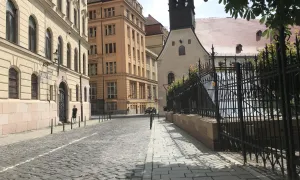
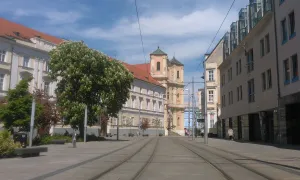
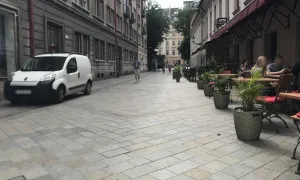
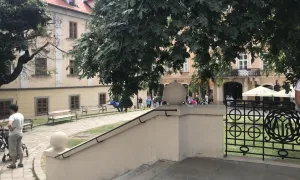
Real photos taken near the monument


Source and licence are given for each image.
Visitor Tips
No tips yet. Be the first!
Log in and add your tip.
Location on Map
More monuments – Bratislava-Staré Mesto
Show all in the town
Visitor photos
No photos yet. Be the first to add a photo from your visit!
Log in and add your photo or leave a rating.
You get more points for a visit verified in the app — we can tell from the GPS that you are there.
Reviews and comments