

calvinist church Church
Calvinistic church in the village of Svätuše in Košice region is a sacral building from the middle of the 13th century. It combines romantic and Gothic elements with later extensions.
Originally originated in the middle of the 13th century, although some sources also indicate the beginning of this period. In the second half of the 15th century, the construction of the Gothic reconstruction of the ship, the sanctuary and the southern portal went through. In 1794 the church was equipped with painted wooden ceiling and in 1907 the architect Ott Sztehl proposed extending the building to the north side boat.
The oldest part of the building is the tower. It preserved romance elements in the form of two above each other combined windows and three pairs of curved friezes at the top. The west side with the tower, the Romanesque entrance portal and the arcades of the Panic Empora comes from the original building. Due to later Gothic enlargement, this facade has reached an eccentric position. The ship with a polygonal presbytery, a star arch and gothic recesses comes from the second half of the 15th century. The south portal shows a donkey arch, on the north side of the presbytery is bricked Gothic portal. The exterior is based on Gothic pillars and the facades are smooth. The roof of the tower and the gabled roof of the entire building were created during the extension of 1907.
In the interior there is a painted wooden ceiling and parapet empory from 1794, decorated with stylized flowers and plant motifs. The interior is from 1907. In the northern annex are secondary located Late Gothic doors with decorative artery nails.
The church is registered in the Central List of Monument Fund of Slovakia under the number 35/1. After renovations in the years 1909 and 1967, the building was rebuilt in 2005 to 2016. In the final phase of 2016, implemented with the support of the program Rómer Flóris Plan, the windows extension, renovated facade and treated shingle roof tower. Under the supervision of the architect Gyulu Káldi, rainwater drainage was solved by new PVC pipes and landscaping. The reformed church was put into use on 17 June 2017.
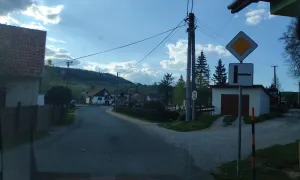
The building is in good condition and serves its purpose. It is located on the hillside Lingó in the eastern part of the village of Svätuše.
Tehdy a dnes
Drag the slider and compare how the monument might have looked when it was built with the view today.
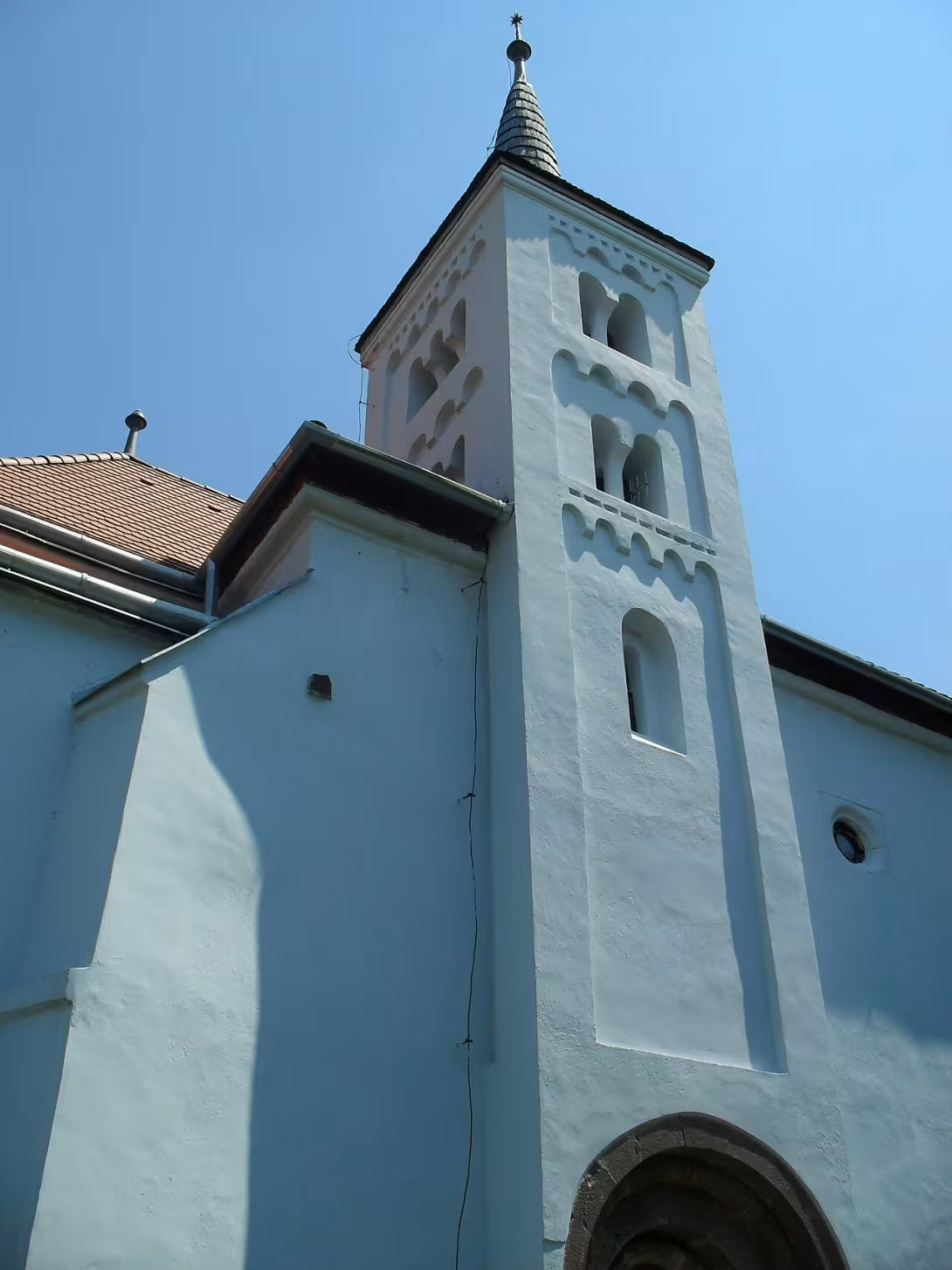
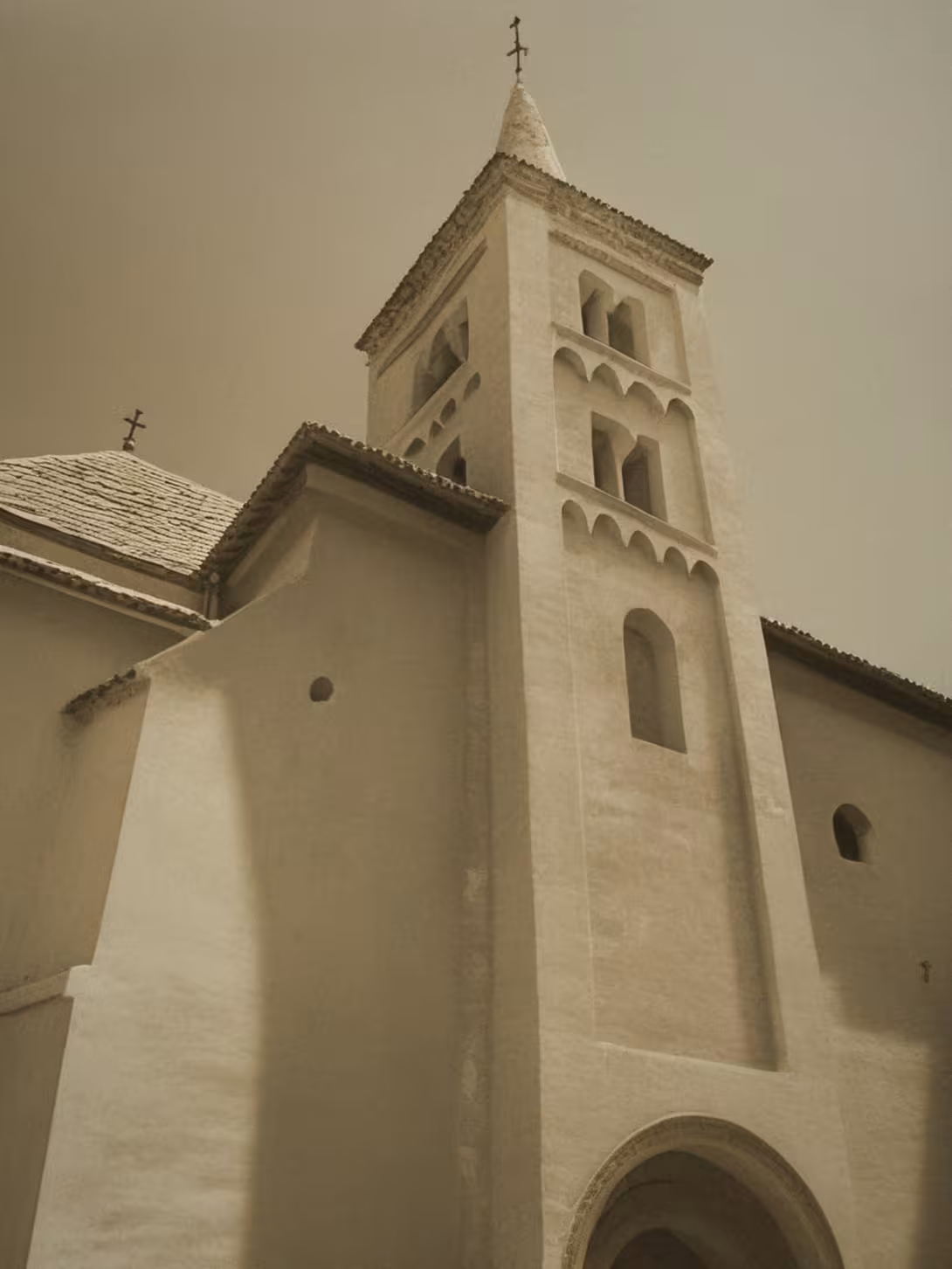
The historical view on the left is a visualisation generated by artificial intelligence and serves as inspiration.
Historical Milestones
- 1794
- measure with painted wooden ceiling
- 1907
- expansion of the church by northern sideship
- 1909
- renovation
- 1967
- renovation
- 2005
- the start of a large-scale restoration
- 2017
- ceremonial introduction of reformed church into use
Restoration history
| Years | Type | Extent | Condition after restoration |
|---|---|---|---|
| 2017 |
Obnova
kalvínsky kostol |
Čiastočná | dobrý |
| 2012 |
Reštaurovanie
kalvínsky kostol |
Čiastočná | |
| 2011 |
Reštaurovanie
kalvínsky kostol |
Čiastočná | dobrý |
| 2008 |
Obnova a reštaurovanie
kalvínsky kostol |
Komplexná | dobrý |
Source: Monuments Board of the Slovak Republic — open data, licence CC BY 4.0
Interesting facts
- Due to the later Gothic expansion, the western facade with the tower, the Romanesque portal and the arcades of the Panic Empora has reached an eccentric position. - The oldest part of the building is the tower, which maintained the Romanesque elements in the form of two above each other combined windows and three pairs of oblique vlysa. - In the interior there is a painted wooden ceiling and parapet empory from 1794, decorated with stylized flowers and plant motifs. - In the northern annex are secondary located Late Gothic doors with decorative artery nails. - The south portal shows a don
Guide
The guide was voiced by a synthetic voice created by artificial intelligence.
Show guide text
The text was prepared by artificial intelligence and has not been editorially reviewed. It may contain inaccuracies.
Welcome to the village of Svätuše, in the heart of Košice region. Right now you are facing an important monument to local spiritual and building history, which is this Calvinist church. When you look at it, you may be impressed by its unusual appearance and the way it fills the space around you. It is a building that bears the clues of many periods and tells how faith and architecture have evolved in the region. Look at the overall character of the building and see the atmosphere of the place that has served the community for many years.
Although the exact names of architects who designed this temple remained unknown in time, the building itself speaks for itself. The history of this church is a story of constant development and care. If we stop in chronology, we will see that the building has undergone many changes to meet the needs of believers. An important milestone was the year 1794, when the interior was enriched with painted wooden ceiling, which adds space special aesthetics and warmth. Then came the new century and with it the need for enlargement. In 1907 the church was extended to the northern sideship, which significantly changed its original disposition and allowed more people to receive.
Pay attention to the details you see right in front of you. Look at the west facade. You may notice something strange. If you look through the building carefully, you will find that the western facade with the tower is in an eccentric position. Why is that? The answer lies in the later Gothic expansion of the building, which shifted the balance of the building and created this already fascinating visual effect today. This very detail shows that architecture is not static, but it is growing and changing along with the needs of the people who built it.
Let's move up to the tower. The tower is the oldest part of the entire complex and represents the key to understanding the origins of the building. Note the features typical of Roman style. There are two above each other combined windows and three pairs of surrounded decorations. These details are medieval witnesses of the time that survived centuries and still remind us of the romance tradition in this part of Slovakia. Do not forget also to note the Romanesque portal and arcades of the Panic Empora, which complement the overall picture of this unique building.
If we look for specific personalities connected with this place, history does not mention them in the written records, but it is obvious that the local people and craftsmen who were at the heart of the preservation of their sanctuary were behind any renovation. The church has undergone several waves of restoration. In 1909, renovation was carried out, which followed shortly after the expansion of the ship. Another major repair took place in 1967, when the db case for preserving material and structure in a period that was not always easy for religious buildings.
However, the biggest and most complex process came in more recent times. In 2005 a large-scale restoration of monuments started. It was a long and difficult process that aimed to restore the church to its typical glory while ensuring that all valuable historical layers, from the Roman Tower to the painted ceiling of the late eighteenth century, were preserved. The culmination of these efforts was the ceremonial introduction of the reformed church into use in 2017. When you look at the building today, you see the result of this precise work that links ancient stones with modern care.
The interesting thing you might be interested in is this layer of styles. It is rare to see on one building such a clear contrast between the Romanesque elements of the tower and later modifications. It's almost like reading a book of events where each chapter was written by someone else in another century. The eccentric location of the facade we're talking about is not a mistake, but Rather is proof of the organic growth of the building. It is a reminder that history is not always a straight line and symmetrical, but it is in these variations that the truth is hidden about how the building evolved.
Now that you've looked at the main architectural elements and learned about the church's journey through the centuries, I'm going to invite you to another study. Feel the peace and quiet surrounding this temple. You can look again at the details of Romanesque windows in the tower or stop by the portal and imagine generations of people who have passed through this door.
I hope this short trip to the history of the Calvin church in Svätýšy helped you to better understand the value of this monument. Thank you for your attention and we wish you a pleasant next day to discover the beauty of the region of Košice.
Tips for visitors
The Calvin church in the village of Svätuše is best to visit during bright days on late afternoons. Sun rays then hit the facade and highlight the details of the construction.
When planning the trip to the region of Košice, we recommend using internet search engines for transport links for accurate traffic information.
Due to the nature of the object we recommend respectful clothing. For detailed view of the tower and masonry it is advisable to use a camera with zoom or binoculars.
Photos of the building can be captured from public spaces around the fence. Masonry texture is best visible shortly before sunset.
Visiting the church can be connected with a walk around the village of Svätuše.
Frequently asked questions
Can the monument be visited?
Religious buildings are usually open mainly during services; at other times a visit is normally arranged with the parish or the operator. We have not verified specific times. According to the heritage register restoration is under way, so access may be restricted.
Where is the monument?
Location: Podhorská ulica 124/59, Svätuše, Košický kraj. The map on this page shows the exact spot.
Why is the monument protected?
It is listed in the Central List of the Monuments Fund of the Slovak Republic as a national cultural monument (ÚZPF no. 42B-35).
For children
Imagine moving your time machine deep into the past. It's 1350, about 676 years ago. No computers, no cell phones, not even electricity! Instead, builders run around you in thick clothes, while in the air they hear loud clinks of hammers and axes. It was in this very time that an amazing church in the village of Svätuše began to grow.
Nearby
🏰 Historic sites (38)
- Reformovaný kostol 0.0 km Podhorská 124/59
- Mohylník v polohe Erös 2.2 km web
- Archeologická lokalita 3.0 km web
- Kaštieľ Vojka 3.7 km Hlavná 84/26
- Čonkavár 3.8 km
- Kaštieľ Zuzany Lorántfiovej 3.9 km
- Regionálna muzeálna expozícia Jozefa Mailátha 4.1 km +421 905 223 435 web
- II. Rákóczi Ferenc 4.1 km
- Honfoglaláskori emlékhely 8.1 km
- Zemplínsky hrad 8.2 km
- Premonštrátsky kláštor 8.4 km +421 56 636 23 23 web
- Šeneiovský kaštieľ 10.2 km Hlavná 449/187
- Veľký Kamenec 11.6 km
- Kúria 11.6 km
- Ervin Varga plaketa 11.7 km
- Vojak 11.7 km
- Fischer-Kaštieľ 11.7 km
- Gáspár Károlyi 11.7 km
- Oslobodenie sovietskou armádou 11.7 km
- A II. világháború áldozatai 11.8 km
🍽️ Restaurants and dining (26)
- Shell Cafe 3.5 km web
- Dolce Vita 4.0 km +421 948 069 777 web
- Libapiac 4.1 km Hlavná 324/70
- Pizzeria Italia 4.1 km Hlavná 712/164
- Pohostinstvo Erdeiová 4.2 km
- Fresh Corner 4.4 km
- Pri závorách 4.4 km
- Kolkáreň 7.8 km Kamenecká 99/9
- Reštaurácia Koruna 11.5 km web
- Zukor Csárda 12.2 km
- Rózsakert büfé 12.4 km
- Bufet Oáza / Latorica 12.4 km
- Söröző 12.6 km
- Vidiecky Dom 12.9 km +421 917 462 777 web
- Bistro Tarbucka 13.2 km
- Pizza Familia 13.3 km
- Bodrog Bár 13.4 km +421 944 551 883 web
- Pipi-Burger 13.4 km
- Bistro Hanoi 13.6 km
- Reštaurácia Majer Bara 13.7 km web
🏨 Accommodation (10)
- Penzion Italia 4.1 km Hlavná 711/162
- Stredná odborná škola 7.5 km +421 56 62 850 20 web
- Guesthouse Ilona 11.8 km
- Rózsakert vendégház 12.4 km
- Penzión Vínny Dom 12.7 km Kamenecká 146/81 web
- Kiadó szoba, Ádám Ferenc 12.9 km +36 47 342 353
- Mágocsy-vendégház 13.1 km web
- Tokaj Guest House 13.2 km web
- Ubytovanie u Aranky 13.8 km +421 907 323 593 web
- Camping Malá Bara 14.2 km web
🚲 Rentals and sport (4)
- Splavujeme Bodrog 10.6 km +421905484482 web
- Riečny prístav Ladmovce 11.5 km
- Základná škola 13.3 km Školská 621/1 +421 56 637 3963 web
- Prístav Viničky 13.5 km
🥾 Hiking and nature (47)
- Čierna hora 1.6 km
- Čikóška 2.3 km
- Bešeňovo 2.4 km
- Veľký kopec 3.0 km
- Malý vrch 3.5 km
- Planina 3.8 km
- Piesky 5.2 km
- Pustovník 7.2 km
- Most svätého Gottharda 8.0 km
- Vrch 9.0 km
- Kamenná Moľva 9.2 km
- rozhľadňa Bačka 9.6 km
- Húšťava 9.9 km
- Viničný vrch 10.3 km
- Prameň - Forrás 10.4 km
- Sústový vrch 10.5 km
- Kryštálová jaskyňa 10.8 km
- Vyhliadkova plošina 10.8 km
- Moľva 10.9 km
- Veľký vrch 10.9 km
Thematic route
1. Fenced area and exterior of church Type: Historical area There is a Romanesque architecture from the 12th century. The exterior consists of stone walls.
2. Roman entry portal Type: Architectural detail The portal has stone decoration and medieval working. It belongs to the Romanesque building elements in the locality.
3. The interior of Calvin church Type: Sacral space The interior is characterized by Calvinism and elements of medieval architecture. Space corresponds to the tradition of the reformed church.
4. Wooden Empora and Interior Equipment Type: Interior part Part of the equipment is wooden chorus and elements that connect medieval construction with later modifications for the needs of Calvin liturgy.
5. Multilateral Church Tower Type: Architectural element The multitasking tower forms the silhouette of the village of Svätuše. It has a strong character that points to the defensive function of sacral buildings in the past.
Seasonal recommendations
The flowering fruit trees in the surrounding gardens surround the historical church building in Svätých. The light is scattered during this period, which allows to observe the details of architecture without sharp shadows. Since the village is located in a flat region, the spring wind is fresh. Suitable for layered clothing and windproof jacket. Sun rays light the face of the temple in the morning.
In summer, intense sunlight occurs in this part of the Východoslovenská Nížina lowland. The church is in the middle of the fields. Sharp light creates contrasts on the facade and highlights the tower. The outdoors are suitable for late afternoon hours when the heat subsides.
In the autumn there are morning fogs around the monument. The leaves in nearby courtyards contrast with stone masonry and brick elements of the building. Since the soil is wet after rain, firm and waterproof footwear is recommended. The afternoon's low sun creates long shadows. It cools rapidly after sunset, so it is advisable to pack a warmer sweater.
Innovate trees or snow cover highlight the silhouette of the building against the sky. Warm winter clothes are needed because the wind on the lowland is freezing. Due to the short days, it is advisable to schedule a visit around noon.
Visualisations and artistic views


The visualisations are generated by artificial intelligence and serve as inspiration.
Photographs from the area
Real photos taken near the monument


Source and licence are given for each image.
Visitor Tips
No tips yet. Be the first!
Log in and add your tip.
Location on Map
More monuments – Svätuše
Show all in the town
Visitor photos
No photos yet. Be the first to add a photo from your visit!
Log in and add your photo or leave a rating.
You get more points for a visit verified in the app — we can tell from the GPS that you are there.
Reviews and comments