

calvinist church Church
Calvinist church in the village of Čečejovce in the Košice region is an early Gothic sacral building with Romanesque elements from the years 1290 to 1300. It has murals from the first half of the 14th century and preserved the late Romanesque elements.
The church was originally built at the turn of the 13th and 14th centuries as a Roman Catholic church of St. John Evangelist. Since the beginning of Rákóczi's uprising in 1703 he has gone into the hands of the reformed church.
This is a single-shiped space with a flat cap without a tower. Facades are smooth. The ship has a flat ceiling from the beginning of the 19th century, the cap is closed by a walled vault. In the broken early-gothic winning arch there are ledges of heavy profiling. On the east and south side of the cap, as well as on the south side of the ship, small Late Romanesque windows from the construction period were preserved. Other windows are newer and have segment finishes.
The Presbytery covers murals from 1300 to 1350, below which are fragments of older paintings. On top of the vault is marked Majestas Domini (Christ in mandorle). After the walls, the scenes of the christological cycle and the characters of saints are in two rows. On the northern wall is in the upper belt of Preaching, Christ's childhood and Bethlehem's slaughter, in the lower belt part of the Last Supper and Christ before Pilate. On the south wall, the resurrection of Jairus ' daughter and the Entrance to Jerusalem are preserved in the lower belt. The east side contains Escape to Egypt and Circumcision of Christ in the upper belt and Calvary with Saint Michael the Archangel in the lower. On the inside of the wall of the winning arch are fragments of angels and the figure of Saint Ladislav, in the arch itself are the breasts of prophets in round medallions. Fragments of paintings, namely St. Stephen's Stonestone First Disciple, were also found on the southern wall of the ship.
Internal equipment comes from more recent times. An exception is the pulpit from 1763 with the inscription and dating on the wooden canopy. The 1967 inventory mentions tin worship vessels, which are the Košice work of 1755 and the malto work of 1806.
It is believed that after the Reformed Church adopted the church in 1703 the paintings were covered with plaster. They were rediscovered and secured between 1893 and 1898. Around 1930 the painting was restored by P.J. Kern and the last works were finished in 1994.
The building is registered in the Central List of Monument Fund of the Slovak Republic under number ÚZPF 417/1. The church stands in the northwest part of the village, is in good condition and fulfills its function.
Tehdy a dnes
Drag the slider and compare how the monument might have looked when it was built with the view today.
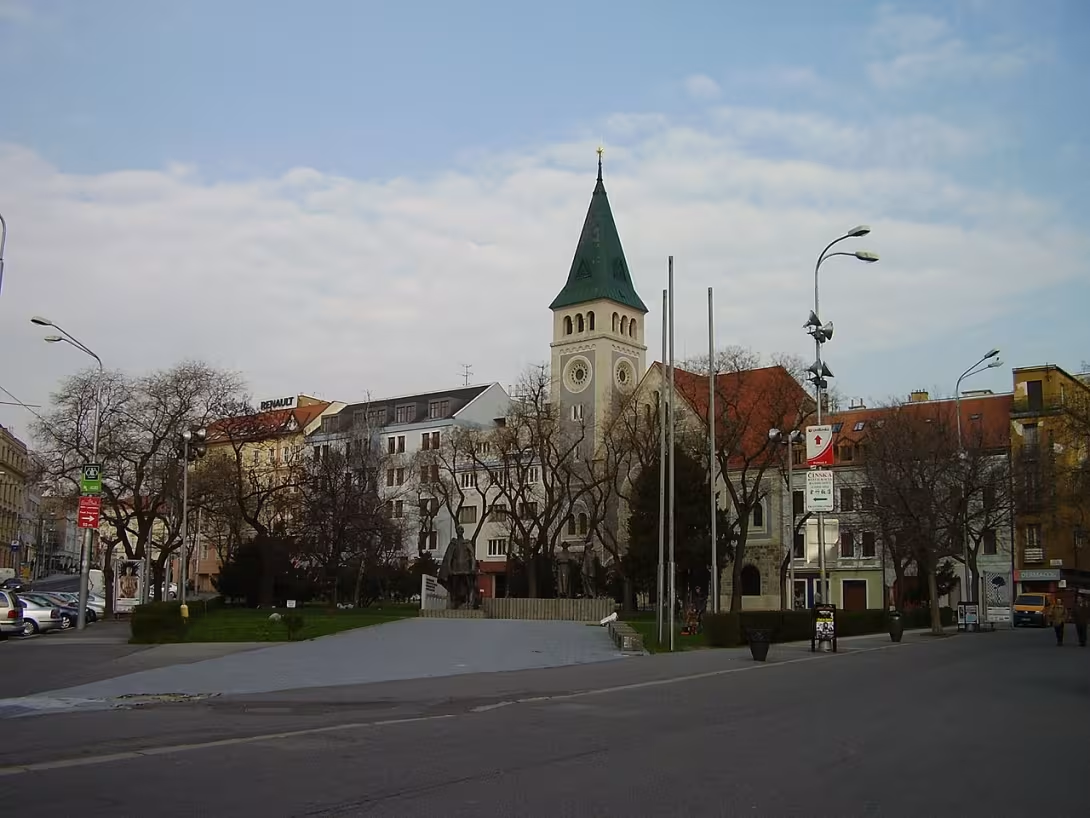
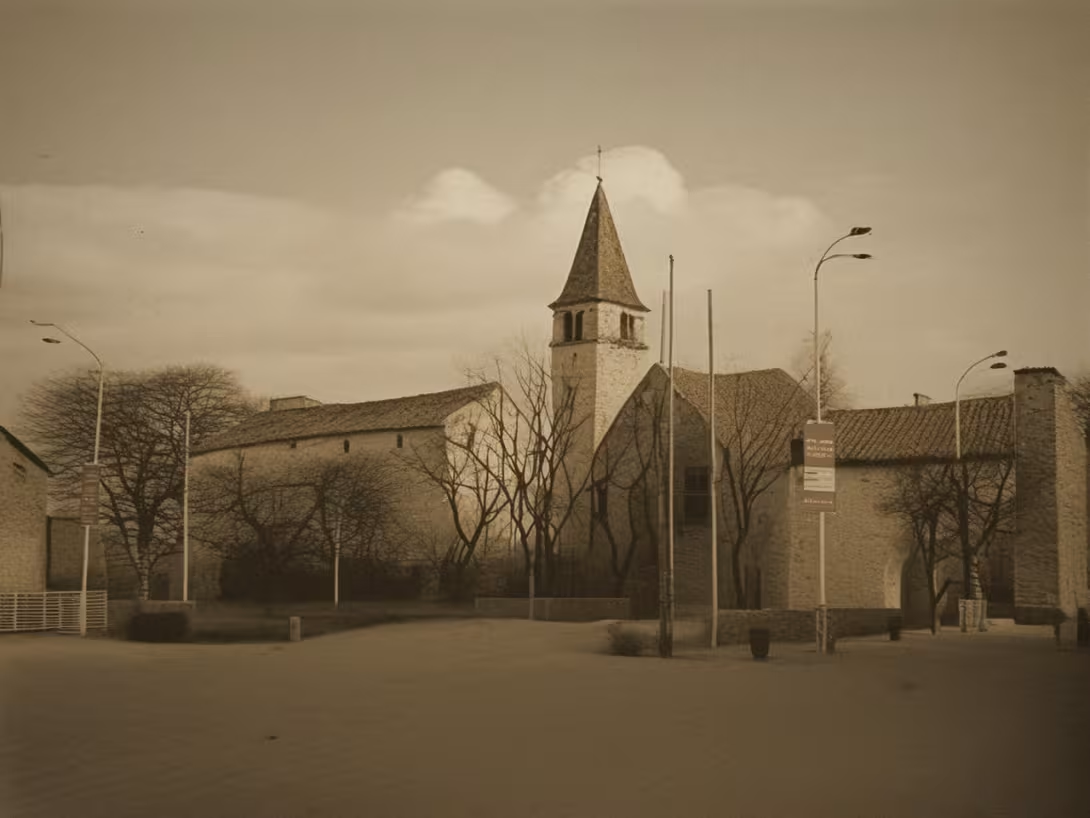
The historical view on the left is a visualisation generated by artificial intelligence and serves as inspiration.
Historical Milestones
- 1290-1300: The creation of an early Gothic church with Romanesque elements
- 1703: Switching to Calvinism, probably covering wall paintings with plaster
- 1893-1898: Uncovering and securing wall paintings
- 1930: The restaurant paintings P. J. Kerno
- 1994: Last restoration work
Interesting facts
- It is an early Gothic building with Romanesque elements from the years 1290 to 1300, which was originally the Roman Catholic church of St.
Guide
Show guide text
The text was prepared by artificial intelligence and has not been editorially reviewed. It may contain inaccuracies.
Welcome to the village of Čečejovce. You stand in front of a building that hides many centuries of history and testifies to the spiritual changes that have gone through this region. In front of you, the Calvinist church, the building, which by its appearance and atmosphere immediately leads to the gaze of ancient times. Now that you are looking at it, you may perceive only a calm temple, but behind its walls lies the story of transformation, faith, and historical twists.
Let's just dive into the roots of this building. Although the exact names of architects or builders have erased time, historical sources tell us that this is a very old object. The church was established between 1290 and 1300. Imagine the world in which people lived when the first stones of this fundamental were laid. At that time, the building was built as a Roman Catholic church dedicated to St. John the Evangelist. It was created at a time when the transition from robust Roman architecture to more elegant Gothic began to manifest itself in Europe, which reflected the very essence of this building.
If you take a closer look at the building, note its architectural character. This is an early-gothic structure, but it still carries significant Romanesque elements. This connection of two epochs gives the church its unique face. Follow the lines of walls and the overall disposition, which is typical for the period of the third century. It is a moderation that also carries the power and stability of the early Middle Ages.
Nyni pay attention to one of the most valuable parts of the entire object, which is the presbytery. Although everything may not be readily visible from the outside, there are rare wall paintings inside the presbytery. These artistic decorations date from 1300 to 1350. Imagine the colors and details that the believers would then have led to spiritual contemplation. These paintings are a medieval testimony to selected artistic cunning and are one of the most important elements of the construction period.
The history of this place, however, is not just a story of one confess. A key turning point occurred in the early eighteenth century. 1703 was a time of great unrest and change when Rákóczi's uprising broke out. It was in connection with these dramatic events that the object went into the hands of the Reformed Church. Since then, the Catholic temple has become a Calvinist church, changing not only its function but also its spiritual identity. It is fascinating to think of how one building served different communities and how it adapted to the political and religious currents of its time.
It is this long continuity that you may be interested in. It is rare to see a structure that has survived for more than seven centuries and has preserved its early Gothic core with Romanesque elements. The exact identity of the people who designed and built the temple remains a mystery, but their work speaks for them. Every stone and every detail of the painting in the presbytery is a silent witness to thousands of stories of people looking for comfort, peace or forgiveness.
Now take a moment of silence and the atmosphere of this place. You stand before a memorial that has survived the Middle Ages, religious Reformations, and great uprisings. It is a place where history meets architecture and where every detail tells about transitions from one era to another.
We are now taking you to further explore the surroundings and to a deeper perception of the beauty of this historical treasure in Chečejovce. We hope this short trip to the past has helped you to better understand the meaning of this Calvinist church. Thank you for your attention and we wish you a pleasant next stay in Košice region.
Tips for visitors
Visit the Calvinist church in spring or early autumn, when temperatures allow a detailed overview of the exterior. We recommend arriving in the village of Chečejovce by car or local transport; check the current links in the internet search engine.
Inside the building, wear clothing corresponding to the sacral nature of the place. Maintain silence and respect in the religious object.
Photos of the entire church can be taken from the surrounding areas. Suitable light for exterior images is during morning or late afternoon hours when shadows are softer and colors are more saturated.
Families with children can connect the visit with a walk around the village and get to know the local architecture.
Frequently asked questions
Can the monument be visited?
Religious buildings are usually open mainly during services; at other times a visit is normally arranged with the parish or the operator. We have not verified specific times.
Where is the monument?
Location: Kostolná 11/7, Čečejovce, Košický kraj. The map on this page shows the exact spot.
Why is the monument protected?
It is listed in the Central List of the Monuments Fund of the Slovak Republic as a national cultural monument (ÚZPF no. 426-417).
For children
Imagine lying in the grass in Chesseyovce, and a sky full of stars stretches over you. But it is not an ordinary night - 736 years ago a church was built here, which witnessed great changes. It was the year 1290 when the stones started to be laid here, which would become part of one of the oldest churches in Slovakia. This church was originally dedicated to St John the Evangelist and was built in a style called early Gothic. However, it is not a purely Gothic church, but it also has several Romanesque elements.
Thematic route
Cruise route in the village of Čečejovce
1. St. Barbora church in Čečejovce This Calvinist church from 1735 presents Baroque architecture in the Košice region. The interior has a detailed decoration. The church is the centre of reformed public. In addition to religious services, cultural events are held here for residents.
2. Castle in Chečejovce Around 500 meters from the church stands a castle from the 18th century, which was originally the birthplace of the Sokolov family. Today it houses exhibitions about the history of the village and its surroundings. Visitors can see interiors and historical objects.
3. Courtyard of the church and surroundings Around the church there is a park with old trees and fountains. The Calvinic tombstool with tombstones of local families is also safe here.
Route details: - Time consuming: 2-3 hours - Distances: 500 m between church and castle, surroundings of the church is available on foot - Suitable for: families, interested in history and reformed culture
Tip: In the village there are also spa resources suitable for relaxation after the trip.
Seasonal recommendations
Jaro
The church in Čečejovce shows a fertile atmosphere in spring, which gives the impression of youth and new life. Inside the church there is often furnished lighting, which according to the sun and spring days takes place in different tones - from average light to intense yellow, which creates a meditative atmosphere. The surroundings of the church are surrounded by flowering trees and vegetation, which begins to manifest in green and white, creating a harmonious combination with historical object. Clothes that are easy and flexible are suitable to avoid moisture problems, which can be frequent in spring. The best time to visit are the morning hours when the air is clean and the atmosphere is clear, but avoid the need for large groups of tourists, which can be frequent during this period. In the main summer season, the church in Chečejovce offers amazing opportunities for visitors looking for a combination of history and natural beauty. Inside the church is often furnished with light, which alternates with the natural light of the windows, creating an amazing contrast atmosphere. The surrounding area is full of sunlight and warmth, where the grasses and plants blossom, and in some areas a flowering plant may also appear. For a visit it is advisable to wear soft, breezy clothes that are easy to remove, and protective sunscreens. The best time to visit is in the morning and detachment hours to avoid bitter and sunny days, which can be very intense during this period. Large groups need to be avoided, which can be very active and disruptive in summer.
Visualisations and artistic views

The visualisations are generated by artificial intelligence and serve as inspiration.
Visitor Tips
No tips yet. Be the first!
Log in and add your tip.
More monuments – Čečejovce
Show all in the town
Visitor photos
No photos yet. Be the first to add a photo from your visit!
Log in and add your photo or leave a rating.
You get more points for a visit verified in the app — we can tell from the GPS that you are there.
Reviews and comments