

cast iron cross file Crosses group
The cast iron cross in the village Haniska in Košice region represents a national cultural monument. This object comes from 1802 and is dated to the first half of the 19th century.
The area, which is registered by the Monument Office of the Slovak Republic under number ÚZPF 4389, forms one particular object. It is a cross made of cast iron from 1802.
The monument is located in Grajciar in the village Haniska. The object is listed in the list of national cultural monuments under the number of ÚZPF 4389.
This set of cast iron crosses is an important witness to the first half of the 19th century in the village of Haniska. We recommend visiting the site Grajciar and personally view this historic object.
Tehdy a dnes
Drag the slider and compare how the monument might have looked when it was built with the view today.
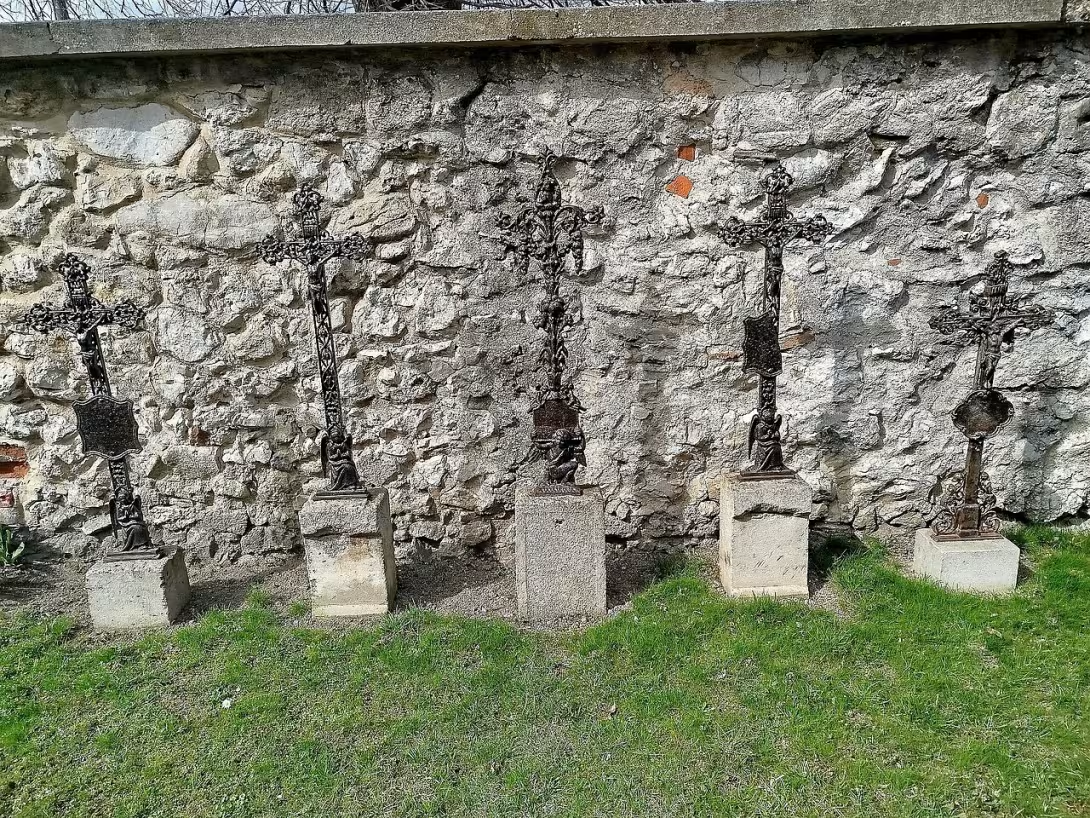
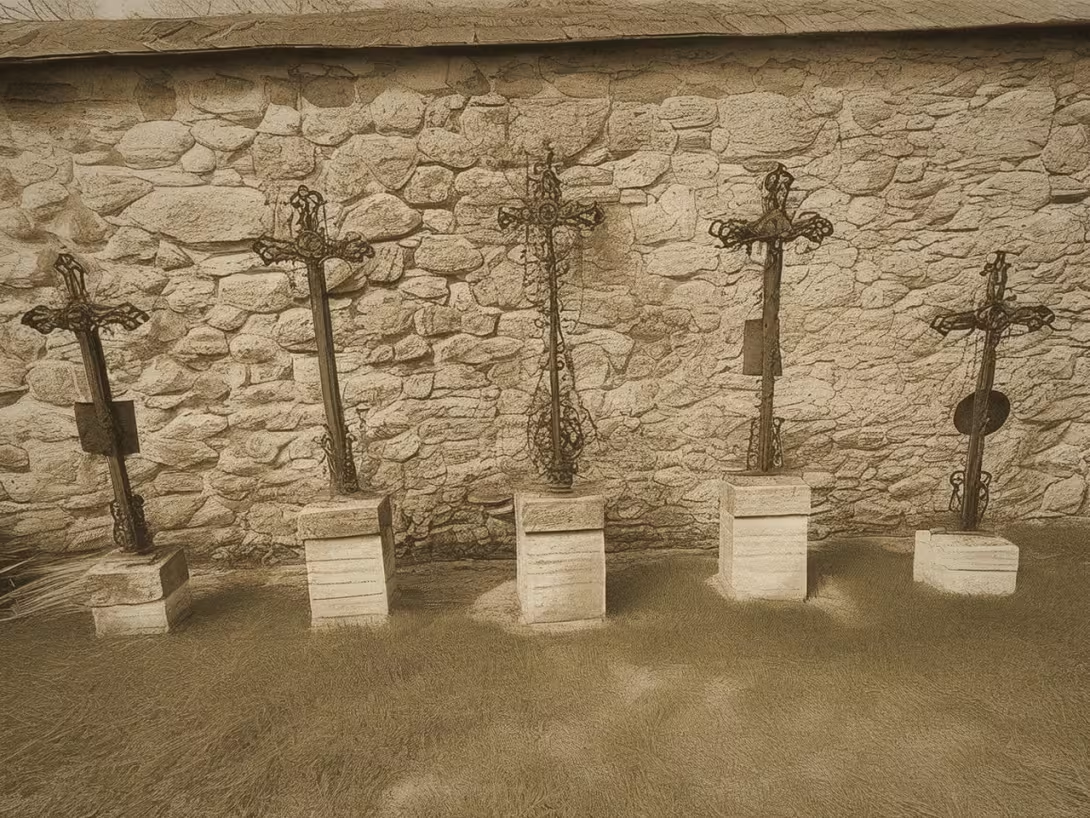
The historical view on the left is a visualisation generated by artificial intelligence and serves as inspiration.
Historical Milestones
- 1750
- The beginning of cast iron cross-blending in Slovakia
- 1802
- Cast iron cross formation in Hanisk
Interesting facts
- It is a national cultural monument. - The object represents a cross made of cast iron from 1802. - The monument is located in Grajciar in the village Haniska. - It is registered by the Slovak Monument Office under number ÚZPF 4389.
Guide
The guide was voiced by a synthetic voice created by artificial intelligence.
Show guide text
The text was prepared by artificial intelligence and has not been editorially reviewed. It may contain inaccuracies.
Welcome to Haniska, the beautiful region of Košice region. Right now you are facing silent witnesses of the past, a set of cast iron crosses that create a special, almost sacral atmosphere in this space. When you look at them, you may see only simple metal shapes in the first moment, but in fact these items are a deep expression of the gratitude, sadness, or faith of the people who lived in this area before us. Look at them humbly and try to perceive the silence surrounding them.
Who exactly created these crosses and when they were planted in this earth remains unknown to this day. History of their origin is not exactly documented in written sources, which makes them silent guardians of secrets. In many cases, the cast iron crosses in our parts were produced in compact workshops and subsequently purchased by families as memorials for dead loved ones or as expressions of thanks for the saved life or crops. Although we do not know exactly who the architect of this ensemble was, it is clear that these were people who wanted to leave a mark that would last centuries.
Now, please approach and pay attention to the material itself and its shapes. Note that it is a cast iron, a material that, at the time of its popularity, has enabled the mass production of detailed ornaments that would take much longer to cut out the stone and cost much more money. Look at the details you see right in front of you. Watch as time is marked on the surface of these crosses. Patina and traces of natural aging give each one their own face. Consider the rhythm with which these crosses are spread, and consider how their presence in this country makes you feel.
If we look for specific names of the personalities associated with this place, we will come across the silence of history. There are no records of known personalities directly establishing these crosses. That is where their strength lies. They are not monuments of fame known to politicians or nobles, but they are the testimony of ordinary people. They are traces of people whose names may no longer be remembered, but their desire for death and memory persisted in these metal shapes. It is a story of anonymity, which is also universal and deeply human.
Perhaps now you will wonder why these crosses are right here and what exactly they mean. That is where the greatest mystery of this place lies. Since we don't know the exact chronology or the reason for their location, we just have to assume. Were they significant roads, monuments of particular tragedies, or perhaps symbols of protection for the entire village of Haniska? Each visitor can answer in his own way. This unfamiliarity is not a shortcoming, but an invitation to think and to realize the passing of time.
Look around you slowly and see the connection of these crosses to the surrounding landscape. You will see that they naturally fit into the environment, as if growing with it. It is fascinating how a material that is as hard and cold as a cast iron can produce such warm and melancholy feelings.
I hope this short stop in Haniska has helped you to better perceive this subtle but significant set. These cast iron crosses are a reminder that history is not only about the great battles and royal courts, but also about the silent symbols that we have left behind our ancestors. I'm inviting you now to further explore the surroundings. Let yourself be guided by your curiosity and see further details of this beautiful area. Thank you for your attention and I wish you a peaceful and inspiring day on your next journey.
Tips for visitors
Crosses in Haniska we recommend to visit in favorable weather and clear day when natural light highlights their details.
Locality is available by car and public transport; check your current links in online search engines.
For photography are suitable morning or afternoon hours, which create cross-walls on the surfaces. Since it is an object in public space, it can be photographed from different angles and distances.
We recommend outdoor shoes and water.
Families with children can follow historical details in the natural environment.
Frequently asked questions
Can the monument be visited?
This is a structure in a public space that can usually be seen from outside free of charge. We have not verified that this particular one is freely accessible.
Where is the monument?
Location: Grajciar, Haniska, Košický kraj. The map on this page shows the exact spot.
Why is the monument protected?
It is listed in the Central List of the Monuments Fund of the Slovak Republic as a national cultural monument (ÚZPF no. 426-4389).
For children
Pull your shoelaces tight and close your eyes. Now we're gonna move back in exactly 224 years. Imagine a world where there were no cars, electricity, or mobile phones. The air is clear, the surroundings are just dense forests and quiet meadows. It is 1802, and you are now in the village of Haniska.
Thematic route
As there are no other objects in the surrounding area, I propose a thematic route within the main objective area:
1. Set of cast iron crosses - Main point of visit. It's a collection of religious monuments made of cast iron. 2. The immediate area of the cross - Walking around the memorials, where you can follow the differences in styles and size of the cross in the natural surroundings of the village Haniska.
Seasonal recommendations
In spring, fresh greenery and flowering trees contrast with the dark metal of cast iron crosses in Hanisko. We recommend visiting the site in the morning. Because of the spring rains, it is advisable to put on waterproof shoes and take a lightweight coat.
Summer season brings intense lighting and full growth of vegetation. Crosses are visible in bright sunshine even during the evening hours before sunset. Due to high temperatures we recommend morning or late afternoon terms, plenty of drinking water and sun protection.
Autumn in Haniska is characterized by colorful leaves and frequent fog. Lighter autumn light highlights cast iron texture and metal processing details.
In winter, snow or frost creates visual contrast on the cross. Since the days are short, schedule a visit until noon. Warm winter clothes, thermolayers, and insulated footwear are essential.
Visualisations and artistic views

The visualisations are generated by artificial intelligence and serve as inspiration.
Visitor Tips
No tips yet. Be the first!
Log in and add your tip.
Visitor photos
No photos yet. Be the first to add a photo from your visit!
Log in and add your photo or leave a rating.
You get more points for a visit verified in the app — we can tell from the GPS that you are there.
Reviews and comments