

chapel of St. John Nepomuk Wayside shrine with statue
St John's Chapel Nepomuckého in the village of Ruska in the Košice region is a building with a statue from the period of baroque and classicism. It comes from 1800 and is registered as a national cultural monument under the number of the ÚZPF 11343.
St John's Statue Nepomuk had the village inhabitants exhibited in 1792. The stone chapel was subsequently initiated by sheep shepherds after the flood of 1813. The existence of the building is documented in the canonical visitation from 1832 and in the drawing Podolínec from 1836.
It is a Baroque-Classicist building with a polygonal finish. Above the opening there is an arch shield with three festons and an ejected ledge, on the sides are two pilasters with a Corinthian head. The interior is closed with a spring vault. In the middle of the vault is a stucco relief with the figure of the Virgin Mary in the garland of flowers and in the corners of four stucco angels.
In the space there is stone mensa. It has a stone retable with the inscription DOM C DIN CO 1720 decorated by two angels of light-nones with six-pointed star lamps.
The chapel was repaired in 1973. Currently, the object is surrounded by a small park.
Tehdy a dnes
Drag the slider and compare how the monument might have looked when it was built with the view today.
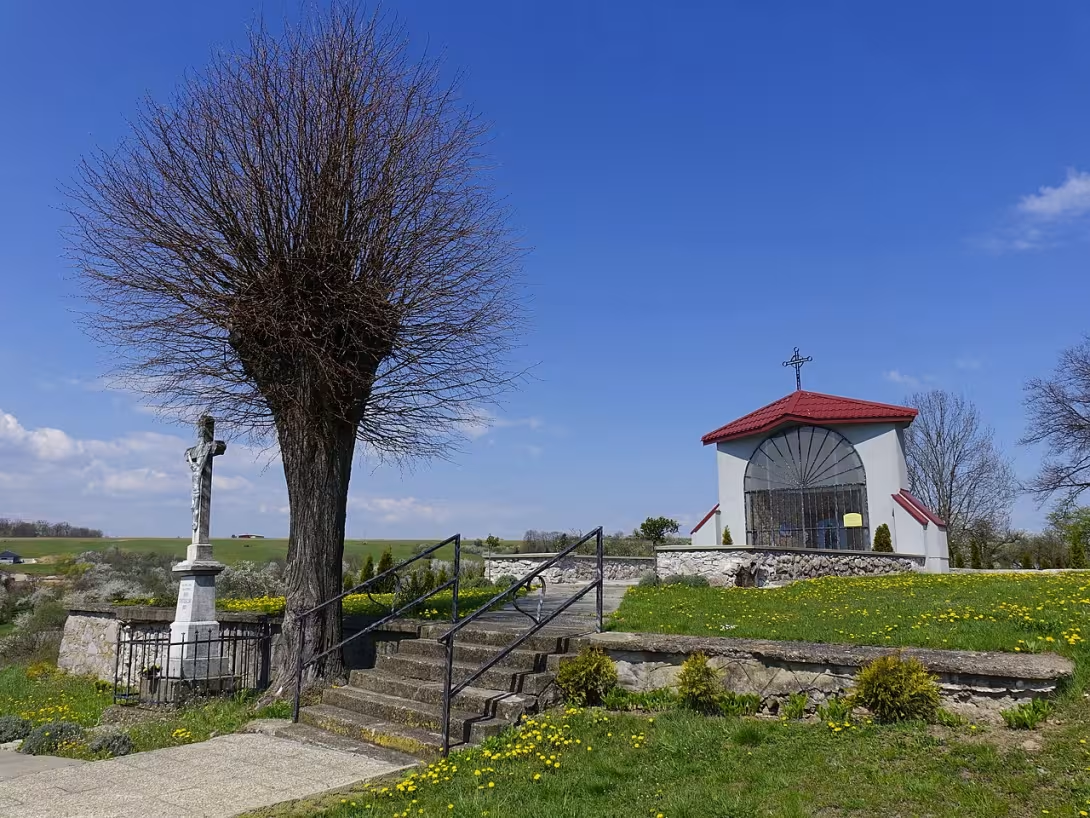
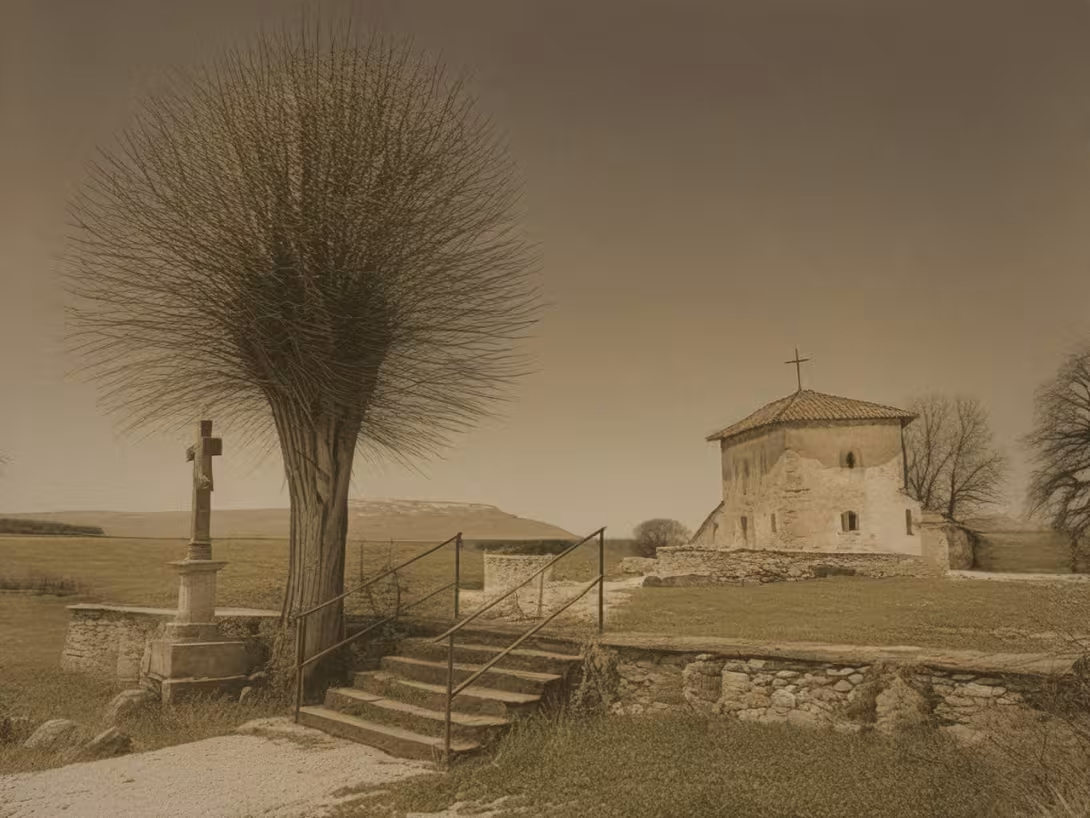
The historical view on the left is a visualisation generated by artificial intelligence and serves as inspiration.
Historical Milestones
- 1792
- residents had the statue exposed
- 1813
- initiating the construction of the stone chapel by sheep shepherds after one of the largest floods
- 1832
- mentioned in the canonic presentation
- 1836
- mentioned in the drawing Podolinec
- 1973
- correction of chapel
Interesting facts
- St John's Statue Nepomuk had the village inhabitants exhibited in 1792. - The stone chapel was subsequently initiated by sheep shepherds after the flood of 1813. - The interior is encircled by a spring vault with relief of the Virgin Mary and four stucco angels in the corners. - On the stone mensa stands a retable with the inscription DOM C DIN CO 1720 decorated by angels with six-pointed star lanterns. - The building is registered as a national cultural monument under number ÚZPF 11343.
Guide
The guide was voiced by a synthetic voice created by artificial intelligence.
Show guide text
The text was prepared by artificial intelligence and has not been editorially reviewed. It may contain inaccuracies.
Welcome to the village of Ruska, in the heart of the Košice region, where time seems to slow down and nature harmoniously complements the works of human hands. You stand before a small but important monument that represents the deep spirituality and gratitude of the local inhabitants in the lands of the chapels. Before you the bars of the chapel of St. John Nepomuk. Although modest construction is involved, its presence in this area brings a sense of peace and stability that has been accompanying passengers for many generations. Look at it in all its simplicity and perceive the atmosphere of this place where faith, history and the memory of local people unite.
To understand why this chapel is standing here, we must rush back to the past, until the end of the eighteenth century. The story of this place did not begin immediately with the building itself, but with a statue. In 1792, the inhabitants of the village decided to express their respect and gratitude by having the statue of St. John Nepomuk brought out. This saint is very revered at our ends, known as a protector from floods and a guardian of silence, which gives this place a special peaceful character. The statue stood alone for so long until 1813 which changed the fate of this site. During this period, the region was hit by one of the biggest floods that left deep traces in the country and in people's hearts. It was in response to this natural disaster and the need for spiritual shelter and gratitude for salvation that sheep shepherds initiated the construction of a stone chapel to protect the statue and provide a place for prayer. It is fascinating to realize that behind the creation of this building were not known architects or nobles, but ordinary people from the local environment, namely shepherds, who at that time formed an important part of the economic and social life of this area.
Now I want to invite you to take a closer look at the architecture itself and the details that make this building more than a mere stone house. Note the materials and the way the chapel is built. Although the fad is modest, its inner space hides surprises that testify to the tastes and skills of the craftsmen of the time. If you look inside, you can see the lines of the ceiling. The interior is encircled by a spring vault, which is a technical detail that gives space stability and at the same time aesthetic value. Your view now please point to the details in the upper parts. In the corners of the arch there are four stucco angels who with gentleness and ease complement the overall impression of the interior. These tiny characters of angels guard the peace of this place, reminiscent of the heavenly protection that people in Russian sought.
Another important detail that you should take care of right now is the central part of the chapel. There's a retabulum on the stone mensa, on a rocky blanket. The plant is an altar superstructure, which in this case bears the inscription. Look carefully at it. These letters are a closer witness of time, and faith in the power of Saint John Nepomuk is anchored here not only in stone but also in word. The relief of the Virgin Mary dominates the whole area, which is part of the inner decorating and represents the highest spiritual authority and protector.
When we stop at the historical context, we find that the chapel is not only a silent witness but is documented in official records. In 1832, it was mentioned in a canonical presentation, which means that it was officially visited and checked by a church representative, confirming its importance to the local community in the first half of the 19th century. Even more interesting is the year 1836, when the chapel appears in the drawing of Podolínec. It is fascinating to think that almost two hundred years ago this visual detail attracted the artistic soul, which captured it in its drawing, allowing us today to imagine what the construction looked like during that period. Time doesn't just take the wrong object. In order to keep the chapel in this state, in 1973 it went through a necessary repair that saved its historical value to us, current visitors.
You may now wonder why sheep shepherds have initiated construction. At that time, shepherds were key figures in mountain and pre-mountain areas. Their lives were full of risk, constant struggle with nature, and responsibility for their flocks. The 1813 basin was probably a traumatic experience for them to build this place of prayer. The chapel is not just a religious building but a symbol of solidarity and gratitude for people who have lived in close contact with nature and its unpredictableness. It is a memorial of a simple man, his faith and his ability to create something lasting for future generations.
Do you care what's left of the secret? Although we know the dates and basic facts, the identity of the specific craftsmen who cut out these angels or built a spring vault remained in the deserts of events. We don't know exactly who held the chisel in his hand when he created the relief of the Virgin Mary. It is this anonymity that gives the chapel some charm. It is not the work of a well - known master, but the result of joint efforts by a community that wanted to express its feelings. Every detail, from stone mensa to stucco decorating, speaks of the depth of the inner beliefs of people from the village of Ruska.
Now that you have looked at all the details and learned about the fate of this arrival chapel, I suggest you for a moment in silence think about how much the world around us has changed, while this stone structure remains almost unchanged. Feel the contrast between the silence of this chapel and the noise of the modern world.
We invite you now to further study the surroundings of the village of Ruska. Let yourself be guided by paths that may have forefathered the same shepherds, and look for further traces of history that this beautiful region of Košice bears. We hope this short trip to the past has helped you to better understand the meaning of the chapel of St. John Nepomuk. Thank you for your attention and we wish you a pleasant and peaceful day to discover the beauty of our country.
Tips for visitors
St John's Chapel Nepomuk is recommended to visit in spring or summer. In the natural light, especially early in the morning or before darkening of the sun, detailed images of the facade and composition with the surrounding landscape are most prominent. The details of the saint are best captured in the morning.
Families with children can connect the visit with a short walk and get acquainted with the arrival architecture. Since there are no other attractions in the immediate vicinity, we recommend connecting the route to the nature survey in the vicinity of the village of Ruska.
Frequently asked questions
Can the monument be visited?
Religious buildings are usually open mainly during services; at other times a visit is normally arranged with the parish or the operator. We have not verified specific times.
Where is the monument?
Location: Ruská, Košický kraj. The map on this page shows the exact spot.
Why is the monument protected?
It is listed in the Central List of the Monuments Fund of the Slovak Republic as a national cultural monument (ÚZPF no. 427-11343).
For children
Close your eyes for a while and imagine you're moving on with time. You're traveling deep into the past, just 226 years back. You're no longer in today's world with cell phones and Internet. The surroundings of the village of Ruska look completely different. The roads are dusty, the air is clean, and only the ringing of the sheep bells and the noise of the wind in the meadows interrupts quietly. Welcome to the time when the world was spinning slower and every small building along the way had its secret story.
Nearby
🏰 Historic sites (46)
- Реформатська церква 2.6 km вулиця Яноша Буттлера 1
- Ľudovít Štúr 4.6 km
- sv. Štefan I. Uhorský 5.1 km
- János Erdélyi 5.1 km
- Géza Herczegh 5.2 km
- Sándor Petőfi 5.4 km
- Štefan Dobo 5.4 km
- 1100. výročie osídlenia otčiny 5.4 km
- Andreas II. 5.4 km
- Pavol Országh Hviezdoslav 5.5 km
- Костел Воздвиження Чесного Хреста 6.8 km вулиця Шандора Петефі 80
- Kúria Berzeviczyovcov 7.8 km
- Na čiare 7.8 km
- Реформатська Церква 8.0 km вулиця Сторожниця 78
- Prof. Štefan Hapák 8.5 km
- Kasigarda – Múzeum vysťahovalectva z územia Slovenska do Severnej Ameriky 9.3 km Ťahyňská 915/36 +421915878924 web
- Hradisko Boťany 10.7 km
- Premonštrátsky kláštor 11.6 km +421 56 636 23 23 web
- Костьол Успіння Пресвятої Діви Марії 12.1 km
- Меморіал воїнам визволителям у ДСВ 12.1 km
🍽️ Restaurants and dining (213)
- Hotelová krčma 4.6 km
- Reštaurácia penziónu 4.7 km
- Life Cafe 5.3 km web
- Fresh Corner 5.4 km
- Hostinec G 5.4 km
- Don Papa Pizza 5.4 km
- Forty cafe 5.6 km
- Pub Ibizza 5.7 km
- Neapol 5.8 km
- Pizza King 6.0 km
- L'amour 6.3 km Janka Kráľa 2216/27
- Bufet Oáza / Latorica 7.5 km
- Na čiare 7.8 km
- Italia snack & Pizza 7.9 km вулиця Ракоці 59
- Корал 8.3 km
- Kis Kakas 9.2 km
- Панська Втіха 9.8 km
- АВС у Тарція 9.9 km
- Зіна 10.0 km
- Пельменна 10.0 km
🏨 Accommodation (25)
- Hotel Družba 4.6 km Zelená 175/65
- Panzion GRIFF 4.7 km Hlavná 172/3
- Ubytovňa Energosun 6.5 km Janka Kráľa 1115/28
- Панська втіха 9.8 km вулиця Свободи 50-Б
- Круїз 9.9 km вулиця Свободи 48 web
- Янтар 10.3 km вулиця Шевченка 3
- Чарда готель 10.9 km вулиця Перемоги 101
- Минай 11.7 km web
- Готель-ресторан "Європа" 11.9 km +380 312 71 6400
- Смарагд 11.9 km
- Локомотив 12.7 km
- Дует 13.0 km вулиця Академіка Корольова 17
- SzaboFFcsik 13.8 km Дубова вулиця 5
- Арго 13.9 km Капушанська вулиця 50/1 web
- Емігранд Art Hotel 14.1 km Митна вулиця 31 +380 67 483 1513 web
- Motel 14.2 km
- AC 14.3 km +380 99 175 4935
- Ужгород 14.4 km площа Богдана Хмельницького 2 +380 312 61 9050 web
- Летючий голландець 14.6 km
- Monada Hotel & Hostel 14.6 km
🚲 Rentals and sport (16)
- Sanatórium pre bicykle 5.1 km +421949753452
- Авто та велозапчастини 12.2 km Головна вулиця 29-А
- Сарбон 12.5 km
- Intersport 12.5 km
- Велофан 12.7 km
- Спортивно-оздоровчий комплекс «Акварель» 12.8 km вулиця Патруса-Карпатського 1-А
- Юність 14.0 km вулиця Марії Заньковецької 5
- Іппон 14.1 km
- Буревісник 14.2 km Митна вулиця 29
- Záhonyi sporttelep 14.3 km
- Ekstremal 14.3 km
- Városi Uszoda 14.3 km József Attila út 56 +36 45 425111;+36 45 414898 web
- Тату-байк 14.7 km Закарпатська вулиця 45
- Max Drive веломаркет 14.9 km Мукачівська вулиця 13 +380 50 850 5292 web
- Adidas 15.0 km
- Bikemaster 15.0 km Робоча вулиця 1 +380 50 841 5469
🥾 Hiking and nature (30)
- Čizer 5.0 km
- Lanový most 6.8 km
- Vŕšok 8.3 km
- Duran 8.8 km
- Piesok 9.6 km
- Парк для коней 9.6 km
- Veľký háj 10.3 km
- Rozhľadňa Čičarovce 10.8 km
- Most svätého Gottharda 11.8 km
- rozhľadňa Bačka 12.4 km
- алея Андрія Палая 12.7 km
- Šeremšín 12.7 km
- Nejzápadnější geografický bod Ukrajiny 12.8 km
- Міський парк 12.9 km
- Vyhliadkova plošina 13.1 km
- Зоопарк 13.1 km
- Мінеральне джерело 13.2 km
- Železničný park 13.4 km
- Moľva 13.5 km
- Боздоський парк 13.5 km
Thematic route
Since there are no other objects in the area of the area, I propose a route focused on the main objective and its environment:
1. St John's Chapel Nepomuk Chapel - a visit point where you can see the architecture and details of this monument. 2. Chapel area - walk around the house and in the country of the village of Ruska.
Seasonal recommendations
In spring, the surroundings of the arrival chapel of St. John Nepomuk in the village of Ruska will awaken into life. Nature in the Košice region during this period blooms and young greenery creates a contrast to historical construction. The place is suitable to visit in the morning when the light is fine and the air is clean. Due to variable weather, layered clothing and waterproof footwear are recommended.
Summer season brings intense sunlight, which highlights the details of sacral architecture. The surroundings of the chapel are surrounded by trees and shrubs in full leaves. Due to high temperatures, early morning or late evening time is suitable. It is practical to take sun protection and plenty of drinking water.
Autumn around the chapel is characterized by a change in the colors of leaves to golden and red shades. Soft light in this period will process photography construction. It is recommended to wear clothes suitable for colder days, such as lightweight jackets or scarves.
Winter brings peace to the country. The snow cover can wrap the chapel in a white coat, which will highlight its loneliness in the country. During the visit, it is necessary to wear very warm and waterproof clothing and use footwear with anti-slip sole to avoid falling on frozen soil.
Visualisations and artistic views


The visualisations are generated by artificial intelligence and serve as inspiration.
Photographs from the area
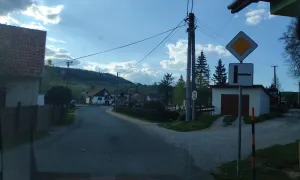
Real photos taken near the monument


Source and licence are given for each image.
Visitor Tips
No tips yet. Be the first!
Log in and add your tip.
Location on Map
Visitor photos
No photos yet. Be the first to add a photo from your visit!
Log in and add your photo or leave a rating.
You get more points for a visit verified in the app — we can tell from the GPS that you are there.
Reviews and comments