

church of the Ascension of the Lord Church
Church of the Ascension of the Lord in the village Island (Košice region) is a neo-Gothic Roman Catholic church built at the turn of the 19th and 20th centuries. It is located in the centre of the village and is listed in the Central List of Monument Fund of the Slovak Republic under the number 10 273/0.
The building was established in 1900 - 1905. Local believers bought land from the Boha estate family from Sobraniec. Previously there was only a bell tower in the village; the construction of the church itself began in 1907. At that time he was a satmarian bishop of Tibor Boromisza, and the island was a branch of Tibavavy where priest Pásztor worked. The building was led by the Masonic Master Čičajčík with 21 bricklayers. Believers engaged in the construction work - they worked about 500 hours - and financially according to the size of their property. Stones from Choňkovce and Maciková mine, sand from Jovre in Ukraine and lime from Brekov were used. The church cost 24,000 crowns and was completed in 1910, when believers paid another 500 crowns. The main altar was donated by Bishop Tibor Boromisza, who blessed the church on May 5, 1910.
The architecture is neo-Gothic with a single-ship space, a polygonal cap of the presbytery and a tower. The interior has pseudogothic vaults. Above the entrance portal there is a viperk with supporting pillars and purple. Facades break broken windows in shambles and two-tier support pillars. On the right side there is an extension. The tower has a high pyramid with triangular shields at the bottom. Internal equipment is pseudogothic from the beginning of the 20th century. The Confessor, the side altar of the Virgin Mary, the bases under the statues and benches were made by the carpenter Michal Kukemezey from Sobraniec. The statues and decorations were created for the priest Pásztor. The statue of St. Theresa Jesusová was purchased in 1940 from the resources that the youth received by performing theater for the priest Z. Krajjansky and teacher Bujdoš.
The church administration was changed in accordance with the church organization; it served as a branch of Tibava and later as a separate parish. During the front crossing in 1944, the church and its tower were damaged. The shrapnel from the thrown bridge near the Island hit the pulpit, the chorus, the cross, and the sheeting of the roof. There are still holes in the building from the missiles. Between 1944 - 1972, the bell was transferred from Ostrov to Sobraniec, where it serves as a dying man today.
Key events include community-funded construction and the donating of the main altar by Bishop Boromisz. Emigrants in America, Michal Janík and Michal Dermek, collected 20,000 crowns, of which the Tomkovský carpenter from the coast made a wooden pulpit. In 1910 the cross fell from the tower, which was then repaired and returned to place. In 1925 a new bell was cast and in 1935 the interior was painted by academic painter Nicholas Jordan from Presov. The reconstructions took place in 1946, 1964 and 1974. The painting was performed by Jozef Branna and Jubák, the bell was tuned in 1977. In 1968 heating was introduced and in 1972 delivered carved Bethlehem from Červený Kostelca. In 1962 a reinforced concrete fence was built around the church.
Today the Church of the Ascension of the Lord in the Island is functional and accessible to visitors.
Tehdy a dnes
Drag the slider and compare how the monument might have looked when it was built with the view today.
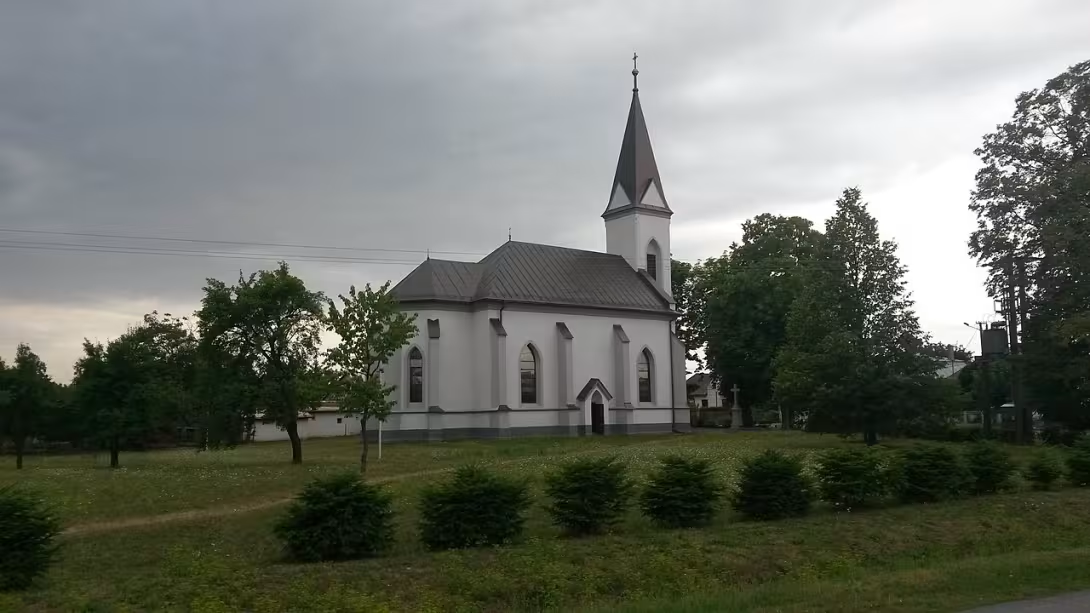
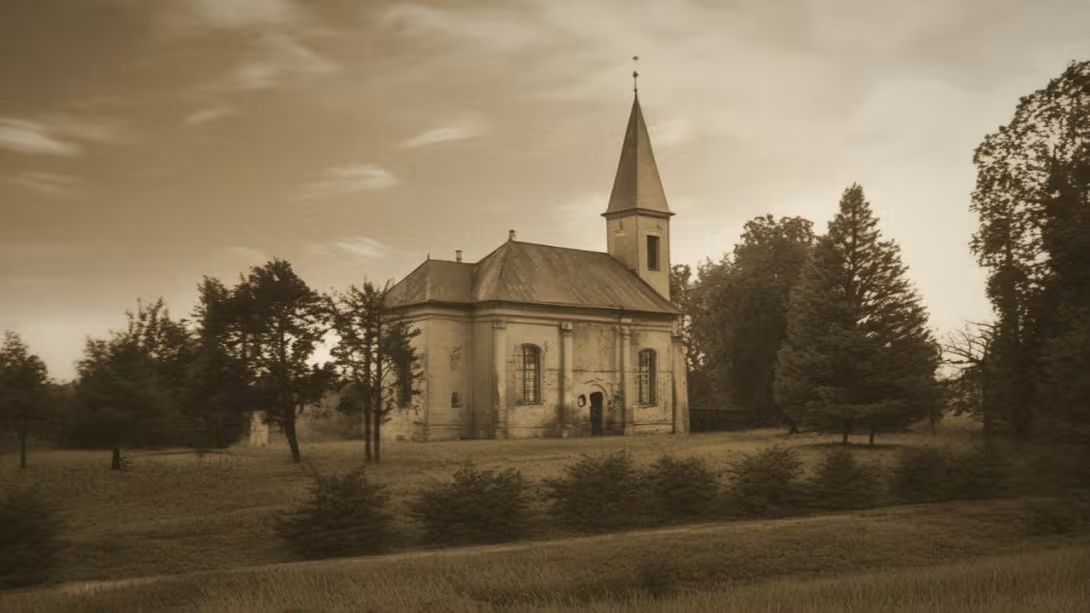
The historical view on the left is a visualisation generated by artificial intelligence and serves as inspiration.
Historical Milestones
- 1907 - beginning of church construction
- 1910 - celebration in the church (5 may)
- 1921 - purchase of pneumatic organ
- 1925 - spilling a new bell
Artistic features
-
vitráž figurálna s dekorom — Nanebovstúpenie Krista
sklo, vkladanie do siete · moderna · 1981-1990 -
vitráž figurálna s dekorom — Panna Mária s dieťaťom
sklo, vkladanie do siete · moderna · 1981-1990 -
vitráž dekoratívna — Geometrický dekor
sklo, vkladanie do siete · moderna · 1981-1990 -
vitráž figurálna s dekorom — sv.Rodina
sklo, vkladanie do siete · moderna · 1981-1990 -
vitráž figurálna s dekorom — Krst Krista
sklo, vkladanie do siete · moderna · 1981-1990 -
vitráž figurálna s dekorom — Dobrý pastier
sklo, vkladanie do siete · moderna · 1981-1990
Source: Monuments Board of the Slovak Republic — open data, licence CC BY 4.0
Interesting facts
- The church was founded at the turn of the 19th and 20th centuries from materials such as stones from Choňkovce and Maciková mine, sand from Jovre in Ukraine and lime from Brekov. - The believers participated in the construction financially and by their own work, working approximately 500 hours. - The wooden pulpit was made by the Tomkovský wood carpenter from Úbreža from 20,000 crowns raised by emigrants in America. - The statue of St.
Guide
Show guide text
The text was prepared by artificial intelligence and has not been editorially reviewed. It may contain inaccuracies.
Welcome to the village Island in the Košice region. Right now you are standing before the Church of the Ascension of the Lord, which dominates the space around you and invites you to stop and think about. When you look at it, you will see a structure that is not just religious in itself but, above all, is a witness to a deep connection between the local people and their common home. Feel the atmosphere of this place and try to imagine the time when work on its construction was first started.
Although the exact chronology of creation and the names of architects remained unknown in time, this church stands as tangible evidence of human devotion. The building was built at the turn of the nineteenth and twentieth centuries, which was the time of change and development. During this period, churches were not just the result of the work of professional builders, but often became centres of community unification. It is in this case that architecture is not just a set of walls and roofs, but the result of a joint effort of the whole village, which decided to create a place for its spiritual need.
Now that you're closer looking at the building, look at its materials. At first glance, this may seem like a normal structure, but behind every stone lies the story of a long journey. This church is made up of materials that have been transported from different areas. The stones that form the foundation and walls come from Choňkovec and Macik's mine. Sand, which added the necessary strength to the building mixtures, was imported from Jovre in Ukraine, while lime comes from Brekovo. It is fascinating to think of the logistical effort required in times before modern traffic. Each of these elements symbolizes the combination of different cities and regions that have met at this point to create something permanent.
Let us now look at what makes this structure truly special. It is not only the quality of the materials used, but above all the human benefit. This church wasn't built just for money from external sources. Believers joined the construction with extraordinary intensity. In addition to financial support, they put their own work into the building. It is estimated that locals have worked some 500 hours of physical work. Imagine these hundreds of hours of drying, transporting stones, and kneading sand with lime. Every detail you see now bears a mark on the hands of people who lived here more than a hundred years ago and wanted to leave something behind for their children and grandchildren.
If you get inside the church, we recommend paying special attention to the wooden pulpit. This is an element that gives space a personal character. It was made by Tomkovský local carpenter from the O... this detailed woodwork is a beautiful addition to robust stone walls and reminds us that craftsmen from the near surroundings have put their artistic skills into this building. The pulpit is not only a functional element for liturgy, but it is also a demonstration of local craft and precision, which was intended to celebrate the deity and beauty of human skill.
Interestingly, this church combines natural resources from several regions and areas with the unseen efforts of local residents. It is a place where lime from Brekov meets, sand from Ukraine and sweating local men and women. This combination creates the unique energy of a place that is not just a building but a monument to community solidarity. It's a story that when people come together as a common goal, they can create something that lasts centuries.
Now that you have learned about the origin of the materials and the self - sacrifice of the people who built this church, look at it again. View it not only as an architectural object, but as a history witness. Note how harmoniously it fits into the country around the village of Ostrov and how it carries the silence and peace that visitors are looking for by far also local believers.
We invite you now to further explore this beautiful area. You can walk around the building in peace, think about the story of its origin, or visit the interior and look at the pulpit. Let yourself be guided by the atmosphere of this place and give yourself a moment of silence near this historical witness. Thank you for your attention and we wish you a pleasant follow-up tour around the area.
Tips for visitors
A spring or autumn period is appropriate for the visit. You can travel by car or public transport; check your current connections in your online search engine. Take water and comfortable shoes. Times around sunrise or sunset are suitable for photographing the details of the building. There are no other attractions in the area.
Frequently asked questions
Can the monument be visited?
Religious buildings are usually open mainly during services; at other times a visit is normally arranged with the parish or the operator. We have not verified specific times. According to the heritage register restoration is under way, so access may be restricted.
Where is the monument?
Location: č. 1, Ostrov, Košický kraj. The map on this page shows the exact spot.
Why is the monument protected?
It is listed in the Central List of the Monuments Fund of the Slovak Republic as a national cultural monument (ÚZPF no. 429-10273).
For children
Imagine being teleported to a time when there were no computers, Internet, or machines. It is the end of the 19th century and something big and exciting is just starting in the village of Island. All the people around you are full of energy. They're not just the residents, they're the ones who want to create something that will survive centuries.
Nearby
🏰 Historic sites (63)
- Gitarové múzeum 2.7 km Gorkého 338/9 +421902370909 web
- Odvlečených židov 2.8 km
- Utečencov čo umreli na hraniciach 2.8 km
- sv. Michal Archanjel 3.0 km
- Panna Mária 3.6 km
- Kúria 8.0 km
- Hrádok Choňkovce 11.4 km
- Kaštieľ Senné 11.4 km web
- Prof. Štefan Hapák 12.7 km
- Podstavec kríža 1903 12.8 km
- Na čiare 13.0 km
- Українсько-угорській дружбі 13.3 km
- Vila 13.7 km
- Закарпатцям-ліквідаторам наслідків Чорнобильської катастрофи 13.7 km
- Музей історії УжНУ 13.8 km
- Археологічний музей УжНУ 13.8 km
- Milan Rastislav Štefánik 13.8 km
- Пагорб слави 13.8 km
- Taras Ševčenko 13.8 km
- Меморіал солдатам 13.8 km
🍽️ Restaurants and dining (281)
- Pohoda 2.4 km
- Očko Pub 2.6 km
- Pohostinstvo Marta 2.8 km
- Pizzeria Marianno 2.9 km
- Pizzeria Megyco 2.9 km
- Maňa 3.0 km
- 11-ka Pub 3.0 km
- Reštaurácia Lucia 3.0 km +421 908 504 600
- Roulette club 3.1 km
- Fresh Corner 3.1 km
- Bunker 3.2 km
- Cupika 3.2 km
- Pohostinstvo 3.8 km
- Hostinec Motuz 4.0 km
- Reštaurácia Sobranecké Kúpele 5.5 km +421 907 146 785
- Motorest Marko 7.8 km
- Hostinec pod Lipou 8.8 km
- Hostinec Bystrina 9.4 km
- Espresso 10.1 km
- Bon Voyage 10.7 km
🏨 Accommodation (46)
- Ubytovanie 6.0 km
- PZ SRNEC Baškovce 9.9 km
- Прага 11.6 km Верховинська вулиця 38 +380 312 64 0764 web
- Гостинний дім 11.6 km Верховинська вулиця 36 +380 312 64 4428;+380 312 61 4470 web
- Europa 11.6 km Верховинська вулиця 3 +380 312 64 2518 web
- Хата 12.0 km
- Apartel Uzhhorod 12.1 km +380 67 005 5552 web
- Гуллівер 12.3 km
- Park Hotel Bristol 12.6 km вулиця Героїв України 29
- Green Island 12.6 km
- White Hills 13.5 km Мисливський провулок 7 +38 050 1440077 web
- Світанок 13.7 km Кошицька вулиця 30
- Емігранд Art Hotel 13.7 km Митна вулиця 31 +380 67 483 1513 web
- Кілікія 13.8 km web
- Янтар 13.8 km вулиця Шевченка 3
- Дует Плюс 13.8 km Кошицька вулиця 6 +380 3122 29 921 web
- Penzión Ivana 13.9 km
- Gazdovské lesy Vyšná Rybnica 13.9 km
- Sĺňava 14.0 km
- Дружба 14.1 km Висока вулиця 12 +380 312 61 2133 web
🚲 Rentals and sport (15)
- Špica 3.1 km
- Letné kúpalisko Sobrance 3.4 km
- Тату-байк 12.9 km Закарпатська вулиця 45
- Іппон 13.7 km
- Intersport 13.7 km
- Буревісник 13.8 km Митна вулиця 29
- Bike Point 13.9 km Собранецька вулиця 34 +380 66 005 3003
- Спецодяг Штурм 14.1 km
- Екстремал 14.6 km web
- Всеспорт 14.6 km
- Панда 14.7 km
- Adidas 14.7 km
- Еталон 14.8 km
- Medvedia hora 14.8 km
- Юність 15.1 km вулиця Марії Заньковецької 5
🥾 Hiking and nature (82)
- Grúnik 1.1 km
- Baťkov 1.3 km
- Roh 3.3 km
- Za cintorínom 3.7 km
- Pniaky 4.3 km
- Rúbanec 5.0 km
- Vrt TSM-2 5.3 km
- Očný prameň 5.4 km
- Grúň 5.4 km
- Remetisko 5.5 km
- Maliníky 5.8 km
- Skalka 6.7 km
- Borsučina 6.9 km
- Mastenič 7.4 km
- Vinohrunok 8.3 km
- Jamisko 8.5 km
- Čonkáš 8.9 km
- Baňa 9.5 km
- Malý Ščob 9.9 km
- Španí vrch 9.9 km
Thematic route
Since there are no specific locations in the area of the area, I propose a route focused on the monument and its immediate surroundings in the village of Ostrov. This ring trail allows you to explore the site without the need to deviate to more distant parts of the region.
Church of the Ascension of the Lord The main destination of the trip. The building reflects the building traditions of Košice region. The interior contains sacral decoration.
Courtyard of the church complex Right in front of the church there is a space for rest and orientation. The courtyard allows close attention to the facade and details of building elements.
Church Tower If access to the inside of the tower is possible, it opens a panoramic view of the roofs of the village Island and surrounding landscape. This view helps to understand the geographical position of the village and its relation to the terrain.
Church Park Surroundings The immediate surroundings of the church contain old trees or landscaped garden elements. Walking through this part of the village connects the monument with the natural environment.
Entry gate and historical fortification The remains of historical fortification or entrance gate in the area are part of the overall picture of the place. These elements point to the defence character of church complexes in the past.
The route is manageable within hours. It allows visitors to focus on one memory. It is recommended to come at a time when the church area is open to the public.
Seasonal recommendations
In spring, the surroundings of the Church of the Ascension of the Lord in the village Island will wake up to life and the landscape will surround the greenery. The sun during this period provides fine lighting suitable for photographing the exterior of the building. We recommend shoes to wet terrain and a visit in the morning. Summer season brings intense light and flowering of nature, creating contrast with historical architecture. Due to high temperatures, early morning or late evening time is preferable. Easy clothing and protection from direct sunlight are practical. Podzim in Košice region will spread the surroundings of the church with yellow and red tones of leaves. The low autumn sun creates long shadows that highlight the details of the facade. Due to variable weather, layered clothing and unpretentious shoes are suitable. The winter season brings silence and snow cover to the landscape. During the visit, warm clothing and clothing with anti-slip sole is necessary to avoid inconvenience on frozen roads.
Visualisations and artistic views


The visualisations are generated by artificial intelligence and serve as inspiration.
Photographs from the area
Real photos taken near the monument

Source and licence are given for each image.
Visitor Tips
No tips yet. Be the first!
Log in and add your tip.
Location on Map
More monuments – Ostrov
Show all in the town
Visitor photos
No photos yet. Be the first to add a photo from your visit!
Log in and add your photo or leave a rating.
You get more points for a visit verified in the app — we can tell from the GPS that you are there.
Reviews and comments