








Csillagvar, ground fortress Small castle
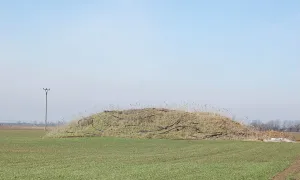
Starry Castle, also known as Stary Castle or Pahorok, is a fascinating ground fortress located near the Little Danube, about 2 km from Dolné Janíky, the local part of the village Janíky in Trnava region. This gorge is remarkable for its irregular hexagon similar to the ground plan and is linked to the devout defense against Turkish troops in the 17th century. Its historical value is highlighted by its registration in the register of national cultural monuments of the Slovak Republic since 1966.
The starfish has emerged as part of a defense system against Turkish troops. Its ground plan, similar to an irregular hexagon, is still remarkably visible and has dimensions of approximately 102 × 112 metres. Based on archaeological findings such as coins, ceramics, pipes and nails, the construction dates back to the 17th century. The castle was surrounded by a palisade wall and a water ditch, probably other defence elements like a fence and a ditch.
The architecture of the castle included 13 wooden buildings for housing and as an armory. These buildings are proof of his role in defense against Turkish troops, making it a valuable monument of the 17th century. The castle is also known under the names Csillagvar and Turkish Val.
The capture is that the castle has two registered objects in the register of the Monument Office of the Slovak Republic: fortification of the Bastónové (No. 2065/1) and a trench (No. 2065/2), both dated after 1663. These elements are part of its Baroque architecture, which has been partially examined.
Today, Starry Castle is available to visitors and worth visiting because of its historical importance and unique ground plan. His presence in Slovakia offers insight into the past, when it was necessary to protect himself from Turkish troops.
Starry Castles is an important part of Slovak history and its visit offers an opportunity to understand defense strategies of the 17th century. Its unique layout and history make it an important cultural monument that is still relevant today.
Historical Milestones
- 17th century
- The emergence of the castle as part of the defence system against Turkish troops
- to 1663
- Formation of Bastion fortification and Priapium
- 1966
- Registration of monuments in the register of national cultural monuments in Slovakia
Interesting facts
Additional name: Starry Castle, Pahorok, Turkish Val
Known ground plan in the shape of an irregular hexagonal star
Guide
Show guide text
The text was prepared by artificial intelligence and has not been editorially reviewed. It may contain inaccuracies.
Welcome to the Janiks. You stand before a place that carries a quiet but very strong trail of ancient history. In front of your eyes, Csillagvár, also known as Hrádok, lies in our contexts. Although at first glance it may seem to be just an unusual shape of this hill, it is, in fact, a monumental witness's day when the fates of entire countries were decided on the border between stability and uncertainty. Feel the atmosphere - this hill is not just a natural part of the country, it is an artificial, strategic point that was designed with a clear and uncompromising aim: to defend.
Let us first understand why this place was created. We must go back deep into the seventh century, namely the seventh century. At that time, the situation in our lands was extremely tense. The threat from the east, the ever approaching Turkish army, was a reality that affected everyone's lives in the region. The castle was not created as a royal palace for fairy tales, but as a functional, military tool of survival. It was part of a wider defense system to protect our territory from the enemy's idea. After 1663 its character has improved further and undergone an important transformation. At that time, what you see today was created - a sophisticated bastion fortification supplemented by a system of ditches. It was not just about the women, but about the precise engineering that was supposed to discourage the enemy before he could penetrate deeper into the country.
Now please pay attention to what you see around you. Look at the overall shape of this place. If you looked at it from a height, you would see something that fascinates every observer - an irregular hexagonal star ground plan. This architecture is not for decoration or for aesthetic beauty, it is a number of mathematics in defense service. Every angle, every arm of this star has been designed to eliminate dead angles where the enemy could hide. Feel the earth rollers that make up here. These are not just heaps of earth, but precisely shaped barriers that make up this unique fort. Note how the terrain adapted to the needs of military engineering. These ramparts, sometimes called the Turkish Wall, constitute an insurmountable obstacle. The fortues that once surrounded them today form part of this unique landscape architecture and define its unusual, stellar profile.
Perhaps at this moment you might like to know the names of the people who built this place, or of the kings and generals who stopped here at the time of the fighting. Here, however, we come across one of the most interesting and mysterious aspects of this place. The architects of this fortu have remained unknown in history. The unknown names of engineers who drew these geometric lines in the seventeenth century do not even know the specific personalities that lived here at times of tension. But it is this anonymity that gives the place a special touch. These are not the names from the textbooks you need to remember, but the voices of anonymous soldiers, engineers and residents who have quietly fulfilled their duties here. See their presence in every inch of this earth, at every angle of this wall.
We also have something for you that may upset your idea of this place. This place has more than one name, which reflects its different faces. Some call it the Castle, others know it as the Star's Castle. The very word, star, is the key to understanding his soul. This star is not just a symbol, it is a physical shape that stands here and defines the entire location. It's a connection between the celestial body and Earth's defense. When you look at this hill, you see not only soil, you see a strategic game in which thousands of people have been betting for lives in the seventeenth century.
Today Csillagvár is no longer a battlefield but a valuable cultural treasure. In 1966 this unique object was officially entered in the register of national cultural monuments of the Slovak Republic. This tells us that what is standing before you is not just a pile of land, but an important heritage that we have a duty to protect for future generations.
Now we invite you to continue this journey. Go through this hill, see its shapes, watch how the earth's ramparts wave in the country and try to imagine what those times looked like when this fort was in full operation and when each of its angles was ready for defense. Let yourself be absorbed in the atmosphere of this historic place and discover its secrets with your own eyes. Thank you for being here with us and for choosing to explore history with us.
Tips for visitors
Best visit time and why: It is best to visit Csillagvar in autumn or winter when it is less warm. This time of the year offers mild light suitable for photography and less rush of visitors.
For public transport: It is appropriate to identify current connections via the search engine.
What to take with you: When visiting Csillagvar we recommend protective clothing for winter days. You can bring the photo and guide to the memorial if you want to learn more about the history and architecture of the castle.
Photography - the best places and light: The best photo moments in Csillagvar are on morning or evening light. Terraces and surrounding landscape pejzaž provide breathtaking perspectives.
What to visit nearby (30 min from place): Near Csillagvar are smaller interesting places, such as traditional villages and historical monuments. The surrounding villages offer a view of traditional life in Trnava region.
Tips for families with children: Csillagvar is also a suitable place for families with children, which devices offer several interactive elements for younger visitors.
Frequently asked questions
Can the monument be visited?
According to the heritage register the site is not presented to the public – there are no accessible remains or information on site.
Where is the monument?
Location: Dolné Janíky, Janíky, Trnavský kraj. The map on this page shows the exact spot.
Why is the monument protected?
It is listed in the Central List of the Monuments Fund of the Slovak Republic as a national cultural monument (ÚZPF no. 211-2065).
Nearby
🏰 Historic sites (199)
- Hviezdicový hrádok 0.0 km
- Dávid Mészáros 1.6 km
- Sv. Florián 2.2 km
- Z príležitosti 750. výročia obce 2.2 km
- HEGYŠÚRANKA 2.3 km
- Sv. Michal 2.3 km
- Sv. Vendelín 2.3 km
- Hasičská striekačka 2.5 km
- Rómsky holokaust 3.3 km
- sv. Vendelín 3.5 km
- Sv. Anton Paduánsky 3.5 km
- Sv. Florián 3.5 km
- Sv. Trojica 3.6 km
- sv. Ján Nepomucký 3.8 km
- Kaštieľ Tonkovce 4.0 km
- Základný kameň 4.2 km
- do dlaní som si ťa vryl 4.2 km
- Ferenc Szimeth 4.2 km
- Sv. Ján Nepomucký 4.5 km
- Vertetics Péter 4.6 km
🍽️ Restaurants and dining (193)
- Pauza 3.5 km +421915857263
- Reštaurácia TRÓFEA 4.6 km +421 31 5691806 web
- Hostinec u Martina 4.6 km
- Ister 4.9 km web
- Flamingo 5.3 km
- Hostinec Bonita 5.6 km
- Fényes 6.1 km Hlavná 539/81
- Fényes 6.1 km
- Ubytovanie u Sovy 6.1 km
- Kamenný dvor 6.2 km web
- Stop Cafe 6.4 km
- Bar 150 6.4 km
- U Juhoša 6.5 km
- Soška coffee&bar 6.5 km Nábrežie Čiernej Vody 8
- U Ernesta 6.6 km web
- Alex Pub 6.6 km 1. mája 202/1
- Old School 6.6 km +421 915 640 810 web
- MALOM 6.6 km web
- Caffé Laguna 6.7 km
- Bistro Dedinka 6.7 km +421 903 558 888 web
🏨 Accommodation (36)
- (backcounty) 1.7 km
- Hotel Máger 3.6 km Prievozská cesta 41/2
- Táborisko pod Krížom 4.6 km +421 949 009 488 web
- Táborisko PomoRanč 4.6 km +421 940 636 602 web
- Ister 4.9 km Dunajská 1266/36
- Vlčanská lúka 5.1 km
- Lúka Tomášov 6.1 km
- Penzión U zlatej rybky 6.1 km web
- Medea 6.2 km
- Táborisko Vodný mlyn 6.6 km
- Táborisko Nová Dedinka 7.0 km
- Zelený dvor 7.0 km
- Anett 7.2 km Železničná 828/15
- Karavanový kemp 7.2 km +421 2 4592 4081 web
- Penzión Lobster 7.4 km +421 902 191 739 web
- Art Hotel Kaštieľ 7.5 km +421 2 209 093 00 web
- Chata Triomint 7.6 km
- Hotel Fortuna 7.6 km +421 2 45 915 194 web
- TP Hotel Družba 7.6 km
- Hotel Senec 7.8 km Slnečné jazerá 2561/113 web
🚲 Rentals and sport (28)
- Opustené kúpalisko 5.6 km
- Cykloservis Polákovič 5.6 km +421 903 850 587
- Telocvična 6.8 km
- splavma.sk 7.0 km +421 905 224 253 web
- Bazén Art Hotela Kaštieľ 7.5 km +421220909300 web
- Člny nože.sk 8.2 km +421 910 658 040 web
- Elfo club - športové stredisko 9.2 km
- Jazdecký areál Anna majer 9.9 km
- Aqualina klub baby plávania 10.1 km +421 915 992 783 web
- AJ bikes 10.4 km +421 950 590 277 web
- Dronte 10.5 km web
- Relaxačno-športové centrum 10.5 km
- Zóna oddychu a relaxácie 10.6 km
- Lodenica Zálesie 10.7 km +421 949 277 761 web
- Centrum jazdeckého športu Bernolákovo 11.0 km
- Cyklohavrila 11.4 km +421 2 4595 1036 web
- Off-road RC Dráha Veľký Grob 12.4 km
- Areál RC Šport Model Klub 12.8 km web
- MSbike 13.1 km +421 907 608 313 web
- Betalservis 13.4 km +421 911 640 926 web
🥾 Hiking and nature (44)
- Borina 0.7 km
- Tonkovský park 4.0 km
- Vodný kolový mlyn Jelka 6.7 km web
- Rozhľadňa Slnečné jazerá 7.4 km
- Rozhľadňa Slnečné jazerá 7.6 km
- Park oddychu 7.7 km Hečkova
- Šibeničný kopec 8.5 km
- Kaštieľsky park 8.7 km Obchodná
- Kaštieľsky park 9.4 km
- Pamätná studňa 9.5 km web
- Totemová lúka 9.6 km
- domček na Malom Dunaji 9.6 km
- u Vcelára 9.7 km
- Zelená oáza 9.7 km
- Žilíp 9.8 km
- Rozhľadňa Hniezdo 10.0 km
- Park Sadová 10.2 km
- Gešajovský mlyn 10.5 km web
- Lipový park 10.5 km
- Anna park 10.5 km
Thematic route
Thematic cruise route to Janíkov and surroundings of Csillagvar
1. Csillagvar, ground fortress (Hradec)
Type: Historical monument
Proč is worth a visit: Csillagvar is an example of an earth fortress built in the 16th century to defend against the Turkish attack. In the heart of Janíky you can explore historical bunkers and understand the strategic importance of this fortress.
2. St. Nicholas Church
Type: Church
Proč is worth visiting: This church is an important part of Janíky and represents an example of Baroque architecture. Its beautiful interiors are ideal for visitors interested in peace and spirituality.
3. Old shops on the main square
Type: Cultural monument
Proč is worth a visit: Visiting these traditional shops offers an opportunity to explore the town of heritage and everyday life. You can move around the streets, which are full of historical elements and urban atmosphere.
4. Local park
Type: Green zone
Proč is worth visiting: The Park in Janíky offers a quiet space for relaxation and a view of the town from its picturesque perspective. An ideal place for short rest periods after visiting Csillagvar.
5. Local museum
Type: Muzeum
Proč is worth a visit: The local museum offers an overview of the history and culture of the village Janíky, including exhibits from local heritage. It is a place for a deeper understanding of historical events associated with Csillagvar.
This route will guide you through the history and culture of the village Janíky, from the dramatic Csillagvar to the more classic aspects of the town.
Seasonal recommendations
Jaro: In spring, Csillagvar in Janíky is marked with flowering plants and colors of nature. Sunlight brightens the walls of the fortress, increasing their beauty. The atmosphere is full of restoration and life. We recommend visiting Csillagvar at the end of spring when there are fewer visitors. Bring resistant pants or dry shoes for the first moisture of the weather.
Léto: Léto in Csillagvary offers warm sunny days and long evenings, ideal for relaxation on the vegetables fortress. Natural light illuminates the architecture and creates contrast with the walls of the castle. The atmosphere is charged with warm energy and loud sounds ofptactv. We recommend visiting Csillagvar in the morning or evening to avoid the highest warm hours and less visitors. Wear soft clothing and protective plaster against sunlight.
Under: In podzimím Csillagvar turns into a fascinating region when wood leaves fall in specific colors. Sunlight is less intense and long evenings bring a skin atmosphere. It is an ideal season to observe changes in nature around the fortress. We recommend visiting Csillagvar in the morning to enjoy warm light and fewer visitors. Wear special clothes for cold weather and a protection against moisture.
Winter: Winter Csillagvar offers a view when the fortress is covered with snow. Sunlight creates beautiful contrasts on the walls of the castles and creates a romantic environment. The atmosphere is quiet and clean, allowing you to enjoy a quiet prohlídka without large crowds. Visit Csillagvar in the morning, when the temperature is most pleasant and less visitors. You wear warm clothes and a protective belt against snow and cold to enjoy winter beauty without problems.
Visualisations and artistic views

The visualisations are generated by artificial intelligence and serve as inspiration.
Visitor Tips
No tips yet. Be the first!
Log in and add your tip.
Zdroje a literatura
The factual basis for this text was the article na Wikipedii, whose authors are Wikipedia contributors. The article is available under the licence CC BY-SA 4.0.
Location on Map
Visitor photos
No photos yet. Be the first to add a photo from your visit!
Log in and add your photo or leave a rating.
You get more points for a visit verified in the app — we can tell from the GPS that you are there.
Reviews and comments