

evangelical church Church
Evangelic church in Mladovo - classicistic toleration building from the mid-19th century
In the central part of the village Mládovo in Banská Bystrica region stands a classicistic evangelical church from the years 1864-1865. This is an example of a tolerance temple built after the abolition of religious restrictions on the non-Catholic population in Hungary. The church without a tower with a flat ceiling and a hallway disposition still serves its original purpose. It is listed in the Central List of the Slovak Republic Monument Fund under the number 464/1.
Background and historical context
The church was founded in the period after the release of the tolerance patent of Emperor Joseph II in 1781, which allowed non-Catholic religions to live more freely. In the second half of the 19th century, after the abolition of other religious restrictions, there was an increase in the construction of tolerance temples in Hungary. The construction in 1864-1865 shows that the Evangelical village in Mládzov had the funds to build its own temple. The building was to serve as a religious centre and symbol of the equality of the local evangelical community.
Architecture and visual design
The church has a hall layout with a flat ceiling, which was usual in classicistic toleration churches. The building has no tower, since smaller temples preferred simplicity and functionality. The interior decorates the classicistic altar with the pulpit. Under the speech balcony hangs the image of Christ in Gethsemane garden from the Slovak painter and graphic artist Peter Bohúň.
Owners, administrators, fates
The church was built for the needs of the local evangelical village, which still owns and manages it. Historical sources do not mention ownership changes or intervention events. The building survived the political and religious changes of the 20th century without major damage.
Key events and attractions
The church architecture reflects the practical needs of the 19th century tolerance villages. Hall layout and absence of towers distinguish it from traditional church buildings. An important element is the image of Peter Bohúň, which links the church with the work of this artist.
Current
The church in Mladovo is in good condition and serves as an active religious center. It is accessible to the public outside the time of worship and religious events. Location in the central part of the village facilitates its visit to interested people of the history of tolerance churches and classicistic architecture.
Tehdy a dnes
Drag the slider and compare how the monument might have looked when it was built with the view today.
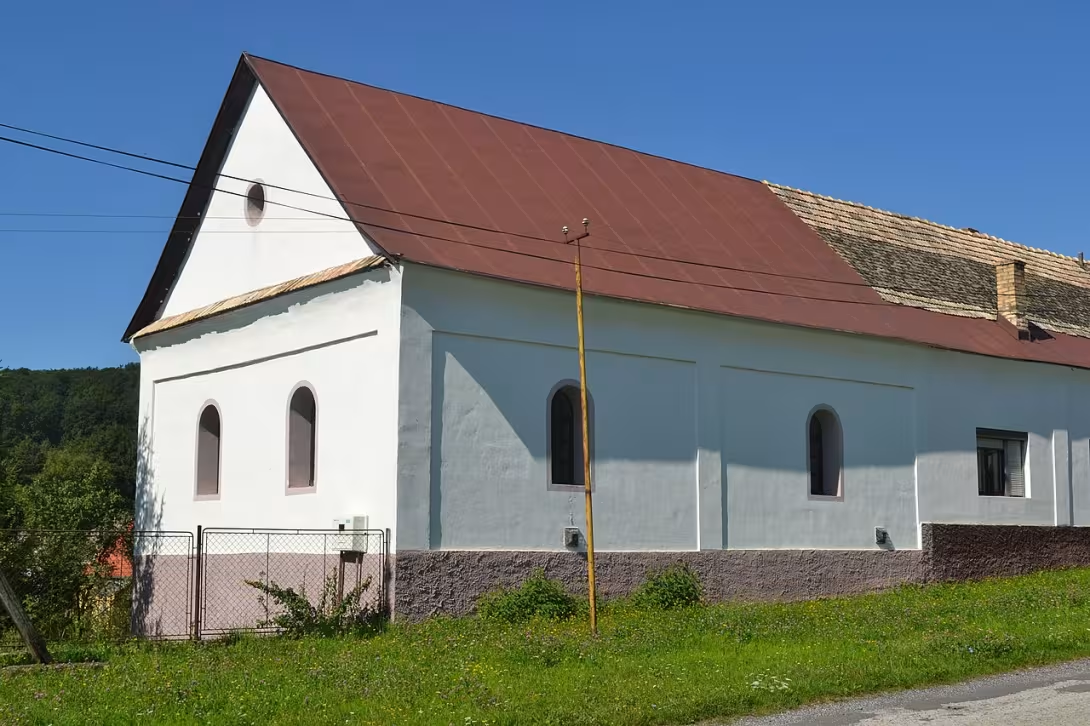
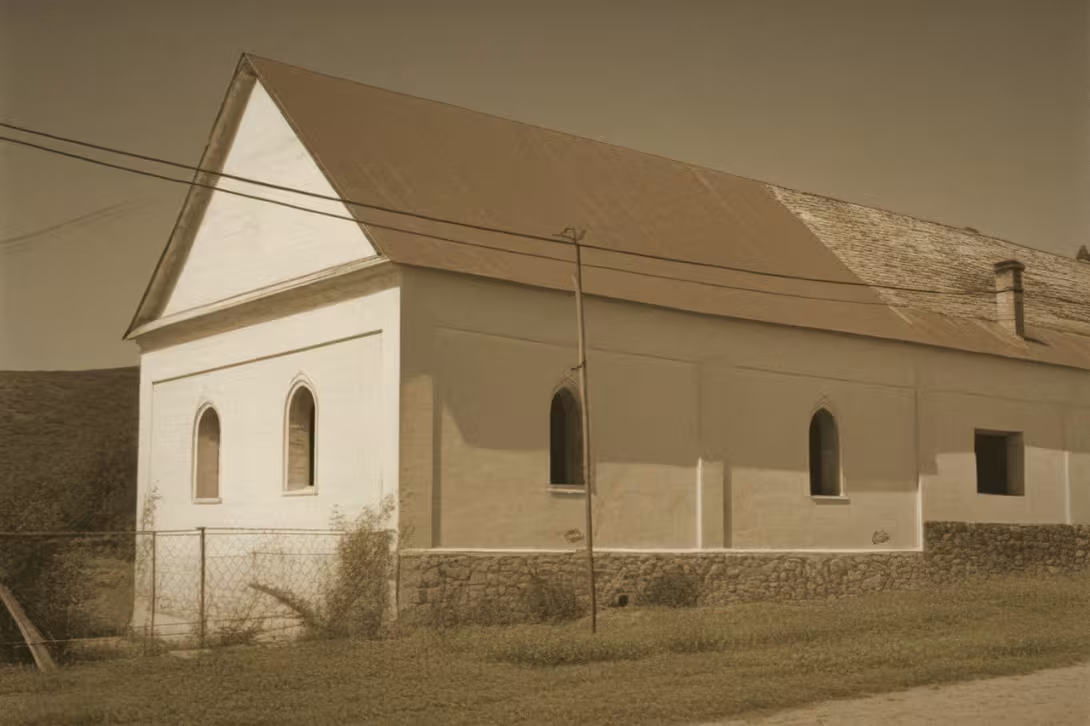
The historical view on the left is a visualisation generated by artificial intelligence and serves as inspiration.
Historical Milestones
- 1864
- The beginning of church construction within the tolerance temples.
- 1865
- Complete the construction of the church.
- Reconstruction of the church (date precisely unknown but confirmed in the Monument Register).
Interesting facts
- It is a classicistic toleration temple from 1864-1865 which has no tower and a flat ceiling. - The building has a hall layout, which was customary in classicistic tolerance temples. The interior decorates the classicistic altar with the pulpit. - Under the speech balcony hangs the image of Christ in Gethsemane garden from the Slovak painter and graphic artist Peter Bohúň. - The church is listed in the Central List of Monument Fund of the Slovak Republic under the number 464/1.
Guide
Show guide text
The text was prepared by artificial intelligence and has not been editorially reviewed. It may contain inaccuracies.
We welcome you to the village of Mladovo, in the heart of the Banská Bystrica region, where right now this peaceful and moderate object is shut down. You are standing in front of an evangelical church which is a silent witness to local history and the spiritual life of the inhabitants of this area. When you look at the building, you may be interested in its unusual simplicity for the first moment. Unlike many other temples that dominate the country with their high peaks, this church does not have a tower. It is a building that does not lead to heights, but rather carries stability and humility, which is typical of the period and style in which it originated. Let us now look at when and under what circumstances this temple was formed. The building you see dates back to the middle of the 19th century. The concrete construction took place between 1864 and 1865. Although the names of architects who designed the project remained unknown at the time, their work clearly shows the influence of classicism. It's a so-called tolerance temple. The term tolerance refers to the historical context of religious tolerance, when minority confessions were granted the right to build their own prayer houses, often under certain restrictions, reflected in the very form of building blocks. That's why this church is so balanced in Mladovo and without any pointless oblivion. If you now pay attention to the architecture and details in front of you, you will notice that the overall composition of the building is very clean. Classicism is characterized by this very return to simplicity and harmony. If you look at the overall silhouette, you will see that the building has a flat ceiling, which complements its minimalist character. Inside is a disposition designed as a hallway. This means that the space is organized in such a way that it led directly to the main alignment of attention, which was in the classicistic tolerance temples at that time a very usual and functional solution. Such an arrangement of space helped with acoustics, creating a sense of unity among all present in the temple. If you enter inside now, we recommend that you perceive the atmosphere of silence and light that fills the interior. Your attention should primarily be directed towards the altar. This classicistic altar is the central point of the entire space and represents the aesthetic of its time, where the center is not too decorated but a clear structure and symbolism. Directly to the altar is the pulpit, from which the words of God and spiritual encouragement to the local inhabitants have been heard for decades. Let us now move on to a detail that is particularly important in the interior and which you should certainly not overlook. Under the speech balcony hangs an image called Christ in the garden of Gethsemane. This image is not only a decorative element but a deep symbol of suffering, humility and acceptance of fate, which complements the overall spiritual dimension of this place. It is a detail that brings emotional depth to the moderate classicistic space and invites the visitor to the insinuation and short prayer or reflexion. It is fascinating how this small church in Mladovo managed to survive centuries and maintain its original form. Although we do not know exactly who designed it, the result is a building that fits perfectly into the Banská Bystrica region. The exact identity of all those who have engaged in its construction remains a mystery, but their devotion is visible in every stone and in every detail preserved to this day. It is this anonymity of the builders that gives the site a kind of mystic, as if the church belonged not to one particular architect, but to the whole community that built and maintained it. Now that you've checked the exterior and you've learned about the interior device, we suggest you for a moment in silence to perceive the ingenious connection of simplicity and spirituality. This evangelical church is an example of the fact that there is no need for size or monumental towers to provide space for peace and dignity. Thank you for sharing this moment with us in this historical monument in Mladovo. We hope that this short trip to the past has enriched you and that you have felt the peace that this classicistic temple will experience. Now we invite you to further explore the surroundings and discover the beauty of the Banská Bystrica region. We wish you a pleasant day and a peaceful journey.
Tips for visitors
When to visit and why
A suitable period for visiting is autumn (especially October and November). Sunlight at a low angle creates sine and emphasizes the architecture of the facade. In June and July, the church is illuminated by warm colors at sunset.'] For more information about connections, use transport applications or official pages of the transport company.
What to Take With You
We recommend solid shoes, because the street around here can be uneven. For photographing the facade it is advisable to use stabilizer or tripod. In colder times (autumn, winter) we recommend warm clothes. During the summer months sun denims are useful due to the reflection of light from stone surfaces.
Photography - places and light
The facade of the church from the southwest, which shows symmetry of towers and windows, is a suitable photographic motive. The golden hour (about an hour before sunset) provides soft light that highlights the details of the stone. For night photos, we recommend a longer exposure to capture church lighting. Images of arches and stone details require close visual angle and plenty of light.
What to visit nearby (up to 30 min)
There is a Mládzovský waterfall, which is 30 minutes walk from the church. It's a place with natural stone and water flow. Within a short trip you can also visit Banská Bystrica (about 20 minutes by car), where there are historical houses, churches and museums.
Tips for families with children
Children can enjoy architectural details of the church, such as stone reliefs or towers. Children can watch water flowing at the Youth Falls. In the vicinity of the church or the waterfall you can use places for a picnic. Finding details on the facade with the camera can be a fun activity for the family.
Frequently asked questions
Can the monument be visited?
Religious buildings are usually open mainly during services; at other times a visit is normally arranged with the parish or the operator. We have not verified specific times.
Where is the monument?
Location: Mládzovo, Banskobystrický kraj. The map on this page shows the exact spot.
Why is the monument protected?
It is listed in the Central List of the Monuments Fund of the Slovak Republic as a national cultural monument (ÚZPF no. 327-464).
For children
A mysterious church without a tower
Nearby
🏰 Historic sites (43)
- Kúria - rodinný dom 3.0 km
- Kúria 5.0 km
- Uhorské Ceriny 5.4 km
- Ozdín 5.6 km
- Pohanské pohrebisko v Cinobani 6.3 km
- Obecné múzeum 6.7 km +421474291122 web
- J.F.Pustovgar 7.1 km
- Kamenná pevnosť na Striebornej 7.5 km
- Kúria 8.2 km
- Padlým v boji proti fašizmu 8.4 km
- Kaštieľ Podrečany 8.8 km
- Kaštieľ Vidiná 9.6 km Zvolenská 123/74 web
- Temetodomb 10.0 km
- Kaštieľ Dolná Slatinka 10.3 km Dolná Slatinka 271/1 web
- Kaštieľ Opatová 10.6 km
- Slovenský dvojkríž 10.8 km
- Kaštieľ Prónayovcov 10.8 km A. S. Jegorova 202/3
- Múzeum ľudovej kultúry 10.9 km
- Malovesský kaštieľ 11.6 km Zámocká 54/6
- Milan Rastislav Štefánik 12.5 km
🍽️ Restaurants and dining (106)
- Pizzeria Kukučka 5.1 km
- Fresh Corner 6.2 km
- Billiard Bar 6.4 km Sklárska 769/82
- Pizzeria and Café Bar 6.4 km Sklárska 740/70
- Gogo Bar 6.5 km Sklárska 783/84
- Orient Bar 6.5 km Sklárska 704/63
- Sweet House 6.5 km +421 915 620 741
- Bufet Huta 6.7 km
- X-Bar 6.8 km
- Krčma u Ďobana 6.8 km Námestie SNP 50/17
- KPU 6.9 km Obrancov Mieru 486/32 +421 918 220 999 web
- Park café 6.9 km +421 905 701 054
- EURO motorest 7.6 km
- Halier 7.7 km
- U Jakuba 7.9 km
- Á-čko 8.4 km
- Art Furman 9.3 km Zvolenská 73/145 +421 905 932 917 web
- KONKURENT 9.8 km
- Fresh Corner 10.3 km
- Caffe and Bar Reyna 10.7 km
🏨 Accommodation (20)
- Penzión Iveta 6.8 km Družby 30/20 web
- Ranc MEGI 8.4 km
- Camping Never Finished 10.3 km +421 948 190 997 web
- Divín 10.7 km
- Miraj Resort 10.9 km +421 473 337 103 web
- Novohrad 11.9 km +421 47 433 1211
- Hotel Slovan 12.0 km +421 474111716 web
- Hotel Clavis 12.1 km +421 47 4303838 web
- Penzión Pé7 12.2 km +421 940 312 411 web
- Mária 12.3 km
- Reduta 12.6 km
- Hotel Reduta, Best Western 12.6 km +421 47 433 1237 web
- Pelikán 12.8 km +421 474 330 871 web
- Zámocký hotel Galicia Nueva 13.1 km +421 47 2852 200 web
- Rocket Club 13.1 km + 421 907 493 163 web
- Zbrojnica 13.4 km +421 47 4392122 web
- Kaštieľ LODOMERIA 13.4 km web
- Penzion Stará Čárda 13.4 km
- Chata na samote DOBROČ 14.4 km
- Gazdovský dvor Koristekovci 14.9 km web
🚲 Rentals and sport (12)
- Telocvičňa 5.0 km
- Cyklo SPORT 9.9 km
- ssFitness 12.2 km
- Športová hala 12.2 km
- Tenisová hala 12.2 km Maxima Gorkého
- MAX Fitness & Spinning Centrum Lučenec 12.3 km Gorkého 1
- Sportcentrum 12.3 km +421 917 840 926 web
- Interbike 12.3 km
- Hillex Studio 12.8 km
- Mestská plaváreň 13.1 km +421 905 328 969 web
- Mestské kúpalisko 13.1 km
- Rocket Club 13.1 km + 421 907 493 163 web
🥾 Hiking and nature (143)
- Hlonča 1.9 km
- Veľká Skalica 2.3 km
- Háj 2.5 km
- Vysoký vrch 2.5 km
- Hloď 3.5 km
- Tri sosny 3.7 km
- Nad Vinicou 3.7 km
- Sklenený vodovod v Ozdíne 3.9 km
- Hrb 4.2 km
- Bôriček 4.2 km
- Hrabovská 4.4 km
- Skalica 4.6 km
- centrum 4.8 km
- Haškovka 4.9 km
- Gejzov park 5.0 km
- Šťavica pod brezinami 5.0 km
- Háj 5.1 km
- Staré Turice 5.2 km
- Skalička 5.2 km
- Hrad 5.6 km
Thematic route
Here is the draft thematic route for the site Mládovo and its immediate surroundings:
1. Evangelical Church Type: Historical and cultural monument Why it is worth visiting: Church in the village of Mládzovo with interesting sacral architecture.
2. Evangelical Church Area Type: Exterior and surrounding monuments Why it is worth visiting: The surroundings of the building provide space for walk and examination of the details of the exterior.
3. Interior of the Evangelical Church Type: Interior spaces of monuments Why it is worth visiting: Inside the temple contains original historical elements, altar and equipment.
Seasonal recommendations
In spring they change meadows and slopes around the Mladovo color to green and morning fog often hides the silhouette of the Evangelical church. Spring sunlight is suitable for photography the exterior of the building without sharp shadows. Due to variable weather and showers we recommend waterproof footwear and layered clothing. There are few tourists around this time. It is best to visit in the morning.
Summer months in the vicinity of the Teen is characterized by flowering vegetation and long days during which the sun illuminates the brick and white walls of the church. In the noon hours can be intense heat. Light clothes, head covers, and plenty of drinking water are suitable for a summer visit as commercial services are lacking around the monument. Architecture is appropriate to observe in the evening when the air temperature drops and the sun produces golden reflections.
Autumn changes the landscape in the Banská Bystrica region into yellow, red and brown shades. In the mornings of the morning, frequent fogs and early dimmings bring. For walks we recommend a warmer, windproof coat and firm shoes, because the terrain can be wet and slippery after rain. The visit is a good time around noon, when the fog occasionally breaks down and reveals the details of the building.
Winter in Mladzov brings snow, where there is an evangelical church. Low winter sun creates sharp and contrasting shadows on the snow surface. Winter clothing, hats, gloves, and snow shoes are essential because maintenance of the surrounding paths is limited. In December and January, the best time to walk around noon is when daylight is brightest.
Visualisations and artistic views


The visualisations are generated by artificial intelligence and serve as inspiration.
Visitor Tips
No tips yet. Be the first!
Log in and add your tip.
Location on Map
More monuments – Mládzovo
Show all in the town

Visitor photos
No photos yet. Be the first to add a photo from your visit!
Log in and add your photo or leave a rating.
You get more points for a visit verified in the app — we can tell from the GPS that you are there.
Reviews and comments