








farmhouse Farmer's farmstead
The court in Oľšaviec, located in Prešov region, is a cultural monument of Slovakia. This object dates back to the first ten years of the 20th century and represents an example of the Jewish architecture. According to data from the Central Record of Slovak Republic monuments (ÚZPF) number 10822, the area contains four objects: House of Folk, Chliev, Sýpka and Stodola. Each of these objects is created using a log structure with the exception of a barn, which has a frame-painted brick structure.
The complex is located from the People's House (rubber construction, 1. third 20. st.), Chlíla and Sýpky (both with similar construction from the beginning of the 20th century) and Stodola (ram-painted brick construction, beginning 20. st.). These objects constitute elements of the farmer's residence from the period.
The monument is located at No 27 in Oľšavická, where it is also registered under the above-mentioned ÚZPF number. Its national heritage status guarantees a certain level of protection. The Court of Farmers in Oľšavic represents the life and architecture of the 20th century, adding to its location the geographical context important for understanding regional history and heritage.
A visit to this court can provide information about life in Slovakia presented through its construction. It is an opportunity to explore and appreciate the heritage that has been preserved in this part of the region. This area is part of the cultural and historical context of Oľšavice.
Tehdy a dnes
Drag the slider and compare how the monument might have looked when it was built with the view today.
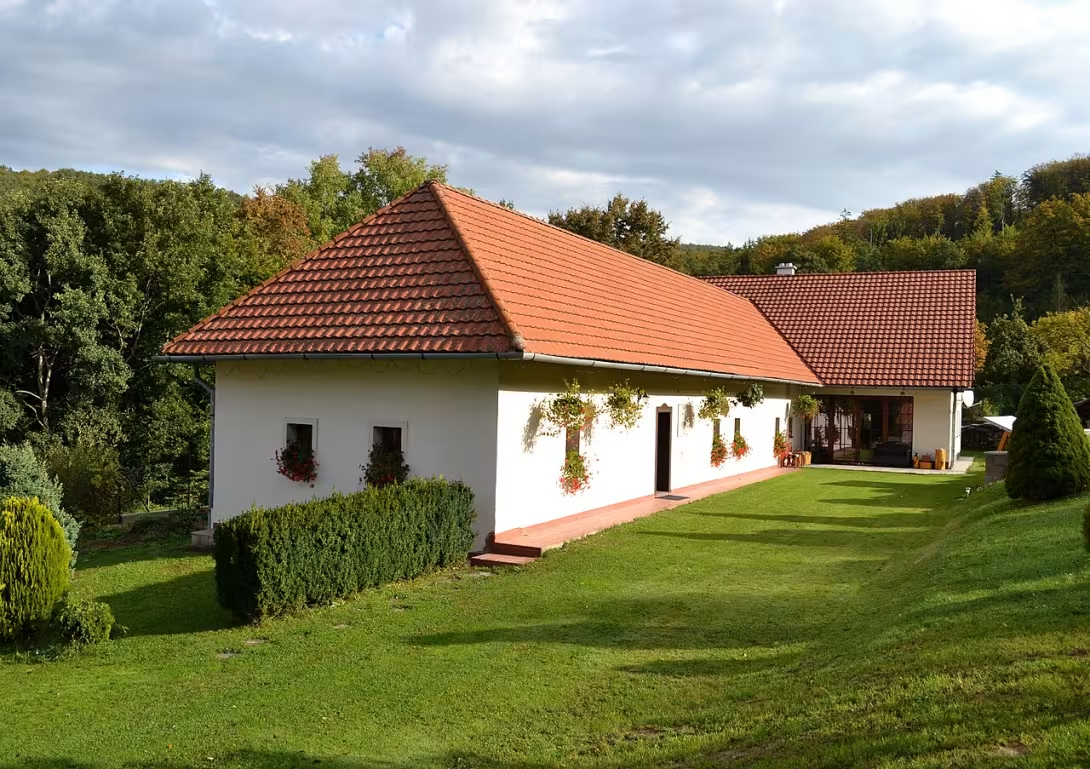

The historical view on the left is a visualisation generated by artificial intelligence and serves as inspiration.
Historical Milestones
- 190-1910
- The formation of the Court of Farmers in Oľšavic.
- first third of the 20th century
- Construction of the House of Folk with log structure.
- early 20th century
- Construction of Chláva and Dýpky with similar log structure.
- early 20th century
- Construction of Stodola with frame-plate brick structure.
Restoration history
| Years | Type | Extent | Condition after restoration |
|---|---|---|---|
| 2016 |
Obnova
sýpka |
Komplexná | dobrý |
Source: Monuments Board of the Slovak Republic — open data, licence CC BY 4.0
Interesting facts
- The Court of Farmers in Oľšavic is a national cultural monument of Slovakia. - The object dates back to the first ten years of the 20th century and represents an example of Jewish architecture. - The complex contains four objects: House folk, Chliev, Sýpka and Stodola; each of them has a log structure with the exception of a barn that has a frame-painted brick structure. - These objects are elements of farming settlement from the early 20th century. - The Court of Farmers in Oľšavic provides insight into the life and architecture of the 20th century in Slovakia.
Guide
Show guide text
The text was prepared by artificial intelligence and has not been editorially reviewed. It may contain inaccuracies.
Welcome to Olishavica. You have just stopped in front of one of these cities, which, although they have no magnificent palaces or monumental cathedrals, bear in themselves the immense value of real, human life. You stand before a peasant settlement, a place that bears the legacy of generations, which, by day-to-day efforts, have built the foundation of their being. Look around and see this atmosphere. You may not be dramatically impressed at first glance, but it is in this quiet presence and in the layout of these buildings that there is a story of perseverance, mutual assistance and deep connection of man to his country in this part of the Prešov region.
When you look at this complex, try to imagine how it worked many decades ago or even centuries ago. Although the exact time of this settlement is unknown to us, its nature remains unchanged. It is a peasant court, which in itself defines its entire existence. This is not just a set of buildings, but a functional entity that has been designed to serve the survival and prosperity of one or more families living in this community. At the time it was born, life in Oľšavic was dictated by the rhythm of nature, the sunrise and sunset, and the necessity of working in the field. This settlement was the heart of this rhythm, the place where work, rest, and family life met.
Let's go now to do what you have right in front of your eyes. When you look beyond the architecture of this place, do not hesitate to look for complex decorative elements, because the beauty of this settlement lies in its practicality and how naturally it fits into the environment. Feel the overall composition of buildings. Typical farm settlement is built on the principle of functionality. Buildings are not distributed randomly, but they form a logical whole, which was intended to protect residents, their property and livestock. Note how individual objects are oriented towards each other. Often they create a closed or partially open space, a court that served as the center of everyday operations - from crop processing to livestock care. This architecture is simple, honest and based on the need to use what the country offers. It's an architecture of survival and stability, not for representation. Look at the materials and how the buildings operate in the context of the surrounding country. Perceive this harmonious synergy between human creation and nature that is now around you.
Although history has not told us the names of specific architects or significant historical figures that would be recorded in these walls, this settlement is actually the memory of thousands of anonymous people. Every wall, every corner of this court is witnessing the work of someone who stood up in the morning, who was looking for warmth here in cold months, and who was looking for comfort here after a long day in the field. Now, when you stand in the middle of this space, try to imagine the voices, the steps and the daily actions that were taking place here. These unknown personalities are the real creators of this place. Their lives were not written in chronicles, but in the shape of these buildings and in the way the settlement worked as a small, independent world. It is in this unknown, in this anonymity, that the place acts so authentic.
The interesting thing that you might be interested in at this point in time is precisely this confusion. The fact that we do not know the exact date of creation or the names of the people who lived here gives this place a certain touch of mystery. Man has a natural tendency to search for answers, to search for names and numbers, but this settlement does not give us them. Instead, it forces us to have a deeper perception. This unfamiliarity forces us to stop asking questions, and to start asking questions like that. How'd it go here? How have joys and calamities been experienced in this area? How could people in this area adapt to changes in time, while this settlement remained a silent witness to their existence? This confusion is actually her greatest gift, as it allows each visitor to find his own story and his own idea of the past.
Now I want to invite you to continue your next discovery. Do not just stay at the first impression, but try to slowly project the entire space. Feel the silence that rules here and try to capture every little thing your eyes can catch. You may be interested in the way light hits the surfaces of buildings, or in this space, a sense of security and openness is changing. Let yourself be carried away by the atmosphere of Oľšavice and this place, which is living proof that true values often lie in what is simple, functional and authentic.
Thank you for spending time right here in this courtyard. We believe that this view of the past has brought you new thoughts and peace. We wish you a pleasant continuing journey along our historical tracks. We'll say goodbye, but let this sense of connection to history carry in a little while longer. Goodbye.
Tips for visitors
The best time to visit the farmer's settlement is June until glamour when the weather is most pleasant. This period also offers good conditions for photography old buildings. For a tour, take shoes suitable for walking on uneven roads and protective eyes. You can also have your sunglasses ready, as the trip is often under the sun's sky. Photography is best in the mornings or dinner when light is mild and constant. The best perspectives offer views from the higher points of the surroundings. Nearby there is a historic church in Oľšavici, which is suitable for visiting. Families with children may find it interesting to visit the surroundings, where they can take short walks or look for wild flora and fauna.
Frequently asked questions
Can the monument be visited?
This is a residential or farm building, not a museum with opening hours. Please view it from public space and respect the owners' privacy. We have no information about access to the interior.
Where is the monument?
Location: č. 27, Oľšavica, Prešovský kraj. The map on this page shows the exact spot.
Why is the monument protected?
It is listed in the Central List of the Monuments Fund of the Slovak Republic as a national cultural monument (ÚZPF no. 414-10822).
For children
In the small village of Oľšavica is a peasant settlement, known as the Dvor peasant. This histórical complex is located in the east of Slovakia and represents the silo from the time when rural life was closely connected with seasons and weather.
The settlement fell from the residential and economic part. The first was family and their daily lives, the second - cattle buildings like horses, sheep, or pigs. Among these structures there was space for drying hay, playing children, and talking to the elders.
Nearby
🏰 Historic sites (57)
- Partizánske boje 0.1 km
- Pamätník padlým v 1. a 2. svetovej vojne 1.6 km
- Klembara Ján 3.2 km
- Hrad Hamborek - Brezovička 7.2 km
- Ľudové múzeum 7.4 km
- ThDr. Ján Švec - Slavkovian 7.5 km
- Michal Olejár 7.5 km
- Kaštieľ Bijacovce 7.5 km web
- Doc. MUDr. Albín Kipikaša CSc. 7.5 km
- Mini-skanzen 7.5 km
- Tragické letecké neštastie 8.8 km
- LáSKa 9.1 km
- Archeologické nálezisko na Pažici 9.2 km
- Panna Mária s Ježiškom 9.2 km
- Mariánsky stĺp 9.2 km
- sv. Ján Nepomucký 9.2 km
- Kúria rodu Berzevici 9.3 km
- Spišský hrad 9.4 km web
- Kaštieľ rodu Berzevici 9.8 km web
- Kúria 9.9 km
🍽️ Restaurants and dining (65)
- u Červeného 5.3 km
- Hostinec 5.4 km
- Levoča Nordic Centrum - kaviareň 7.2 km +421 903 770 075 web
- Bar pod Skalku 7.2 km
- Music Pub 7.4 km
- Eso Club 7.5 km
- Spišský salaš 8.7 km web
- St. Margita Cafe 8.7 km
- Kolkáreň 9.1 km
- U kastelána 9.1 km
- Pod hradom 9.2 km
- St. Martin Restaurant 9.2 km web
- Imperio 9.2 km
- Lipa 9.3 km web
- Reštaurácia Dreveník 9.3 km +421 949 339 789
- Spiš Castle 9.4 km
- Pizzeria Burger Bar Brezovica 9.5 km Brezovica 76 +421 90 808 2707
- U Spišských bratríkov 9.6 km
- Na Rázcesti 10.3 km Hlavná 30/23
- Giulia 10.4 km Hlavná 33/26 web
🏨 Accommodation (47)
- Javorinka 7.2 km
- chata Hrby 7.2 km
- U Alžbetky 7.3 km
- Penzión Music 7.4 km +421 918 404 147 web
- Penzión Živa 7.5 km +421 917 796 088
- Chata Levočské vrchy 7.7 km web
- Chata Bobor 7.8 km +421905475054
- Kameň 8.3 km
- Chmeľov 8.6 km
- Penzion Chalupka 9.0 km web
- A+S Penzion Podzamok 9.0 km
- Sivá Brada 9.1 km Levočská cesta 665/13
- Penzión St. Martin 9.2 km web
- Penzión Hamborek 9.2 km +421 908 889 049 web
- Pacák 9.3 km
- Simona pod Smrekovicou 9.5 km
- Vargas 9.7 km
- Sedemnástka 9.8 km
- Penzion Dreveník 10.2 km
- Vinná 10.4 km
🚲 Rentals and sport (1)
- eMo BICYKLE 13.4 km +421905913338
🥾 Hiking and nature (246)
- Prameň sv. Vavrinca 1.4 km
- Pozavan 1.4 km
- Podruša 2.1 km
- Jedlinka 2.1 km
- Spišská 2.6 km
- Okrúhly hrb 2.9 km
- Uhlisko 3.1 km
- Okrúhly hrb 3.1 km
- Hoľa 3.2 km
- Čelisko 3.3 km
- Stredný vrch 3.9 km
- Ostrý vrch 4.0 km
- Bišar 4.1 km
- Kozinec 4.5 km
- Peciská 4.5 km
- Ostrý vrch 4.5 km
- Klimova hora 4.7 km
- Košariská 4.7 km
- Pálenica 5.2 km
- Panský vrch 5.3 km
Thematic route
Courtyard settlements - Type: outdoor space. The entrance part that places visitors in the atmosphere of the traditional rural court.
Main building and exposition - Type: museum. A place where the way of life of old farmers and their everyday objects are presented.
Farm buildings - Type: architecture. An example of traditional construction and functions that served to produce crops and raise animals.
Location area - Type: green space. Environment around buildings that allows you to feel the peace and natural character of the village Oľšavica.
Seasonal recommendations
Jaro: In spring, the peasant settlement in Oľšavica opens in front of visitors with flowering natural beauty. Green fields and blossoming trees make up the idyll that should be visited in the morning when the temperature is more comfortable and less people. It is recommended to wear clothes suitable for mist temperature.
Leto: In summer, the peasant settlement in Oľšavic is a place full of life and heat, ideal for activities outside the house. Visitors should attend morning or evening hours to avoid the highest temperatures. It is recommended to wear lightweight clothing and sunglasses.
Podzim: Podzim offers visitors full of apple trees and growing leaves. This time of year is suitable for relaxing walks when the temperature is acceptable. It is recommended to wear protective clothes against cold and visit the morning afternoon.
Winter: In winter, the peasant settlement in Oľšavica becomes a quiet destination. Visitors should prepare warm clothes, including jackets and gloves.
Visualisations and artistic views


The visualisations are generated by artificial intelligence and serve as inspiration.
Visitor Tips
No tips yet. Be the first!
Log in and add your tip.
Location on Map
More monuments – Oľšavica
Show all in the town
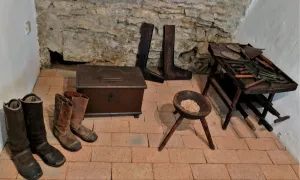
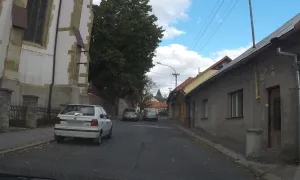
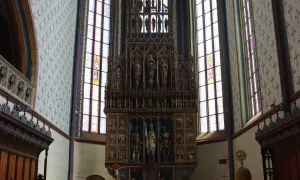
Visitor photos
No photos yet. Be the first to add a photo from your visit!
Log in and add your photo or leave a rating.
You get more points for a visit verified in the app — we can tell from the GPS that you are there.
Reviews and comments