

The Hussite Church Fortified church
In the village of Lúčka in the Košice region there is a fortified church, declared a national cultural monument. Construction dates from 1300 and shows signs of early Gothic from the second half of the 13th century.
The area is registered by the Monument Office of the Slovak Republic under the number ÚZPF 523 and consists of three objects. The first is the ruin of the Church of the Birth of the Virgin Mary from the second half of the 13th century. The second is a brick stone tower from the first half of the 15th century. The whole is complemented by a brick wall from the same period, decorated in Gothic style.
The complex combines sacral construction with defence elements and preserves fragments of brick structures from the 13th and 15th centuries.
Tehdy a dnes
Drag the slider and compare how the monument might have looked when it was built with the view today.
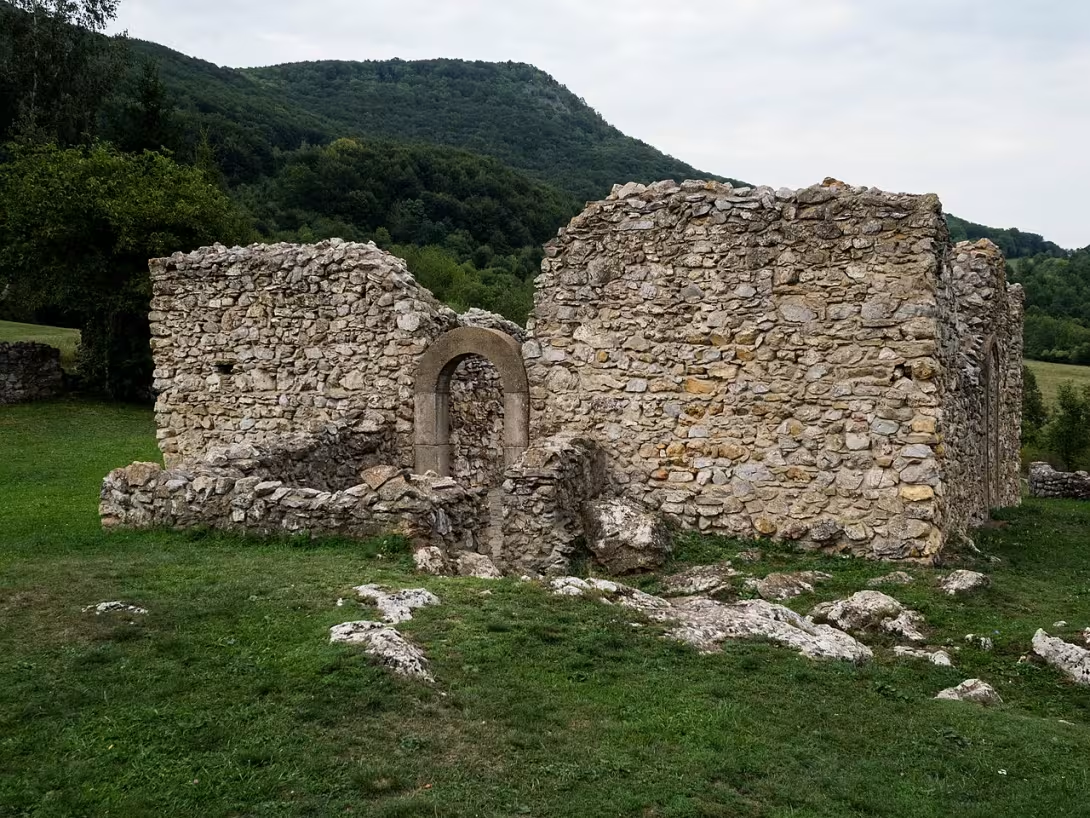
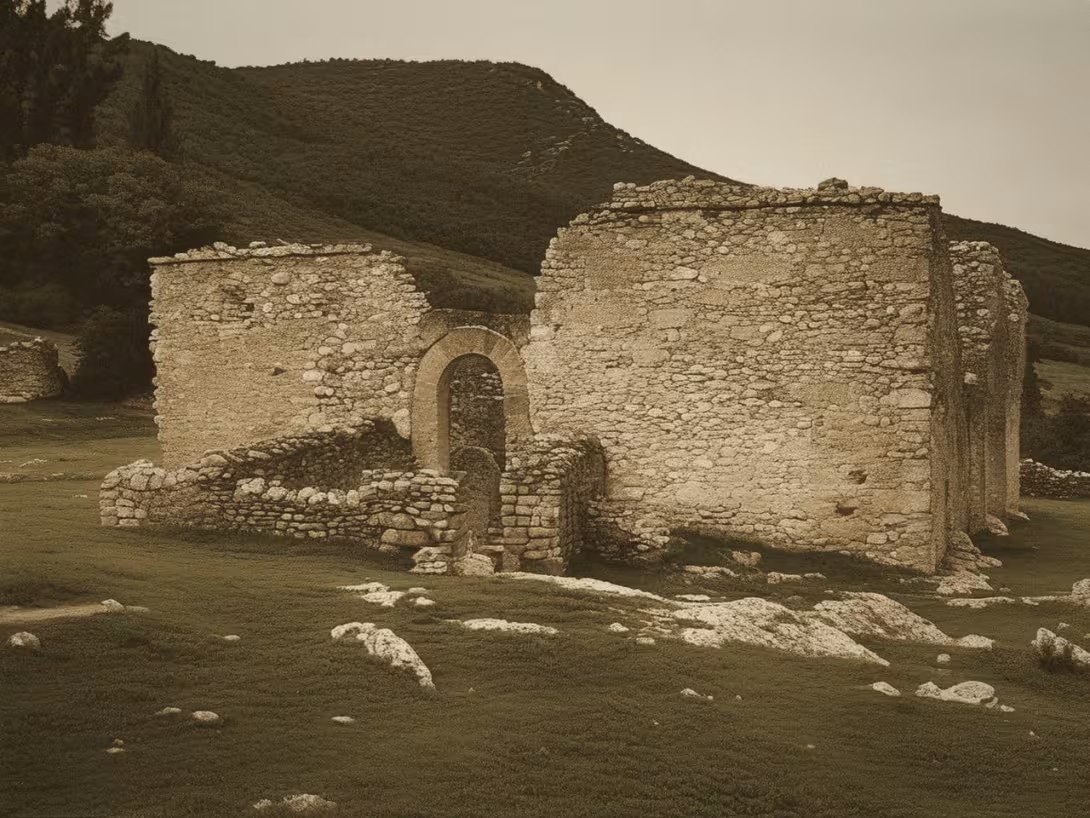
The historical view on the left is a visualisation generated by artificial intelligence and serves as inspiration.
Historical Milestones
- 1250-1299
- Construction of the Church of the Nativity of the Virgin Mary in early-gothic style.
- 1300
- Official dating of church formation in the village of Lúčka.
- 1400-1450
- Construction of a stone tower and defence wall.
Interesting facts
- Fortified church in the village Lúčka is declared a national cultural monument. - The building comes from 1300 and shows signs of early Gothic from the second half of the 13th century. - The complex consists of three objects: the ruins of the Church of the Nativity of the Virgin Mary, a brick stone tower and a brick wall. - The stone tower and the Gothic wall are from the first half of the 15th century. - The complex combines sacral construction with defense elements.
Guide
Show guide text
The text was prepared by artificial intelligence and has not been editorially reviewed. It may contain inaccuracies.
Welcome to the Husit Church in the village of Lúčka. This is an example of architecture coupled with a defensive function. The building combines two tasks: spiritual and protective. The temple was not only a place of prayer but also a refuge for the locals in times of danger.
Although the exact chronology of creation and the names of architects remained unknown, the name Hussite church refers to the period in which it originated. Husitism was a movement that brought changes to the religious and social life of Central Europe. At the time, it was not just a theological dispute but a period of unrest and war, which explains why it was not built as a mere temple but as a fortified building. The communities had to be prepared for sudden attacks, so the religious center became a citadel.
Pay attention to architecture. The building is not an isolated building, but a complex designed to withstand external threats. Look at the elements of the fortification that surround the church. Connecting sacral space to defence walls is a key detail. These elements are integrated into the whole to create an obstacle to the enemy. A functional approach to the construction is evident; every detail should serve the safety of the people who took refuge in these walls.
Imagine how this place worked centuries ago. The existence of construction in Lúčka testifies to the perseverance of the people who lived here. The church bell not only announced the beginning of the service, but also warned against the coming danger. Then the door closed and the temple became a fortress.
The exact construction time and identity of creators remain a mystery. Why a complex building was created here and what forced local investment to live in church fortification is not known. History has not preserved these details in writing. We remain to be aware of the then applicable engineering and strategic thinking.
When you look at the facade and layout of the complex, note the contrast between today's peace and the tension that this place has experienced in the past. The Hussite Church in Lúčka is a symbol of survival and faith in a time of chaos.
I invite you to further research. Go around the building and take a moment to think about how people's needs have changed over the centuries. Thank you for your attention and I wish you a pleasant stay in Košice region.
Tips for visitors
When to visit and why
Spring and summer months (April to September)
During this period there is good visibility of ruins and surroundings. In the morning before 10:00 or after 16:00 the light is suitable for photography, as it highlights the details of fortification and stone walls. In summer you will also avoid a large number of visitors.
October
At this time there are fewer tourists, leaf changes color and light is still favorable for photography. '] Check current connections and routes in the mobile application or on the official website of the transport undertaking.
What to Take With You
Suitable footwear
The terrain around the ruins is uneven and steep. We recommend solid tourist boots or trekking shoes.
Water and small snacks
There are no grocery stores or stalls nearby. Water is essential, especially in the summer months.
Camera or smartphone
Ruina provides opportunities for photography, especially in the morning or evening.
Sunshades and sunscreen
Solar radiation in summer can be intense
00 to 3:00.
Photography - places and light
West and South Wall Ruins
These sides are best lit in the morning, creating a contrast between light and wall. It is suitable for photographing details of stone walls and fortifications.
View from the top
From the top above the ruins, you can see the entire site. Suitable light is in the morning or shortly before sunset.
Indoor court ruins
Inside ruins is suitable for photographing in the morning when light passes through stone arches and walls.
Light
The light source should be behind you or on the side to minimize the sines on the stone structures. It is advisable to take pictures at a golden hour (shortly after sunrise or before sunset).
What to visit nearby (up to 30 min)
Municipality of Lúčka
A village with typical Slovak architecture. You can see houses, church and local traditions. In summer there are folklore events.
Monuments in Košice (longer trip)
Košice offers historical monuments such as the Medieval City, the Cathedral of St. Elizabeth or Dvorančík. They are available by public transport or by car.
Tips for families with children
Detective play
Children can find it fun to search for stone fragments and explore how ruins could have looked in the past. You can show them how to build zdi or what historical churches looked like.
Supervision
The terrain is steep and uneven, so children should be supervised by adults.
Small rewards
For children it may be motivating to receive small rewards for exploring ruins or for correctly answering questions about the history of the site.
Frequently asked questions
Can the monument be visited?
Religious buildings are usually open mainly during services; at other times a visit is normally arranged with the parish or the operator. We have not verified specific times.
Where is the monument?
Location: Lúčka, Košický kraj. The map on this page shows the exact spot.
Why is the monument protected?
It is listed in the Central List of the Monuments Fund of the Slovak Republic as a national cultural monument (ÚZPF no. 428-523).
For children
Close your eyes and imagine shooting down a time machine. You set it for 1300 and with a loud boom! you will land right before this place. It's about 726 years ago. There are no cars, no phones or asphalt roads around you. You feel the smell of smoke in your nose from the fires and you only hear the sound of wind and this quiet nature. Welcome to the time of knights, secrets and great changes.
Nearby
🏰 Historic sites (103)
- Zrúcanina kostola 0.0 km web
- Obetiam 1. a 2. svetovej vojny 0.2 km
- Vodný mlyn Kováčová 1.9 km +421 949 306 413 web
- Kaštieľ Bôrka 3.0 km web
- Pamätník leteckého nešťastia 4.0 km
- ľadovňa 4.2 km
- Drnavská železiareň 4.8 km web
- 1849 5.0 km
- Kaštieľ Andrássyovcov 5.2 km
- Pomník dvoch rumunských vojakov 7.3 km
- Tomáš Čamek 7.9 km
- Sveťo Poláček 7.9 km
- Ľubo 8.0 km
- Oslobodenie obce 8.2 km
- Múzeum Zádiel 8.3 km
- Zádiel 8.4 km
- Mauzóleum Františky a Dionýza Andrássyovcov 8.8 km +421 587 983 118 web
- Sprístupnenie prechodu Čertovej skaly pre povozy; prvý autobusový spoj do obce 9.0 km
- Múzeum Zoltána Fábryho 9.1 km
- Osloboditeľom 9.1 km
🍽️ Restaurants and dining (99)
- Csárda 0.6 km
- Vodný mlyn 1.9 km
- Kora Presso 4.2 km
- Piton klub 4.2 km
- Victory 4.2 km
- Café Kispest 4.9 km +421 905 446 635 web
- Fresh Corner 5.6 km
- Espresso 6.1 km
- Szadivo 6.2 km
- Zádielska chata 6.3 km +421 58 7979 222 web
- Granárium 6.4 km web
- Koliba Soroška 7.4 km +421 903 720 714
- Bufet tajch/jazero 8.0 km
- U Vodnára 8.0 km +421 907 305 413 web
- Bufet Zádiel 8.2 km
- Bufet 8.3 km
- Dreveňák 9.1 km
- Pod Skalou 9.2 km
- Zanzibar 9.3 km
- U železného grófa 9.4 km Rožňavská 635/64 web
🏨 Accommodation (66)
- Shambhala mind & outdoor centrum 0.9 km +421 918 637 205 web
- Banský potok 3.7 km
- "Hubertusz" Vadászlak 3.9 km
- Chata Skalky 4.8 km
- Čierna Moldava 5.8 km
- Tanya 5.8 km
- poľovnícka chata Zenderling 6.1 km
- chata pod Pipitkou 6.1 km
- Pipítka 6.2 km
- Granárium 6.4 km +421 915 347 333 web
- chata Hegen 6.4 km
- poľovnícka chata Peklisko 7.6 km
- Zádiel 8.2 km web
- Vila u Kovácsa 8.3 km +421905828169
- Turistiská ubytovňa Zádiel 8.3 km
- Turistická ubytovňa 9.2 km
- Farebný penzión 9.2 km Osloboditeľov 296/81 web
- Ubytovanie Žaneta 9.4 km Tichá 411/7 +421 905 585 048 web
- Helena Kulcsárová – ubytovanie v súkromí 9.4 km +421 55 466 63 69
- Sedliacky dom 9.5 km Tichá 412/5 +421 915 938 571 web
🚲 Rentals and sport (14)
- Tulipán - Sedliacky dvor 4.9 km +421 907 794 813 web
- Granárium 6.4 km web
- Maďarská 8.2 km
- Orlia bašta 8.3 km
- Veža na vlásku 9.1 km web
- BUZGÓ bike 10.9 km +421 940 991 555 web
- Kúpalisko Medzev 13.9 km web
- Lezecká stena Rožňava 14.1 km +421 902 988 207 web
- Ebike tour 14.3 km
- Miko šport 14.4 km +421 58 732 8249
- Bicykle Signal 14.4 km +421 58 733 1690 web
- J Gom 14.4 km
- Detské centrum Rožňava 14.6 km +421 911 735 795 web
- Bicykle-Servis-Šport 14.7 km +421 907 101 619 web
🥾 Hiking and nature (726)
- Žľab 1.1 km
- Gobič 2.2 km
- Okrúhle 2.2 km
- Soví kameň 2.3 km
- Luhota 2.7 km
- Veterná priepasť 2.9 km
- Úkryt žien 3.0 km
- Úkryt dievčat 3.0 km
- Sovia priepasť 3.0 km
- Kozia diera 3.1 km
- Oltárna diera 3.2 km
- Tegart 3.2 km
- Medvedia jaskyňa 3.2 km
- Holubia skala 3.4 km
- Čierny kopec 3.4 km
- Osadník 3.5 km
- Orlia studňa 3.5 km
- Matesova skala 3.6 km
- Drieňovec 3.6 km
- Dvorník 3.6 km
Thematic route
The proposed thematic route within the area of the memorial:
1. Husit church - Main architecture. Connecting sacral space to defence elements. 2. Church fortification - Defence system. Walls and fortifications to protect visitors and clergy from attack. 3. Courtyard and area - Outdoor space. Surroundings of the building, where the dimensions and layout of the complex can be perceived.
Seasonal recommendations
Spring In March and April, the Hussite church in Lúčka hits a fine spring light that breaks over stone walls. The surroundings are wet after winter rains. In the vicinity of the church flower firstfruits, such as passersby or convales, and the air smells fresh ground and arrows. In the morning and in the evening, the building is poured with golden light, and the ruins of ruins create significant contrasts in the tail. The morning hours are suitable when the surrounding area is quiet and the temperature is pleasant. Clothes for variable weather - light sweater and shoes for wet grass are recommended.
Summer In July and August, the sun's rays hit the stone remains and create games of light and shadow on the eroded walls. The surrounding area is dry, grown with grass and herbs. In summer it is advisable to visit the church early in the morning or late in the afternoon, when the sun is not too hot and the temperature is noticeable. Clothing should be easy and protect against sunlight - hat, sunglasses, and light coat for evening cooling. The atmosphere is intense, interrupted only by the sound of the wind in the crowns of the surrounding trees.
Fall In September and October, the Hussite church is surrounded by colorful leaves and morning fog. The surroundings create a mosaic of red, yellow and brown colors. The light is soft and scattered. It is best to visit it before the evening when the sun bows for the mountains and the building pours into warm golden shades. Clothing should be warmer and practical - sweater, waterproof footwear and jacket, as the weather can change quickly.
Winter In December and January, the Hussite church is covered with snow that softens its sharp lines. The surrounding area is quiet, covered with ice and snow, and the air smells frost and pitch. The light is cold and intense; the church creates a dark silhouette on a white background. It is best to visit him in bright, sunny days when snow shines. Clothing should be warm and protect from frost - sweater, gloves, cap and waterproof footwear.
Visualisations and artistic views


The visualisations are generated by artificial intelligence and serve as inspiration.
Visitor Tips
No tips yet. Be the first!
Log in and add your tip.
Location on Map
Visitor photos
No photos yet. Be the first to add a photo from your visit!
Log in and add your photo or leave a rating.
You get more points for a visit verified in the app — we can tell from the GPS that you are there.
Reviews and comments