








Karl's Huta High kiln
Karlova Huta is a historic blast furnace from the mid-19th century in the village of Vlachovo in Košice region. The building is registered as a national cultural monument and documents the technology of production of pig iron on wood coal.
The first blast furnace in Vlachov was built in 1843 by Karol Andráši. It processed ore from mines in Vlachov, Rejdová and Vyšná Slaná, but later constructions were preserved. In 1868 Emanuel Andráši proposed the establishment of a Šálgotárjana joint stock company for processing gemer ore for rail production. In 1870 he built the blast furnace Charles named after his father Charles III.
The furnace is part of a metallurgical complex, in which the foundry was also located. The building is 12 meters high with a capacity of 28 cubic meters. Wood coal was used as fuel, and two water wheels provided for the propulsion of the blower. In 1884 the furnace performance was 5 162 tonnes of pig iron. Thanks to its technical design, Sheffield University records it among the historical high furnaces in Europe.
Property ownership has undergone some changes. In 1877 Emanuel Andrásy registered the company Železiarne Count Emanuel Andrássy. In 1881, the Rimav-Murán-Šalgotarjana Iron Participation Company RIMA was formed by linking the Šálgotárjana Joint Stock Company with the Rima-Murána Company in the financial assistance of Wiener Bankveiner. The largest shareholder was Emanuel Andrási. After his death in 1891, the estate was inherited by the son of Gejz Andras. He later sold all the hutes and hámres from Vidová to Dobšiná RIMA, although he remained a shareholder in its management. Gejza Andráši later served as Minister for the Interior and Minister for Foreign Affairs of Hungary.
The operation of Karlova huta was stopped by RIMA in 1907. The older furnace from the previous period was decommissioned in 1880.
Currently, the building is managed by the Slovak Technical Museum in Košice as its branch. Since the end of 2016, the monument is closed for visitors. Access to the building leads from Vlachov towards Dobšiná, where before the confluence of Slaná and Dobšinský creek there is a branch through the railway crossing.
Tehdy a dnes
Drag the slider and compare how the monument might have looked when it was built with the view today.
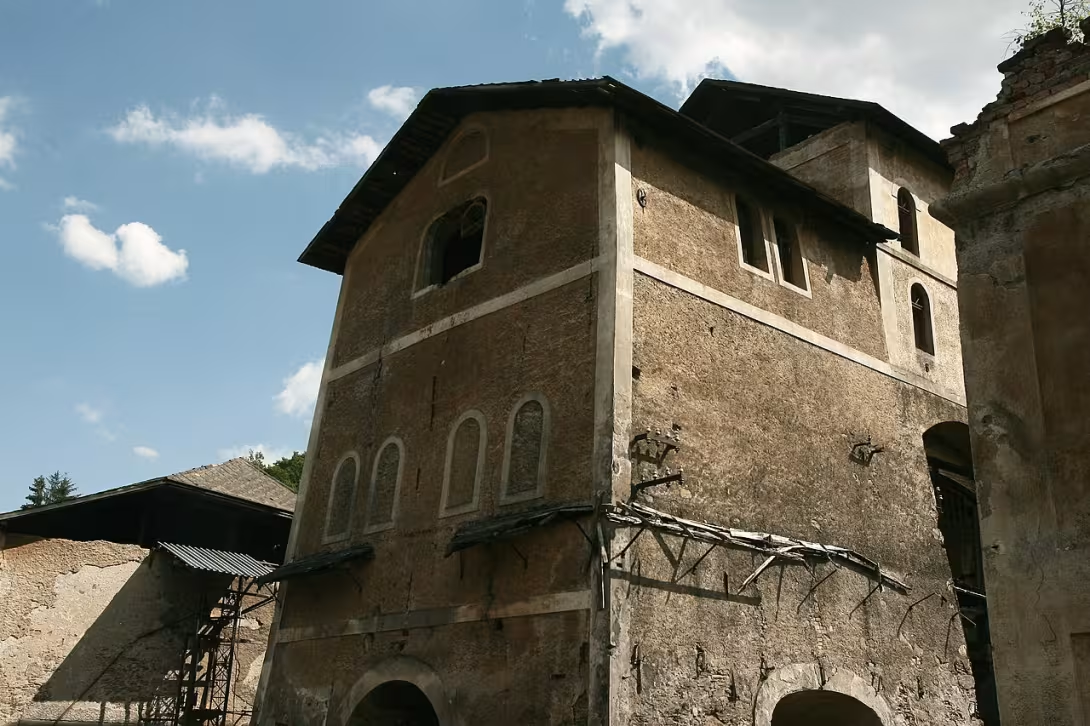
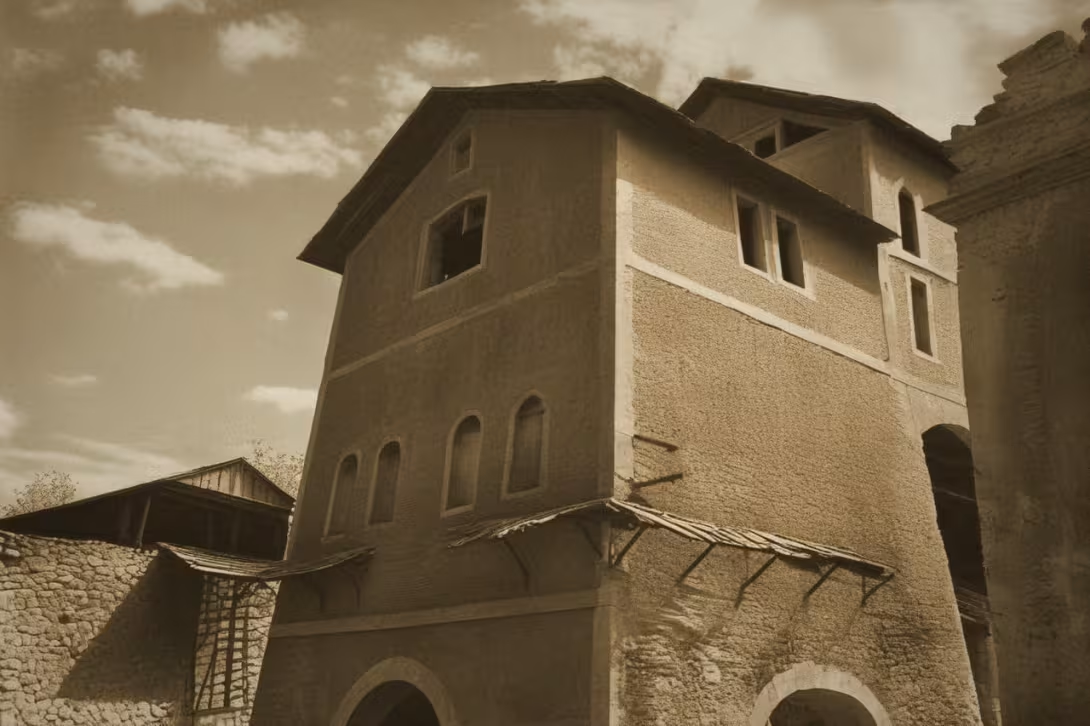
The historical view on the left is a visualisation generated by artificial intelligence and serves as inspiration.
Historical Milestones
- 1843
- construction of the first blast furnace in Vlachov by Karol Andrášim
- 1870
- construction of the blast furnace by Karol Emanuel Andrášim
- 1877
- company registration Ironworks of Count Emanuel Andrássy
- 1881
- the establishment of a Rimav-Murán-Šalgotarján steel company (RIMA)
- 1907
- stopping operation of Karl's hut by RIMA
Interesting facts
- Karl's Huta is a historical blast furnace from the mid-19th century that documents the production of pig iron on wood coal. - The building is 12 meters high with a capacity of 28 cubic meters and two water wheels provided for the propulsion of its blower. - In 1884 the furnace output reached 5 162 tonnes of pig iron. - Thanks to its technical design, Sheffield University records it among the historical high furnaces in Europe. - The building is currently in the administration of the Slovak Technical Museum in Košice as its branch.
Guide
Show guide text
The text was prepared by artificial intelligence and has not been editorially reviewed. It may contain inaccuracies.
Welcome to Vlachov. You are standing in front of a monument which is a silent witness to the industrial past of this region. Before you, the rods of Karl's Huta, the historic blast furnace, which in its time represented the peak of technical progress and economic expansion. Now that you're looking at it, you may only feel the peace and quiet of the neighborhood, but more than a hundred and fifty years ago, this place was the center of huck, hurrah and constant movement. Feel the atmosphere of this place, where nature has been gradually associated with technology and where local raw materials have become a basic building fertiliser for the development of the country.
Now let's rush into the past to understand how this complex was created. Everything began in 1843 when Karol Andráši built the first blast furnace in Vlachov. At that time, it was not just a mere construction, but a strategic step to exploit the natural wealth of the country. Iron production required three basic components: ore, fuel and energy. Vlachovo offered everything needed. The origin of the hut was closely linked to the ambitions of the Andrássy family, who wanted to modernise their estate and increase its value.
There was no one-off development. With the growing demand for iron, more investments have come. In 1870 Karol Emanuel Andráši built another blast furnace, thus expanding production capacities and consolidating the position of Vlachov as an important industrial point. This process of institutionalisation culminated in 1877 when the officially registered company Železiarne Count Emanuel Andrássy. It was a time when craft production was turned into a modern industry and family events were transformed into a professional business.
Nyni, pay attention to the building itself that is before you. Look up and note the impressive height of the furnace. It reaches a total of 12 meters, which in the mid - 19th century was a significant landmark in the country. Imagine that the volume of this furnace is twenty-eight cubic metres. It is a space in which iron melted in huge temperatures and separated from ore and fuel streams.
While you see static construction today, then the hut was a living organism. The key detail you should think about is the blower drive. To reach the necessary temperature for the melting of iron, a strong stream of air had to flow into it. Two water wheels provided this process. Imagine those huge wooden wheels that slowly revolved in the rhythm of the stream of water, propelled the whistles of the blower and drove the air deep into the heart of the furnace. It is this symbiosis with water resources in the vicinity of Vlachov that has enabled the hut to function efficiently and continuously.
Andrássy family members were named by the key figures that drove the project forward. Their vision and capital made it possible to turn a small room into an industrial complex. However, with time the hut became part of an even larger whole. In 1881, the establishment of Rimav-Murán-Šalgotarjana a participating company, known as RIMA. This link was a natural step in the consolidation of the iron industry to the theorio of Slovakia and Hungary today. RIMA has brought new administration, new investments, but also stricter management of production.
If we stop at one fascinating bias, we must mention the performance of this furnace. It may seem to you that thousands of tons of iron are commonplace in these days, but in 1884 Karl's hute performance was up to five thousand hundred and sixty-two tons of pig iron. It's a number that shows the enormous intensity of the work that has taken place here. Each kilogram of this iron required a huge amount of charcoal, which meant that the hut also affected the surrounding forests and employed many people in the logging and processing of wood. Karl's hut thus documents a transitional era, when it was still reliant on wood fuel, although there were already modern coke ovens on the horizon.
As with many historical companies, the moment of the end came. After years of prosperity and hard industrial process, Karl's hute operation stopped. This happened in 1907 when RIMA decided to stop operating in this particular object. Perhaps it was because of the depletion of resources, or rather because newer and larger factories were more efficient. From that moment on, the hut became a silent monument.
Now, when you look back at this 12 - meter structure, try to imagine the contrast. On the one hand a shining stream of liquid iron, sparks flying into the air and sweat of thousands of workers, and on the other hand today's peace and quiet surrounding you. Karl's hut is not just a pile of material, it's a story about ambition, about the technical genius of its time and about how the industry has changed and evolved.
We're inviting you now to further explore this area. Go around slowly, see the details of the construction, and think about the meaning of this hut for people who lived and worked here. It is a place where history meets nature and every stone tells of thousands of tones of iron produced. Thank you for sharing this short trip to the industrial past of Vlachova. We wish you a pleasant further stay and inspirational wandering around.
Tips for visitors
Karl's hut in Vlachov is recommended to visit in spring or autumn. Pleasant temperatures allow a detailed overview of the architecture of the factory without summer spring.
When visiting we recommend shoes with fixed soles, suitable for movement in the area of industrial construction. For photography is the best light during the golden hour before the sun melts, when shadows highlight the texture of the walls and the industrial character of the object.
For families with children, visiting can be a lesson in the history of industry and crafts. We recommend that they prepare a short story about how the hut works in advance. Since there are no other attractions in the immediate vicinity, we recommend to focus on exploring the monument itself.
Frequently asked questions
Can the monument be visited?
Some buildings of this kind are open for guided tours, others serve another purpose or are privately owned. We have not verified whether and when this monument is open – please ask the operator.
What are the opening hours and admission?
We have not verified the opening hours or admission. Current information is published by the operator.
Where is the monument?
Location: Vlachovo, Košický kraj. The map on this page shows the exact spot.
Why is the monument protected?
It is listed in the Central List of the Monuments Fund of the Slovak Republic as a national cultural monument (ÚZPF no. 428-2484).
For children
Close your eyes and imagine you're passing through time. We travel deep into the past, 183 years exactly back. It's 1843. The surroundings of the village Vlachovo is not quiet, as you know today. The air vibrates with energy, noise is heard everywhere, and the nose smells like smoke and hot iron. Welcome to the center of the former industrial miracle called Karl's Huta. What would it look like? Imagine a place that resembles a giant kitchen, but instead of soups, iron was cooked. There were no electric machines or computers. Everything worked because of the power of nature.
Nearby
🏰 Historic sites (47)
- Pamätná tabula založenia sídliska Rozkvet 2.6 km
- Pamätník SNP 2.7 km
- Obetiam 2. svetovej vojny 3.0 km
- Múzeum Mobilov Dobšiná 3.2 km +421 902 110 097 web
- Grófska ľadovňa 3.3 km web
- Kaštieľ Andrášiovcov 3.4 km SNP 234/16 web
- Múzeum Vlachovo 3.4 km +421 58 381 04 50 web
- Oslobodenie obce 25.1.1945 4.8 km
- Rodný dom Jura Hronca 4.8 km
- Akademik Jur Hronec 4.8 km
- Gočovskí učitelia 4.8 km
- Kúria - pohostinstvo 5.0 km
- Prekladacia stanica 5.1 km
- Pamätný dom P. J. Šafárika 5.9 km +421 587951243
- Huta Etelka 6.8 km web
- Tu vyučoval Kpt. J. Nálepka 6.8 km
- Pamätník SNP 7.0 km
- Múzeum tradičnej ľudovej kultúry 7.4 km web
- Jozef Spišák - Geravčan 7.8 km
- Flôs 8.6 km web
🍽️ Restaurants and dining (61)
- Šoltés 2.7 km SNP 630/279
- Tri ruže 2.7 km SNP 1170/277
- La Dolce Vita 2.8 km +421 948 395 399 web
- Marvin 2.9 km SNP 613/243
- Calisto 2.9 km
- Banik - Reduta 3.0 km
- Pizzeria u Eda 3.0 km
- Lila Bar 3.0 km SNP 505/6
- Motel pod Stromíšom 3.2 km +421 907 975 949 web
- Denný bar pod Čuntavou 3.4 km
- Hostinec Bujak 3.4 km
- Pizzeria 3.4 km
- Gôšovská keršma 4.8 km
- Hostinec Kolkáreň 6.5 km
- Wandrak Caffe & Bar 6.7 km +421 903 619 194
- Hotel Raj 6.9 km web
- Horáreň 7.0 km web
- Hostinec U Pelleho 7.4 km web
- Priehrada 7.4 km
- Alex 7.4 km
🏨 Accommodation (53)
- Rekreačné stredisko Július 2.4 km +421 903 324 947 web
- Motel pod Stromíšom 3.2 km +421 907 975 949 web
- Vila Andrássy 3.4 km +421 911 122 199 web
- Penzión Dobšinka 3.4 km Rybárska 17/15 web
- Penzión Dobšinka 3.4 km Rybárska 12/7 web
- chata svätého Huberta pod Suchým vrchom 3.9 km
- chata Rakovec 4.3 km
- Slánska 4.8 km
- Trostie 6.1 km
- Salamander 6.3 km web
- Penzión Pod guglom 6.4 km +421 903 016 865 web
- chata Gápel 6.7 km
- Domček u Ferka 6.9 km +421908382828 web
- Chata Aqualand 6.9 km web
- Hotel Raj 6.9 km web
- Chata Skalka 7.1 km
- Chata Skalka 7.1 km +421 915 439 502
- Zámoček Podsúľová 7.2 km +421 587 322 750;+421 587 322 751 web
- Lake Forest Dedinky 7.2 km
- Jozefína 7.3 km web
🚲 Rentals and sport (3)
- Július 3.3 km +421 903 324 947 web
- Požičovňa športových potrieb a informačná kancelária 7.0 km +421 905 356 540 web
- E-biky Telgárt 14.5 km +421 907 499 743 web
🥾 Hiking and nature (190)
- Vysoká pec Karol 0.0 km
- Krásna hôrka 1.5 km
- Zadný hrb 1.9 km
- Končistá 2.2 km
- Nové cesty 2.2 km
- Fabiánka 2.6 km
- Cipová 2.6 km
- Suchý vrch 3.0 km
- Šibenica 3.2 km
- Fridvald 3.6 km
- Spúšťadlo 3.8 km
- Studnička na Muzikantskom chodníku 3.9 km
- Veľký Radzim 4.0 km
- Bučina 4.1 km
- studnyška pod Stromíšom 4.5 km
- Hohengrad 4.6 km
- Brdárske čerešnové sady 4.6 km
- Maroň 4.7 km
- Kováčová 4.8 km
- Macov hrb 4.8 km
Thematic route
Route in Karlova huta area
1. Karlova huta ( Factory) - Main building and exposition. It includes historical machines and information about the technical development and history of production in the building. 2. Courtyard huts - Outdoor area area with industrial complex architecture. 3. Area and surroundings of the building - Walk around the building, which allows to explore the size of the factory and its location in Vlachov.
Seasonal recommendations
In the spring, the surroundings of Karl's Hut in Vlachove will awaken into life and nature around the factory bloom. The fresh morning light highlights the details of historical architecture. It is recommended to wear footwear with a firm sole, as the terrain may be wet and muddy after rain. Summer season brings strong sunlight suitable for outdoor photography of the object. The air is warm, creating a pleasant environment for walks. Due to high temperatures are suitable morning or late evening hours and light, breathable clothes. Autumn in the region of Košice spreads the landscape with golden and red tones. Cooler and cleaner air improves the visibility of the construction details. When visiting, it is advisable to wear layered clothing and windbreakers, as autumn winds can be violent in this area. Zimą acquires Karl's hut a freezing atmosphere that underlines its industrial character. If snow falls, the landscape around the merchandise gets a white look. It is necessary to dress warm and waterproof clothing and use footwear with anti-slip sole.
Visualisations and artistic views


The visualisations are generated by artificial intelligence and serve as inspiration.
Photographs from the area
Real photos taken near the monument

Source and licence are given for each image.
Visitor Tips
No tips yet. Be the first!
Log in and add your tip.
Location on Map
More monuments – Vlachovo
Show all in the town
Visitor photos
No photos yet. Be the first to add a photo from your visit!
Log in and add your photo or leave a rating.
You get more points for a visit verified in the app — we can tell from the GPS that you are there.
Reviews and comments