








ľudový dom Vernacular house
Objekt se nedochoval — na místě dnes nestojí. Následující text popisuje jeho historii, ne současnou návštěvu.
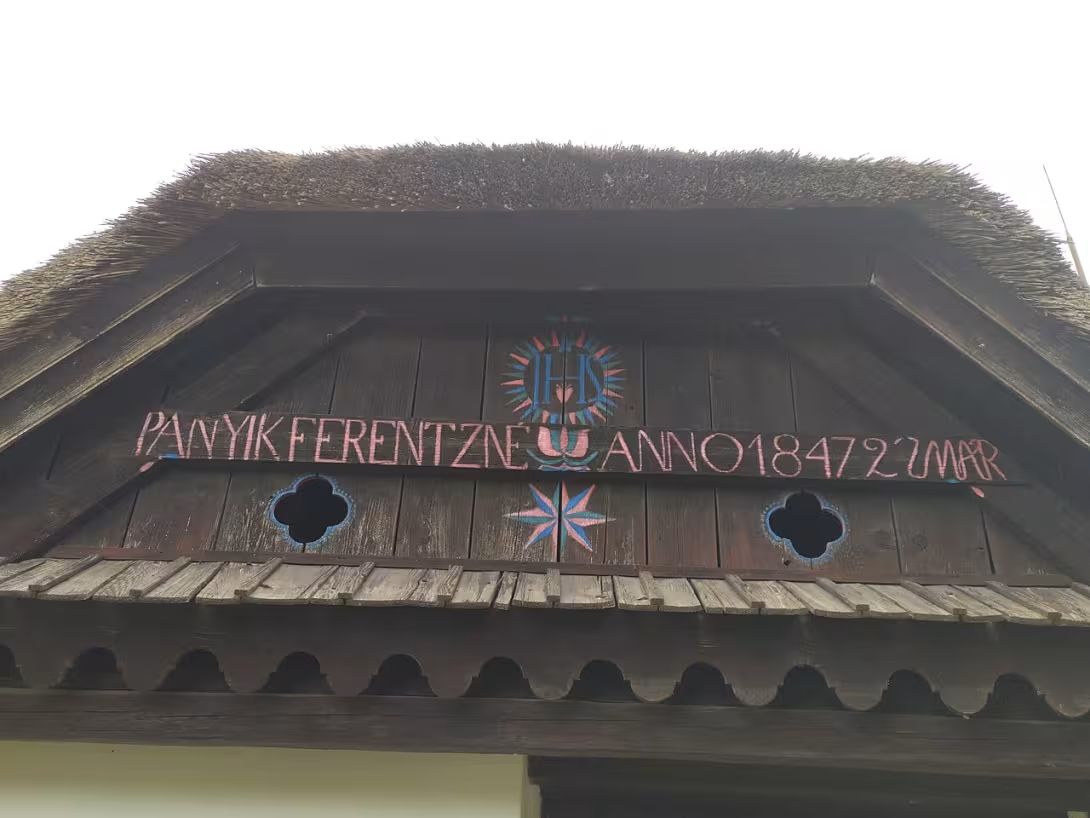
In the village of Jakubany in Prešov region there is a folk house, which represents a sample of folk architecture from the first half of the 20th century. The building comes from 1936.
The area, which registers the Monument Office of the Slovak Republic under number ÚZPF 1917, consists of one object. It is a folk house with internal designation 1917/1, built in 1936.
From the point of view of construction characteristics, the monument is realized in log construction. This method of construction is characteristic of folk construction of the period in which the building was created.
The building is located at the address number 300 in the village Jakubany. The building is officially declared a national cultural monument.
This folk house in the village of Jakubany is illustrated by an example of regional construction from the first half of the 20th century. For those interested in traditional architecture, it represents a specific point in the list of monuments that we recommend to visit.
Tehdy a dnes
Drag the slider and compare how the monument might have looked when it was built with the view today.

The historical view on the left is a visualisation generated by artificial intelligence and serves as inspiration.
Historical Milestones
- 1936
- Creation of a folk house in the village of Jakubany
- 1950
- Official declaration as a national cultural monument
Guide
Show guide text
The text was prepared by artificial intelligence and has not been editorially reviewed. It may contain inaccuracies.
Welcome to Jakubany, the heart of Prešov region, where time stopped for a while. Right now you are facing an object that is the embodiment of simplicity and humility - in front of a traditional folk house. The first impression you are likely to have is a feeling of deep peace and authenticity. Look at this building in front of you. It is a place that does not say everything at first sight, but which invites you to stop and consider how people lived in previous generations. Feel the atmosphere of this place, the silence of the surroundings and the way this house naturally connects with the landscape around it. It's more than just a building; it's a witness of everyday life that's been going on for years.
When we search for answers to the questions about exactly when this house was created or who its fooder was, we encounter a fascinating silence. The chronology of this house is not exactly known and there is no name for a famous architect to sign his project. This may surprise you at first glance, but it is actually quite natural in the case of folk architecture. These houses were not created in studios, but in need, tradition and deep knowledge of local conditions. Their architects were the people themselves - local masters, fathers, and sons, who passed on knowledge of construction from generation to generation. This house was not built for glory, but for life. It was designed to protect the family from winter cold and summer glow to provide refuge and stability. It is this anonymity of the diners that gives the house a special charm; it is not a memorial of one personality, but a memorial of the whole community's spiritual and material world, Jakubian.
Now, please concentrate and take a closer look at the architecture itself. Note the overall composition and proportions of the house. Look at his facade and see how it is arranged. Looking at the outer part of the building, note the details that show the functionality and practicality. There was nothing unnecessary in folk construction. Every element, every corner and every opening had its specific meaning. Follow the lines of the house and think about how housing issues were dealt with in the past. Look at the way the house is situated in space. Note how it naturally fits into the environment, creating a harmonious whole. Although we do not know exactly what materials were used in every detail, you can feel this nature and moderation, which is typical of traditional buildings in our region. Look carefully at the surfaces and joints that are the result of the handiwork and patience that we have often lost in today's fast world.
When you look at this house like that, imagine the people who lived in it. Although history has preserved their names in oblivion, their presence is still in this space. This house was the center of the entire universe for families who found their marina in it. Imagine the morning rising at sunrise, the smell of morning air, and the rhythm of work that he defined every day. This is where children were born, where they cared for older family members, and where important family issues were addressed. Every corner of this house hides invisible stories of love, effort, joy, but also of difficult moments to survive. Imagine evenings in the light of the lamp, when at the common table talked about the harvest, the weather and the news from the surrounding villages. Although we do not know the specific names of the historical personalities associated with this place, the very fact that this house survived makes its former inhabitants heroes everyday. Their lives were not written in chronicles, but they were carved into the walls and floors of this building.
Perhaps you will now be interested in one of the attractions associated with the nature of such houses. The mystery is not what we see, but what we have long forgotten. Each folk house had its invisible rules and rituals. There were ideas of where the house was the best place to sleep, where food was stored, and how the guest would be welcomed. It is fascinating to think that this house speaks to us the language of symbols and traditions that we no longer fully understand today. The secret of this house lies in its silence. It is this silence that makes us ask ourselves: " What would the walls tell us if they could speak? What dreams were dreamed and what fears were expressed here? This ignorance is not a mistake in history, but rather an invitation to our own imagination. It is a space where we can complete the missing pieces of the puzzle and imagine life in James many centuries ago.
Let us now slowly move to the conclusion of our short stop. This folk house in Jakubany is a reminder that the real value does not always lie in monumentality, expensive materials or familiar names. The true value lies in authenticity, in connection with roots, and in the ability to survive time trials. You stand before a building that is a bridge between us and our ancestors. It is a place that teaches us humility and gratitude for basic human needs - a roof over our heads and a feeling of home.
I invite you now to take a slow walk around the house, to perceive its presence from different angles and to be drawn into its peaceful atmosphere. You may notice the detail you missed before, or you may feel the impulse to stop and just keep quiet about the surroundings. Let yourself be guided by your feelings and try in this silence to find answers to your own questions about home and tradition. Thank you for your attention and for devoting time to this modest but precious monument. I wish you a pleasant continuation in your journey by Jakubany and in discovering the beauty of the Prešov region. Let this experience accompany you in the next steps of your journey. Goodbye.
For children
The People's House in Jakubany is one of the largest hiding places in the Prešov region. It was born almost 90 years ago when the construction started new.
It was like a great adventure! People came from all over the region and started building houses, schools, churches... And the folk house in James was one of the first. Here lived families who fed on farming and making clothes.
Nearby
🏰 Historic sites (44)
- Replika vodného kolesa 4.2 km
- Vysoká pec Jakubany 4.2 km web
- Oslobodenie sovietskou armádou 4.5 km
- Jozef Dragoš Alžbetinčan 5.2 km
- Svojim hrdinom v r. 1914-18 5.2 km
- Metod Dominik Trčka 6.3 km
- Milan Rastislav Štefánik 6.3 km
- Dom Mešťana 6.5 km web
- Ján Kubášek 6.5 km
- Mons. Viktor Trstenský 6.5 km
- sv. Florián 7.2 km
- Panna Mária 7.7 km
- Ľubovniansky hrad 8.0 km +421 52 432 20 30 web
- Vojenská expozícia Michala Strenka 8.1 km web
- Galéria Hniezdne 8.1 km
- Bajerovským rodákom 8.1 km
- Hrdinom sovietskej armády 8.1 km
- 60 rokov od vyhorenia obce | 95 rokov založenia DHZ 8.1 km
- Ľubovniansky skanzen 8.2 km +421 52 432 39 82 web
- Trojičný stĺp 8.2 km web
🍽️ Restaurants and dining (68)
- Ľubovnianka 3.2 km
- Krčma 3.3 km
- Bistro Štelka 3.7 km +421 950 798 796
- kaviareň Glóbus 3.9 km
- Nasa kava 5.1 km Levočská 36 +421 911 917 827 web
- Kamenný dvor 5.1 km
- Modra 6.1 km
- Damask 6.1 km
- MP Cafe 6.1 km
- Kultur klub 6.1 km
- Piváreň Hnedá Kocka 6.1 km
- Pizzéria Palma 6.2 km
- Unico 6.4 km
- Talianska pizzéria 6.4 km
- Caffe Rustical 6.4 km
- Dukla 6.4 km
- Reštaurácia Gurmen 6.5 km
- Pohostinstvo u Jeleňa 6.5 km
- Reštaurácia u Jeleňa 6.5 km
- Kebabing 6.5 km
🏨 Accommodation (31)
- Dinda 3.0 km
- Silvia 3.1 km
- Hotel SOREA Ľubovňa 3.1 km +421524321751 web
- penzion Barbora 4.3 km
- Chata Plavnica 5.5 km +421 52 43 93 807 web
- Penzión Gurmen 6.5 km
- Penzión u Jeleňa 6.5 km
- Hotel Familia 7.0 km
- Čierna hora 7.8 km
- LIMBA 8.0 km +421 911 656 056 +421 904 113 714 web
- Poľana 9.2 km
- Chmeľov 9.9 km
- Peklo 10.9 km
- Privát Tina 11.0 km +421919432222 web
- Grosek 11.4 km +421524398347
- Privat BENE 11.5 km +421911876170
- U Johna 11.5 km
- Villa Thermia 11.6 km
- Mystery 11.6 km
- Privát Panoráma 11.9 km
🚲 Rentals and sport (8)
- Wallhalla 4.8 km web
- PEM aréna 5.6 km Tehelná 10 +421940649641 web
- Mestská športová hala 5.8 km Tehelná 462/1
- Športové a relaxačné centrum 6.0 km
- Plaváreň 6.4 km
- TheGrind.sk 6.5 km Námestie sv. Mikuláša
- Sportisimo 6.9 km
- detský bazén 12.2 km
🥾 Hiking and nature (206)
- Vajcovka za tyšačku 0.8 km
- Zajačia hora 1.3 km
- Modrenina 2.4 km
- Vysoká 2.5 km
- Kýčery 2.6 km
- Javorinka 2.6 km
- Borsučiny 2.7 km
- Martinec 2.9 km
- Prameň Andrej 3.2 km
- Veronika LZ - 6 3.2 km
- Predné hory 3.6 km
- Sihla 3.6 km
- Rytierska studnička 4.0 km
- Pustá hora 4.1 km
- Hŕbok 4.1 km
- Repisko 4.2 km
- Nízka hora 4.9 km
- Nízka hora 4.9 km
- Grúň 4.9 km
- Siminy 5.0 km
Visualisations and artistic views


The visualisations are generated by artificial intelligence and serve as inspiration.
Visitor Tips
No tips yet. Be the first!
Log in and add your tip.
Location on Map
More monuments – Jakubany
Show all in the town
Visitor photos
No photos yet. Be the first to add a photo from your visit!
Log in and add your photo or leave a rating.
You get more points for a visit verified in the app — we can tell from the GPS that you are there.
Reviews and comments