








ľudový dom Vernacular house
The folk house in the village Dvorníky-Veľáre, located in the Košice region, is a national cultural monument of Slovakia. This object is recorded under the number of the ÚZPF 426-4678 and belongs to the turn of the 19th and 20th centuries, whose architecture represents folk construction.
The monument area includes one object: House folk (mural). This house is an example of traditional brickwork that was typical of this time and location. Architecturally it is a building with characteristicly available people's houses from this period.
The entry is located at No. 5 in Beekeepers, Dvorníky-Veľáre. Although specific data on flooring and floor plan are not provided, the brick house of the folk type usually consists of separated premises designed for different needs. The material used in its construction is a material wall, which is common to houses of this kind.
The folk house was declared a national cultural monument of Slovakia. Apart from the construction itself, no other objects or protection zone are recorded on the site, indicating its exclusive status and meaning.
This house is an important part of the village Dvorníky-Beekeeping. Its location and protection illustrate the importance of this object not only for the town community, but also for the wider cultural heritage of Slovakia. Visit of this monument offers the opportunity to get a better look at the traditions and architectural styles that formed many villages in the Košice region.
Tehdy a dnes
Drag the slider and compare how the monument might have looked when it was built with the view today.
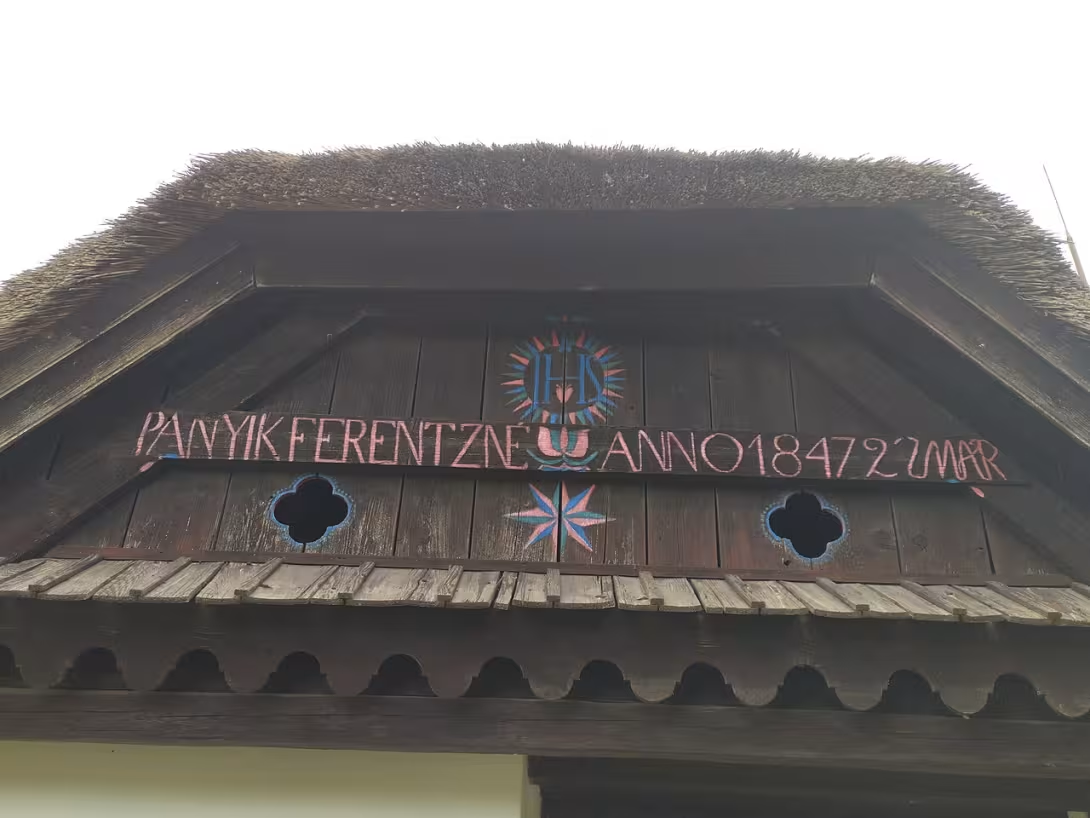

The historical view on the left is a visualisation generated by artificial intelligence and serves as inspiration.
Historical Milestones
- round 1900
- Creation of a brick folk house in the village Dvorníky-Veľáre.
- the end of the 19th century
- Enlargement of the brick folk building in the region.
- unknown
- Declaration of the building as a national cultural monument of Slovakia.
Interesting facts
- The folk house in the village Dvorníky-Veľáre is declared a national cultural monument of Slovakia. - The building comes from the turn of the 19th and 20th centuries. - It is a brick house, which is an example of traditional brickwork typical of this time and location. - The area of the monument includes only one object and there are no other buildings or protection zone.
Guide
Show guide text
The text was prepared by artificial intelligence and has not been editorially reviewed. It may contain inaccuracies.
You know, in the quiet and humble corner of our country. You are standing in front of the Folk House in the village Dvorníky-Veľáre. Before you begin to explore its form, let's just try to stand in this space for a while and see the atmosphere of the place you are in. Perhaps you feel the strange kind of peace that works here. It is a feeling that comes only where history meets the daily lives of the inhabitants of this region. Before you lies a building that is not a monument built for kings or great soldiers, but it is a monument for simple people, for their work, their efforts and their existence. When you look at this house, you may not see anything dramatic at first sight, but it is in the simplicity and authenticity that its real strength hides. This house is not just a set of walls and roofs. It is a witness to time that has long passed, and it is also a connection to our roots. Although histoya did not tell us the exact name of the architect who designed his face, nor the exact century when this house was first built, his presence here is undoubted. This ignorance carries a special charm. Some things in life are more important than exact dates and names. The essence that this house radiates is important. It is an essence of human insistence, an effort to create a home and a place to protect us from the enemy elements of the world. Now that you're used to his presence, try to devote yourself to his architecture. Look at his lines and how the house fits into the surroundings. Note how his building operates in harmony with the country of the Košice region. Traditional folk architecture was not about inventions that were supposed to impress the world, but about the deep understanding of nature and the material that the earth gave us. Even if we do not know the exact details of its construction, you can perceive this deep consistency. Watch the house's face communicate with the surrounding roads and the rhythm of this village. Perceive his proportions. The folk construction industry did not use complex geometric calculations of modern engineers, but intuition and experience of ancestors who knew how to build a house to be functional and durable. See this structure as a whole. Look at her pre-face and try to imagine the eyes that have been watching her in the past. You may have noticed that this house does not seem like a foreign object that was accidentally laid around here. He seems to grow out of it. This is a typical property of folk buildings - their organic connection to the soil on which they stand. Although we do not see a list of materials in the documents, we can assume that every stone, every beam or layer of material that forms this house has been chosen with intent and respect for the work. Now let's move on to something that may be even deeper than the building itself. We're talking about people. Since we do not know the names of the particular personalities that built or lived in this house, we must imagine them as anonymous heroes of our history. Every folk house is built by the hands of someone who had dreams, who was worried, who worked from the dawn of the day to its west. These hands formed this space. These lives have taken place here. Perhaps they celebrated joys here within the family, or there were difficult times in silence. It is this anonymity that makes this house so special. He does not belong to one famous historical act, he belongs to all those who lived, worked and built their identity in the region. It's a house that represents the collective memory of our ancestors. Notice how work and life are connected in this house. In the past, there was no clear distinction between home and place of work. The house was the center of the whole world of the family. There is great wisdom in this simplicity. Today we live in a world where our spaces are divided, where work is in one place and rest in another. The folk house reminds us of the time when life was sibling and integrated. Perhaps you are now wondering what is the greatest mystery in this place. Maybe it's the unknown. When did this house get built? Who was his first owner? What did his walls see? This uncertainty is not a mistake, it is her greatest treasure. In an era where everything is recorded, filtered and stored in digital databases, this house is an oasis of the unknown. It's a challenge to our imagination. Look at it again, and let's try to build images of the past in our head that are not written in the books but are stored in the very atmosphere of this place. It's a mystery that no one can explain, but which everyone can feel. Sometimes the greatest truth is hidden in what we cannot say in words. This house does not tell us about great battles or political changes, but it tells us about the durability of the human spirit. It tells us that while centuries are changing and generations are leaving, certain foundations remain. Now that we've gone through its essence, I invite you to continue to explore. Don't leave him now. Try to slowly pass by, perceive its walls from different angles, watch as light changes and as its face changes depending on where you stand. Perhaps in silence, you will find answers to questions you cannot even ask. Thank you for stopping by and paying attention to this vague but deep witness to our past. We wish you the pleasant rest of your journey through Dvorníky-Beekeeping and hope that this short moment in time brought you a sense of connection with the history that molds us all. We'll say goodbye, but let this feeling be carried in for a while.
Tips for visitors
It is appropriate to visit spring or late summer, when the weather is stable. It is recommended to have comfortable shoes and water with you. We recommend that photographers use morning or afternoon natural light to highlight the details of the house. The visit is also suitable for families with children, but we recommend checking the accessibility of roads in advance.
Frequently asked questions
Can the monument be visited?
This is a residential or farm building, not a museum with opening hours. Please view it from public space and respect the owners' privacy. We have no information about access to the interior.
Where is the monument?
Location: č. 5, Včeláre, Dvorníky-Včeláre, Košický kraj. The map on this page shows the exact spot.
Why is the monument protected?
It is listed in the Central List of the Monuments Fund of the Slovak Republic as a national cultural monument (ÚZPF no. 426-4678).
For children
Hello until every standard barn became a place of stories and joy! We were found in a small village Dvorníky-Veľáre in a large region of Košice region. And here, as from the swimming pool, the folk house is demolished - whether by almost mysterious private roads or by over-perfect imagination of children. This house was more than just a wall and a roof; it was a place where friendships were formed and games were created.
Thematic route
Thematic cruise route from the village Dvorníky-Veľáre
1. Folk House (Folk House) - Type: Cultural monument - Proč is worth a visit: The object represents an example of traditional architecture and cultural traditions of the region. It makes it possible to understand the history and life of local inhabitants.
2. Chapel nearby The People's House - Type: Religion monument - Proč is worth a visit: The chapel provides cash credit and spiritual cosy. The ideal place for meditation or short prayers.
3. Local garden surroundings - Type: Natural and cultural area - Proč is worth visiting: Space is suitable for relaxation in nature. Local gardens with traditional flora offer photomotivations and the possibility of local botany.
4. Local park near the People's House - Type: Natural space - Proč is worth a visit: Park offers an opportunity to relax on the outside, waking with pets or easy walks. Ideal space for families.
This route combines cultural, spiritual and natural elements, making it suitable for various types of visitors.
Seasonal recommendations
In spring, the surroundings of the folk house in the village Dvorníky-Veľáre awaken into life. The first green and flowering trees create a fresh atmosphere that complements the rustic character of the building. It is recommended to come in the next morning when the attendance and light are low and gentle. Due to variable weather, it is advisable to dress with layers.
Summer season brings bright sunny days and full bloom meadows around the memorial. To avoid the greatest crowds, plan a visit for the early morning. Do not forget light clothes and plenty of drinking water.
Autumn dresses the landscape into golden and red tones, creating a cozy mood. The ideal time to visit is the afternoon when the low sun highlights the texture of wood and natural materials. Moistness in nature requires waterproof shoes.
In winter the folk house is peaceful, especially if it is covered by snow. The atmosphere is quiet and evokes traditional rural life. During Advent time, the place is surrounded by a feeling of peace. It is necessary to put on warm clothes and check in advance the shortened opening time that is common for the winter season.
Visualisations and artistic views

The visualisations are generated by artificial intelligence and serve as inspiration.
Visitor Tips
No tips yet. Be the first!
Log in and add your tip.
More monuments – Dvorníky-Včeláre
Show all in the town
Visitor photos
No photos yet. Be the first to add a photo from your visit!
Log in and add your photo or leave a rating.
You get more points for a visit verified in the app — we can tell from the GPS that you are there.
Reviews and comments