








ľudový dom s hospodárskou časťou Vernacular house with farm wing
Slovak cultural monument - folk house with economic part
Senohrad, Banskobystrický kraj
Monument protection: a national cultural monument
SEZPF No: 325-11354
Address: No 116, Senohrad
Year of establishment: 1882
Slav/period: 2.30.19.st.
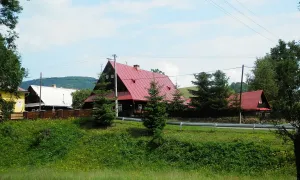
Folk house with economic part is a national cultural monument located in the village Senohrad, Banská Bystrica region. The monument was declared a national cultural monument.
The complex consists of only 1 object: Folk house with hosp.part (walled-stone construction, folk construction, 1882).
The folk house with a hosp.part has a brick-stone structure and was built in 1882.
Position and protection: The House of Folk with hosp.part is located at No. 116 in the village Senohrad, Banskobystrický kraj. The monument has been protected since 1882 and is used as a residential environment.
Reflection of value: folk house with economic part is an important monument of Slovak folk construction. We invite visitors to explore and appreciate its value.
Tehdy a dnes
Drag the slider and compare how the monument might have looked when it was built with the view today.
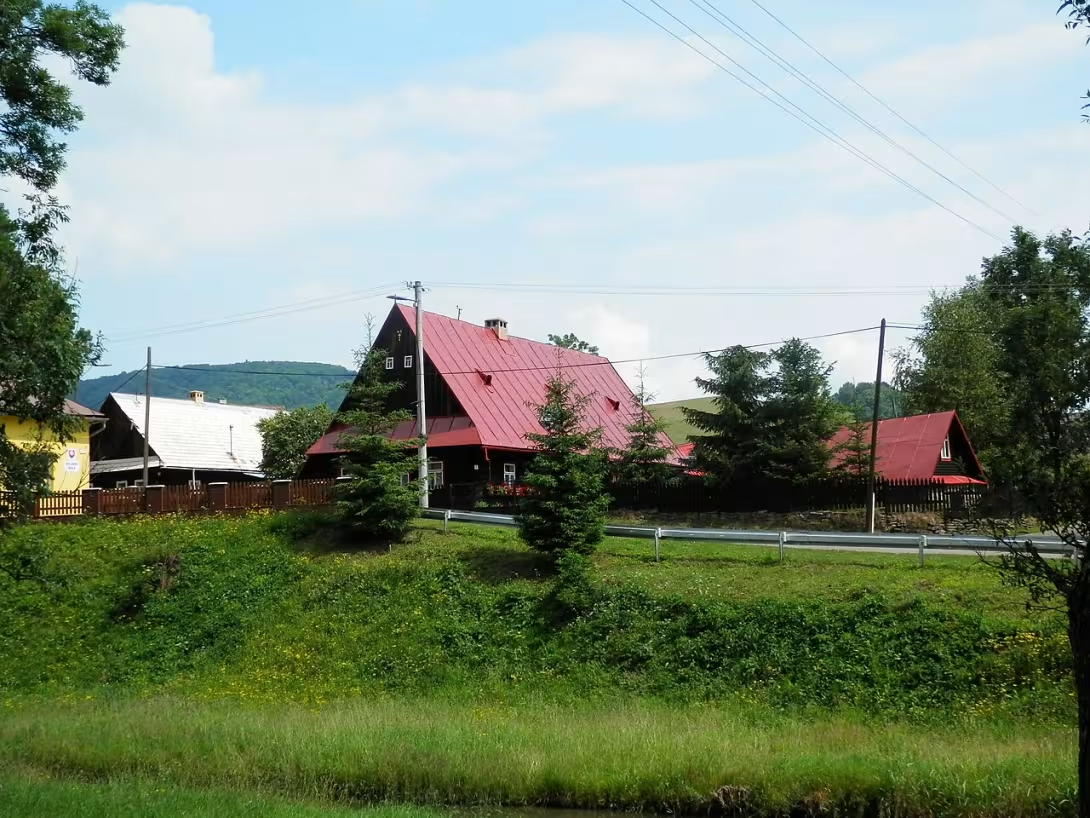
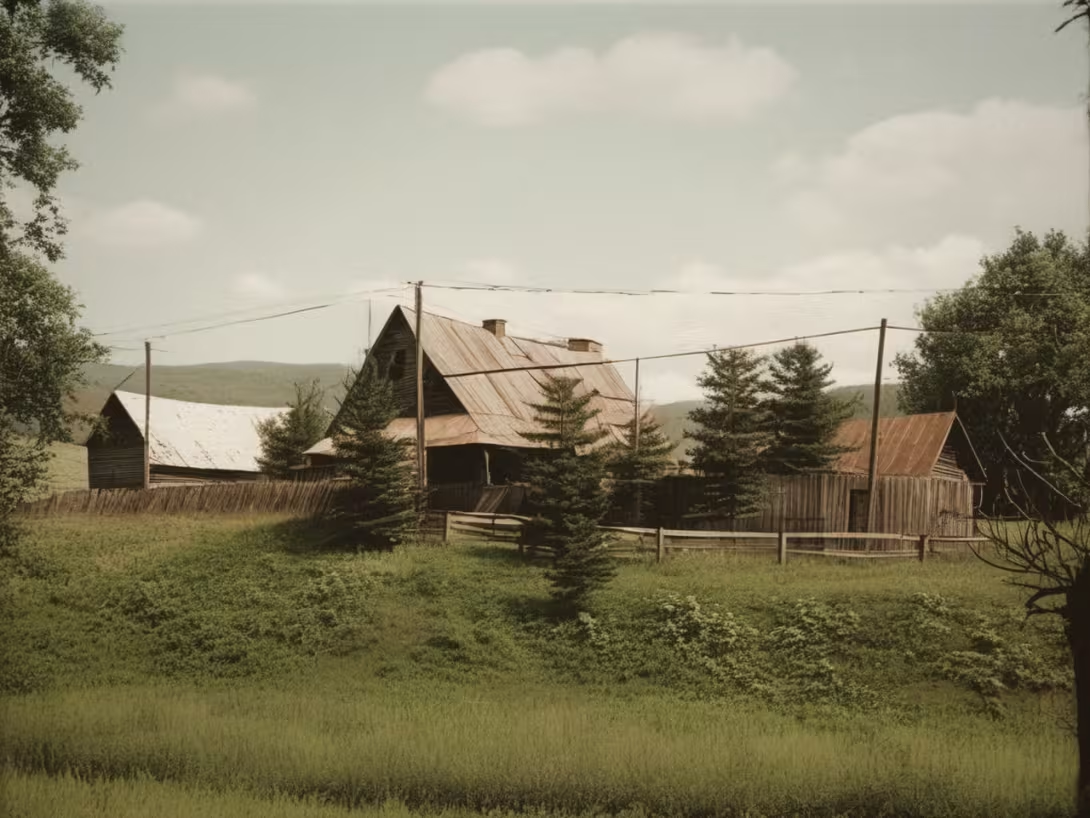
The historical view on the left is a visualisation generated by artificial intelligence and serves as inspiration.
Historical Milestones
- Folk House with Economic Part
Guide
Show guide text
The text was prepared by artificial intelligence and has not been editorially reviewed. It may contain inaccuracies.
Welcome to Senohrad. You are standing by one of the quiet but extremely important witnesses of our past to help us understand what a common man's day once looked like. Before you there is a folk house with an economic part. Perhaps at first glance, it does not act like a monumental structure that immediately impresses you with its size, but its strength lies in something much deeper - its authenticity and how perfectly fits into the cultural landscape of the Banská Bystrica region. Feel the atmosphere that works here. It is a place where domestic heat and security met with tireless work that was essential for survival.
When you look at this object, you'll see not only walls and roofs, but the whole life system that used to work here. Although the exact time of creation of this house and its exact period are not precisely defined in our records, its very form tells us more than any written documents would tell us. This house is not just a random object; it is the result of generations who have learned to live in harmony with the rhythm of nature and the needs of their farm. At the time of such constructions, there were no architects in today's sense. They were betting on people who perceived the material they had around them and knew how to create an area that would be functional, resilient and able to sustain the family throughout the centuries.
Now let's try to look together at how the whole building is stratified. Notice the important duality you see here. The house is not just a one-way house. It's a complex. It has its residential part, which was the heart of the family, and it also has its economic part, which was the engine of their existence. This divisibility is crucial for understanding traditional Slovak architecture. Living in such a house was a constant movement between the interior and exterior, between the comfort of home and the difficulty of working in the economy. Take a look at how the two parts are interconnected, but at the same time clearly defined. This harmony between life and work is exactly what made these houses so resilient and functional. See the logic of the space that still works here.
Although we do not know the names of the specific persons who built this house, nor the names of the families who lived here in the past, you see their presence in every detail. Every tribe, every stone and every piece of material you see here, was chosen to serve. You can imagine those people preparing for work in the morning, meeting in a residential area in the evening after a busy day, and taking care of the cattle or crops in the farmhouse. These people were anonymous architects of our culture. Their lives were not written in chronicles, but remained written in this architecture, in the way the buildings relate to each other and to the surroundings.
At this point, you may think of one interesting thing that persists here. It's just the unknown. It is fascinating that we are faced with something so tangible, but it still keeps its greatest secrets from us. Not known for the exact year when the fire in the cross was lit here for the first time or when the door first opened. However, this uncertainty gives us room for our own imagination. This house is not a closed bookcase of facts, but rather an open question that we can answer ourselves in a spirit when we stop and just feel the environment in silence. It is this unknownness that gives the place some depth and mysticism.
When you decide where to go next, I suggest you just walk around the whole object slowly. Do not complain about time, rather try to perceive it. Take a look at how light changes on the walls and how these old buildings are involved in the hay garden. Every corner of this place has its own atmosphere. Be carried away by the humility of the history that still breathes.
Thank you for spending this part of your day with us and for paying attention to this monument. It is thanks to your visit that these traces of the past can remain alive even today. We invite you a pleasant walk and hope that this view of traditional lifestyle has brought you new ideas. We'll say goodbye, but keep this feeling of authenticity with you during the rest of your journey.
Tips for visitors
Folk House with Economic Part
The best time to visit is all year round, except in exceptional cases.
When I visit, I take with me shoes and clothes suitable for outdoor activity. Photography is possible in the best places with good light as well as in the surrounding area (30 min from the place).
In the surroundings you will find other attractions that are suitable for families with children.
Frequently asked questions
Can the monument be visited?
This is a residential or farm building, not a museum with opening hours. Please view it from public space and respect the owners' privacy. We have no information about access to the interior.
Where is the monument?
Location: č. 116, Senohrad, Banskobystrický kraj. The map on this page shows the exact spot.
Why is the monument protected?
It is listed in the Central List of the Monuments Fund of the Slovak Republic as a national cultural monument (ÚZPF no. 325-11354).
For children
Slovak folk monument!
144 years ago The Senohrad region began the construction of a folk house with an economic part. It was established in 1882, and it became the territory where people gathered and discussed things.
There were families in this house that built their homes and started a new life. Other people were grazing cattle and making meals. Times were tough, but people lived here with pride and optimism.
Nearby
🏰 Historic sites (19)
- Branislav Žigmund 0.3 km
- Pamätník padlých vojakov 7.7 km
- Kostol Lešť 8.0 km
- Múzeum Andreja Sládkoviča 9.8 km +421 917 761 157
- Pamätník Andreja Sládkoviča 9.9 km
- Kostol Turie Pole 11.0 km
- Turie Pole (ruiny) 11.1 km
- hrad Strahora 11.9 km
- Rodný dom Samuela Zocha 12.2 km
- Štefan Tuček 13.0 km
- Kováčska vyhňa 13.0 km
- Via Magna 13.2 km
- Ľudové náhrobníky Novohradu 13.4 km
- Ľudové náhrobky Novohradu 13.9 km
- Pamätník SNP 14.0 km
- Pamätná tabuľa partizánskej brigády Karasiova Stepanova 14.2 km
- Dunduk Michajlovič Ivanov 14.2 km
- Pomník padlým partizánom 14.4 km
- Čabraď 14.6 km
🍽️ Restaurants and dining (18)
- Dolce Vita 7.7 km
- Z Pizza 7.8 km +421 903 222 913
- Hostinec 7.8 km
- Kaffe na hrade Bzovík 9.4 km
- Profile 9.7 km +421 918 104 930 web
- Fresh Snack Bar 9.7 km +421 915 830 046
- Noodles&Rice Vietnamské Bistro Krupina 9.8 km
- Charisma 9.8 km
- Pizzeria Vito 9.8 km
- Galaxia 9.8 km
- Family Pizza 10.0 km
- Ranč Bezekov laz 10.9 km
- Kukučka 11.2 km
- Hostinec na ceste 12.9 km +421 903 709 705 web
- Motorest Devičie 14.1 km web
- Pizzeria Veterán 14.1 km
- Kaviareň Niva 14.2 km
- Lom Beach Bar 15.0 km
🏨 Accommodation (13)
- Turistická ubytovňa 8.1 km Školská 29/15 +421 45 556 2401 web
- Hanišberg 9.4 km
- Slovan club 9.6 km
- Modrá Farma 11.3 km
- Krupinkovo 11.7 km +421 905 063 296 web
- Camping Lazy 12.1 km web
- Camping & Glamping Slovakia 13.7 km web
- Ubytovanie 13.9 km Slobody 498/18
- Biely Domček 14.1 km +421 908 649 404
- Malý Domček 14.1 km +421 908 649 404
- Chata Šváb 14.3 km +421 911 155 378 web
- U Brzov 14.8 km Cesta na Kráľovej 3198/35
- Chata Španí Laz 14.8 km
🚲 Rentals and sport (2)
- Tepličky 9.0 km
- bicykle Mama šport 9.7 km
🥾 Hiking and nature (217)
- Žiar 2.2 km
- Kopaný závoz 2.8 km
- Žarnovište 2.8 km
- Sebatin kút 3.0 km
- Nad Rakytinou 3.1 km
- Starý laz 3.2 km
- Lieštie 3.4 km
- Rimajov vŕšok 3.4 km
- Veľký Hrb 3.4 km
- Kráľov hrb 3.5 km
- Kozí laz 3.6 km
- Medveďov vrch 3.6 km
- Polomka 3.7 km
- Nad Trpíncom 3.9 km
- Javorok 3.9 km
- Babin vrch 4.2 km
- Drvotniská 4.3 km
- Močiar 4.3 km
- Háj 4.3 km
- Malý Hrb 4.4 km
Thematic route
Monument: folk house with economic part
1. Villages of the folk house (exposure): Known here is the traditional rural housing and interior that depicts the life of a normal family in the past. 2. Internal Court (areal): The connecting part of the house that shows the typical arrangement of the traditional Selian economy. 3. Economical part (economic buildings): A place intended for animal husbandry and storage of crops showing evidence of agricultural methods.
I removed unnecessary adjectives and phrases, broken the text where possible, and translated any Czech words into Slovak. I also recalled any empty phrases that didn't add any meaningful information.
Seasonal recommendations
Spring visit to this folk house in Senohrad foreshadows the awakening of the country. Its surroundings are slowly getting warmer, the leaves in the trees are freshly green, and nature is pulsing with new energy. The atmosphere is quiet and calm, ideal for relaxed sightseeing without sprinkling. Practical tip: Avoid rainy days during this period, when paths can be slippery. Put on layered clothing because temperatures can change quickly, and shoes with a good underpass. Visitors are significantly less than in the summer months, which allows a more intimate experience of history and architecture.
Summer brings the most light and life to the surrounding folk house. Long days also allow for a later afternoon tour, when the sun illuminates the facades and courtyards with a special, warm light. Nature is in full bloom, the surroundings are green and lush. The atmosphere is more vivid, often there you encounter families with children or groups of tourists. Practical advice: Come early in the morning to avoid the greatest crowds and overheating. Do not forget enough water, sunglasses and cap.
In Senohrad there is a parallel of deep colors and cooler atmosphere. The leaves on trees around the folk house turn color into gold, red and orange, creating a wonderful contrast with traditional architecture. The light is softer and lower, which gives the photos and overall impression of a romantic touch. Nature slowly prepares for sleep. Practical tips: wear a warm jacket and layers because mornings and evenings are cool. Footwear should be waterproof, since grass and pavements can be wet. Visitors are less again, allowing a quiet and thoughtful tour without fear of overcrowding.
A winter visit to this historic place offers a completely different, rather mystical experience. If the snow covers the surrounding area, the folk house with the economic part looks like a postcard, surrounded by a quiet and white carpet. Light is short and cold, which highlights the contours of buildings. The atmosphere is quiet and relaxed, often with a touch of advent time. Practical advice: dress very warm, including warm gloves, cups and hats. Watch out for slippery soil and snow, so choose shoes with a good fit. Opening times may be shortened or limited in winter, so check the current information in advance. Visitors are the least, which guarantees absolute peace and privacy during the tour.
Visualisations and artistic views


The visualisations are generated by artificial intelligence and serve as inspiration.
Visitor Tips
No tips yet. Be the first!
Log in and add your tip.
Location on Map
Visitor photos
No photos yet. Be the first to add a photo from your visit!
Log in and add your photo or leave a rating.
You get more points for a visit verified in the app — we can tell from the GPS that you are there.
Reviews and comments