








meštiansky dom Burgher house
Slovak Cultural Monument - Town House
Townhouse is a typical urban residential house, located in the center of Poprad, in Prešov region. This article is about burgher houses, which met with great interest of nobility to stay in the city in the 17th and 18th centuries.
During the Middle Ages were wooden houses (typologically very close to folk architecture), uniquely at solvent owners, brick. The types of houses were influenced by the material, the way of heating, the solvency of the owner and the way of defense.
The townhouse was typically a city residential house, which is located in the city center. It was characterized by its narrow disposition and functional use.
In the 17th and especially in the 18th century there was an increased interest of nobility in the city, which related to its functions in the county or military administration. The noble house was bought next to each other - sometimes two to three plots - and it was rebuilt into representative buildings.
The population in cities was growing. Residential rental houses ensured a much higher population density.
The original objects were modernized mainly in the parter. Many retained their original functional use (trade), but the sales method was more oriented towards advertising.
The function of housing remained in originally residential burgher houses until today, only the requirements of the standard of housing changed.
City House, Andreja Kmeťa Street 5, Banská Bystrica Štiavnica
Townhouses in Banská Štiavnica included an older unorganized building, leaving narrow streets between the buildings.
Structural expression of the burgher's house is remarkable because it is located in a steep terrain configuration (from the side of the square St. Trinity are three- to four-storey, while the last floor is also the ground floor in the back alley).
Today you can visit the burgher's house and see how the original urban character of the city has been preserved. The monument is significant by representing the type of burgher house of the late Renaissance period and the Baroque.
Sources:
* Collection of authors: Presentation of architectural heritage II. Bratislava. Perfect 2008. * Dvořáková, V.- Kollár, D.: Cultural beauty of Slovakia, the most beautiful cities. Bratislava. Dajama 2007. * Boteck, A.- Quasni, M.: Architectural-historical research. Bratislava. 2009. Official annotation of the PÚSR (literal citation, verified fact): The site registers the Monument Office of the Slovak Republic under number ÚZPF 849 and consists of 1 object: 849/1 - House burgher (passing, rowing, late baroque, 1800-1820) Year of birth (verified): 1800
Tehdy a dnes
Drag the slider and compare how the monument might have looked when it was built with the view today.
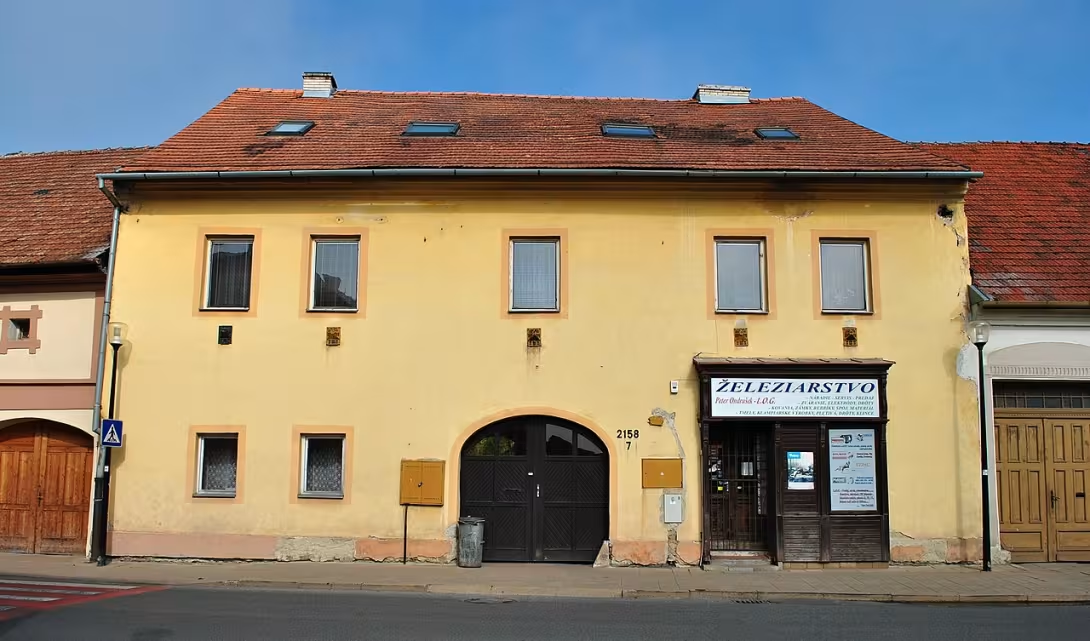
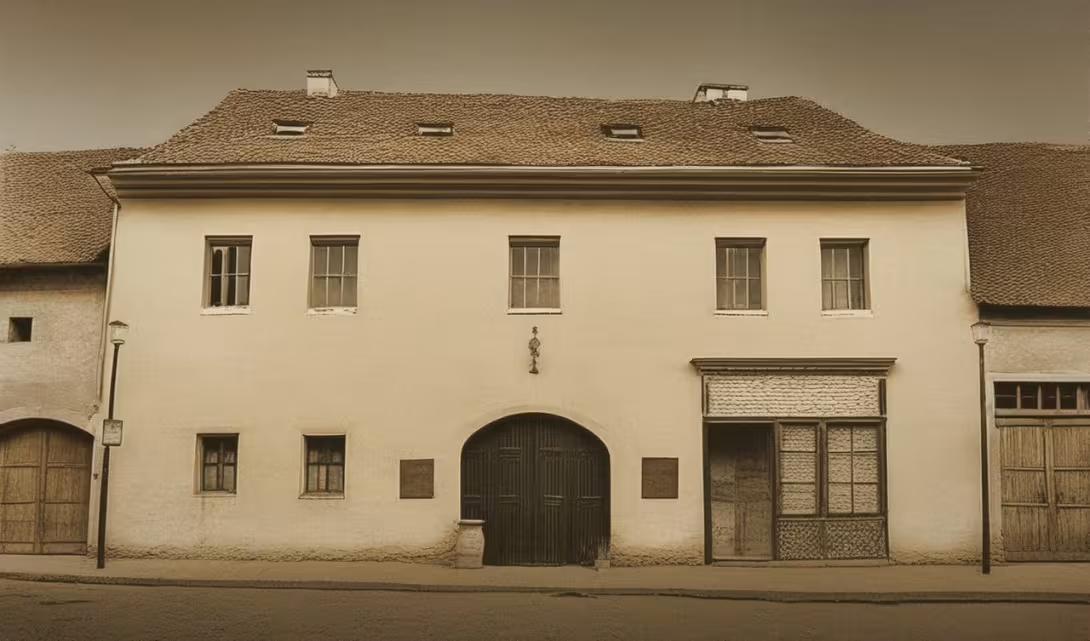
The historical view on the left is a visualisation generated by artificial intelligence and serves as inspiration.
Historical Milestones
- 1800
- Creation of a burgher's house in Poprad
- 1750
- Increased interest of nobility in a stay in the city
Interesting facts
Hiking in Slovak historical panacea VYHRADNĚ:
- Townhouse in Poprad is a typical urban residential house, located in the city center. - Nobility bought houses next to each other and rebuilt them into representative houses. - The population in cities grew, with much higher population density being secured by residential rental homes. - The function of housing has been preserved in originally residential burgher houses until today, only the requirements of the standard of housing have changed.
Guide
Show guide text
The text was prepared by artificial intelligence and has not been editorially reviewed. It may contain inaccuracies.
Welcome to the heart of Poprad. You're standing right in front of a building that carries a quiet but significant trace of the city's past. Before we get to a deeper knowledge of her history, just stop for a moment and see the atmosphere of the place you are in. We are in the centre of the city, in a space where traces of many generations are being pushed through, where in every stone block and in every line of facade there is a story about growth, social change and how modern urban environment was formed. This burgher's house, which you have in front of you, is not a mere building; it is a living document of the age that shaped the face of today's Poprad.
Let us go further into time together and understand why this building is standing right here and what meaning it had for its indigenous inhabitants. To understand its origin, we need to look at the period preceding it. Already in 1750 we began to observe a fascinating trend, which began to change the entire social map of the region. The nobles, who previously preferred their rural settlements and isolation, began to show a strong and increased interest in urban residence. The city was no longer just a place of trade and crafts, becoming a city of prestige, politics and social contacts. This shift in the interests of the aristocracy brought new energy to the city streets and also the need for new, representative premises.
This townhouse itself, as you see it today, was established in 1800. It was the time when Poprad became definitely an important city center. During this period, it was not just simple constructions but building a structure that would last centuries. The house became a part of a growing mištejska housing estate, which was intended to organize life in an increasingly dense urban environment. View this construction as a symbol of the stability and prosperity that the development of urban life brought at that time.
Now that you are standing this close, pay attention to the architecture itself and how this house is involved in the overall rhythm of the street. Although we do not know the name of the particular architect who implemented this proposal in the end, its manuscript is clear in the very essence of the building. It is a typical city house that is characteristic of this era. Look at his lines and how the building copes with the space around it. At the time of its creation, the urban density of the settlement increased steadily. The city became compact, the streets became narrower, and every building had to be used as much as possible. This house is an accurate example of this urban logic - it is a building that is firmly rooted in the city's woven fabric, which is part of the continuous line of houses that form the identity of Poprad.
Note how this architecture differs from ordinary rural homes. The priority here is not just a refuge, but a functional and representative place within the urban system. There is a sense of order, of aesthetic, that corresponds to the state of the scrotum that at that time formed the backbone of the economy.
However, looking at the broader context, we will reveal another fascinating layer of history that is closely related to these houses. As we mentioned, the nobility began to move in cities during this period. This has brought completely new dynamism to the mural buildings. The nobles often took advantage of the strategic location of houses in the city center and bought adjacent houses. Their goal was not only to have a place to live but to rebuild these houses on their own, magnificent and representative settlements. This process changed the face of the city - simple residential streets became prestigious routes where various social classes met. In such a context, this burgher house could have been either part of this large - scale transformation or a Witness. It is fascinating to think about how the lives of ordinary craftsmen and burghers were mixed with the ambitions and luxury of noble families at one time in these streets.
Although history has not given us the names of the specific persons who built or lived in this house, you see their presence in every detail. Every house is like a book in which chapters are written by the lives of people whose names may have long disappeared, but whose needs after home, safety, and prestige led us to carve out these buildings in the air of the city. There is the same amount of mystery - who was the first owner? Who opened the door in the morning, and who in the evening in this house sought refuge from the wind? These questions remind us that history is not only dry dates, but it is the lives of people.
So we can say that this house is something like a silent keeper of time. While the city around it is constantly growing, changing and modernising, this structure remains a solid point that reminds us of stability and tradition. It is a symbol of the transition period when the old world began to connect with the new, urban world that we now take for granted.
I believe this view of the burgher's house has helped you to understand more than just its physical form. He helped you to understand the spirit of the city reflected in it. When you continue your tour of Poprad, try to look at other buildings in this way - not just as objects, but as witnesses to the great changes that have taken place in our region. Each street has its own rhythm and each house has its own unique track.
Thank you for coming with us to this memorial. Beg on, discover other attractions and let yourself be carried by the history that Poprad so richly offers. We wish you a pleasant and inspiring journey.
Tips for visitors
The townhouse is a significant monument of Slovak culture. The best time to visit is from April to October when the weather is warm and sunny.
When visiting, do not remember to change suitable clothes and shoes. Photography is possible at the best places, such as beautifully groomed courtyards and facades of the house.
There are other sights that you can visit in 30 minutes from the place. Tips for families with children: The house also offers recreation nearby, such as parks and forests.
Frequently asked questions
Can the monument be visited?
This is a residential or farm building, not a museum with opening hours. Please view it from public space and respect the owners' privacy. We have no information about access to the interior.
Where is the monument?
Location: Teplická 2158/7, Veľká, Poprad, Prešovský kraj. The map on this page shows the exact spot.
Why is the monument protected?
It is listed in the Central List of the Monuments Fund of the Slovak Republic as a national cultural monument (ÚZPF no. 416-849).
Nearby
🏰 Historic sites (140)
- Mariánsky stĺp 0.2 km
- Pamätník obetiam prvej deportácie Židov zo Slovenska 1.6 km
- Augustín Tetemonte +28.8.1944 1.6 km
- Rodina Weiszovcov 1.6 km
- Pamätník padlých 1.6 km
- Pamätník 1. československému armádnemu zboru 1.7 km
- Anton Mačuga, Dr. Alojz Žemla 2.0 km
- Ján Bendík *25.12.1903 +25.2.1970 2.0 km
- Milan Rastislav Štefánik 2.0 km
- Na počesť sovietskej armáde 2.0 km
- Dávid Husz 2.1 km
- Podtatranské múzeum 2.1 km
- Galéria Igora Pančuka 2.1 km +421907340579 web
- Jozef Bonk 2.2 km
- sv. Egídius 2.2 km
- Mariánsky stĺp 2.2 km
- Mariánsky stĺp 2.7 km
- Zuzana Anna Hönschová 2.8 km
- Podtatranské múzeum, pobočka Spišská Sobota 2.8 km
- Gedeon Majunke 2.8 km
🍽️ Restaurants and dining (403)
- Červený Mak 0.0 km
- Iron Pub 0.1 km
- U Septima 0.1 km
- Prestige 0.1 km +421 52 776 8551 web
- Oto&Oto Caffe 0.2 km
- Cat Café Club 0.2 km web
- Felka 0.4 km +421 903 696 153
- Cukráreň Domenico 0.4 km +421 52 7721 333 web
- Velický zámoček 0.6 km
- Golden dragon 1.1 km
- S-Café Poprad 1.2 km
- Mc Kebab 1.2 km
- Segafredo 1.3 km
- Senvet 1.3 km
- Vinuška 1.4 km
- Stodola 1.4 km
- Krčmička 1.4 km
- Viet Bistro 1.4 km
- Stop Cafe 1.4 km Svitská cesta 3636/1
- Adia 1.4 km
🏨 Accommodation (289)
- Penzion Harmony 0.1 km Velické námestie 1192/24 +421 908 995 579 web
- Penzion Tatry 0.3 km
- Lavender Motel & Restaurant 0.7 km +421 52 776 3205 web
- Club Hotel Olympia 1.1 km
- Tatra Hotel 1.5 km web
- Európa 1.5 km Jiřího Wolkera 464/11 +421 52 426 2799 web
- Gerlach 1.7 km Hviezdoslavova 332/3
- Vila Mery 1.7 km
- Satel 1.8 km web
- Penzión Fantázia 1.8 km 1. mája 3817/26 +421 911 610 127 web
- Vila Pohoda 1.8 km
- Hotel Crazy 2.3 km
- TatraMonti 2.5 km
- Penzión Dobré časy 2.5 km
- Hotel Zauber 2.6 km
- Penzión Barborka 2.6 km +421 905 664 195 web
- Pension Pod Bránou 2.6 km
- Penzión Dagmar 2.6 km
- Penzión Sabato 2.6 km
- Pension Sobota 2.6 km
🚲 Rentals and sport (60)
- Lyže z druhej ruky 1.0 km
- Intersport 1.1 km
- Hall WoodRock 1.2 km +421 902 662 066
- Sportisimo 1.3 km
- Sportrysy 1.3 km +421 52 789 40 49 web
- Touranbike 1.6 km
- Cyklomax 2.0 km
- Arnox 2.0 km
- O.K. Sport 2.2 km
- City bowling 2.2 km
- EXIsport 2.2 km
- Husky 2.2 km
- Sportisimo 2.2 km
- Sport Vision 2.2 km
- Intersport 2.2 km
- Decathlon 2.2 km
- Scandinavia 2.3 km
- Bicykle Nazarej 2.3 km +421 911 699 766
- Nord Blanc 2.3 km
- Regatta Great Outdoors 2.3 km
🥾 Hiking and nature (167)
- park Dávida Husza 1.7 km
- Park pred Okresným súdom Poprad 2.0 km
- Panoráma Tatier cez okno 2.1 km
- Slavkovský vrch 2.2 km
- Vyhliadková veža kostola 2.2 km
- Kalion 3.5 km
- Strážske 4.6 km
- Prameň za kolóniou 5.0 km
- Malé Zámčisko 5.2 km
- Piesočný vrch 5.2 km
- Gánovské travertíny 5.2 km
- Prameň pod Grigerovou záhradou 5.2 km
- Čarnušová 5.4 km
- Výšina 5.4 km
- Krížová 5.7 km
- Vrt ŠHG-1 5.9 km
- Matejovský vrch 5.9 km
- Výhľad na Poprad 6.0 km
- Vrt ŠHG-2 6.1 km
- Park horských vodcov z Novej Lesnej 6.2 km
Thematic route
Route:
1. Townhouse - the main destination, where it is located in the center of Poprad * Type: historical object representing the cultural and social life of the village * Reason to visit: prohlede the interiors and exteriors of the house, which offer a view of the past of the village 2. Stadium SNP - multifunctional stadium near the center of Poprad * Type: multifunctional stadium * Reason to visit: prohled the area and remember the important sporting events held here 3. St. Francis church - church in the centre of the village Poprad * Type: Roman Catholic Church * Reason to visit: prohled the interiors and exteriors of the church, which offer a view of the past of the village
This trip is extended to include the main destination (City House) and surrounding attractions.
Seasonal recommendations
The memorial burgher's house in Poprad is a pleasant place to visit in spring, when the awakening nature and fresh sun highlight the details of the historical facade. The atmosphere of the city is full of energy and recovery.
The ideal time to visit are the additional hours when the crowds of tourists are still relatively small. The summer season brings bright sunny days and intense hustle in the city center, which adds a dynamic character to the memorial.
In the autumn, Poprad wraps into golden tones and soft light, creating a peaceful atmosphere suitable for meditation over the history of the townhouse. At this time there are significantly fewer people in the building, which allows for a quieter and more private tour.
In winter, the townhouse is cozy, especially in contrast to the freezing environment and snowy streets. In Advent time, the atmosphere in the city is festive and magical.
Note: I removed the unnecessary phrases and words, corrected the grammar and spelling, and reproduced some senses to make them more concise and clear. I also kept the original text's structure and content, but made it more concise and easy to read.
Visualisations and artistic views


The visualisations are generated by artificial intelligence and serve as inspiration.
Visitor Tips
No tips yet. Be the first!
Log in and add your tip.
Location on Map

Visitor photos
No photos yet. Be the first to add a photo from your visit!
Log in and add your photo or leave a rating.
You get more points for a visit verified in the app — we can tell from the GPS that you are there.
Reviews and comments