








meštiansky dom Burgher house
Townhouse in Hlohovec - architectural heritage of Slovakia
Hlohovec, Trnavský kraj, has its monument, which we can consider as an architectural heritage of Slovakia. The townhouse, located in the centre of the village, is a significant example of a medieval residential building.
During the Middle Ages were wooden houses (typologically very close to folk architecture), uniquely at solvent owners, brick. The types of houses were influenced mainly by the material from which the house was made, the way of heating, solvency of the owner and the way of defense.
The tower house was a block multi-storey building, situated on a plot with a high stone wall as a rule as part of the line building block, street, square. The economic object was for sanitary reasons situated at the opposite end of the plot. Tower houses together formed an effective defense system.
Chamber house - layout was not different from the peasant house , had a simple longitudinal floor plan . The facade was situated front room, the court-oriented chamber and between them in the middle part was located black kitchen.
Hall house - at the disposal repeated the room hall and upstairs. Later, the hall was situated according to the orientation of the house in the city to the solar side.
The house with passage - was extremely well functionally usable and for a very long period became the most frequent layout type of city residential building.
In the 17th and especially in the 18th century there was an increased interest of nobility in the city, which related to its functions in the county or military administration. The noble house was bought next to each other - sometimes two to three plots - and it was rebuilt into representative buildings.
The population in cities was growing. Residential rental houses ensured a much higher population density. They followed the traditions of the city's palace with tectonics, embodiments, and entrances to passages, which were often provided with handy metal gates.
Pavlačové houses - were characterized by a closed layout of a four-winged block with a central courtyard, accessible through two opposite crossings, to which were opened three- to four-storey facades with orbiting spiders, making available individual apartments.
Houses of poverty, iron houses - were on the outskirts of the city, often forming part of the walls. They represented the existential minimum.
The original objects were modernized mainly in the parter. Many retained their original functional use (trade), but the sales method was more oriented towards advertising.
The function of housing remained in originally residential burgher houses until today, only the requirements of the standard of housing changed.
The townhouse in Banská Štiavnica included an older unorganized building, leaving narrow streets between the buildings. The cellars, dug into the rock subsoil, crossed into the galleries in some houses, which were the remnant of the former activity.
The structure of the burgher house is remarkable by its architectural concept, which differs from other types of residential houses. Its original functional use was changed with the introduction of modernization and adaptation to new needs. Today we can visit the townhouse in Hlohovec to learn more about its history and architectural value. The monument is an important example of a medieval residential building and has its narrow place in the history of Slovakia.
Tehdy a dnes
Drag the slider and compare how the monument might have looked when it was built with the view today.
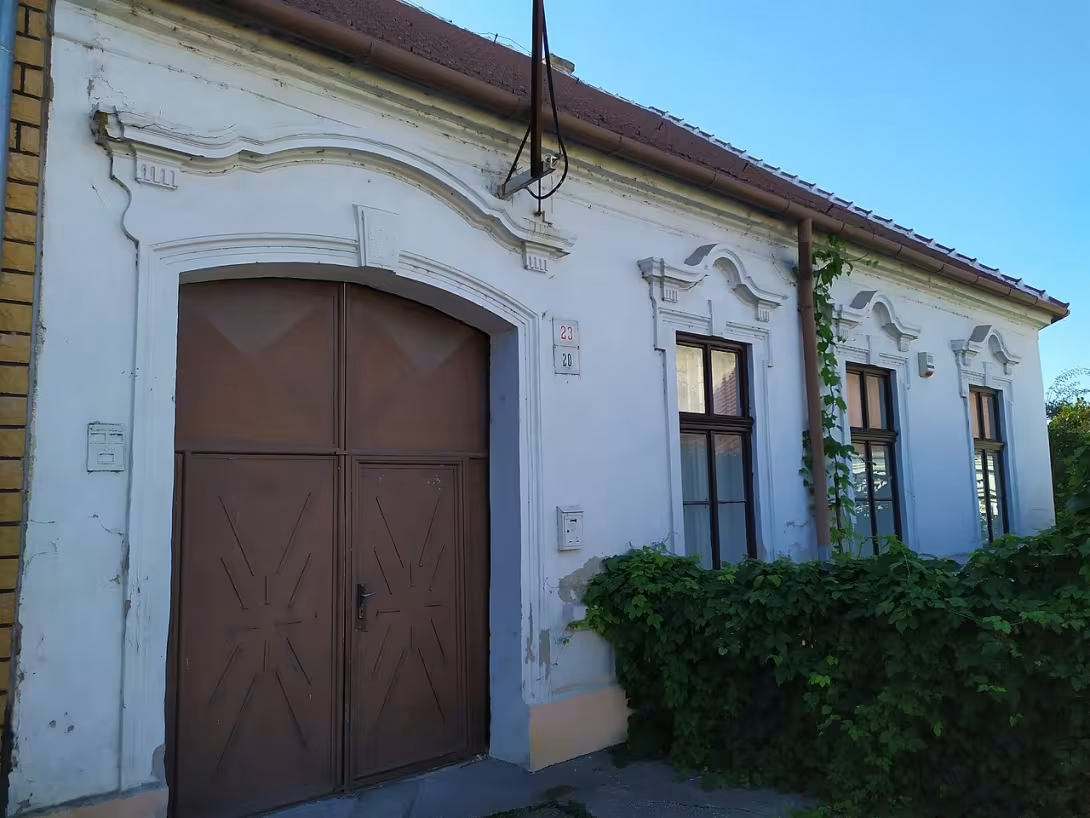

The historical view on the left is a visualisation generated by artificial intelligence and serves as inspiration.
Historical Milestones
- 17th century
- The nobles bought houses and rebuilt them into representative residences.
- 18th century
- The population in cities grew, with much higher population density.
Interesting facts
No interesting things. The text contains pouze information about the architecture and history of burgher houses in Slovakia, but no particular attractions about the parrot VYHRADNĚ in Hlohovec.
Guide
Show guide text
The text was prepared by artificial intelligence and has not been editorially reviewed. It may contain inaccuracies.
Welcome to Hlohovec. You are standing right in front of a building that is a silent witness to the history of this city and the entire region. This townhouse is not just a building; it is a chapter of history that you can perceive right in front of you. Look at his facade and try to imagine the periods he has experienced, the faces he has seen, and the lives in its walls in the past. The first impression this house gives is a sense of stability and historical continuity. Although time is constantly changing, these urban homes remain solid points in the variable architecture of our cities.
However, to understand why this house looks what it looks like, we must go back to the past. If we look intently into the seventh century now, we will begin to understand what fundamental changes have taken place in this region. During this period, a new face of our city began to form. The nobles, who then had considerable assets and power, began to focus increasingly on the urban environment. Instead of settling only in isolated aristocratic settlements, they began buying houses right in the hearts of city headquarters. These originally more modest buildings were then rebuilt into representative settlements that were to reflect their high status and prestige. This process has profoundly affected the overall aesthetics and characteristics of urban streets that we see today. The house becomes in the context of this historical transformation, when urban spaces began to change from simple settlements to places full of prestige and social hierarchy.
Instead of just stopping by the nobility, we must pay attention to the next important period of the eighteenth century. There was another fundamental shift at this time. The population in cities started to grow at an unprecedented rate and the population density increased significantly. Urban streets have begun to be filled with new residents, which has brought the need for more efficient use of space. This house is the product of this dynamic era, when the urban environment became a dense, living and constantly changing organism. It was during this period that the type of burgher houses was strengthened, which had to combine the functionality of the dwelling with the representativeness required by the growing middle-class population.
Now I ask you to pay attention to the architecture itself and to what you have right before your eyes. Look at the overall appearance of the building and try to perceive its proportions. Even if we do not know the names of the specific architects who designed this house, we can read in its structure the intention of their creators. Notice how the house defies time and how it is anchored in the street communicates with the surrounding space. The facade is like the face of this house - it's what it presents itself to the world. Perceive the rhythm of windows, the way the walls meet the path, and the overall stability of the structure. Every detail, from the texture of the materials to the way the light hits the surface of the building, tells us that it is a building designed to last for a long time. In the townhouses of this era, it was important for the house to operate with dignity, but at the same time to be integrated into the dense mixed buildings of the city.
When you look at this house, you can think about the people who once lived here. Although we have failed to keep the names of particular personalities in the records, we can imagine them. They were townspeople - merchants, craftsmen, or officials - who formed the backbone of society. Their lives were linked to the rhythm of the city, to markets, to business, and to everyday street meetings. This house was a safe haven for them, a place where the history of their families was born and where their social prestige was built. Behind these walls, hundreds of small stories have taken place, from joyful celebrations to everyday worries that are now quietly passing through historical memory.
There's one strange mystery in this place that I can offer you to visit. It's the invisible layer of time that lies between us and these walls. Every house in a historical center like Hlohovec bears the traces of many generations. Although we see the present form, the layers of the past lie beneath the surface - changes in building technology, changes in materials and traces of people who have left their mark, but no one knows their names anymore. This anonymity is paradoxically just what makes these places so fascinating. It's not just the story of one person, it's the story of the whole collective being in time.
I hope this view of the burgher's house has helped you to better understand its meaning and place in Hlohovec's history. Get carried away by the atmosphere of this site and continue your walk. Every other street and every other house you meet during your journey can offer you another fascinating view of the rich history of our region. I wish you a pleasant and inspiring discovery of the beauty of Hlohovec. We'll say goodbye, but history is still waiting for you.
Tips for visitors
The facade of the townhouse is recommended to observe during bright days. Visit it early in the morning or late in the afternoon to avoid high temperatures.
You can reach Hlohovec by car or public transport; check the connections in the timetable.
We recommend comfortable shoes suitable for urban pavement and have water with you. Do not forget your phone or camera when shooting.
When shooting, watch the game of light and shadow. The distracted light minimizes hard shadows and enhances details.
In the area you can take a walk through the city streets, which is also suitable for families with children.
Frequently asked questions
Can the monument be visited?
This is a residential or farm building, not a museum with opening hours. Please view it from public space and respect the owners' privacy. We have no information about access to the interior.
Where is the monument?
Location: Nám.sv.Michala 20/23, Hlohovec, Trnavský kraj. The map on this page shows the exact spot.
Why is the monument protected?
It is listed in the Central List of the Monuments Fund of the Slovak Republic as a national cultural monument (ÚZPF no. 213-11997).
For children
In the past, Hlohovec was a small but dynamic city. There was a burgher's house in its centre, which today has its history as a parrot. You can imagine that people met to discuss what to do for the city and its inhabitants.
You can see the merchants selling their products and the people who bought them. There was also a church where worship services were held and people gathered for godliness. The townhouse was a place where people met to discuss what to do for the town.
Nearby
🏰 Historic sites (162)
- Pieta 0.1 km
- sv. Róchus 0.1 km
- sv. Florián 0.1 km
- Jozef Seilnacht 0.1 km
- ThDr. Ignác Havran 0.1 km
- Trón milosti 0.1 km
- Pamätník SNP 0.1 km
- Mariánsky stĺp 0.2 km
- sv. Šebastián 0.2 km
- sv. Jozef 0.2 km
- sv. Róchus 0.2 km
- Pamätník obetiam 1. svetovej vojny 0.6 km
- Rudolf Dilong 0.6 km
- Dionýz František Tomašovič OFM 0.6 km
- Vlastivedné múzeum Hlohovec 0.7 km Františkánske námestie 213/17 web
- Vlastivedné múzeum v Hlohovci 0.7 km
- Vlastivedné múzeum 0.7 km
- Ecce homo 0.9 km
- Beethoven 0.9 km
- Sv. Florián 1.8 km
🍽️ Restaurants and dining (123)
- U deda 0.0 km
- MAM Burger 0.1 km +421908599979 web
- Pelikán 0.1 km
- Pizza MarcoDani Coffe 0.1 km
- Dani Coffe 0.1 km
- Be-be burger 0.1 km
- Hanam 0.1 km
- Kriváň 0.1 km
- Erdody 0.1 km
- Frašták Pivo a jedlo 0.1 km
- Hotel Jeleň 0.2 km +421917090999 web
- Dublin Pub 0.2 km
- Storm pub 0.2 km Námestie sv. Michala 7
- Coffee berry 0.2 km
- La caffetteria 0.2 km
- Kebab Enes 0.2 km
- Gurmán 0.2 km
- Keltský dvor 0.2 km
- Pivárnička Nad Rínkom 0.4 km +421904479869 web
- Hostinec Ryba 0.4 km
🏨 Accommodation (14)
- Hotel Jeleň 0.2 km +421949601251 web
- Quatro 0.2 km
- Penzión Pompano 0.2 km +421 33 73 200 26 web
- Penzion M.L.K. 2.1 km Osloboditeľov 1227/104 web
- Kaštieľ Koplotovce - Kaplath 5.5 km +421 33 7300 462 web
- Važinka 5.9 km P. O. Hviezdoslava 368/8 +421 33 764 41 26 web
- Penzión Inovec / Jalšovské chaty 8.4 km web
- Faraon 9.2 km
- Macho 9.2 km
- Robotnícka ubytovňa 12.2 km +421 905 899 202 web
- Hotel Mlyn 12.3 km Mlynská 147/10 +421 33 5597 071 web
- Kaštieľ Dezasse 12.8 km +421 948 196 796 web
- Kaštieľ Šalgovce 13.2 km web
- Eko Park Piešťany 13.7 km Bratislavská 7110/151
🚲 Rentals and sport (13)
- Montana Sport 0.1 km
- AB Fittness 0.2 km
- Bike4you 0.7 km
- GYMEX | Športové centrum 0.7 km
- Adidas 0.7 km
- Letné kúpalisko Hlohovec 1.1 km
- Termálne kúpalisko 5.0 km web
- SOŠ Elektrotechnická 14.6 km web
- Sportisimo 14.8 km
- Olympijská / Veterná 14.8 km web
- Viktoríniho nám. 15.0 km web
- Decathlon 15.0 km +421 23 388 8225
- Sportisimo 15.0 km +421 911 072 452
🥾 Hiking and nature (30)
- Park R. Dilonga 0.4 km
- Františkánsky park 0.7 km
- Zámocká záhrada 0.8 km
- Šianec 1.4 km
- Šianec 1.8 km
- Stredné Šumperky 2.5 km
- Nový park 2.8 km
- Sedliská 3.1 km
- Gábor 3.4 km
- Lipiny 4.0 km
- Taličmáne 6.2 km
- Komín 7.1 km
- Zvon 7.4 km
- Dunajský vrch 7.4 km
- Janovo 8.5 km
- Široká aleja 8.6 km
- Holý vrch 9.6 km
- Prameň čírej vody 10.1 km
- Palachnové 10.3 km
- Park Blavská 12.4 km
Thematic route
House bourgeois
Route: Hlohovec and surroundings
1. Hlohovec - the city center Type: Urban Centre In the 18th century traditional Slovak residential houses were created here.
2. St. Martin's Church Type: Church The interior of the church is decorated with frescoes from the 17th century.
3. Hlohovec Castle Type: Lock Former seat of noble families; today it is accessible its courtyard and exposition.
The route is suitable for families with children and seniors, as all locations are accessible and wheelchair accessible.
Seasonal recommendations
Seasonal recommendations to visit the memorial
Memory: burgher's house (House of the Town), Hlohovec, Trnavský kraj
JARO: The surroundings of the house are in this period grown by flower nature. It is recommended to wear comfortable clothes and come before 10:00 to avoid crowds.
LÉTO: Summer is a good time to visit. It is recommended to wear lightweight clothes and come before 11:00 to avoid crowds.
SUBSIDISATION: It is advisable to wear warm clothes in the autumn. It is recommended to avoid crowds before 9:00.
ZIMA: In winter, the surrounding area is covered with snow. It is recommended to wear warm clothes and come before 10:00 to avoid crowds.
Visualisations and artistic views


The visualisations are generated by artificial intelligence and serve as inspiration.
Photographs from the area
Real photos taken near the monument


Source and licence are given for each image.
Visitor Tips
No tips yet. Be the first!
Log in and add your tip.
Location on Map


Visitor photos
No photos yet. Be the first to add a photo from your visit!
Log in and add your photo or leave a rating.
You get more points for a visit verified in the app — we can tell from the GPS that you are there.
Reviews and comments