








renesančná kúria Burgher house
This burgher house, located in the village Hlohovec in Trnava region, is a national cultural monument of Slovakia. According to data The Office for Nature and Landscape Conservation (ÚZPF) with the number 213-839 is a Renaissance building from the 15th-16th century, located at Podzámska 42/14.
The area of the monument consists of only one object: the burgher's house, which differs from its Renaissance architecture. This type of construction has been often used in the past for passing and rowing purposes, indicating its function as a local centre or trading point.
In terms of building characteristics, there are no details of available, floor plan and material used. This information is therefore not available.
The monument is located on the territory of the village Hlohovec in the Trnava region. It is protected as a national cultural monument, but specific date of declaration and information on protection zones or zones are not included in the available data. Current state and current use of this object also unknown.
This burgher house is an important part of the cultural heritage of Hlohovec village, which boasts its rich historical background. Visitors have the opportunity to gain a better view of the life and architecture of the population in the 15th-16th century. This object is a witness to the past, which has been well integrated into the modern Hlohovec environment. Visit of this monument offers a unique view of the historical development of local architecture and culture.
Tehdy a dnes
Drag the slider and compare how the monument might have looked when it was built with the view today.
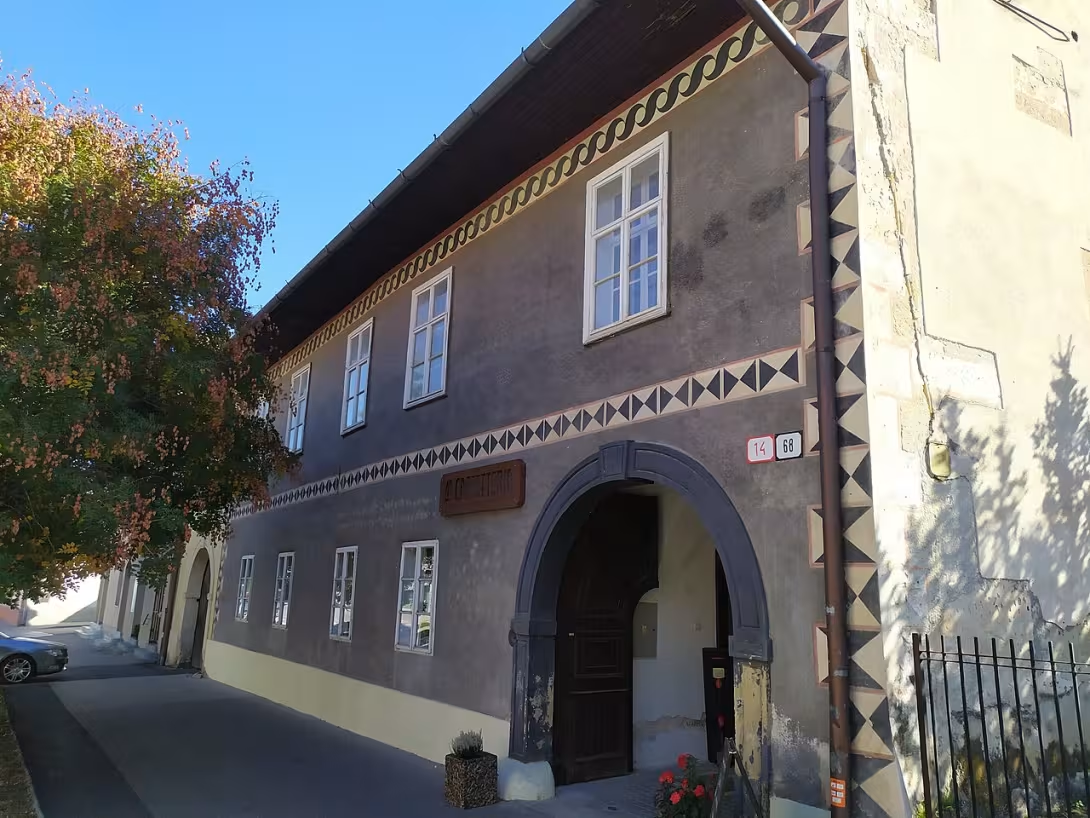

The historical view on the left is a visualisation generated by artificial intelligence and serves as inspiration.
Historical Milestones
- 15-16th century
- The creation of a Renaissance cure in Hlohovec as a local center or trading point.
- round 2000
- House burgher was declared a national cultural monument of Slovakia.
Interesting facts
- This burgher house is a national cultural monument of Slovakia. - According to data Office for Nature and Landscape Conservation (ÚZPF) with number 213-839 is a Renaissance object from the 15th-16th century. - The area of the monument consists of only one object: the burgher's house, which was used in the past for passing and rowing purposes. - This type of construction indicates its function as a local center or trading point. - He has witnessed a past that has been well integrated into the modern Hlohovec environment.
Guide
Show guide text
The text was prepared by artificial intelligence and has not been editorially reviewed. It may contain inaccuracies.
Welcome to Hlohovec. They just stopped by one of those quiet but extremely important witnesses to history that forms the true soul of this city. Before your eyes, the bars are renaissance curios, also known as the House of Town. Before we get to a deeper knowledge, just stop for a moment and see the atmosphere of the place. Do you feel that strange feeling when one encounters something that has survived centuries, what has seen generations of people, their joys and their sadness, while remaining still, as if waiting for someone to understand it again? This building is not just a set of walls and windows, it is a chapter of history that we now open together.
When you look at this building, see its presence in urban architecture. Although history has not provided us with the exact name of the architect or the exact date when the curio was first built, its very nature tells us a great deal. It belongs to the Renaissance era, the period brought to our countries a new era of thinking, humanism and the pursuit of balance. At that time, the urban environment began to change. They were no longer just fortified, enclosed places, but cultural and economic centers began to form here, where education and business met. The burgher house, as you can see it, is a direct proof of this change. It was a house that should not only serve as a refuge but as an expression of the status, stability and cultural growth of the local population.
Now that you're used to her appearance, try to take a closer look at her facade. See the rhythm this building creates. The Renaissance has always sought harmony and symmetry, which is also reflected in the way elements of this building are stratified. Look at the proportions of the windows and the total shape of the building. Even if we do not know the specific materials used in its construction, you can see the effort for order and geometric purity that this style defines precisely. See how the curio fits into the environment and acts as a fixed point in the city scene. Every detail, every line of this facade is the result of a certain aesthetic idea that was at that time the highlight of a modern lifestyle.
Although we can imagine the unknown names of the particular persons who lived in this house. Imagine these townspeople - maybe it was the merchants who built the wealth of the city here within their homes and business premises, or the craftsmen who formed the central pillar of the local economy in this area. This house was their world. It was a place where business was decided, where important life decisions were taken in family well-being, and where, in quiet evenings, the next generations were talking about. Even if their names are lost to us in the darkness of time, their presence is still in this building. Every step along this street is actually a step in the footsteps of the people who lived here, worked and formed the identity of Hlohovec.
At this point, you may think of something else. What's so fascinating about this place when we don't know either the year of construction or the names of the builders? That is where the greatest mystery lies and the greatest beauty of this cure. It's the unknown, the quiet void in the archives that makes us fantasy and deeper. This building is like an open book missing some pages, but the rest are so rich that we can feel the weight of history. It's the uncertainty that makes history something alive and not just a dry list of facts. Who was the man who designed these lines in the Renaissance spirit? What did he have to think of when he viewed this house as his home? This question remains unanswered, and that is where its strength lies.
You're standing before something that beats time. This Renaissance curio is not just a memory of the past, it is a link between us and those who were before us. Even if their names are lost, their legacy in the form of this building remains. See the strength that this building still exerts on the surroundings.
We believe that this brief look at the burgher house has helped you to perceive this place a little differently, not just as a building, but as a living witness to history. Let yourself be carried away by the atmosphere of Hlohovec and continue to discover the hidden treasures that this city offers. Every street, every old house can have its own, quiet story waiting to be caught. Thank you for your journey together and we wish you a pleasant and inspiring passage through the historic centre of the city. We'll say goodbye, but keep in your heart the feeling of wonder what's hiding in our neighborhood.
Tips for visitors
The best time to visit the Renaissance cure is in the autumn months when the climate is pleasant and not so crowded by tourists.
See what you can take with you: sunglasses for shooting experiences and comfortable shoes for the sidewalk. Also remember the map of the site or mobile application with navigation.
Photographing the Renaissance curie is best in the morning or in the evening when the light is soft. The most beautiful experiences offer corner views of the overall picture of the building.
In the immediate vicinity of Hlohovec you can visit the historic church and local castle, which are ideal for a short trip. These sites offer further insights into regional architecture and history.
Frequently asked questions
Can the monument be visited?
This is a residential or farm building, not a museum with opening hours. Please view it from public space and respect the owners' privacy. We have no information about access to the interior.
Where is the monument?
Location: Podzámska 42/14, Hlohovec, Trnavský kraj. The map on this page shows the exact spot.
Why is the monument protected?
It is listed in the Central List of the Monuments Fund of the Slovak Republic as a national cultural monument (ÚZPF no. 213-839).
For children
About 50 years ago, the round of 2000, in the small town of Hlohovec, a breathtaking novelty appeared - a Renaissance curio called the House of burgher. This place is like a magic castle, but unlike medieval castles, here you can move and enjoy everything with your eyepieces. Let's say you're at the time this house was built. In Hlohovec the atmosphere was full of life - the town was like a bubble waiting to explode with new ideas and projects. The burgher's house has become a place where a lot of amazing things have accumulated quickly.
Nearby
🏰 Historic sites (162)
- Pamätník SNP 0.2 km
- sv. Róchus 0.2 km
- Trón milosti 0.2 km
- Jozef Seilnacht 0.2 km
- ThDr. Ignác Havran 0.2 km
- Pieta 0.2 km
- sv. Florián 0.2 km
- Mariánsky stĺp 0.2 km
- sv. Jozef 0.2 km
- sv. Róchus 0.2 km
- sv. Šebastián 0.2 km
- Beethoven 0.8 km
- Pamätník obetiam 1. svetovej vojny 0.8 km
- Rudolf Dilong 0.8 km
- Dionýz František Tomašovič OFM 0.8 km
- Vlastivedné múzeum 0.8 km
- Vlastivedné múzeum Hlohovec 0.8 km Františkánske námestie 213/17 web
- Ecce homo 0.9 km
- Vlastivedné múzeum v Hlohovci 0.9 km
- Sv. Florián 1.8 km
🍽️ Restaurants and dining (130)
- La caffetteria 0.0 km
- Coffee berry 0.0 km
- Kriváň 0.1 km
- Erdody 0.1 km
- Hotel Jeleň 0.1 km +421917090999 web
- Dublin Pub 0.2 km
- MAM Burger 0.2 km +421908599979 web
- U deda 0.2 km
- Frašták Pivo a jedlo 0.2 km
- Dani Coffe 0.2 km
- Hanam 0.2 km
- Pizza MarcoDani Coffe 0.2 km
- Storm pub 0.3 km Námestie sv. Michala 7
- Pelikán 0.3 km
- Kebab Enes 0.3 km
- Be-be burger 0.3 km
- Hostinec Ryba 0.3 km
- Pivárnička Nad Rínkom 0.4 km +421904479869 web
- U leva 0.4 km
- Keltský dvor 0.4 km
🏨 Accommodation (14)
- Quatro 0.1 km
- Hotel Jeleň 0.1 km +421949601251 web
- Penzión Pompano 0.4 km +421 33 73 200 26 web
- Penzion M.L.K. 2.2 km Osloboditeľov 1227/104 web
- Kaštieľ Koplotovce - Kaplath 5.7 km +421 33 7300 462 web
- Važinka 6.1 km P. O. Hviezdoslava 368/8 +421 33 764 41 26 web
- Penzión Inovec / Jalšovské chaty 8.6 km web
- Faraon 9.2 km
- Macho 9.3 km
- Robotnícka ubytovňa 12.0 km +421 905 899 202 web
- Hotel Mlyn 12.2 km Mlynská 147/10 +421 33 5597 071 web
- Kaštieľ Dezasse 12.9 km +421 948 196 796 web
- Kaštieľ Šalgovce 13.3 km web
- Eko Park Piešťany 13.9 km Bratislavská 7110/151
🚲 Rentals and sport (14)
- AB Fittness 0.2 km
- Montana Sport 0.3 km
- GYMEX | Športové centrum 0.9 km
- Bike4you 0.9 km
- Adidas 0.9 km
- Letné kúpalisko Hlohovec 1.0 km
- Termálne kúpalisko 5.2 km web
- SOŠ Elektrotechnická 14.6 km web
- Sportisimo 14.7 km
- Olympijská / Veterná 14.7 km web
- Václavík priemyselný tovar 14.8 km
- Sportisimo 14.9 km +421 911 072 452
- Viktoríniho nám. 14.9 km web
- Decathlon 14.9 km +421 23 388 8225
🥾 Hiking and nature (30)
- Park R. Dilonga 0.7 km
- Zámocká záhrada 0.7 km
- Františkánsky park 0.9 km
- Šianec 1.2 km
- Šianec 1.6 km
- Stredné Šumperky 2.3 km
- Nový park 3.0 km
- Sedliská 3.2 km
- Gábor 3.4 km
- Lipiny 4.2 km
- Taličmáne 5.9 km
- Komín 7.0 km
- Dunajský vrch 7.2 km
- Zvon 7.2 km
- Široká aleja 8.4 km
- Janovo 8.7 km
- Holý vrch 9.8 km
- Prameň čírej vody 9.9 km
- Palachnové 10.5 km
- Rumanovský park 12.2 km
Thematic route
Thematic cruise route: Renaissance curio and surrounding Hlohovec
1. House burgher (Renaissance curio) - Type: Architectural monument - Proč is worth a visit: This Renaissance house was the seat of the town hall and is one of the oldest residential buildings in Hlohovec. Its architecture reflects the historical period.
2. St John the Baptist's Church - Type: Religious monument - Proč is worth a visit: This church has a rich history that has developed since the 13th century. Its gothic shield and Renaissance elements add a moving atmosphere to the room.
3. Old Towns - Type: Historical area - Why is it worth a visit: By walking the old streets of Hlohovec you can experience the feeling of the past and the view of historical buildings.
4. Trnava Museum - Type: Museum - Proč is worth a visit: Trnava Museum offers an overview of the historical and cultural development of the region. Its expositions are ideal for understanding the wider history of the surroundings.
5. Hlohovec Podhradie - Type: Historical part of the city - Proč is worth a visit: The Podhradie offers a view of the development of Hlohovec and its population. This area has witnessed many historical events.
This route takes you through time, from Renaissance to today, and offers a view of the historic development of Hlohovec.
Seasonal recommendations
Jaro: In spring, the Renaissance curio in Hlohovec is revived by green flowering of the surrounding area. In sunlight, the architectural details of the house brighten up, adding to the atmosphere of the colds of life and new beginnings. Tourists should use this period to visit before the first crowds of tourists begin; we recommend to issue a faster morning or in the middle of the day. Due to warm weather, it is advisable to wear lightweight clothing, but you should not forget the protective coat, as spring weather may be unreliable.
Leto: In summer Hlohovec is the destination of many tourists. With strong sunlight, the architectural features of the cure become even brighter, but the weather can be dried. It is recommended to wear a protective coat and a sufficient amount of drinking water with a measure. The best time to visit is morning or evening, as during the day tourist crowds may be larger and temperatures higher. Remember to take sunscreen.
Under: In the podium, the surroundings of the cure turn into pink, yellow and orange cut flowers. With the weaker intensity of sunlight, architectural details appear in a different light, which can be fascinating for photographers and lovers of history. Due to limited weather, it is recommended to wear multiple layers of clothing and protective coats to be ready for sudden temperature changes. The best time to visit is in the middle of the day.
Winter: In winter, the atmosphere around the Renaissance cure is calmer as tourist crowds are less chaste. In light of weak or cold light, architectural elements appear in a yin context. Due to lower temperatures and shorter days it is recommended to wear warm clothing including protective coats, gloves and headbands. Prepare for cold temperatures and possibility of springs or snow conditions.
Visualisations and artistic views


The visualisations are generated by artificial intelligence and serve as inspiration.
Photographs from the area
Real photos taken near the monument


Source and licence are given for each image.
Visitor Tips
No tips yet. Be the first!
Log in and add your tip.
Location on Map



Visitor photos
No photos yet. Be the first to add a photo from your visit!
Log in and add your photo or leave a rating.
You get more points for a visit verified in the app — we can tell from the GPS that you are there.
Reviews and comments