








meštiansky dom Burgher house
Townhouse in Banská Štiavnica is located in Banská Bystrica region and is an example of 19th century architecture. The house was built in a micronámestie, where it has a prominent position, fixing the older urban situation with the original communication route and side communication. It is an end corner object representing the type of burgher house of the late Renaissance period and the Baroque.
In the 19th century, urban population increased, leading to the construction of residential rental houses with higher population density. Architecturally, these houses were based on the traditions of the city palace and often contained passages with metal gates. The townhouse in Banská Štiavnica is an example of such buildings.
Architecturally, these houses differed with their tectonics, embodiments, and entrances to the crossings. Many of them were provided with metal gates. Townhouse in Banska Štiavnica has preserved the overall expression and ground plan-space composition, but its facade was partially changed by modification of the parter. Removing part of the volume of the side wing disrupts the material expression.
Historically, these houses have been upgraded, especially in the parter, and many retain their original functional uses, such as trade. The function of housing has been preserved in originally residential burgher houses until today, but housing standards have changed.
Today, the burgher's house in Banská Štiavnica is a protected conservation area under the number ÚZPF 3372. It is the only object of this monument zone and part of the urban cultural heritage of Banská Štiavnica. This house is important for its architectural character and as an example of the development of the urban environment in the 19th century.
Visit of this object offers a view of the history and culture of Banská Štiavnica, which is interesting for historians and tourists.
Tehdy a dnes
Drag the slider and compare how the monument might have looked when it was built with the view today.
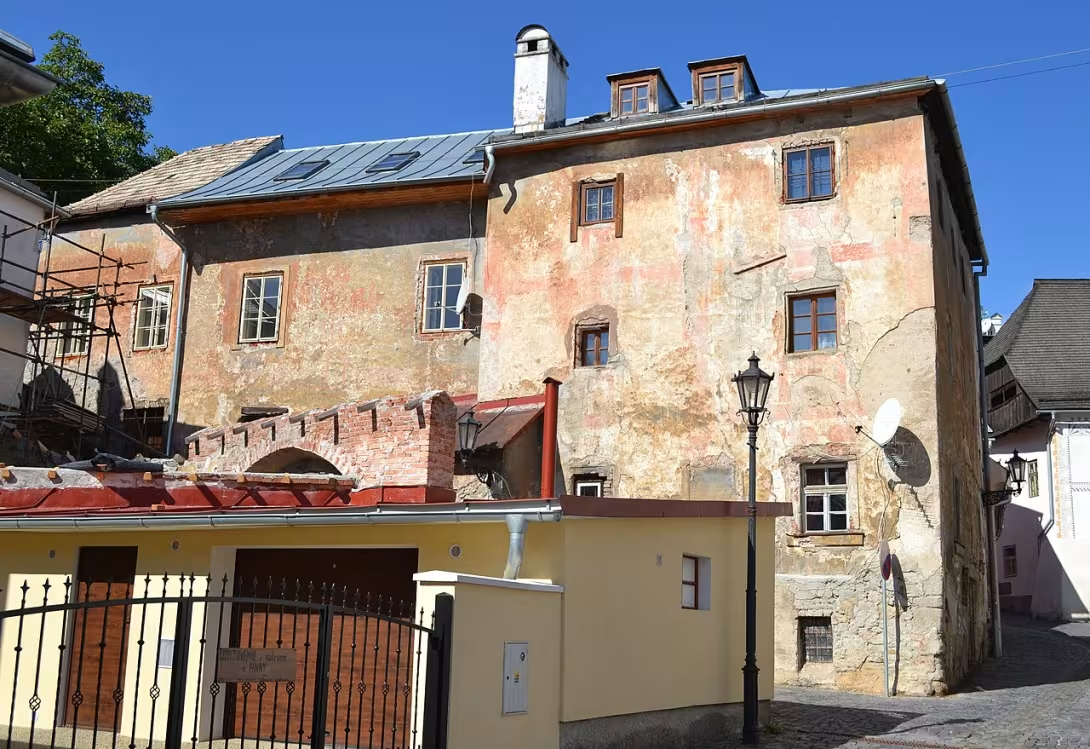

The historical view on the left is a visualisation generated by artificial intelligence and serves as inspiration.
Historical Milestones
- round 1800
- The townhouse in Banská Štiavnica
- 19th century
- Urban population increase and construction of higher population density rental houses
- 19th century
- Modernization of burgher houses, especially in the parter, maintaining the original functional use as stores
- today
- Townhouse is a protected landmark zone under the number ÚZPF 3372 and part of the urban cultural heritage of Banská Štiavnica
Interesting facts
- The townhouse in Banská Štiavnica is an example of 19th century architecture and represents the type of burgher house of the late Renaissance and Baroque period.
- Architecturally, these houses differed with their tectonics, embodiments and entrances to the crossings. Many of them were provided with metal gates.
- The townhouse in Banská Štiavnica has preserved the overall expression and ground plan-space composition, but its facade was partially changed by modification of the parter.
Guide
Show guide text
The text was prepared by artificial intelligence and has not been editorially reviewed. It may contain inaccuracies.
Welcome, dear visitors! You are facing a unique witness of urban life from the end of the 18th and 19th centuries - a burgher house in Banská Štiavnica. From a distance it will take its firm position and harmonious silhouette, which is inserted into the historical core of this mining town. When you look forward, you will see a stone structure with a regular yet lively facade structure that combines the elements of the late Renaissance and the Baroque. Your view will first be captured in the overall picture - on the symmetry of the windows, on the central entrance and on the minor details that indicate the rich history of this house. You sense the atmosphere in which the historical message mixes with vibrant urban life.
The origin of this townhouse dates back to about 1800, when a new chapter of urban development began to form in Banská Štiavnica. At that time the city grew, new inhabitants came and with them the need for narrow but functional housing and trade. That is why houses were built to serve not only as living quarters but also as a space for local shops and craftsmen. The townhouse, which you admire today, was one of these projects, built at a time when Banská Štiavnica changed from a traditional mining centre to a city with a more diverse social structure. In the 19th century, the population increased, along with the need for a denser settlement - so there were many rental houses in the city that brought higher density to the populated areas. It was during this period that modernization of burgher houses was also taking place, especially in their inner part, where the premises for shops were reduced and housing capacity increased. Despite these modifications, however, the original function - a combination of trade and housing - was preserved, which is one of the reasons why this house is so valuable for understanding the urban life of that time.
Now that you are looking at the facade, notice how the architectural solution is reflected in the typical features of the late Renaissance and Baroque. Although the exact author of the project is not known, the building bears characteristic features that were common at the time for burgher houses. These buildings differed by their tectonics - the way stones and bricks were arranged into a solid yet elegant structure. You will notice that the overall shape of the house is balanced, with the regular arrangement of windows that create rhythm and harmony on the surface. The entrance to the house is often emphasized - right here you can observe how the architecture tries to welcome the visitor. In many burgher houses, including this one, the entrances to walks and passages were designed to provide easy access to trade and to residential areas. In this particular house you can see how the gateway opens into narrow but functional spaces that once served as market stalls or small workshops.
One of the most interesting details you can see today are the metal gates, which are decorated by many burgher houses in Banská Štiavnica. Although it is uncertain whether this particular building is still equipped with such a gate, historical records mention that many of these houses were fitted with solid iron doors that served not only as a protection but also as a symbol of the wealth and status of the city's inhabitants. If you look carefully at the entrance portal, you may notice traces of such a metal element - either in the form of preserved parts or in the form of prints, indicating that there was once a robust gate that protected trade while stressing the importance of this place in urban life.
The history of this house is closely linked to the daily life of the inhabitants of Banská Štiavnica, although the specific names of the personalities that lived or worked there are not recorded. However, this does not mean that their stories are not present. Imagine how local traders, craftsmen, and their customers met in these areas, as the exchanges of goods and information took place in a narrow space under one roof. In the 19th century, the burgher's house was often the centre of social activities - markets were held here, ownership conditions were changed and families met in everyday responsibilities. Every step on the stone floors, every door opening brought a new story that was associated with the growth and change of the city. Although the names of these people are not in the historical records, their presence is felt in every stone, in every slit and in every reflection of light on the facade.
An interesting fact, which can be interesting even the most intriguing, is that the burgher house in Banská Štiavnica is today a protected conservation area under the number of the ÚZPF 3372. This designation is not only an administrative number, but a symbol of recognition of the historical and cultural value of this building. Thanks to this status, the house is part of an urban cultural heritage that ensures the preservation of the authentic atmosphere and architectural heritage for future generations. Anyone passing by this house has the opportunity to look into the past and understand how urban spatial arrangements and social structures have changed. This protection also ensures that the architectural elements that you have just recognized - tectonics, shaping, entrance portals and metal gates - will be preserved in their original state so that they can serve as an educational source and inspiration for architects, historians and ordinary visitors.
If you would like to dive even more into the secrets of this place, you can notice that the burgher house is often associated with the question of why this type of building has become such a characteristic element of the city picture in Banská Štiavnica. One of the theories suggests that the combination of economic expansion and the need for efficient use of space has led to the development of such multifunctional houses, which were able to combine trade, housing and social gatherings under one roof. This concept has become a model for other cities in the region and has contributed to the development of urban planning, which stressed practicality and aesthetics at the same time. As a result, the townhouse became not only an architectural but also a social phenomenon that shaped everyday life in the 19th century.
Now that you have gone through all these layers of information, we invite you to look again at the facade and see it not only as a stone structure, but as a living story that is constantly telling. Notice how light changes during the day, how shadows fall on windows, and how metal details reflect. Get carried away by the atmosphere that surrounds you, and imagine how people once met here, how goods and information were exchanged, and how their lives were shaped in these areas. Every detail you see today is connected with the past, which lives on in the heart of Banská Štiavnica.
In conclusion, we want to thank you for taking the time to discover this historical jewel. Townhouse in Banska Štiavnica is not only a building but a witness to the transformation of the city and its inhabitants. We invite you to continue to cross the streets of this ancient city, discover other monuments and be inspired by the rich history that is at hand here. Let each next stop fill you with new knowledge and experiences, and let you manage to capture the spirit of the past that is still pulsing in Banská Štiavnica. Thank you and wish you a pleasant and informative trip after this unique historical environment.
Tips for visitors
The townhouse in Banská Štiavnica is part of the historical centre, which visitors can visit. Public transport from nearby towns is well connected by buses.
Protective clothing is recommended when visiting, as the corridor may be cooler. You can take the photo with you to capture moments. It is ideal to photograph in the morning or evening hours when the light is soft and the interior of the house with the original stucco is well lit.
Nearby there is a technical park and museum offering interactive exhibitions for children.
Frequently asked questions
Can the monument be visited?
This is a residential or farm building, not a museum with opening hours. Please view it from public space and respect the owners' privacy. We have no information about access to the interior.
Where is the monument?
Location: Strieborná 156/10, Banská Štiavnica, Banskobystrický kraj. The map on this page shows the exact spot.
Why is the monument protected?
It is listed in the Central List of the Monuments Fund of the Slovak Republic as a national cultural monument (ÚZPF no. 322-3372). It is part of a UNESCO World Heritage Site.
For children
Imagine the end of the 18th century in Banská Štiavnica. When the evenings rang prayers and streets fed by pushing the feet of the burghers. During this period, when the weather changed from cold to warm, a simple house was created on the corner of the street.
This townhouse was the home of a family that could live and work under different conditions. The place of this house was full of life: although the walls were simple, each stone had its history on it. They rejoiced and suffered in the house, but always together.
Nearby
🏰 Historic sites (232)
- Banské múzeum 0.1 km web
- Kammerhof 0.1 km
- Andrej Kmeť 0.1 km
- Židovská synagóga 0.1 km
- Anton Péch 0.1 km
- Dom Maríny 0.2 km
- Dominikánsky kláštor 0.2 km
- Vzbura baníkov v roku 1852 0.2 km
- Hugo Heincz 0.2 km
- Július Gretzmacher 0.2 km
- Štefan Farbaky 0.2 km
- Mariánsky stĺp 0.2 km
- Anton Kerpely 0.2 km
- Karol Kachelmann 0.2 km
- Marína Sládkovičova 0.2 km
- Georg Gerzso a Marie Gerzso 0.2 km
- Sládkovičova Marína 0.2 km
- Galéria Schemnitz 0.2 km
- Karol Fizély 0.2 km
- Emil Grillusz 0.2 km
🍽️ Restaurants and dining (160)
- U Böhma 0.0 km
- Trotuar Cafe 0.0 km
- Cigar Bar 0.1 km
- Stará škola 0.1 km
- Divná pani 0.1 km +421 45 679 09 45 web
- ViNOCENTRUM 0.1 km
- Art Cafe 0.1 km Akademická 327/2 web
- Pivovar ERB 0.1 km +421456921147 web
- Reštaurácia Matej 0.1 km Akademická 329/4
- Svätá Barborka 0.1 km
- Bansky Dom 0.2 km
- Reštaurácia Pizzeria Marína 0.2 km +421 0911 533 337 web
- Archanjel Cafe Bar 0.2 km web
- U Jašteríc 0.2 km
- Reštaurácia Amálka 0.2 km
- Čajovňa Klopačka 0.2 km +421 905 980 499 web
- Coburg coffee & burger 0.2 km
- Eleuzína 0.2 km web
- Kaldera Cafe Bar 0.2 km
- Jazz Cafe 0.2 km
🏨 Accommodation (106)
- Penzión Cosmopolitan II 0.1 km web
- Bristol 0.1 km Andreja Kmeťa 123/11
- Apartmán Zlatý dvor 0.1 km
- Penzión Matej 0.1 km
- Penzión Rozália 0.1 km +421 948 221 213 web
- Boutique Hotel ERB 0.1 km +421 456 789 555 web
- Hotel Grand Matej 0.1 km
- Subyt 0.1 km
- Penzion Nostalgia 0.1 km Ing. Štefana Višňovského 208/3
- Penzión Resla 0.2 km
- Penzión Tomino 0.2 km
- Salamander 0.2 km
- Villa Botanica 0.3 km web
- Gavalier Design Rooms 0.3 km +421 903 222 309 web
- Skautský dom 0.3 km Antona Pécha 69/2 +421905382885 web
- BARCADAM 0.3 km Námestie sv. Trojice 17/13 +421 908 965 202 web
- Penzión Pri štôlni Glanzenberg 0.3 km
- Ubytovanie Tatiana 0.3 km
- Skautský dom 0.3 km web
- Penzión Na trojici 0.4 km Námestie sv. Trojice 21/17
🚲 Rentals and sport (18)
- Diana poľovnícke potreby 0.5 km
- Ortler sport 0.6 km
- BS-Rent 0.7 km +421 948 908 737 web
- MK bike service 0.9 km +421 904 494 573
- Pontónová plaváreň na Klingeri 1.1 km
- Tanad sport 1.2 km
- Bikepro - Hotel Salamandra 3.1 km web
- ŠK Lesy Banská Belá 4.1 km
- Požičovňa vodných bicyklov 6.6 km
- Sedací bazén 7.9 km
- Detský bazén 7.9 km
- Rekreačný bazén 7.9 km
- Jaskynný parný kúpeľ 8.0 km
- OFK Štart Prenčov 10.8 km
- Lodenica Hliník nad Hronom 12.8 km
- Cyklosport 3000 13.4 km Májová 280/3
- Bazén Ďuricov majer 14.3 km
- Plážové kúpalisko Žiar nad Hronom 14.4 km
🥾 Hiking and nature (590)
- Z Dolnej ružovej 0.1 km
- Kaufhaus šachta 0.1 km
- Z Hornej ružovej 0.1 km
- Na centrum 0.1 km
- Banka lásky 0.2 km web
- Z Katovej 0.2 km
- Banskoštiavnicky betlehem 0.2 km web
- Michal štôlňa 0.2 km
- História mesta (reliéf) 0.2 km
- Od Červeného kríža 0.3 km
- Glanzenberg dedičná štôlňa 0.3 km web
- Z Lichardovej 0.3 km
- Z Vodárenskej 0.3 km
- Park SNP 0.4 km
- Na kalváriu 0.4 km
- Cherubín dedičná štôlňa 0.5 km
- Žigmund šachta 0.6 km Na Zigmund šachtu 1647/15
- Z Vodárenskej 0.6 km
- Schindelberg 0.7 km
- Nad Reslou 0.7 km
Thematic route
1. Entry portal and courtyard - Architectural element, which represents the original architecture of the house.
2. Interiors of the burgher's house - A tour of authentic rooms that testify to the everyday life of the past.
3. Upper floors and tower - Possibility to view the city panorama and details of the interior arrangement of the building.
4. Park included - Recreational place for relaxation in nature.
Seasonal recommendations
Jaro: In the spring season Banská Štiavnica is charming with its green meadows and flowering orchards. The atmosphere in the burgher's house is pleasant, nature around ideal for relaxing moments. It is best to visit in the morning when crowds are even less intense and you can enjoy a quiet walk down historic streets. It is recommended to wear comfortable clothes suitable for warm but still cool weather time and do not forget about sunglasses. Léto: In summer Banská Štiavnica is full of visitors. The atmosphere is alive, in the burgher's house there are exhibits interesting. The best time to visit is morning or evening, when crowds are even smaller and can enjoy a quieter walk. It is recommended to wear lightweight clothes suitable for warm day time and remember to protect from the sun. Under: In the foothills of Banská Štiavnica Banská Štiavnica new beauty when the green turns yellow and orange. The atmosphere in the burgher's house is storage, nature around gives the place a romantic character. The best time to visit is the sunny days, when crowds are even less intense and can enjoy a peaceful walk. It is recommended to wear warm clothes according to weather forecasts and remember to wear sunglasses. Winter: In winter Banská Štiavnica is covered with snow, which gives the city a new look. The atmosphere in the burgher's house is storage and nature around ideal for shooting moments. It is best to visit in the morning when crowds are even less intense and can enjoy a quiet walk along snowy streets. It is recommended to wear warm clothing, including fur or other insulating materials, and remember to protect against cold.
Visualisations and artistic views


The visualisations are generated by artificial intelligence and serve as inspiration.
Photographs from the area
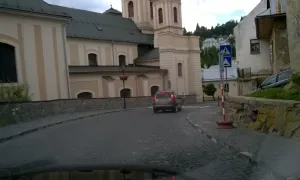
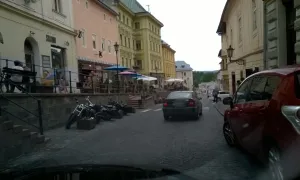
Real photos taken near the monument


Source and licence are given for each image.
Visitor Tips
No tips yet. Be the first!
Log in and add your tip.
Location on Map
More monuments – Banská Štiavnica
Show all in the town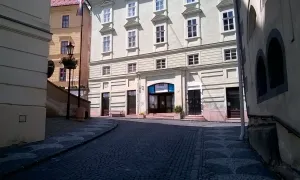


Visitor photos
No photos yet. Be the first to add a photo from your visit!
Log in and add your photo or leave a rating.
You get more points for a visit verified in the app — we can tell from the GPS that you are there.
Reviews and comments