








burgher's house Burgher house
The townhouse in Banská Štiavnica is a terraced building from the late Renaissance and Baroque period (the second half of the 16th century to the first half of the 17th century). The building is registered by the Slovak Monument Office under number ÚZPF 3342.
The building is situated in micronámestie as an end corner house. It is a new-renaissance terraced house, which has preserved the ground plan-space composition. The facade partially modified the upgrade of the partition and the removal of part of the side wing.
Townhouses in Banská Štiavnica are situated in a rough terrain. Constructions near the Square of the Holy Trinity are three to four floors, while the last floor on one side serves as the ground floor in the back alley. The construction took advantage of older unorganized buildings, among which the narrow streets later stopped in row buildings. A typical feature of the cellars is dug into the rock subsoil, which in some cases passed to the galleries.
In the Middle Ages, burgher houses were mostly wooden, built only by owners with higher property. Various types were created: tower houses with high stone walls, chamber houses with longitudinal floor plan and black kitchen or hall houses. The house with passage allowed the extension of another floor and the change of function of the ground floor to production or commercial. Some houses had reduced attic to store wet - sensitive goods, which appeared on the facade with small windows with shutters or forged knocks.
During the Baroque period (especially in the 18th century), the nobility bought plots and rebuilt houses in city palaces with front courtyard and decorated staircases. In the 19th century there were rental houses with large gates and pavilion houses with a four - winged block and a central courtyard. On the outskirts of the city walls were houses of poverty and iron houses.
Many burgher houses are now used for housing. The parties were mainly modernized for business operations and advertising.
Tehdy a dnes
Drag the slider and compare how the monument might have looked when it was built with the view today.
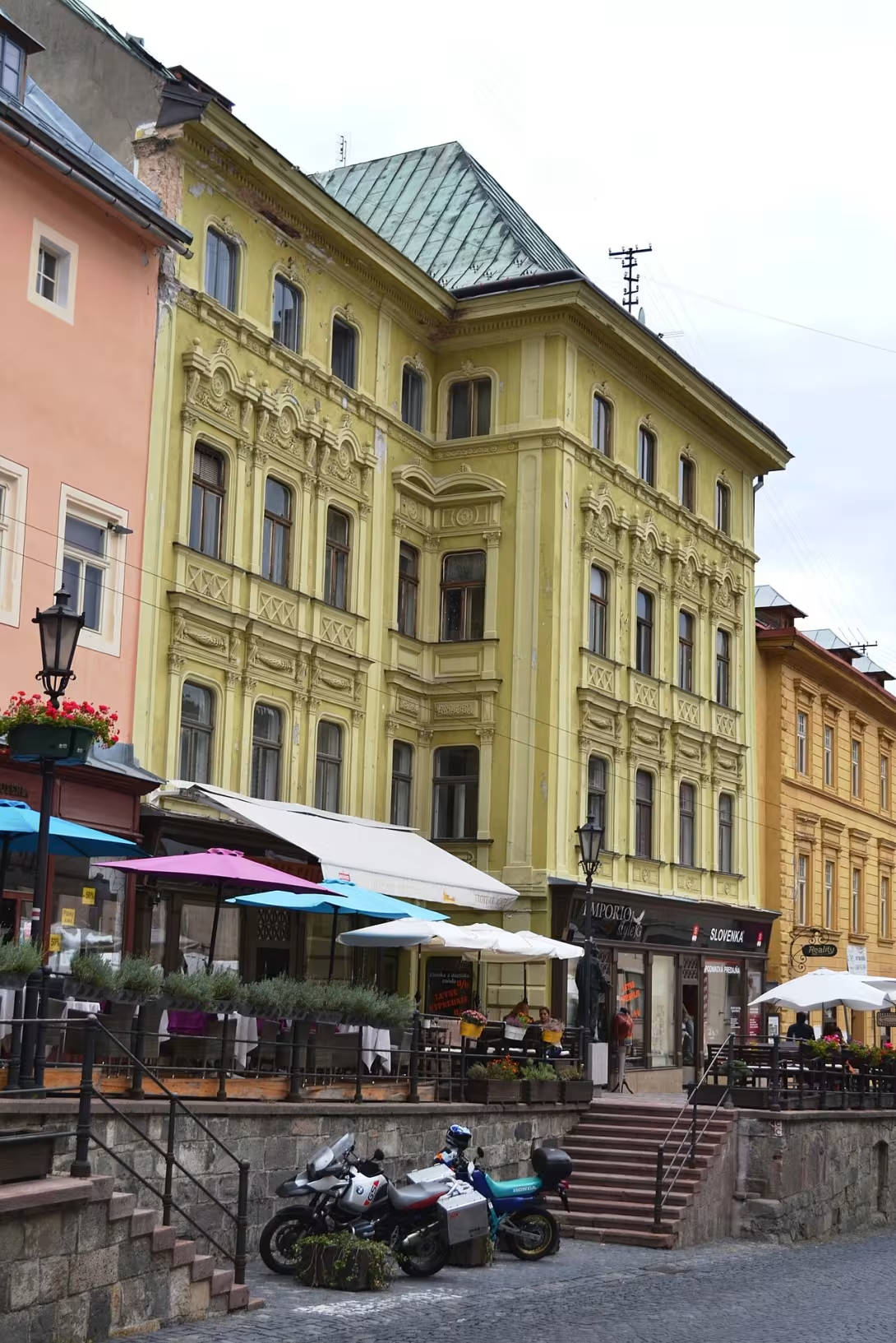

The historical view on the left is a visualisation generated by artificial intelligence and serves as inspiration.
Historical Milestones
- the second half of the 16th century - the first half of the 17th century
- creation of construction in the period of late renaissance and baroque
- 18th century
- the period of rebuilding burgher houses in city palaces
- 19th century
- the creation of rental and pavilion houses in the city
- present
- upgrading of partners for business operations and advertising
Interesting facts
- The house is a terraced object from the late Renaissance and Baroque period, from the second half of the 16th century to the first half of the 17th century. - The building is situated in a micronámestie as an end corner house and preserved its ground plan-space track. - Townhouses in Banská Štiavnica are located in a rough terrain and typical elements are cellars dug into the rock subsoil, which sometimes passed into the sheds. - Some houses had reduced attic to store wet - sensitive goods, as shown by small windows with shutters or forged knocks. - During the Baroque period, the nobility
Guide
Show guide text
The text was prepared by artificial intelligence and has not been editorially reviewed. It may contain inaccuracies.
We welcome you to Banská Štiavnica, a city with a fascinating history, where each house tells its own story. Right now, you are facing one of the typical witnesses of ancient times, which is this burgher's house. When you look at it, you may at the first moment see only the present face of the city with commercial operations and advertisements in the parameters resulting from the modernisation. However, if you look deeper and lift your sight higher, you will see a building that carries layers of several centuries.
Let's now come in together in time and find out when and how this house originated. The building you stand before comes from the late Renaissance and Baroque period. Its roots date back to the second half of the sixteenth century and the first half of the seventeenth century. Imagine Banská Štiavnica at that time. It was a time of bloom when the city prospered thanks to the mining of precious metals and rich townsmen built houses that were supposed to reflect their status and success. It was at this time that the basic structure of this house was created, which served not only as a place of housing, but also often as a centre of business activities.
Now let us take a closer look at the architecture and what you can see right in front of you. Note that it is a terraced object located on a micron square. Its position is exceptional because it works as an end corner house. It is this position that gives it a specific character and allows us to perceive its volume from multiple angles. Although time and modernization changed the appearance of the ground floor, the building miraculously preserved its ground plan-space composition. This means that the internal layout and basic organisation of the premises remained as they were hundreds of years ago. It's a rare detail that allows us to imagine how the Renaissance lived in these walls.
As we move on in time, to the eighth century, we will find that the city has undergone another change. In Banská Štiavnica, burgher houses began to be rebuilt into representative city palaces. The owners tried to upgrade their homes according to the fashion trends of the day to make them even more luxurious and robust. Later, in the nineteenth century, rentals and pavlač houses appeared in the city, indicating an increasing population and a change in the social fabric of the city. This house, which you now see, is therefore a silent observer of all these changes.
Although we do not know exactly who the architects who designed this house or which particular historical figures lived in it, the building itself is a story. It's a story about adaptation and survival. The interesting thing is how the house evolved with the city. From a Renaissance bloom, to baroque elements, to today's commercial use of partners. The mystery remains what secrets hide its walls and how many generations of townspeople have experienced their happy and unfortunate moments.
Look again at the overall composition of the house within this small square. Feel the atmosphere of this place, where ancient walls connect with the rhythm of modern city. It is fascinating that although the surface is changing, the basis remains. This house is proof of stability and continuity of Banská Štiavnica.
We hope that this short trip to the depths of the buildings has helped you to better understand the character of burgher housing in our city. Now we invite you to continue to explore other streets and monuments that await you in this unique urban environment. Let it burn in Banská Štiavnica and let each other house surprise you with its beauty. Thank you for your attention and we wish you a pleasant next walk.
Tips for visitors
We recommend a visit in spring and autumn months. Temperatures are then pleasant to walk through the historic centre and the architecture of the house stands out in natural light. Since it is a residential building, respect the privacy of the people.
You come to Banská Štiavnica by car or public transport; check your current connections in your search engine.
For a walk around the city, we recommend comfortable shoes with solid soles, because terrains in the historical core are often rocky and uneven.
Take a street photo. Details of facade and burgher architecture are best captured during morning or afternoon hours when light is softer and less contrasting.
Families with children can combine a walk around the house with searching for historical details on the facades of buildings.
Frequently asked questions
Can the monument be visited?
This is a residential or farm building, not a museum with opening hours. Please view it from public space and respect the owners' privacy. We have no information about access to the interior.
Where is the monument?
Location: Andreja Kmeťa 126/14, Banská Štiavnica, Banskobystrický kraj. The map on this page shows the exact spot.
Why is the monument protected?
It is listed in the Central List of the Monuments Fund of the Slovak Republic as a national cultural monument (ÚZPF no. 322-3342). It is part of a UNESCO World Heritage Site.
For children
Close your eyes and imagine you're moving in time. You smell that smell? It's the smoke from old fireplaces and the sound of horses pulling heavy wagons on the stone pavement. Welcome to Banska Stiavnica hundreds of years ago! There are high houses around you where rich people lived, and the air is full of secrets from the time when precious silver was mined in the neighborhood. It's like entering the world from your favorite historical movie or video game where every corner of the street hides something interesting.
Nearby
🏰 Historic sites (232)
- Andrej Kmeť 0.1 km
- Kammerhof 0.1 km
- Banské múzeum 0.1 km web
- Židovská synagóga 0.1 km
- Dom Maríny 0.2 km
- Dominikánsky kláštor 0.2 km
- Július Pántik a Gustáv Valach 0.2 km
- Anton Péch 0.2 km
- Mariánsky stĺp 0.2 km
- A. Gölnerová-Gwerková 0.2 km
- Vzbura baníkov v roku 1852 0.2 km
- Morový stĺp 0.2 km
- Galéria Schemnitz 0.2 km
- SNP 0.2 km
- Cesta v čase 0.2 km web
- Hugo Heincz 0.2 km
- Július Gretzmacher 0.2 km
- Anton Kerpely 0.2 km
- Štefan Farbaky 0.2 km
- Karol Kachelmann 0.3 km
🍽️ Restaurants and dining (161)
- Trotuar Cafe 0.0 km
- Cigar Bar 0.0 km
- U Böhma 0.1 km
- Divná pani 0.1 km +421 45 679 09 45 web
- Art Cafe 0.1 km Akademická 327/2 web
- Stará škola 0.1 km
- ViNOCENTRUM 0.1 km
- Reštaurácia Matej 0.1 km Akademická 329/4
- Svätá Barborka 0.1 km
- Pivovar ERB 0.1 km +421456921147 web
- Reštaurácia Amálka 0.2 km
- Eleuzína 0.2 km web
- Reštaurácia Pizzeria Marína 0.2 km +421 0911 533 337 web
- Bansky Dom 0.2 km
- Archanjel Cafe Bar 0.2 km web
- Kaldera Cafe Bar 0.2 km
- Coburg coffee & burger 0.2 km
- U Jašteríc 0.2 km
- Jazz Cafe 0.2 km
- Čajovňa Klopačka 0.2 km +421 905 980 499 web
🏨 Accommodation (106)
- Penzión Cosmopolitan II 0.0 km web
- Apartmán Zlatý dvor 0.0 km
- Bristol 0.1 km Andreja Kmeťa 123/11
- Penzión Matej 0.1 km
- Penzión Rozália 0.1 km +421 948 221 213 web
- Hotel Grand Matej 0.1 km
- Boutique Hotel ERB 0.1 km +421 456 789 555 web
- Penzion Nostalgia 0.2 km Ing. Štefana Višňovského 208/3
- Penzión Tomino 0.2 km
- Subyt 0.2 km
- Penzión Resla 0.2 km
- Salamander 0.2 km
- Villa Botanica 0.3 km web
- Gavalier Design Rooms 0.3 km +421 903 222 309 web
- BARCADAM 0.3 km Námestie sv. Trojice 17/13 +421 908 965 202 web
- Ubytovanie Tatiana 0.3 km
- Skautský dom 0.3 km Antona Pécha 69/2 +421905382885 web
- Penzión Pri štôlni Glanzenberg 0.3 km
- Penzión Na trojici 0.3 km Námestie sv. Trojice 21/17
- Skautský dom 0.3 km web
🚲 Rentals and sport (18)
- Diana poľovnícke potreby 0.5 km
- Ortler sport 0.6 km
- BS-Rent 0.7 km +421 948 908 737 web
- MK bike service 0.9 km +421 904 494 573
- Pontónová plaváreň na Klingeri 1.2 km
- Tanad sport 1.2 km
- Bikepro - Hotel Salamandra 3.1 km web
- ŠK Lesy Banská Belá 4.1 km
- Požičovňa vodných bicyklov 6.6 km
- Sedací bazén 7.9 km
- Detský bazén 7.9 km
- Rekreačný bazén 7.9 km
- Jaskynný parný kúpeľ 8.0 km
- OFK Štart Prenčov 10.9 km
- Lodenica Hliník nad Hronom 12.8 km
- Cyklosport 3000 13.4 km Májová 280/3
- Bazén Ďuricov majer 14.3 km
- Plážové kúpalisko Žiar nad Hronom 14.4 km
🥾 Hiking and nature (589)
- Z Dolnej ružovej 0.1 km
- Z Hornej ružovej 0.1 km
- Kaufhaus šachta 0.1 km
- Banka lásky 0.2 km web
- Na centrum 0.2 km
- Michal štôlňa 0.2 km
- Z Katovej 0.2 km
- Banskoštiavnicky betlehem 0.2 km web
- História mesta (reliéf) 0.2 km
- Od Červeného kríža 0.2 km
- Z Lichardovej 0.3 km
- Z Vodárenskej 0.3 km
- Glanzenberg dedičná štôlňa 0.3 km web
- Park SNP 0.4 km
- Cherubín dedičná štôlňa 0.5 km
- Na kalváriu 0.5 km
- Z Vodárenskej 0.6 km
- Žigmund šachta 0.6 km Na Zigmund šachtu 1647/15
- Schindelberg 0.7 km
- Hybalka 0.7 km
Thematic route
The proposed thematic route within the area:
1. Townhouse (interior) - a tour of historical housing and architecture of the city. 2. Exposures - rooms presenting the cultural and social heritage of an epoch. 3. Courtyard - internal space with a demonstration of the organisation of burgher settlements.
Seasonal recommendations
In spring in Banská Štiavnica the first trees bloom and the facade of the burgher house is fresh. Due to unstable weather in the mountain area, layered clothing is recommended. The ideal thing is to come in the morning.
Summer season brings the most visitors to the city. The sun's rays highlight the architectural details of the building, surrounded by dense greenery. Due to high temperatures and the number of people on the streets, it is advisable to visit the place early in the morning or late in the evening. Light, breathable clothing and sun protection are recommended.
Autumn in Banska Štiavnica is characterized by golden leaves and fog. Filling the light is suitable for outdoor observation. Since it often rains during this period, it is practically non-visible, waterproof footwear and waterproof cloak.
In winter, the facade of the house contrasts with snow. In a quieter atmosphere, details from outside can be better observed. In Advent time the city is cozy. It is essential to warm, layered clothing that protects from frost and wind typical of the stiquious mountains.
Visualisations and artistic views


The visualisations are generated by artificial intelligence and serve as inspiration.
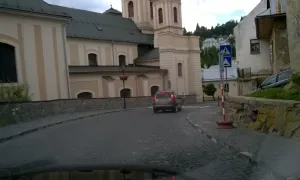
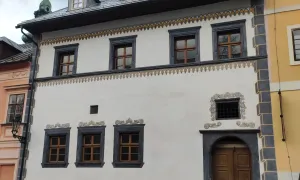
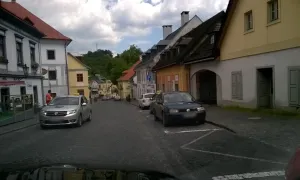
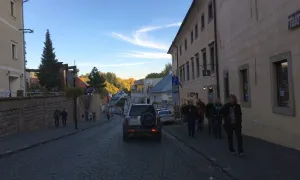
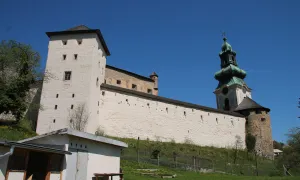
Photographs from the area
Real photos taken near the monument


Source and licence are given for each image.
Visitor Tips
No tips yet. Be the first!
Log in and add your tip.
Location on Map
More monuments – Banská Štiavnica
Show all in the town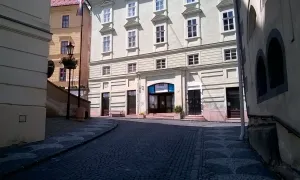
Visitor photos
No photos yet. Be the first to add a photo from your visit!
Log in and add your photo or leave a rating.
You get more points for a visit verified in the app — we can tell from the GPS that you are there.
Reviews and comments