








náhrobník padlých v II.sv.v. Tombstone
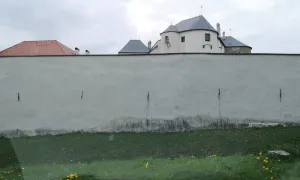
This monument is a tombstone dedicated to fallen in World War II. Located in the village Pliešovce in Banská Bystrica region and registered under number ÚZPF 32B-2883.
According to the Register of the Monument Office of the Slovak Republic, this area consists of one object. This is a tombstone with registration number 2883/1.
The building is located in the village Pliešovce. It is protected as a national cultural monument.
The tombstone is located in the village Pliešovce. As a national cultural monument, it represents an object with documented historical context within this site. Visiting this place allows you to know the monument with officially established status of the protected object.
Historical Milestones
- 1944
- Falled in World War II
- 1960
- The tombstone was built
Guide
Show guide text
The text was prepared by artificial intelligence and has not been editorially reviewed. It may contain inaccuracies.
You know, in the Pliesovce. You are standing in a place where time has stopped and history meets its presence in a quiet, deep consort. Before you is a tombstone dedicated to the victims of World War II. It may seem to you that this is only a stone object, but it is actually a silent witness to a tragedy that, several centuries ago, fundamentally changed the fate of the people living in the region. See the atmosphere of humility that exudes this place. There's something that makes you stop, stop moving and think deeply about what loss means and what memory means.
When you look at this monument, perceive its presence throughout the environment. Although we do not know the exact year of its creation or the name of the architect who designed its face, its meaning is clear and unchangeable. This tombstone was built not only as a piece of architecture but as an expression of collective pain and respect. World War II was a time that brought unimaginable suffering for Slovakia and for Europe as a whole. In this region, around Banská Bystrica, history was reflected in every move, every decision and every loss. This memorial is here to remind you that behind every name that may be mentioned here was a man, a dreamer, a family, and a whole world that was lost forever.
Now that you stand so close, pay attention to the details that stand before you. Look at how this object was incorporated into the surroundings. Notice how its form works and how it interacts with ambient light. Although the details of his construction may be unknown to us today, his very essence - the seriousness and the immobility - speaks with a clear voice. Look at the surface of the tombstone. Feel its texture that resists time and weather. Every lead they've left on him for years is part of his story. If you look at it more attentively, you may find in its form an effort to express infinity or to preserve dignity at the moment everything around you seemed to fall apart. See the power that this object communicates without a word.
Speaking of this place, we cannot ignore people whose lives have been changed by these events. Although not listed in our records specific personalities are directly connected with the design of this monument, in each of its millimeter is present the memory of those who have fallen. Any such tombstone is the voice of those who can no longer speak on their own. Imagine the people of Pliešovic and the surrounding region who faced uncertainty, fear, and self - sacrifice during the war. This monument is the link between us living in a peaceful world and those who have paid the highest possible price for this peace. It is a bridge between generations that teaches us that peace is not a matter of course, but a gift that we must protect ourselves.
However, there is also a mystery that persists here. It's a mystery of unknowns. Who was the man who quietly designed these lines? What did he feel when he saw the first stone placed in a place to serve as a permanent port for memory? The unfamiliarity of the architect and the exact time of creation gives this place another layer of mysticism. It's not just facts, dates or names in textbooks. It's about the feeling that these unknown facts make us feel. This uncertainty forces us to be more active in our understanding of history. If we don't know something exactly, we have to imagine it, we have to try to fill the void with empathy and consideration. It is this unknownness that makes this tombstone more than just a historical object - it makes it a universal symbol of human destiny.
Instead of just seeking dry information, try to view this moment as a personal experience. You stand here in Pliešovce, in silence, which is interrupted only by the sounds of the surrounding area, and you face a monument that surpasses time. It's a moment of reflection. What would the people whose lives this tombstone celebrates tell us? What would those who built it tell us? They may urge us to respect every moment and every person in our community.
Now we invite you to continue to discover this region again. Pleasants and their surroundings offer many other stories that wait to be told. When you walk around this place, you were not just tourists but time travelers. Let yourself be carried away by the beauty of the country, and at the same time you do not feel the seriousness you felt here. Thank you for paying your attention to this place and its memory. We wish you a peaceful and inspiring rest of your journey. We'll say goodbye, but memory remains.
Frequently asked questions
Can the monument be visited?
Cemeteries and graves are usually accessible; please respect the dignity of the place. We have not verified the opening hours of this cemetery.
Where is the monument?
Location: Pliešovce, Banskobystrický kraj. The map on this page shows the exact spot.
Why is the monument protected?
It is listed in the Central List of the Monuments Fund of the Slovak Republic as a national cultural monument (ÚZPF no. 32B-2883).
For children
I'm very happy to write a history of memory for you, little friends and friends! In this text we will talk about the tombstone fallen in World War II, located in the village of Pliešovce.
It was like 80 years ago when a great tragedy happened in this place. Many of the young lives were the remains of the conflict, and today their memory can be reminiscent of the importance of peaceful co-nutrition.
Thematic route
1. Pliešovce (Type: Village) - Location, in which the main historical object is located. 2. The tombstone of the fallen in the Second World War (Type: Memorial) - The main destination of the route, which serves as the peet symbol of the victims of World War II. 3. Memorial area for tombstone (Type: Park) - The immediate surroundings of the monument designed for silent meditation and memory.
Seasonal recommendations
Jaro: In the spring around Pliešovce comes to life nature. The light is suitable for photography at this time. We recommend layered clothing because mornings are cold and afternoon warm. It is a period with fewer visitors.
Summer: Summer brings intense sunlight and flowering around. Due to high temperatures and increased attendance, we recommend visiting the memorial early in the morning or later afternoon. Do not forget enough water and sun protection, such as a hat or cap.
Fall: During the autumn, a wet jacket and firm footwear are recommended as moisture and falling leaves can cause slippage of roads. The appropriate light is during a bright, colder afternoon.
Winter: In winter the surrounding area is often covered with snow. Since the days are short, plan a visit during daylight. Warm, windproof clothing and quality footwear are essential.
Visitor Tips
No tips yet. Be the first!
Log in and add your tip.
More monuments – Pliešovce
Show all in the town
Visitor photos
No photos yet. Be the first to add a photo from your visit!
Log in and add your photo or leave a rating.
You get more points for a visit verified in the app — we can tell from the GPS that you are there.
Reviews and comments