








pohrebná kaplnka Burial chapel
Slovak cultural monument - funeral chapel in Hnúšť
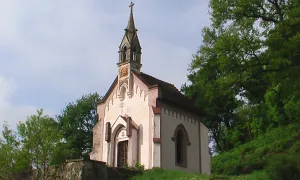
The Funeral Chapel in Hnúšť is a national cultural monument of the Slovak Republic, located in the Banská Bystrica region. The complex consists of 1 object: Funeral Chapel (novorenasance, 1902).
The chapel was built in 1902 and has a simple layout with flooring and floor plan. It stands at Križanova 153, Hnúšťa, in the cadastral territory of the village.
Historical protection has been declared but the year of this protection is not indicated. The current state of the chapel is preserved and used as a funeral chapel.
The Funeral Chapel in Hnúšť is significant for its architectural style of the New Renaissance and its history. A memorial can be visited to learn about its value and its importance for the region.
Tehdy a dnes
Drag the slider and compare how the monument might have looked when it was built with the view today.
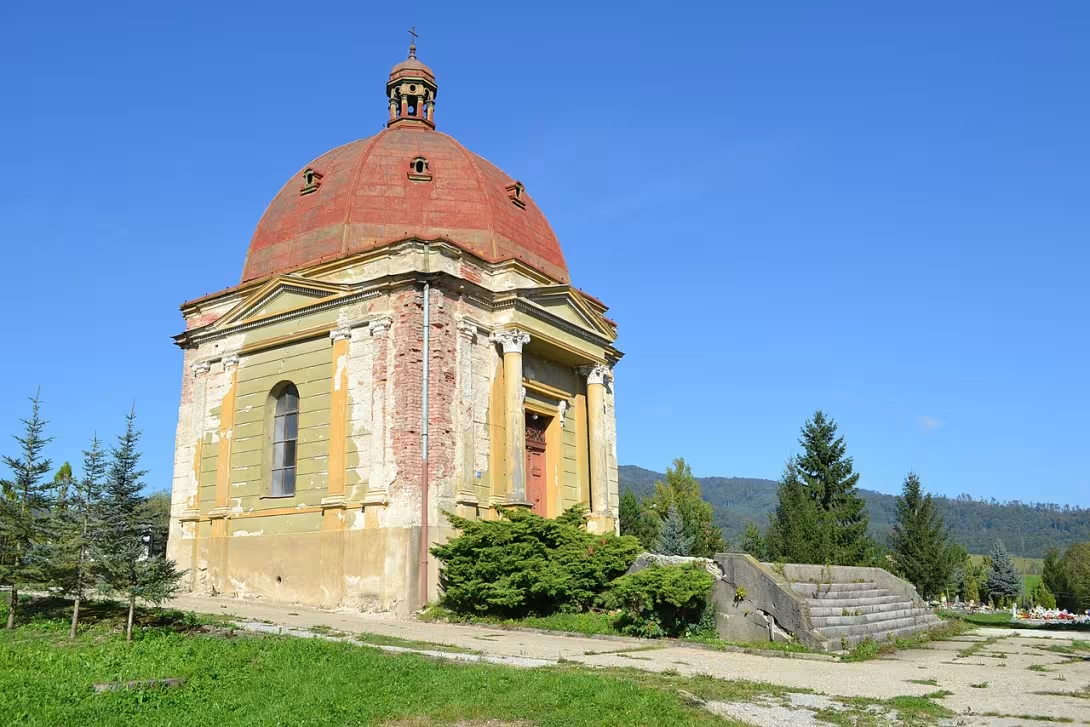

The historical view on the left is a visualisation generated by artificial intelligence and serves as inspiration.
Guide
Show guide text
The text was prepared by artificial intelligence and has not been editorially reviewed. It may contain inaccuracies.
Vite in Hnúšt, in the heart of Banská Bystrica region, where the historical layers of this town overlap with the nature and everyday life of the inhabitants. You stand in front of the funeral chapel, a place that requires quiet respect and thought. Right in front of you lies this modest but significant building, which served as the last rest area for many families and individuals in the region. At first glance, you are likely interested in its simplicity and moderation, which is typical for funeral architecture of this type. It is not a monumental cathedral nor a beautiful Baroque building with rich decoration, but rather an intimate space where death meets hope, sadness with peace. The atmosphere around the chapel is often penetrated by silence, which allows you to better perceive the details and feel the weight of history that has accumulated here for centuries.
When we look at the origin and historical context of this monument, we encounter a challenge unknown. The exact year of construction and the names of architects who gave it shape did not appear in the available records. However, this anonymity is not a shortcoming, but rather a mirror of common practice in the past, where many smaller sacral buildings were built on the basis of local initiatives, often without keeping detailed documents. Funeral chapels in Slovak towns and villages were a common part of urban character, usually located near graveyards or on the edge of urban buildings. Their purpose was to provide space for religious ceremonies associated with funeral rituals, such as dashes, prayers for the deceased, and the blessing of graves. In Hnúšť, which has a rich history associated with mining and mountaineering tradition, such a chapel probably also served mountaineers and their families who faced the risks of working underground and sought spiritual comfort and rest for those who had not returned.
Looking at the architecture of this chapel, you should pay attention to the overall shape and proportions of the building. Although we do not have a detailed description of the architectural style, it is possible to observe how the building is inserted into its surroundings. Try to see what materials were used to build it. Whether it is a stone structure that testifies to a dream of durability or a brick building with plaster, each detail bears a trace of time. Look at the chapel windows. They are often smaller and simpler with funeral chapels, contributing to the intimate atmosphere of the interior. If you are in construction, try to imagine how prayers sounded in the past and how the light from the windows illuminated the environment during holy ceremonies. The facade of the chapel, although perhaps lacking rich ornamentation, has its own beauty in its moderation and functionality. It is an architecture that is designed not to impress but to quietly accompany people in their most sensitive moments.
Historical personalities directly associated with this particular chapel do not appear in the available resources. This does not mean, however, that there were no significant figures passing through. The move was in the past an important centre where people from different levels of society met. The mountaineers, craftsmen, officials, and clergymen met not only in business matters but also in spiritual events. It is possible that local notables were buried here, who contributed to the development of the city, or vice versa, ordinary people whose stories were lost in the dust of history, but their presence here is still felt. This anonymity reminds us that history is not only about big names, but also about the silent fates of ordinary people who formed the tissue of this place.
One of the interesting things a visitor can find is the very existence of such a building in the context of a modern city. At a time when graves often move and cemeteries reorganize, chapels like this remain as permanent witnesses of the past. They serve as a bridge between generations, reminding us that death is an integral part of life and that the place where we deal with it has its own sacred place. Another aspect worth considering is the change in the function of such structures over time. Some funeral chapels later became a place for silent prayer only, others preserved as historical monuments that are no longer used for the original purpose but serve as symbols of local identity. In Hnúšť this chapel is part of a wider historical environment, which includes other sacral buildings and historical buildings, creating a unique urban and spiritual landscape.
The mystery surrounding many such buildings is the precise data and identification of architects. Why are they so little known? Is this the result of insufficient archiving, loss of documents during historical events, or simply insufficient interest in documentation of smaller sacral buildings? This unknown offers us space for imagination and exploration. Perhaps you could try to overcome the limits of available information and look for clues in local archives, family chronicles, or the oral traditions of the elderly. Any such contribution helps to complete the image of this monument and make it more vivid.
Finally, I would like to invite you to take a moment to think. You stand before a building that testifies to people's deep relationship with their spiritual needs and respect for the deceased. Although we do not know exactly who built it and when, we know that it served its purpose for generations. Look at her with respect and openness. Try to imagine how the outside sounded in the past, how people stood in mourning, and how they sought comfort here. This chapel is part of the soul of the Mouth, and its protection and respect is our shared responsibility. When you continue your walk around the city, remember to look back and appreciate the quiet beauty of this place. Thank you for your attention and I wish you a pleasant discovery of other historical jewels in Hnúš. May this trip bring you not only information but also a deeper sense of belonging and understanding to the history of this territory. We'll say goodbye here, by the quiet walls of this chapel, with the hope that you'll carry with you not only the consciousness but also the peace that this place offers.
Tips for visitors
Spring and autumn months are suitable for visiting the Hnúšte and the local funeral chapel. Take strong shoes, plenty of drinking water, and suitable clothes for nature. Use morning or late afternoon light to photograph the chapel. In the immediate vicinity, follow local information boards or check with local service providers.
Frequently asked questions
Can the monument be visited?
Religious buildings are usually open mainly during services; at other times a visit is normally arranged with the parish or the operator. We have not verified specific times.
Where is the monument?
Location: Križanova 153, Hnúšťa, Banskobystrický kraj. The map on this page shows the exact spot.
Why is the monument protected?
It is listed in the Central List of the Monuments Fund of the Slovak Republic as a national cultural monument (ÚZPF no. 329-2614).
For children
Nearby
🏰 Historic sites (47)
- Múzeum socialistických kuriozít 0.2 km +421 948 001 079 web
- Ján Francisci Rimavský 0.4 km
- Expozícia histórie priemyslu v Hnúšti 0.5 km +421 47 202 88 28 web
- Petrivaldského vila 0.8 km +421 47 202 88 28 web
- Banské múzeum Hnúšťa 3.1 km +421 907 318 119 web
- Padlým v II. svetovej vojne 4.7 km
- Karol Salva 4.7 km
- Elena Rampáková 4.7 km
- Karol Pajer 4.7 km
- Založenie MO-KSČ 4.7 km
- Padlým v I. svetovej vojne 4.7 km
- Ľudovít Kubáni 4.9 km
- Tank T-34 5.2 km
- Nálezisko obydlia človeka kyjatickej kultúry 6.8 km
- Pamätník padlým 6.8 km
- Evanjelický a. v. kostol 7.3 km
- Jozef Škultéty 7.8 km
- Kaštieľ Kokava nad Rimavicou 8.2 km Štúrova 271/68 web
- SNP 8.2 km
- Pomník Václava Vraného 8.9 km
🍽️ Restaurants and dining (29)
- Koliba 0.2 km Hlavná 919/1
- Pizzeria Kaštieľ 0.3 km +421 908 421 801
- Trio Kebab 0.6 km
- KOCKA bar&restaurant 0.7 km +421 949 222 503 web
- Hostinec Maťo 0.8 km
- Zlatá hus 2.7 km
- u Sveťa 4.8 km
- Hostinec Hiková 4.9 km
- Pohostinstvo Pohoda 4.9 km
- Bar Majka 7.5 km
- Koliba Studienka 8.1 km
- Pizzeria Favore 8.1 km
- Kokavská izba 8.2 km
- Reštaurácia Kokava 8.2 km
- Hostinec u Táni 8.2 km
- Oáza Bar 8.2 km
- Kulturák 9.3 km
- Cukráreň 10.5 km
- Pizzeria Meredith 10.8 km
- Darián 10.9 km
🏨 Accommodation (9)
- Robotnícky dom 0.6 km
- Hotel Vepor 4.8 km web
- Chata Hámor 7.9 km web
- Penzión Kokava 8.2 km
- Penzión na Ráztočnom 9.4 km web
- Penzión Močiar 13.4 km
- Nemcová 13.6 km
- chata Voniaca 13.7 km web
- Bodnárka 14.5 km
🚲 Rentals and sport (3)
- Mestské kúpalisko Hnúšťa 1.1 km
- Športová hala 5.4 km SNP 1173/51
- Športový areál 10.7 km
🥾 Hiking and nature (162)
- Štepový vrch 1.5 km
- Burianka 2.6 km
- Hora 2.6 km
- Laz 2.9 km
- Studnička Cigánka 3.5 km
- Železná tabla 3.9 km
- Ohrablo 3.9 km
- Sinec 4.1 km
- Matejov hrb 4.2 km
- Cigán 4.4 km
- Hrb 4.5 km
- Protitankový kanón 4.7 km
- Malý Sinček 4.7 km
- Divá kyslá 4.9 km
- Kyslá voda 5.0 km
- Hruštie 5.2 km
- Sinček 5.3 km
- Ostrá 5.3 km
- Kvakov vŕšok 5.3 km
- Bodnárka 5.4 km
Thematic route
Moor - Funeral chapel and surroundings
The route starts in the center of the village Hnúšťa, where there is the main clay: Funeral Chapel. This monument is an important historical residence, which stands behind the visit for its uniqueness and symbolizes the history of the village.
1. Funeral Chapel - the main line * Type: Monument * Proč is worth a visit: The chapel is an important historical residence that symbolizes the history of the village and stands behind the visit for its uniqueness. 2. Castle - Former Castle * Type: Monument * Proč is worth visiting: The castle is an important monument located in the immediate vicinity of the chapel and is behind the visit for its history and architecture. 3. St. Martin's Church - Church * Type: Monument * Proč is worth visiting: The church is an important monument, located in the centre of the village and is behind the visit for its history and architecture.
Seasonal recommendations
The spring brings nature awakening and the surrounding greenery slowly begins to come to life, which gives this sandy place a special, fresh time. Lighting is very fine during the spring months and morning fog often covers the architecture of the chapel in mysterious haze, ideal for peaceful photography. During this period you will not meet large crowds of tourists, so you will enjoy the whole atmosphere in absolute creative concentration. For a visit it is recommended to wear unpromoted shoes, because the terrain in the surrounding area is wet after the melted snow, and a warmer windbreaker against the spring wind. The best time for a tour is in the morning when the sun's rays light up pleasantly through the tree branches.
Summer brings to the site the full power of vegetation, thick treetops provide a welcome shade and sunlight creates sharp contrasts between light and shadow on the historical masonry. The main tourist season brings slightly increased interest of visitors, although the place still retains its chamber character. Since the temperatures in the afternoon peak, the best time to arrive is early in the morning or late in the afternoon when the air is more pleasant. In practical terms, there is no need to underestimate sufficient supply of drinking water, head cover and light breathable clothing, as there are no refreshments around the chapel.
Autumn transforms the appearance of the surrounding nature into a colorful palette of shades of yellow, red and brown, creating a melancholy and deep atmosphere directly destined to slow down. Lighting is low and soft during this period, while in the afternoon it is rapidly darkening, which affects the length of stay outdoors. Almost no one comes here during the fuzzy autumn days, so you will enjoy maximum privacy without any interference. The practical advice includes the choice of firm, non-slip shoes due to fallen leaves that can slide on the pavements and several layers of clothing, including a warm cap. The best lighting conditions to visit rule around noon, when the sun will penetrate the cloud for at least a moment.
Winter envelops the entire building in the silence of the snow blanket, and the freezing air enhances the serious and dignified atmosphere of this burial place. The lighting is sharp but short, while the snow cover beautifully reflects daylight and the whole scenery optically illuminates. During the winter months there is complete peace and tourists almost do not come here, which lovers of solitude appreciate. High quality, really warm winter clothes, high non-promoting shoes and gloves are essential, as temperatures in the region fall far below freezing. Due to a very short day, plan to arrive ideally at an early afternoon in order to make a visit in daylight.
Visualisations and artistic views


The visualisations are generated by artificial intelligence and serve as inspiration.
Visitor Tips
No tips yet. Be the first!
Log in and add your tip.
Location on Map
More monuments – Hnúšťa
Show all in the town
Visitor photos
No photos yet. Be the first to add a photo from your visit!
Log in and add your photo or leave a rating.
You get more points for a visit verified in the app — we can tell from the GPS that you are there.
Reviews and comments