








roľnícko-šafranícka usadlosť Farmer's farmstead
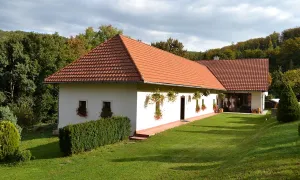
In the village Blatnica in Žilina region there is a peasant-šafranice settlement declared a national cultural monument. According to the data from the register, the yard is a peasant from 1900 and its parts date back to the mid-19th century.
The complex consists of two objects: folk house with economic part and gates, both dated to the mid-19th century. The house has brick and stone structure, the gate is brick. These technical parameters are documented in the memorial record of the Slovak Monument Office.
The monument is registered under the number ÚZPF 316-11745. Located in the cadastral area of the village Blatnica, its exact location is determined by GPS coordinates 48.93242, 18.92963. The maintenance of this court allows to observe the materials and techniques used in the construction of farmers' settlements in the mid-19th century.
Tehdy a dnes
Drag the slider and compare how the monument might have looked when it was built with the view today.


The historical view on the left is a visualisation generated by artificial intelligence and serves as inspiration.
Historical Milestones
- 1900
- Creation of a peasant-saffrac settlement
- 1850
- Construction of folk house and gates
Guide
Show guide text
The text was prepared by artificial intelligence and has not been editorially reviewed. It may contain inaccuracies.
You know, Blatnica. You stand by one of those places where time seems a little slower and where every wall and every corner of the earth tells a story that someone else has already started. Before you lies the Court of Peasant, a place that is not just a set of buildings, but a living witness to the ancient way of life that shaped our culture and identity. When you look at this peasant-shaffranic settlement, try to imagine for a moment how it could have been here many years ago. Feel the atmosphere of peace and the connection with nature that emanates from this place. It's not just a simple structure, it's a symbol of a man who lived in a close relationship with the land he was circling and the fruits that he provided him with.
Although accurate chronological data on the creation of this court are not preserved in our records and we do not know exactly in which century its foundations were first settled in this country, its essence remains clear. It is a settlement which was the centrepiece of agricultural activity. However, the name saffron settlement tells us something very important and rare. The saffron is not just a mere crop; it was in the past a symbol of rareness, patience and specific skill. So this settlement was not just about basic survival, but much more about cultivating something subtle and valuable. In the context of this area, this suggests that people who lived here must have not only strong hands suitable for farming but also feeling and knowledge for growing demanding plants. This court was a place where the harsh reality of field work was associated with the softness and value of the saffron.
Now, when you are standing right in front of him, pay attention to the architecture and the overall arrangement of this place. Although we do not know the names of specific architects who designed the exact lines of these buildings, we can see in their work a deep logic and functionality. Look at how the individual elements of the settlement are stratified. In traditional courtyards it was not about aesthetics in the modern sense, but about efficiency. Every building, every space had its clearly defined purpose. Feel the harmony that creates the overall chain of structures. Some parts served as dwellings, other than storage facilities, or places for economic operation. Notice how these objects complement each other and create a closed, secure world. When you look at the facades and materials used here, realize that every trace of work in them reflects the pursuit of durability and protection against the influences of the surroundings. It is an architecture that does not demand the attention of magnificent adornments, but is threatened with its sincerity and ability to resist time.
Maybe you're asking who all lived here. Although histoya did not give us the names of the specific personalities that led this court, we can imagine them. They were people with firm steps going out into the fields every morning and returning every night to the warmth of their home. They were farmers who understood the cycle changes of nature, and growers who cared immensely for the saffron. Their lives were linked to the rhythm of the season - from spring sowing to autumn harvesting. Although their names are not written in the books, their presence is seen in every detail of this settlement. It is in the way that buildings are sun - oriented, in the way that spaces for work are created, and in how they maintain the feeling of home. These unknown personalities have created a world that we are trying to understand today.
However, there is also a mystery that persists here. It's the unknown chronology and the confusion that makes us think. Why here? Why this kind of specialized agriculture? This uncertainty raises the question of what we have yet to understand about this place. The saffron in the center of this name carries a glimpse of mystery. How did this rare plant species reach this site, and how did it affect the economy and life of the region? Maybe there's something hidden in these walls, and there's still something hidden in these spaces, something waiting for us to look at it the right way.
Don't just stop at this one point. This yard is only a doorway to the wider world of Blatnica history and the whole region. We invite you to continue this journey. Walk around, feel the silence, try to look at the details you may have missed at first sight. Feel the atmosphere of a place that has survived for many generations and that enables us today to get to know a piece of our own past. Let this sense of connection with the people who stood before us. Thank you for being with us at this short guide window, and we wish you a pleasant and inspiring sequel to discovering this historical monument.
Tips for visitors
A jar or autumn is recommended for visit. Check your current online search engine connections when you arrive by public transport. We recommend shoes suitable for field walks and camera. Morning or evening light highlights the textures of traditional architecture and the details of the settlement. Families with children can know the traditional management and history of saffron cultivation.
Frequently asked questions
Can the monument be visited?
This is a residential or farm building, not a museum with opening hours. Please view it from public space and respect the owners' privacy. We have no information about access to the interior.
Where is the monument?
Location: Blatnica, Žilinský kraj. The map on this page shows the exact spot.
Why is the monument protected?
It is listed in the Central List of the Monuments Fund of the Slovak Republic as a national cultural monument (ÚZPF no. 316-11745).
Nearby
🏰 Historic sites (89)
- Ján Lupa 0.2 km
- Pamätník hrdinov SNP 0.3 km
- Sovietsky veliteľ 0.4 km
- Obetiam banderovcov 0.5 km
- Révayovský kaštieľ 0.7 km
- Blatnica 2.1 km
- Lavína-r.2000 2.9 km
- Peter Mlynárik 3.1 km
- Belis Kaštieľ Mošovce 3.9 km Kollárovo námestie 36/32 web
- Múzeum Jána Kollára 3.9 km J. Kollára 22/16
- Ján Kollár 4.0 km
- František Révai 4.2 km
- Modrý kaštieľ 6.5 km
- Sándor Petöfi 6.5 km
- Michal Miloslav Hodža 6.5 km
- Obecná múzeum Notariát 6.6 km
- Juštovský kaštieľ 6.6 km
- Franklinovský kaštieľ 6.6 km
- SNP 6.8 km
- Juraj (György) Lahner 6.8 km
🍽️ Restaurants and dining (133)
- Amfiko 0.4 km
- Chatová osada Gader 0.6 km
- U Mira 0.7 km
- Hostinec u Menichov 4.0 km
- Krčma u Miháľov 4.2 km
- Pod skalkou 6.6 km
- Dedkov dvor 6.7 km
- Slza 7.2 km
- Bistro pod Kopcom 7.3 km
- Autocamping 7.8 km
- Centrála 8.1 km
- Pohostinstvo 8.1 km
- Jagogastro 8.1 km +421908112288 web
- Drevená dedinka 8.3 km
- Belmondo Pizzeria & Sport pub 8.3 km +421 910 659 300 web
- Denný bar u Jozefa 8.6 km Belá 277
- Bistro u Želky 8.7 km
- Ďuríkov dvor 8.7 km
- Novstav 9.0 km
- Mliečna víla 9.1 km
🏨 Accommodation (58)
- Hotel Gader 1.3 km
- Chata pod hradom Blatnica 1.8 km
- Drienok 4.3 km Na Drienok 460/10
- Camping Drienok 4.4 km
- Zrubová chata Brotnica 6.4 km +421 903 531 047
- Diana 6.5 km +421 918 326 345 web
- Chateau Diva 7.9 km +421 948 920 622 web
- Penzión 8.1 km
- Chata Drobkov 8.8 km
- Hotel G 9.2 km
- Milka 9.3 km
- Hotel Lesník 9.3 km
- Aqua 9.4 km
- Royal Palace 9.4 km +421434918010 web
- Hotel Vyšehrad 9.4 km
- Veľká Fatra 9.4 km
- Chata 108 9.5 km
- Anesis 9.5 km
- Velka Fatra 9.5 km
- Apartmány Park 9.6 km web
🚲 Rentals and sport (19)
- Kúpalisko Drienok 4.3 km web
- Terrabike 9.1 km +421 949 130 861 web
- Kúpalisko Vieska 9.2 km web
- Červený bazén 9.5 km
- Ľudový 9.5 km
- Súkromná strelnica TRg0 SPZ MARTIN 10.8 km
- Ovčín - Boulder&Bistro 11.7 km Dolné Jaseno 160 web
- Snowland 13.1 km web
- Športové centrum Diaková 13.1 km
- Motokrosový areál ZE-TEC 13.4 km
- Sport 2000 14.1 km
- Marki Sport 14.2 km
- Sportisimo 14.5 km
- Max Šport 14.5 km web
- Novsport 14.5 km
- Segoland - lanový park 14.5 km +421 918 402 854 web
- Adventura Sports 14.6 km
- unisport 14.7 km
- Motokáry Martin 14.9 km +421 940 548 131 web
🥾 Hiking and nature (262)
- Dolná stĺpová 2.1 km
- Horná stĺpová 2.2 km
- Konuš 2.2 km
- jaskyňa Mažarná 2.4 km
- v Ostrej 2.8 km
- Tlstá 3.1 km
- Ostrá 3.1 km
- Mlynčekovo 3.2 km
- Mošovský park 3.4 km
- Lubená 3.7 km
- Bôriny 3.8 km
- Bágľov kopec 4.0 km
- Pekárová 4.3 km
- Révaiovský prameň 4.3 km
- Jelenec 4.4 km
- Malinie 4.4 km
- Chládkové úplazy 4.4 km
- Krieslo 4.5 km
- Drienok 5.2 km
- Stráž 5.4 km
Thematic route
1. Entrance to the area Dvor peasant (historical courtyard) - The tour begins in the open space, which shows the structure of the traditional settlement. 2. Interior of the main building (historical exposure) - Exposed items and furniture will illustrate the life of farmers. 3. Shafran part of the settlement (specialised exhibition) - Information about the tradition of saffron cultivation that is typical for this site. 4. The immediate settlement area (garden and surroundings) - Walk around the buildings.
Seasonal recommendations
Monument: a peasant-saffranean settlement
Western Slovakia, Blatnica, Žilinský kraj - peasant-safranice settlement (Dvor peasant)
Jaro: At this time, flowers and trees begin to be fruitful. The atmosphere is full of life. Enlightenment is occasional, especially at the time of the full sun. There will be bigger crowds, so it's good to come before 10:00. Better clothes are soft and comfortable.
Summer: The temperature is high, the atmosphere warm and sunny. The enlightenment is intense, especially at the time of the full sun. There will be more crowds, so it is good to come before 11 a.m. Better clothes are soft and comfortable.
Under: Temperature begins to decline, atmosphere dry and cold. Enlightenment is occasional, especially at the time of the full sun. There will be smaller crowds, so it is good to come after 2 p.m. Better clothes are warmer and comfortable.
Winter: The temperature is low, the atmosphere is cold and dark. Enlightenment is occasional, especially at the time of the full sun. It's good to come after 10 a.m. Better clothes are warmer and comfortable.
Everything else stays the same.
Visualisations and artistic views


The visualisations are generated by artificial intelligence and serve as inspiration.
Photographs from the area
Real photos taken near the monument


Source and licence are given for each image.
Visitor Tips
No tips yet. Be the first!
Log in and add your tip.
Location on Map
More monuments – Blatnica
Show all in the town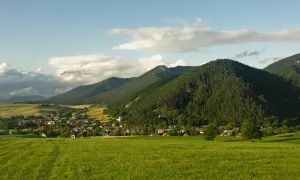


Visitor photos
No photos yet. Be the first to add a photo from your visit!
Log in and add your photo or leave a rating.
You get more points for a visit verified in the app — we can tell from the GPS that you are there.
Reviews and comments