

st. Anna's pilgrimage church Church and chapel
The pilgrimage church of St Anna in the village Rudník in the Košice region represents a national cultural monument from the second half of the 18th century. The building was built in 1750 and shows signs of late Baroque.
The whole area, which is registered by the Monument Office of the Slovak Republic under the number ÚZPF 10090, consists of two separate objects. The first one is the Roman Catholic church of St. Anna, whose construction took place between 1750 and 1776 in the late Baroque style. The second object in the area is the Roman Catholic chapel of St. John Nepomuk, which dates back to the early 19th century and is made in the style of classicalism.
The monument is located at number 275 in the village Rudník. The building is protected as a national cultural monument, while it is registered in the ÚZPF register under the number 10090.
This set of sacral buildings in the village Rudník provides a concrete example of connection of Baroque and Classicist architecture within one area. We recommend visiting this place to anyone interested in verified historical buildings from the above period.
Historical Milestones
- 1750
- The pilgrimage church of St. Anna in Rudník.
- 1776
- Complete the building of St. Anna's pilgrimage church in Rudník.
- early 19th century
- The Roman Catholic chapel of St. John Nepomuk in the area of the pilgrimage church.
Interesting facts
- The pilgrimage church of St Anna in the village Rudník is a national cultural monument from the second half of the 18th century. - The church was built between 1750 and 1776 in the late baroque style. - The area also includes the Roman Catholic Chapel of St. John Nepomuck of the 19th century, which is made in the style of classicism. - The whole set of buildings represents an exemplary example of linking Baroque and Classicist architecture within one area.
Guide
The guide was voiced by a synthetic voice created by artificial intelligence.
Show guide text
The text was prepared by artificial intelligence and has not been editorially reviewed. It may contain inaccuracies.
Welcome to Rudnik. Right now, you are standing before the pilgrimage church of St. Anna, a place that, by its presence in the country, creates a feeling of peace and spiritual refuge. When you look ahead like this, you will see not only the building of the church itself, but the entire area surrounding this holy place. It is a space for meditation, prayer and a quiet encounter with history that has been going on for generations. Feel the atmosphere of this place where nature is associated with human efforts to create space for higher values. Now let's stop by to see how and why this church was created. Although the exact chronology of the construction is not detailed in the available records and the names of architects were forgotten in time, the very existence of a pilgrimage church in this location testifies to the deep viera of local inhabitants and surrounding regions. Pilgrimage sites were usually established where people felt the need for spiritual support or where they believed in miracles and the protection of saints. In the case of Saint Anna, this is a figure that is perceived in Christian tradition as a symbol of family and wisdom, which probably motivated the community in Rudník to build this very area. Now that you are right in front of the building, invite you to observe the overall appearance of the building. Put your eyes on the details that surround you. Look at the facade and see the way the church is written into the surrounding terrain. Note how the area defines the boundary between the everyday world and the sacred space. Although we do not know exactly who designed these walls, it is clear that the aim was to create a place that would be modest but dignified. Take a look at the line of the building and consider how many thousands of people have gone through the way that you too are coming to find comfort or forgiveness. If we are looking for specific historical personalities associated with this place, we must admit that history is silent in this case. There are no records of known builders or significant personalities leaving their signature here. It may seem sad to you, but it is actually fascinating. This church does not belong to one known personality, but belongs to people. It belongs to thousands of nameless pilgrims, to the local people of Rudník and to all those who, over the centuries, sought answers to their questions in these temple walls. It is this anonymity that gives the place some kind of universality. It is not a monument to one man's power or glory, but a testimony to collective faith and endurance. Each such building carries a certain mystery. In the case of St. Anna's pilgrimage church, the greatest mystery is precisely its exact origin and the details that have been lost in the forgotten time. Why was this place chosen? What stories did they tell when the pilgrims stopped for a break? These questions remain open and invite you to your own imagination. When you look around, try to feel the invisible traces of the past that remained on the premises. It is in this unfamiliarity that the magic of this place is hidden, because it allows you to perceive the church not as a dry fact from the historical book, but as a living organism that breathes through the stories of people whose names no longer are remembered. Now that you have examined the exterior and felt the spirit of this place, invite you to walk on the grounds in peace. Feel the silence that surrounds you and give yourself a moment of meditation. Let your feelings guide you and try to imagine what this place looked like tens or hundreds of years ago. The pilgrimage roads are long and tiring, and the moment when the pilgrim first sees the tower or the walls of the church on the horizon is a moment of great relief and joy. I hope this short trip to the world of spiritual architecture in Rudník helped you better understand the meaning of this area. Although history has not provided all the answers, the place itself speaks a clear language of peace and stability. Now you can continue to explore the surroundings or simply stop and enjoy this moment of privacy. Thank you for your attention and I wish you a pleasant rest of the day to discover the beauty of the region of Košice.
Tips for visitors
We recommend a visit in spring and summer, when the surroundings of the pilgrimage church of St. Anna in Rudník in flower.
We recommend taking comfortable shoes and water to the ground on the church premises. Photos of the facade are of the highest quality in the early morning or before sundown.
In the surroundings you can focus on the architecture of this sacral place. For families with children, a visit is an opportunity for a short trip to nature and to meet the local monument.
Frequently asked questions
Can the monument be visited?
Religious buildings are usually open mainly during services; at other times a visit is normally arranged with the parish or the operator. We have not verified specific times.
Where is the monument?
Location: č. 275, Rudník, Košický kraj. The map on this page shows the exact spot.
Why is the monument protected?
It is listed in the Central List of the Monuments Fund of the Slovak Republic as a national cultural monument (ÚZPF no. 426-10090).
For children
Imagine that you have a magic key in your hand that can open the gates to the past. You push it, and the world around you starts to change. The car disappears, the roads turn into forest paths, and instead of the noise of engines, you hear just the noise of trees. We've been going back exactly 276 years. It's 1750.
Thematic route
As there are no other objects in the area, I propose an area-oriented theme:
1. Pilgrimage church of St. Anna - The main monument where visitors can see the architecture of this sacral object. 2. Church area - Walking around the building, which shows the connection of the church with its surroundings and the soil character of the place. 3. Courtyard and exterior - Space to observe details of facade and access roads within the area.
Seasonal recommendations
In spring, St. Anna's pilgrimage church in Rudník is surrounded by green vegetation. The sun during this period provides fine lighting suitable for photographing the exterior of the building. We recommend shoes to wet terrain and a visit in the morning.
Summer season brings intense lighting and rich colors of the landscape that contrast with historical architecture. Due to high temperatures, it is advisable to arrive early in the morning or late in the afternoon. Light clothing and sun protection are practical.
Autumn Around Rudnik is characterized by a change in the colors of leaves. The golden light of the autumn sun highlights the details of the facade. Due to colder weather and humidity, layered clothing and waterproof footwear are suitable.
Winter is the pilgrimage church of St. Anna ascetically, especially if the area covers snow. The days are short and the atmosphere is still. When visiting, warm clothing and footwear with anti-slip soles are necessary due to frozen origin.
Visitor Tips
No tips yet. Be the first!
Log in and add your tip.
More monuments – Rudník
Show all in the town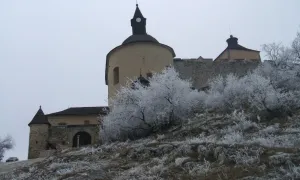

Visitor photos
No photos yet. Be the first to add a photo from your visit!
Log in and add your photo or leave a rating.
You get more points for a visit verified in the app — we can tell from the GPS that you are there.
Reviews and comments