

st. Florian's Church Church
The church of St. Florian in the village of Opátka in the Košice region is a baroque-classicist building from 1784. The interior includes a teresian Confessor, a rococo organ cabinet and paintings with mining topic.
The building was built in 1784. The renewals passed in 1845 and at the end of the 19th century. The report is provided by the Parish Office in Košice Belá.
It is a single-boat space with a polygonal cap Presbytery and built-in polygonal sacristy. Polygonal solution is applied on facades, from the inside are segment caps. The shield facade is built-in tower with a terrace and a Baroque latern dome. Facades are smooth with segmented windows. The main facade from 1845 consists of a flat recess with a portal and a small window, ending with a triple edge shield.
The interior has Prussian vaults with inter-knife bands, which are mounted on the ledge heads of pilasters with a dentist. On the western side there is a classicistic wooden organ empora with parapet decorated with festons. Its brick rear wall opens into the space below the tower in the width of the organ wardrobe. At the head of the triumphal arch is the folk painting from the first half of the 19th century, which depicts the semi-positions of two miners.
The main altar and pulpit come from the end of the 19th century. Two side altars from the years 1780 - 1790 have a classicistic back wall framed the middle image, two side oval earrings with images and an extension part. On the classicistic bases are sculptures of saints; on the left altar St. Nicholas (presumed) and St. John Nepomuk, on the right archangel Michael and Gabriel. A fragment of another side altar from the years 1780 - 1790 was preserved, from which the back wall with the image of Saint Mark and pictures of mining life in the oval ears remained.
The equipment includes a baroque-classicist teresian confessional in the form of a wide cabinet. It has double pilasters on a rosette and oval wreath decorated with a parapet. The middle area is made up of wings with the image of St John the Nepomuk confessing Czech queen and the image of the dead Saint John Nepomuk in the lower parallel. On the roof is a multi-figurous plastic group of God-Father with angels and crosses, on the side doors are painted figures of the apostles Peter and Paul.
The inventory includes a rococo organ wardrobe from 1784 and a free picture of St. Florian from 1784 in a rococo frame, which was repainted in the first half of the 19th century. In the church there is a free picture of Saint Rozalie (predicted) from the early 19th century in a romantic frame and four classicistic wooden carved candlesticks from the late 18th century. In the sacristy there is a brick oven for baking wafers, iron form from 1749 and a wall bench with copper containers from 1784. Other items include a classicistic lavatory box with a picture of St. Elizabeth, a tombstone from 1784, a shell reservoir, a teresian rite box, and two carousel wardrobes and alby. The ensemble completes the chalice from 1770 with rojami and luisese application.
The church is located in the center of the village and is registered in the Central List of Monument Fund of SR under the number of ÚZPF 430. Some sources indicate good condition, other information points to the emergency condition of the damaged roof, in what is planned a general repair.
Tehdy a dnes
Drag the slider and compare how the monument might have looked when it was built with the view today.
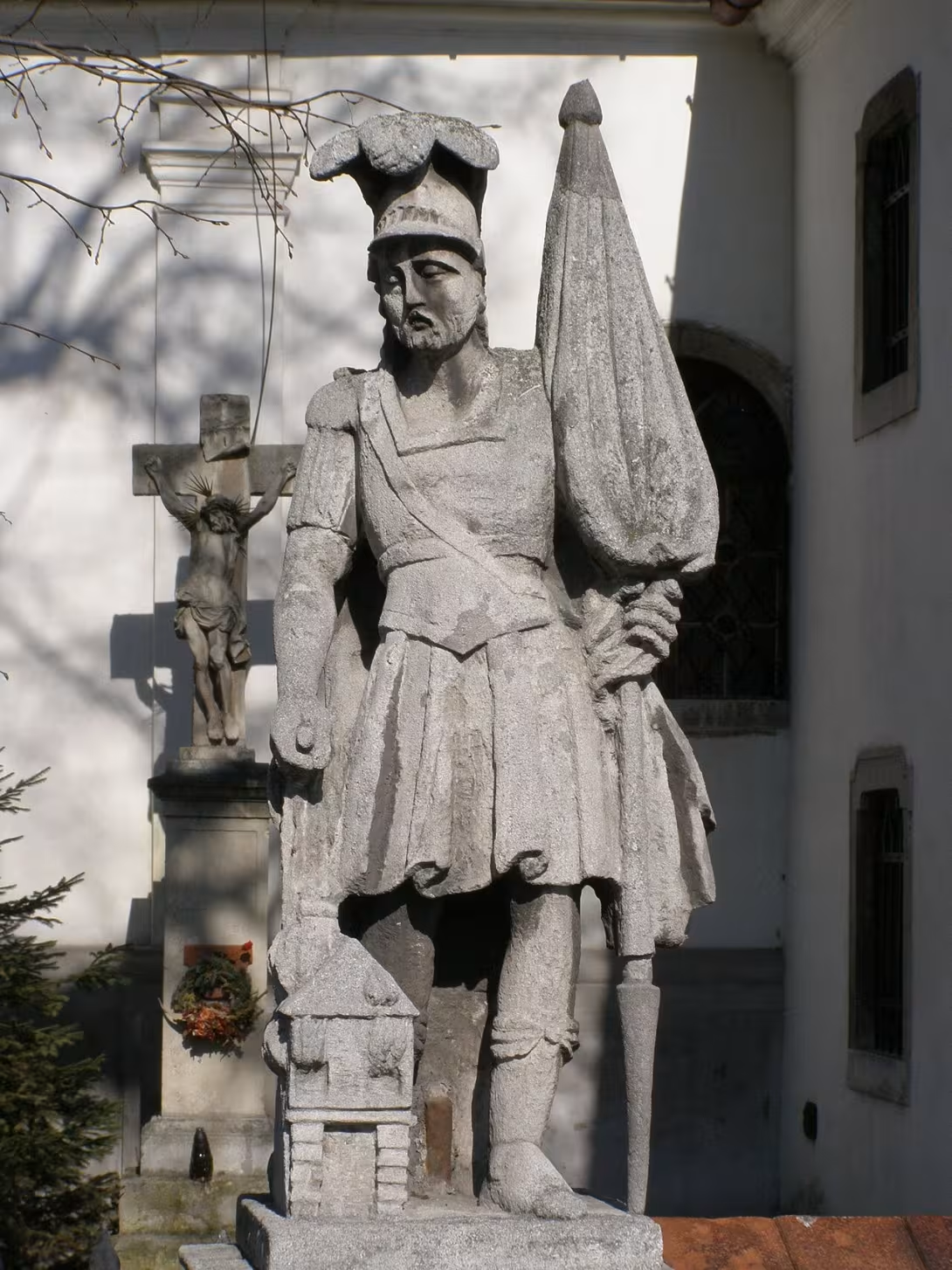
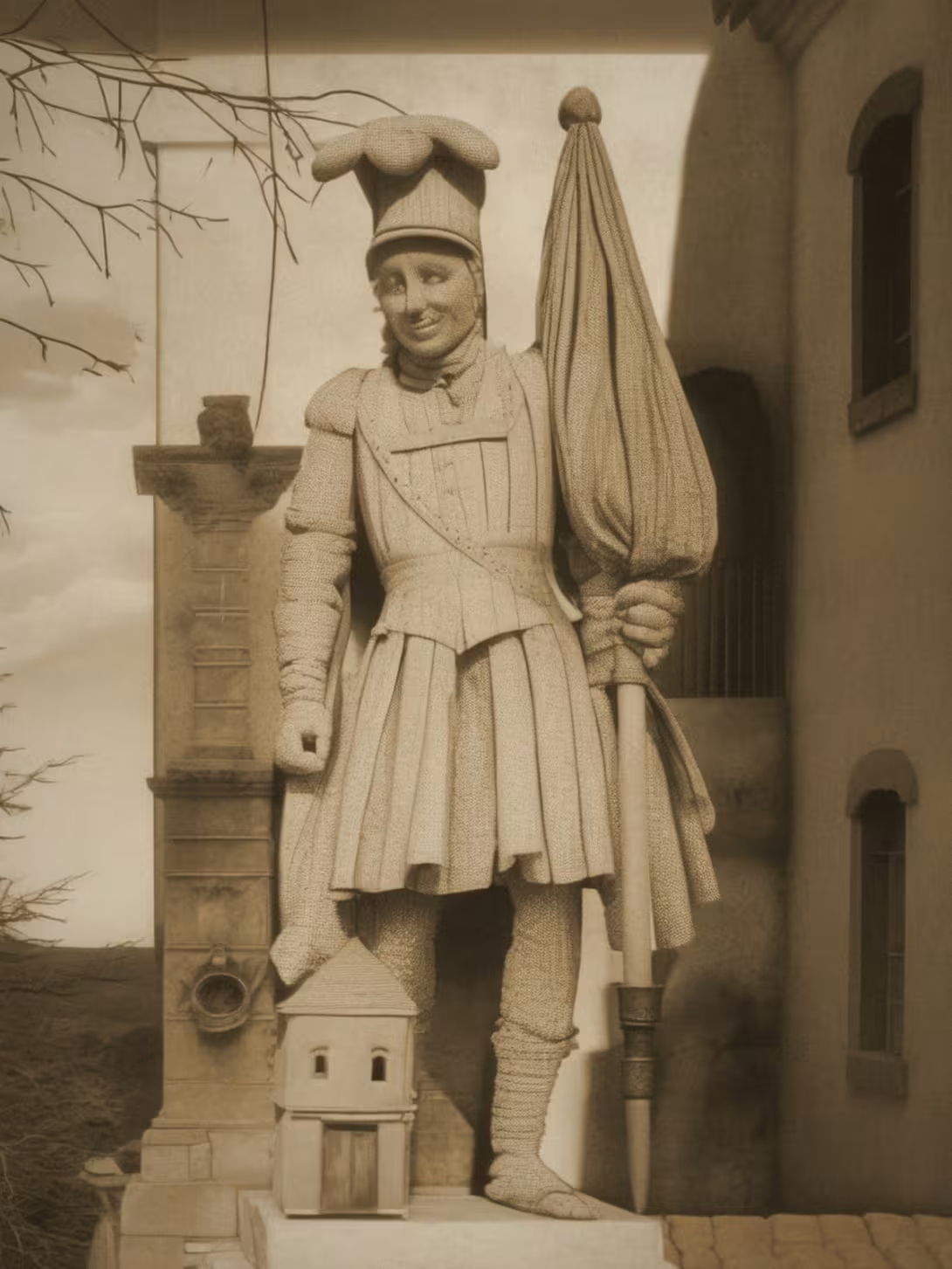
The historical view on the left is a visualisation generated by artificial intelligence and serves as inspiration.
Historical Milestones
- 1784
- construction of the church
- 1845
- renovation and modification of the main facade
- end of the 19th century
- renovation
Interesting facts
- It is a Baroque-Classicist building from 1784, whose interior includes paintings with mining themes. - At the head of the triumphal arch there is a folk painting from the first half of the 19th century depicting two miners. - The equipment is complemented by a Baroque-Classicist teresian confessional in the form of a wide cabinet and a rococo organ wardrobe from 1784. - In sacristy there is a brick oven for baking wafers and iron form from 1749. - Part of the inventory is a free picture of Saint Florian from 1784 in a rococo frame.
Guide
The guide was voiced by a synthetic voice created by artificial intelligence.
Show guide text
The text was prepared by artificial intelligence and has not been editorially reviewed. It may contain inaccuracies.
We welcome you to the Abbey, in the heart of the region of Košice, where the church of St. Florian is now shut down in front of you. Stop for a moment, take a breath of air and look around you. You are faced with a building that is a silent witness to the history of this area and that, by its presence, is creating the character of a local country. The first sight of the building is likely to tell you that it is a place with a deep tradition that combines spiritual values with the history of local inhabitants.
Let's now look together at when and how this church was created. The building you see dates back to 1784. Imagine the time we were in - the end of the 18th century brought new currents and changes to Europe, which also reflected in architecture. Although the names of the particular architects who designed the project remained forgotten in time and are not known, the result of their work is a building that combines two important artistic styles: Baroque and Classicism. It is this transition between periods that gives the building its specific character.
Now that you take a closer look at the appearance of the building, note especially the main facade. What you see today is not entirely in its original state of 1784. In 1845 the building underwent a major renovation, during which the front facade was modified. Later, at the end of the 19th century, the church went through another renovation to preserve its functionality and beauty for future generations. Look at the lines and proportions of the building; baroque dynamics meet here with classicistic moderation and harmony.
now I invite you to move to the interior, because that is where the most precious is hidden. When you cross the threshold and enter inside, feel the calm atmosphere of this space. Notice the paintings that decorate the walls. However, these are not mere religious motives. St. Floriana is exceptional because its interior contains paintings with mining theme. It's a fascinating detail that tells us a lot about people who lived and worked here. Mining was crucial for this region, and so the law in sacral space appeared motives associated with hard work at the depths of the earth.
Now give your attention to one of the most important details in the entire church. Look at the triumphal arch. On its forehead is a folk painting from the first half of the 19th century. If you approach, you will see a picture of two miners. It is a direct reference to the identity of the locals, their daily struggle for livelihoods and their faith, which gave them strength. It is fascinating that in the church dedicated to Saint Florian, we find such a strong element of folk art and local history.
Apart from interior paintings, your attention will certainly attract another subject. It's a Baroque-Classicist teresian confessional. Note its shape of a wide box that is typical of the reign of Imperial Maria Theresa. Such confessionals were at that time a symbol of the new order and structure within the church administration, but at the same time they are a beautiful example of the craftsmanship of their day.
Interestingly, although we do not know exactly who built the church or which particular personalities in its building worked, the walls themselves speak for themselves. The church's mining motives are almost tangible evidence of how closely faith and work were linked. The miners, who started and finished every day's risky work in the shafts with prayer, left their mark right here in these paintings.
Now that you have discovered the basic facts about this place, let yourself be guided by your own curiosity. Go through the interior again at a slow pace, think about the fates of the people who klicked here two hundred years ago, and see the detailed precision of the teresian Confessor or the softness of folk paintings on triumphal arch.
We hope this short trip to history has helped you to better understand the meaning of St. Florian's Church in Abbot. It is a place where the history of mining, folk art and the architecture of two great ages meet. Now you can continue to explore the surroundings peacefully or simply drink in the silence of this historical space. Thank you for your attention and we wish you a pleasant crush in this beautiful region.
Tips for visitors
Visit the village Monkey in spring or fall. Nature in the surroundings contrasts with the emergency state of the building. Since the sacral structure is in poor technical condition, approach it carefully.
We recommend shoes with fixed soles for stability when moving around the building.
When photographing are interesting details of architecture and emergency state of St. Florian church. The appropriate light for exterior images is during the time of the golden clock - shortly before sunfall, when the shadows are long and the texture of the walls is more pronounced.
For families with children, we recommend a visit within the educational walk about the history of the region. It is important to track children and prevent them from entering dangerous parts of the object.
Frequently asked questions
Can the monument be visited?
Religious buildings are usually open mainly during services; at other times a visit is normally arranged with the parish or the operator. We have not verified specific times.
Where is the monument?
Location: č. 30, Opátka, Košický kraj. The map on this page shows the exact spot.
Why is the monument protected?
It is listed in the Central List of the Monuments Fund of the Slovak Republic as a national cultural monument (ÚZPF no. 426-430).
For children
Close your eyes for a second and imagine moving back in time. You travel deep into the past, just 242 years ago. The year is 1784. There are no cars, no internet or smartphones around you. There are only horses, dirt roads, and people in strange hats and long dresses. Just at this time in the village The Abbot originated the church of St. Florian.
Thematic route
As there are no additional sites in the area of the area, I propose a thematic route within the main objective area:
1. Church of St. Florian - The main monument in the village Abbot. 2. Interior of the church - Indoor space with altar and temple equipment. 3. Church area - Outdoor space and surroundings of the building.
Seasonal recommendations
In the spring, the surroundings of St. Florian's Church in Abbot will awaken into a new life, blossom the first of the pre-spring plants, and the landscape will become a dark green color. The sun is gentle in this period, creating a pleasant atmosphere for walks. It is recommended that footwear suitable for wet terrain and clothing in layers that allow to adapt to variable weather conditions.
Summer months bring intense lighting and bright colors. The building stands out in contrast with dense vegetation. The air is warm; it is recommended to visit the site in the morning or late evening to avoid high temperatures. Because of the strong sun, you need to take a head covering and enough drinking water.
In the autumn, the atmosphere around the church changes, the leaves of the trees become golden and red shades. This time provides colorful contrasts to photograph the exterior of the building. Due to colder mornings and frequent fog, it is advisable to put on a wet jacket and tight shoes.
Zimą is the church of St. Florian in Abbot freezing and quiet, snowy landscape underscores its historical character. The lighting is weaker and the days are short. When visiting it is necessary to dress up in warm layers, the boots are the most suitable for walking on snow-covered terrain.
Visualisations and artistic views

The visualisations are generated by artificial intelligence and serve as inspiration.
Visitor Tips
No tips yet. Be the first!
Log in and add your tip.
More monuments – Opátka
Show all in the town
Visitor photos
No photos yet. Be the first to add a photo from your visit!
Log in and add your photo or leave a rating.
You get more points for a visit verified in the app — we can tell from the GPS that you are there.
Reviews and comments