

st. Trinity church Church
The church of the Holy Trinity is a classicistic building from 1822 in the southern part of the village Rad in the Trebišov district. This Roman Catholic church is listed in the Central List of Monument Fund of SR under number 10 716/1.
The building was built in 1822, which confirms the summer on the portal. In 1920 the building was repaired. The church belongs to the parish Rad and the decant of Veľké Kapušany in Košice archdiocese.
It is a single-boat building with a semicircular altar cap. The interior is encircled by a Prussian vault and a Czech plaque, while the interior remained in a classicistic style from the construction period. Facades are divided by lizenes. The built-in tower is covered with a mine and has side shields, on which in the past there were stone vases.
The building fulfills its original purpose and is subject to conservation. The church is an example of classical architecture from the first half of the 19th century.
Tehdy a dnes
Drag the slider and compare how the monument might have looked when it was built with the view today.
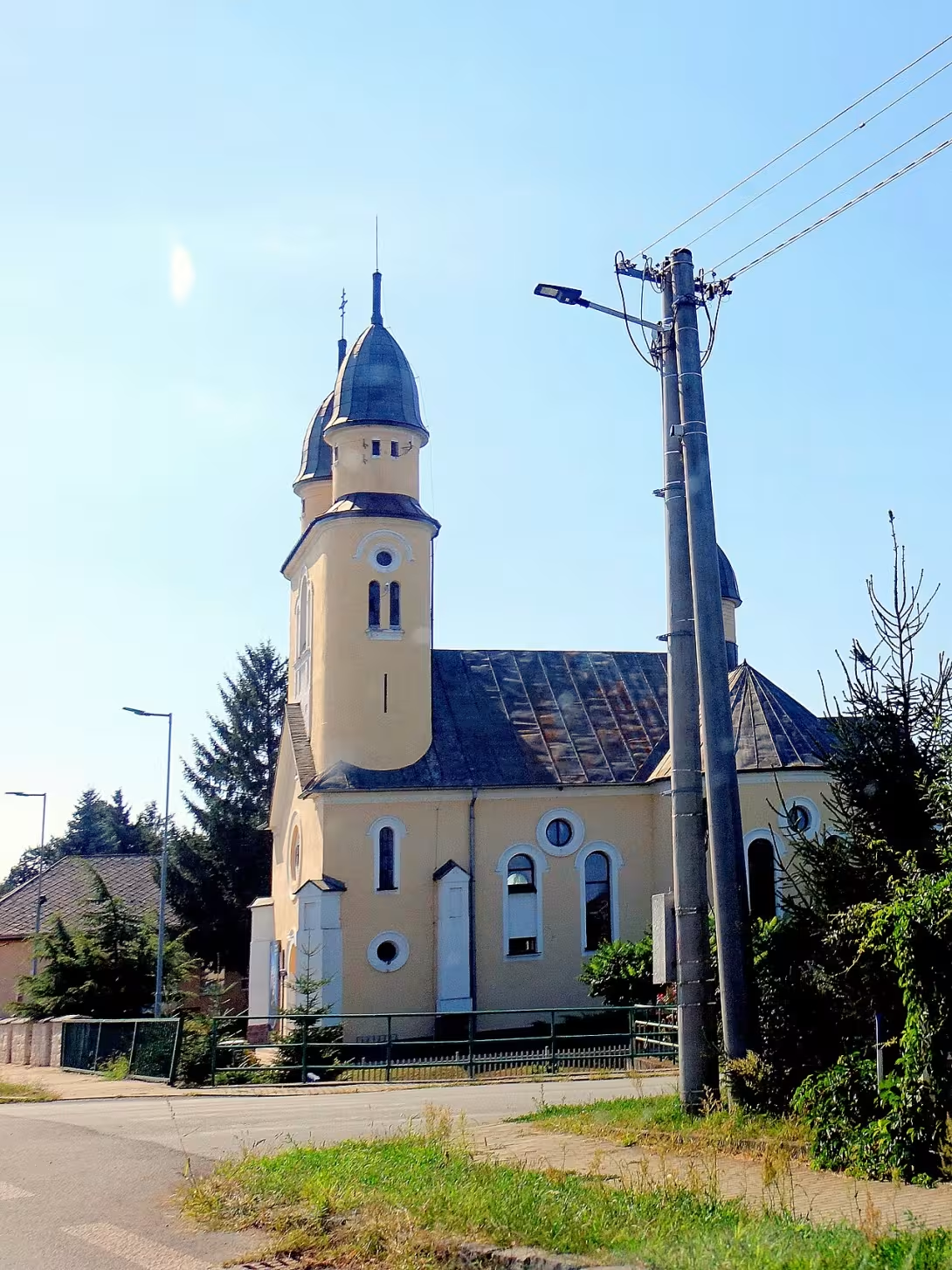
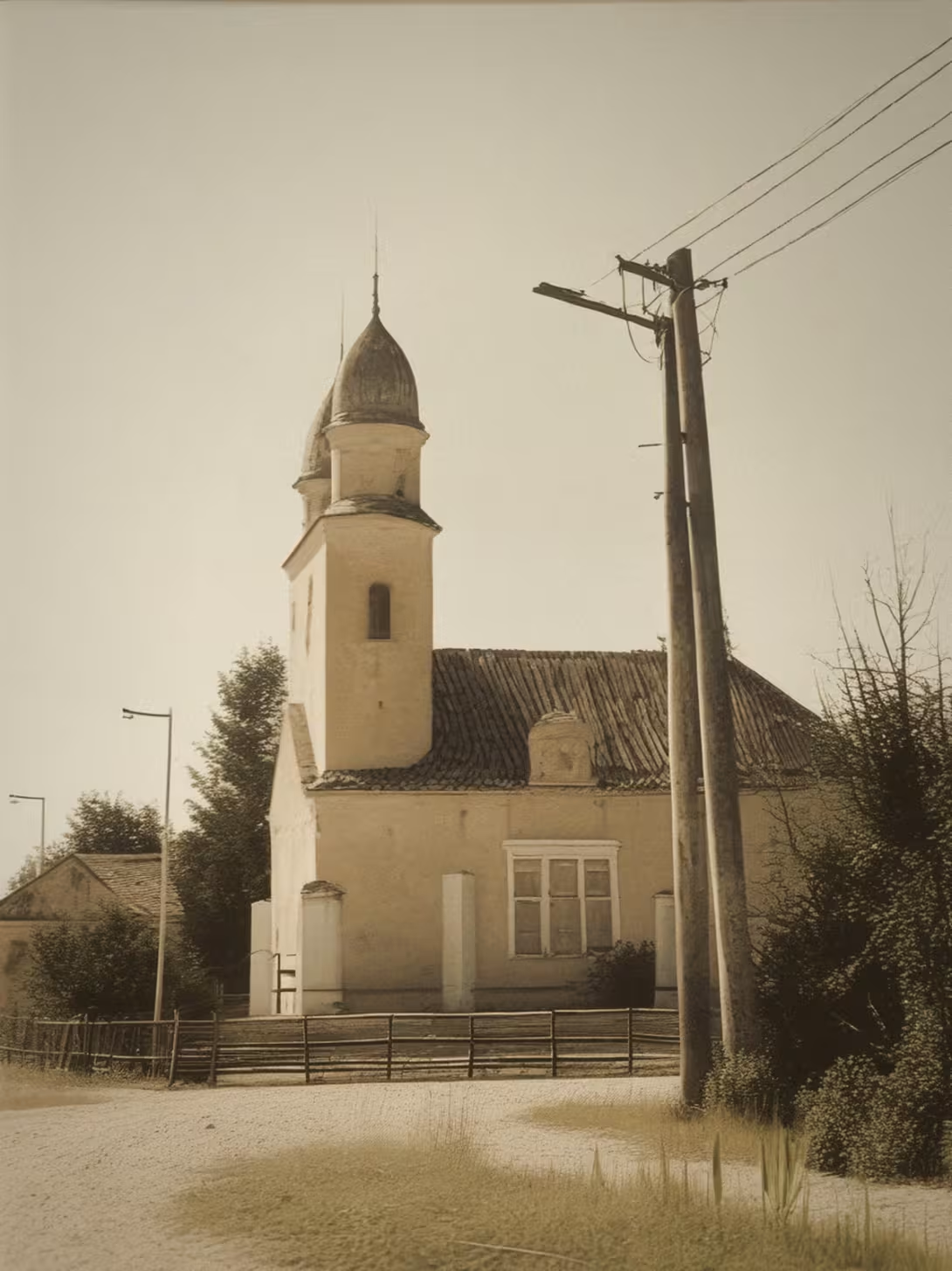
The historical view on the left is a visualisation generated by artificial intelligence and serves as inspiration.
Historical Milestones
- 1822
- Construction of the classicistic church of the Holy Trinity in the village Rad.
- 1920
- Repair of the church building.
Interesting facts
- It is a classicistic building from 1822, which confirms the summer time on the entrance portal. - The interior is encircled by a spring vault and a Czech plaque, while the interior remained in a classicistic style from the construction period. - Facades are divided by lysenes and built-in tower is covered with mine. - On the side peaks of the tower were previously found stone vases. - The church is listed in the Central List of Monument Fund of SR under number 10 716/1.
Guide
The guide was voiced by a synthetic voice created by artificial intelligence.
Show guide text
The text was prepared by artificial intelligence and has not been editorially reviewed. It may contain inaccuracies.
We welcome you to the village of Rad, where a quiet witness of local history and spiritual life is now standing before you. Look in front of you at the church building of the Trinity. The first sight of this temple will probably tell you its peaceful and balanced form that fits into the country of Košice region. It is a place that carries the peace of the generations and at the same time represents the aesthetics of its time. When facing this object in this way, feel the atmosphere of a place that has served communities in Rad for over two hundred years as a place of prayer and meeting.
Let's now look at when and how this church originated. If you take a closer look at the entrance portal, you'll see an engraved 1822 summer there. This very year marks the construction of the Church of the Holy Trinity. It originated at a time when classicalism dominated the architecture, a style that tried to return to purity, simplicity and harmony of ancient patterns. Although we do not know exactly who the architects who designed the project, their work with space and proportions is evident. The building was repaired during its existence, with significant renovation of the building in 1920, which helped maintain its original character for future generations.
Pay attention to the details you see right in front of you. Notice the facades of the building. They are divided by so-called lysenes, which are vertical strips of brick surface, which protrude from the ply wall and give the building rhythm and stability. These elements are typical of classicistic architecture and help break wall monotony. If you raise your sight, you will see a built-in tower that is covered by a mine. This tower is not only a functional element for bells, but it forms the dominant of the entire object and gives it the necessary vertical accent.
Let's go mentally into the temple. Although the outside works in moderation, the interior conceals interesting construction solutions. The space is closed with a spring vault and a Czech plaque. These are arching techniques that ensure not only the stability of the ceiling, but also specific acoustics and visual lightness of the space. What is really rare and valuable is the fact that the interior equipment remained in the classicistic style of the construction period. This means that when you enter inside, you will see the interior almost as seen by people in 1822. It is a rare example of continuity, where the style of architecture and equipment complement each other and create a single whole.
If we were to look for specific historical personalities associated with this place, they are far from clearly defined in the records, but the church itself is the story of the whole village. Every stone and every detail tells of the people who lived, worked, and sought spiritual comfort. It's a story about perseverance and how you're a community in the city The council was able to build a temple that survived over two centuries of change, wars and social coups.
An interesting feature that you should not overlook is the entry portal just mentioned. Nowadays, we are used to digital records and archives, but in the case of this church, history tells us directly from stone. That 1822 summer is like the signature of an author who tells us that an authentic piece of classicism is standing before us. It is fascinating to think that at the time this church was built, the world looked completely different, but the principles of beauty, symmetry and peace that classicalism promoted remain valid and pleasant for us today.
We show you this object as a demonstration of regional architecture, which may not be too obvious to be valuable. It is in this moderation and cleanliness that the true strength of this place is covered. See how the sun's rays reflect from the facade and how the foxes play with light and shadow.
Finally, we invite you to enjoy the silence of this place for a while more. Walk slowly around the building, look from different angles on the shape of the tower and its mine, and if you have the opportunity, take a look at the interior to feel the atmosphere of Prussian vaults and classicistic equipment. We hope this short trip to the past has helped you to better understand the value of the church of St. Trinity in the village of Rad. Thank you for your attention and we wish you a pleasant continuation in discovering the beauty of the region of Košice.
Tips for visitors
We recommend a visit in the spring or autumn period when the light is gentle and the landscape around the church of St. Trinity in the Council has pleasant colors. When shooting, focus on the facade of the building; in the morning and evening light highlights the texture of the material and architectural details. We recommend comfortable shoes for walking around and clothing appropriate to the place. In the surroundings of the Council you can look at local architecture and nature. The location is also suitable for families with children for a short walk and learning about the history of the village.
Frequently asked questions
Can the monument be visited?
Religious buildings are usually open mainly during services; at other times a visit is normally arranged with the parish or the operator. We have not verified specific times.
Where is the monument?
Location: Hlavná ulica 85/100, Hrušov, Rad, Košický kraj. The map on this page shows the exact spot.
Why is the monument protected?
It is listed in the Central List of the Monuments Fund of the Slovak Republic as a national cultural monument (ÚZPF no. 42B-10716).
For children
Imagine having a time machine at your disposal. You set it exactly for 1822. That was a completely different world! No phones, no cars, no electric lights. Then, exactly 204 years ago, a beautiful building was built in the village of Rad, which is still standing and waiting for you. There weren't as many people here at the time as today. The streets were quiet, and only horse carriages moved along the roads. When you walked past the Church of the Trinity, you'd see the workers baking bricks and carrying stones. Everything had to be built by hand, with great patience and skill.
Nearby
🏰 Historic sites (42)
- Zemplínsky hrad 4.1 km
- Kaštieľ Vojka 4.2 km Hlavná 84/26
- Reformovaný kostol 6.1 km Podhorská 124/59
- Cejkov 6.8 km
- Cejkov 6.8 km
- Mohylník v polohe Erös 6.9 km web
- Archeologická lokalita 9.1 km web
- Reformovaný kostol 9.5 km Hlavná 30/1 web
- Kaštieľ Hraň 9.6 km SNP 447/180 web
- Čonkavár 9.6 km
- Kaštieľ Zuzany Lorántfiovej 9.7 km
- Regionálna muzeálna expozícia Jozefa Mailátha 10.0 km +421 905 223 435 web
- II. Rákóczi Ferenc 10.0 km
- Reformovaný kostol 10.4 km
- A II. világháború áldozatai 10.5 km
- Výstava motocyklov 11.8 km
- Kúria 12.1 km
- Vojak 12.1 km
- Ervin Varga plaketa 12.1 km
- Gáspár Károlyi 12.1 km
🍽️ Restaurants and dining (28)
- Shell Cafe 9.0 km web
- Vidiecky Dom 9.2 km +421 917 462 777 web
- Pri závorách 9.3 km
- Dolce Vita 9.8 km +421 948 069 777 web
- Fresh Corner 9.9 km
- Libapiac 9.9 km Hlavná 324/70
- Reštaurácia Majer Bara 9.9 km web
- Pizzeria Italia 9.9 km Hlavná 712/164
- Pohostinstvo Erdeiová 10.1 km
- Kolkáreň 10.4 km Kamenecká 99/9
- Kaviareň - Bar pod Vinohradmi 11.2 km
- Bodrog Bár 11.5 km +421 944 551 883 web
- Gazdovský dom 11.7 km web
- Pizza Familia 11.8 km
- Pipi-Burger 11.8 km
- Zlatá putňa 11.9 km web
- Zlatá putňa 11.9 km +421 562399500 web
- Reštaurácia Koruna 11.9 km web
- Reštaurácia Grand Bari 11.9 km +421563337955 web
- Bistro Hanoi 12.0 km
🏨 Accommodation (21)
- Penzion Italia 9.9 km Hlavná 711/162
- Camping Malá Bara 10.3 km web
- Tokaj Guest House 10.6 km web
- Penzión Vínny Dom 11.8 km Kamenecká 146/81 web
- Chateau GRAND BARI 11.9 km +421563337955 web
- Guesthouse Ilona 12.2 km
- Domik II. 12.2 km +421 915 999 909 web
- Domik I. 12.4 km +421 915 999 909 web
- Apartmány Lipovina 12.8 km +421905319790 web
- JM apartmány 12.9 km Obchodná 136/9 web
- Na Chalupe 13.0 km +421 905 837 829 web
- Tokaj Macik Winery 13.3 km web
- Penzión Tokaj 13.3 km web
- Penzión Tokaj 2 13.3 km web
- Tokajský dom 13.4 km web
- Stredná odborná škola 13.6 km +421 56 62 850 20 web
- Hotel Brigadír 13.9 km +421 948 740 890 web
- Táborisko pri Rákócziho kaštieli 14.0 km web
- Rózsakert vendégház 14.3 km
- Kiadó szoba, Ádám Ferenc 14.8 km +36 47 342 353
🚲 Rentals and sport (4)
- Splavujeme Bodrog 7.6 km +421905484482 web
- Riečny prístav Ladmovce 9.2 km
- Prístav Viničky 11.0 km
- Základná škola 11.9 km Školská 621/1 +421 56 637 3963 web
🥾 Hiking and nature (60)
- Kamenná Moľva 3.4 km
- Bešeňovo 3.9 km
- Veľký vrch 4.8 km
- Čikóška 5.4 km
- Húšťava 5.5 km
- Vakovec 6.1 km
- Planina 6.7 km
- Čierna hora 6.7 km
- Vrch 7.1 km
- Tokajský vrch 7.1 km
- Dlhá hora 7.2 km
- Prameň - Forrás 7.3 km
- Moľva 7.4 km
- Kryštálová jaskyňa 7.6 km
- Vlčia hora 7.6 km
- Piesky 7.8 km
- Čierna hora 7.9 km
- Pustovník 8.2 km
- Šomoš 8.2 km
- Kaca 8.5 km
Thematic route
As there are no additional sites in the area of the area, I propose a thematic route focused directly on the main objective and its immediate area:
1. Church of St. Trinity - The main monument. Visit this sacral object because of its architecture and spiritual atmosphere. 2. Interior of the church - Indoor space. See the artistic details, altars and equipment that testify to the history and traditions of the village Rad. 3. Church area - surroundings of the building. Walk around the courtyard and surrounding area, which provides a peaceful environment and room for meditation.
Seasonal recommendations
In the spring, the surroundings of the church of St. Trinity in the village Rad will wake up to life and the country will bloom into green tones. The sun in this period provides natural lighting that highlights the details of the facade. The place is suitable to visit in additional hours. Due to variable weather, layered clothing and comfortable shoes are recommended.
Summer season brings intense light and rich colors of vegetation that create contrast with the architecture of the church. The best time to visit are the early morning or late evening hours, when the temperature is lower and light more favorable for photography. A sufficient amount of water should accompany the route and protect against sunlight.
Autumn surrounding the monument turns into a variety of gold, orange and red shades. The air is cleaner in this period and visibility on the surrounding hills is high. For visitors are ideal October and November, when there are fewer tourists. Due to the cold and humidity of the air it is advisable to choose unswift clothes and warm sweater.
Winter dress the church of St. Trinity in white. A short time of day requires noon visits to use natural light. Due to the low temperatures and the possibility of snow are in the series necessary warm shoes, gloves and layered clothing.
Visualisations and artistic views


The visualisations are generated by artificial intelligence and serve as inspiration.
Visitor Tips
No tips yet. Be the first!
Log in and add your tip.
Location on Map
Visitor photos
No photos yet. Be the first to add a photo from your visit!
Log in and add your photo or leave a rating.
You get more points for a visit verified in the app — we can tell from the GPS that you are there.
Reviews and comments