

st. Trinity temple Church
Church of St. Trinity in the village Stakčín is an Orthodox sacral building in the Neo-Byzantine style, built between 1947 and 1952. The building is characterized by a central ground plan with a large dome and is the whole work of the archimandra Andrej Kolomackého, which ensured everything from project to active construction.
The history of this parish is linked to the national and religious opposition of the people against the Hungarianization and Uzhgorod Union at the end of the 19th and early 20th centuries. After World War I, in 1921, the inhabitants of Stakčín decided to return to the Orthodox Church. In 1925 the parish was organized with its own wooden church, which was officially confirmed in 1930 by the Ministry of Schools and Education. After the events of World War II, the original wooden temple was almost completely destroyed, forcing the believers to build a new building. As part of the reconstruction after the war damage, the Orthodox Church was assigned land for the construction of the temple and the parish building.
The building is implemented in the New Byzantine style and has a cross-ground plan directed to the east. Its main element is the large central dome standing on four colons, to which four half are attached. The architecture of the building includes the creation, the temple ship and the altar part, the sanctuary. There is a choir above the pichra and two sacristies are located at the altar part. On the west side there is an entrance belfry. The interior of the church is painted by academic painter Nicholas Jordan from Prešov.
The construction process began on August 7, 1947, when the engineer Bessmerný measured the land. On August 18, 1947, the foundation stone was sanctified. In the spring of 1948, the foundations and masonry were dug up, while in the same year the first holy liturgy served on them during the Feast of the Ascension of the Holy Spirit to the Apostles. The construction was completed in 1952, when the temple was sanctified.
The building is registered in the Monument Office of the Slovak Republic under number ÚZPF 146. After 50 years of operation, the building underwent general repair, in which reconstruction of the exterior and interior was carried out. The roof was covered with copper sheet, new staircases, facade, pavement and fencing in the surroundings. The painting and iconostasis went through the restoration. Today, the temple is in good condition and fulfills its religious function.
The Church of the Trinity documents the history of religious life in the village Stakčín. It is a place that combines the architectural deposit of the Kolomandého archimanda with the artwork of Nicholas Jordan.
Tehdy a dnes
Drag the slider and compare how the monument might have looked when it was built with the view today.
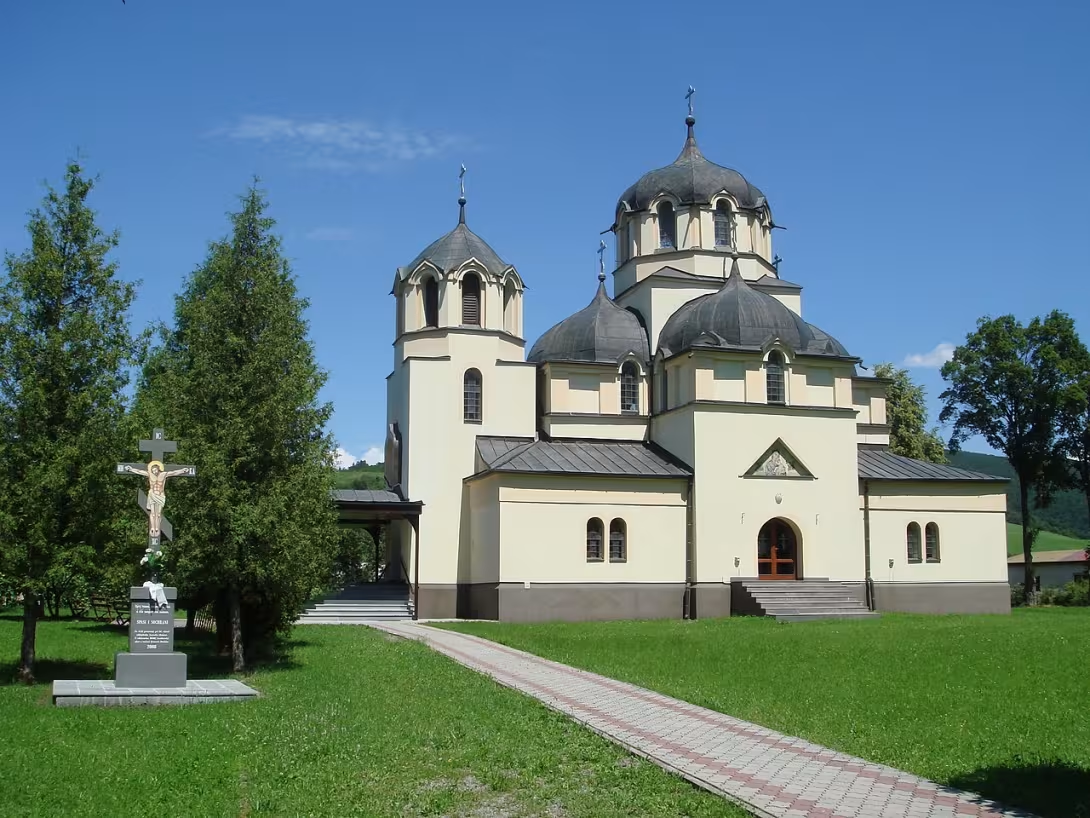
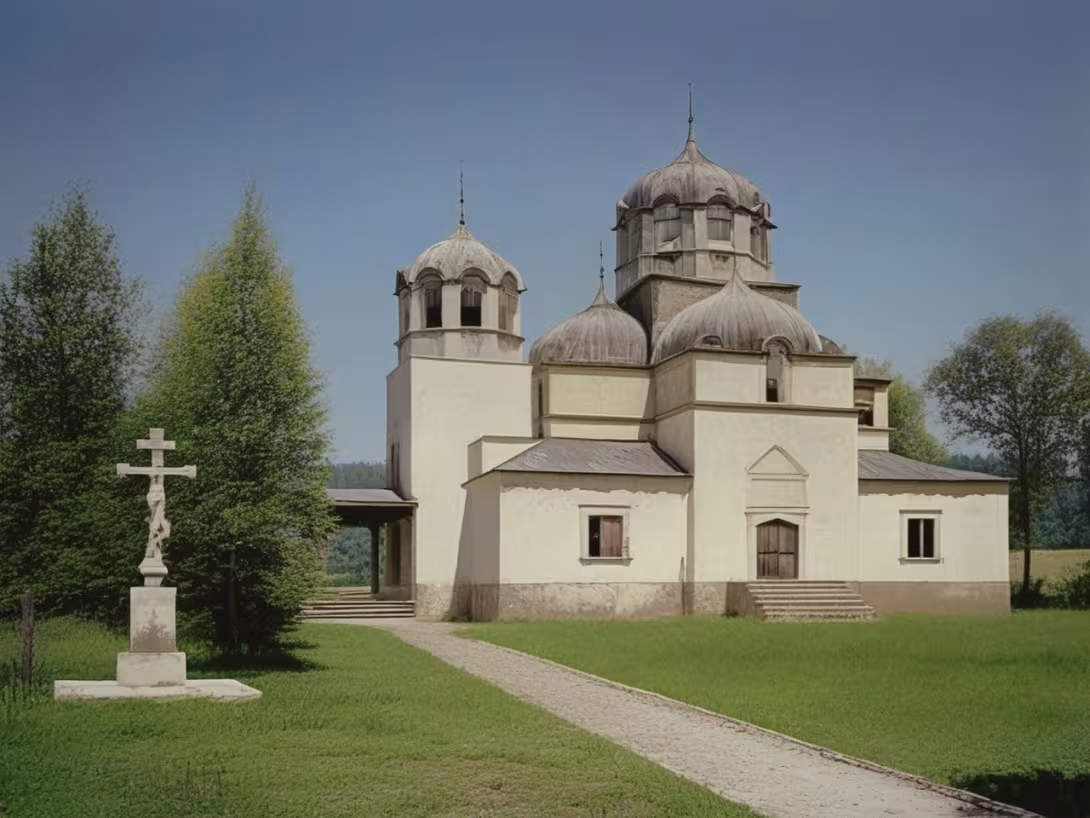
The historical view on the left is a visualisation generated by artificial intelligence and serves as inspiration.
Historical Milestones
- 1921: public plebiscite about the return of the village inhabitants to the bosom of the orthodox church
- 1947: land assessment by engineer Bessmertný and sanctification of the foundation stone
- 1948: excavation of foundations, walling of socles and the first holy liturgy
- 1952: completion of the construction and sanctification of the temple
Interesting facts
- The church was built in New Byzantine style between 1947 and 1952. The whole project and the implementation was provided by archimandrite Andrej Kolomacký. - The present building was created after the original wooden temple was almost completely destroyed after the events of World War II. - The architecture of the object has a cross ground plan with a large central dome on four colonials and four half-cuples. The interior of the church was painted by academic painter Nicholas Jordan from Prešov. In 1921, residents of Stakčín decided to return to the Orthodox Church.
Guide
Show guide text
The text was prepared by artificial intelligence and has not been editorially reviewed. It may contain inaccuracies.
You can see in Stakčín, a picturesque village in Prešov region, where time seems to be taking place at a different pace. You stand before the temple of the Virgin Mary, which is not only a spiritual center for the local people, but also a symbol of courage and restoration. When you look at it, the first thing you are likely to be interested in is its distinctive architectural style, which is different from the typical wooden churches we often see in this part of Slovakia. This object is not just a building of stone and brick; it is a testimony to how the community can stand on its feet after difficult events and create a new place of prayer and meeting. The atmosphere here is peaceful, yet full of history, which can be seen in every detail of the facade and in the silence surrounding this sacred place.
In order to understand why this temple looks just like this, we must look into the recent past, namely the period of World War II and its consequences. The original church in Stakčín was wooden, which was typical for the time and character of the villages in this region. However, as was often the case with conflicts, this wooden building monument suffered severe damage. After World War II, it was almost completely destroyed. It was a huge loss to the local community, not only material but also spiritual. The need for compensation was urgent and strong. The decision to build a new temple was not just a technical act but an act of faith and determination. Construction started in 1947 and lasted until 1952. Those five years were an important time for Stakchin during which the area gradually recovered from the war wounds and people sought support in the joint work.
The key person behind the creation of this work is archimandrite Andrej Kolomacký. He was the one who secured the whole project and its implementation. His role was not only to oversee the construction work, but also to coordinate the efforts of the entire community and to ensure that the temple is built in the desired style. It is important to realise that in these years, when Europe was still recovering from war, it was difficult to obtain materials and finance. The fact that such a formidable object was built testifies to great commitment and organization. The archimandrita Kolomacký played a central role in this process and his name is inextricably linked to the history of this place.
Now that we know who and when the temple was built, let us pay attention to its architecture. The church was built in New Byzantine style. This style is characterized by some monumentality and emphasis on symbolism. When you look at the facade, note how it differs from traditional Slovak wooden churches. The New Byzantine style often uses domes, arcades and distinctive vertical elements that point up towards the heavens. Although precise details, such as colors or particular ornaments, may be affected by time and maintenance, the overall impression is clear: it is a building that should be permanent and pronounced. The cross plan that this object has is another important element. Cross shape is not only an aesthetic decision, but it has a profound theological significance. It symbolizes the cross on which Jesus Christ was crucified, while creating an area ideal for liturgical celebrations. When you look at the layout of the building, you can imagine how past believers moved in the space they met and prayed.
Look at the surroundings of the temple. Stakčín is surrounded by nature, and the temple here creates a dominant that harmoniously participates in the country. Contrast between natural environment and stone construction is strong and interesting. The wooden temple, which stood there earlier, was likely more merged with the surrounding vegetation, while this New Byzantine object was taken out and attracted attention. This is a testimony to the change that took place in the village. It is not only a change in material, but also a change in how the community imagines its spiritual center. The new temple should be permanent, firm, and time - resistant.
One of the attractions of this place is the very process of construction in such a short time. Five years on a character such a building is extremely fast in conditions after the war. This suggests that there had to be a great deal of commitment and cooperation in the village. Local residents probably contributed not only financially but also by physical work. Such projects brought people together and created a sense of unity. Today, when you stand in front of the temple, you can imagine the construction workers working between 1947 and 1952 as the stones were worn and the facade gradually shaped. Every stone, every brick has a story, even if no one knows it today.
The architecture of the New Byzantine style has its specific features that you can notice now. For example, look at the windows. They are often arc shaped, which is typical of Byzantine architecture. These arches are not only decorative but also functional because they allow the entrance of light into the interior. Light is very important in the temple, symbolizing God's presence. When the sun shines on the facade, it can create interesting shadow effects that change the appearance of the building during the day. In the morning and evening, when light is soft and warm, the temple may look different than at noon when the light is sharp and bright.
The history of this place is also linked to the broader context of Slovak churches in the second half of the twentieth century. Many of the wooden churches were extinct or destroyed during this period, and their substitutes were often made of more permanent materials. This trend was also evident in Stakčín. The transition from wood to stone and brick also meant a change in maintenance and the way the temple was treated. Wooden structures require constant care and repairs, while the stone is more weather resistant. This could be one of the reasons why it was decided for this type of construction.
When you look at the top of the temple, notice how different it is from the surrounding trees and buildings. Its height and shape make it dominant of the village. For the inhabitants of Stakčín, this is a landmark that can be seen from many towns in the area. It's a place where people return, where they come to weddings, funerals, celebrations. It is the heart of the community, not only in the spiritual but also in the social sense. Cooperation in the construction and subsequent maintenance of the temple likely strengthened relations between the inhabitants and created
Tips for visitors
To visit the church of St. Trinity near Stakčín is a suitable period of spring or autumn. We recommend comfortable shoes and suitable clothing when entering the building. Use morning or afternoon light to highlight the details of the facade and composition of the building. Families with children can learn about local history and architecture by following the details of the church exterior. There are no other sights in the immediate vicinity.
Frequently asked questions
Can the monument be visited?
Religious buildings are usually open mainly during services; at other times a visit is normally arranged with the parish or the operator. We have not verified specific times.
Where is the monument?
Location: Slov.Národ.Povstania 628/3, Stakčín, Prešovský kraj. The map on this page shows the exact spot.
Why is the monument protected?
It is listed in the Central List of the Monuments Fund of the Slovak Republic as a national cultural monument (ÚZPF no. 419-146).
For children
Close your eyes and release yourself in time. Imagine the world exactly 73 years ago. No smartphones, no internet, just quiet mountains and tree noise in Stakčín. That's when something well done happened.
V The old wooden temple was standing in the sky. It was a home for many prayers and old stories. But then World War II came and everything changed. The wooden church was almost completely destroyed. Only a sad memorial column remained and a great desire to build something completely new that will stand firm and proudly.
Nearby
🏰 Historic sites (33)
- T-34 0.1 km
- Alexander Duchnovič 0.2 km
- Kaštieľ Stakčín 0.2 km SNP 293/5
- Padlým vojakom v 1. svetovej vojne 0.2 km
- Múzeum obce Stakčín 0.2 km Československej armády 137/67
- Beskydský panteón 4.2 km web
- Pozdrav mieru 5.7 km
- sv. Ján Pavol II. 6.0 km
- 2. svetová vojna 6.0 km
- Vznik Československa 6.1 km
- sv. Ján Nepomucký 6.2 km
- Sninský kaštieľ 6.2 km Kpt. Nálepku 71/6 web
- Snina 7.0 km
- Pamätník vzniku SR 7.0 km
- Padlým v 2. svetovej vojne 8.4 km
- Vlak 8.4 km
- Kaštielik Morské Oko 10.0 km web
- Matka Sedembolestná 10.2 km
- Alexander Duchnovič 10.4 km
- Alexander Duchnovič 10.5 km
🍽️ Restaurants and dining (33)
- Heyday 5.1 km
- Formula BAR 5.2 km web
- U Mecha 5.5 km
- Minos 5.5 km
- Diner 5.6 km
- Central pub & restaurant 5.6 km web
- U Sklenára 5.7 km Komenského
- Herkules 5.7 km
- Bagetka 5.7 km
- Bagetka 5.7 km
- Fiesta - Coffee & Cocktail Bar 5.7 km
- 3ka bar 5.7 km
- Capri 5.7 km Strojárska 2061/96 web
- Adria 6.1 km
- Bowling bar 6.1 km Strojárska 2949/110 +421917859445
- Di Stefano 6.2 km
- Stupavská krčma 6.2 km
- Expres Pizza 6.2 km
- Rozvalka 6.8 km Dukelských hrdinov 2079 web
- Pohostinstvo 7.8 km Jozefa Rholla 189/11
🏨 Accommodation (20)
- Hotel Armales 0.2 km Duchnovičova 282/1 +421 577 674 247
- Hotel Kamei 4.1 km
- Autocamping Snina 4.2 km web
- Vihorlat resort 4.7 km web
- Adria 6.1 km
- Penzión LUKI 7.8 km Kostolné námestie 178/6
- Chata Topovne 8.4 km +421 911 984 444
- Penzión RHOLL 8.6 km Pod Sninským kameňom 482/2 +421 905 216 922 web
- Penzión Starý mlyn 9.2 km Riečna 37/1
- Chata Morské oko 9.5 km web
- Jurčišov - Ladomirov - turistická ubytovna 10.1 km
- Chata Podstavka 10.1 km
- Ubytovanie u Jara 10.7 km +421 904 841 460 web
- Ubytovanie u Ľubky 10.8 km +421905292977
- Turistická ubytovňa 11.0 km
- Chata Šumná Voda 11.7 km +421 904 903 844 web
- Táborisko pod Ostrou 12.5 km
- PZ Poľana 14.3 km
- Turistická ubytovna 14.7 km +421 903 619 345
- Turistická ubytovňa 14.9 km +421 57 769 4136
🚲 Rentals and sport (7)
- Požičovňa ebajkov - poloniny.bike 4.2 km +421 910 480 350 web
- Sejko kolobežky - servis, predaj, doplnky 5.1 km +421 944 467 575 web
- Mestská športová hala 5.2 km
- BikeServis 5.8 km web
- Mestská plaváreň 5.9 km 1. mája web
- Mestská plaváreň 5.9 km Kukučínova 8
- Dom športovcov 8.5 km
🥾 Hiking and nature (175)
- Rovienky 1.1 km
- Vŕšok 1.5 km
- Topoľa 1.5 km
- Magurica 2.5 km
- Maňov 2.6 km
- Vŕšok 2.8 km
- Mazúrov vrch 3.0 km
- Strop 3.7 km
- Širkáň 4.0 km
- Park tmavej oblohy Poloniny 4.2 km web
- Krušina 4.2 km
- Tri kopce 4.4 km
- Novina 4.4 km
- Veľký Brusný vrch 4.5 km
- Prípor 4.8 km
- Štefkovo 4.8 km
- Lieskovec 4.9 km
- Barankovec 4.9 km
- Hrb 5.1 km
- Prípek 5.5 km
Thematic route
1. Church of St. Trinity (church) - Interior and architectural details form the core of this sacral place. 2. Church Tower (Search Point) - From the height of the tower can be observed solution of the building and its surroundings. 3. The Courtyard of the Temple (Areal) - Room to relax and walk in silence at the building.
Seasonal recommendations
In spring, the surroundings of St. Trinity temple in Stakcin will wake up to life and the landscape will be packed with fresh green. The sun is gentle in this period, creating a pleasant atmosphere to observe the exterior of the building. It is recommended that footwear with waterproof soles for spring rain and light sweater. It is best to arrive early in the morning when the air is cleanest and nature is the liveliest.
Summer months bring to Prešov region intense colors and bright lighting, which highlights the details of the facade. The neighborhood is in full blossom, and it's a summer comfort. In the main summer season it is advisable to choose light, breathable clothes and not forget to protect yourself from the sun. The ideal time to visit are early evenings when the temperature is more acceptable.
Autumn in Stakčín is characterized by colorful leaves and frequent fog that give the church a mysterious and melancholy appearance. The golden light of the afternoon beautifully complements the architecture of the monument and creates nostalgic mood. It is practical to dress with layers in order to be able to react to violent weather changes, and to choose stable shoes suitable for wet terrain.
In winter, the church of St. Trinity is peaceful, especially if the landscape is covered with snow. Cold, blue light of short days creates a significant contrast with the massiveness of the building. In Advent time, warm thermal clothing, gloves and cap are essential. The visit at this time offers the greatest peace and quiet that complements the winter atmosphere of the surroundings.
Visualisations and artistic views


The visualisations are generated by artificial intelligence and serve as inspiration.
Photographs from the area
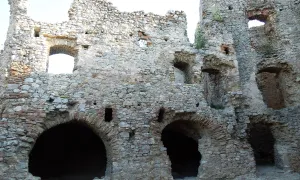
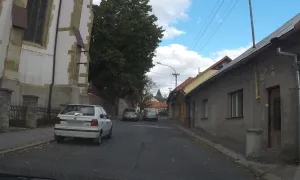
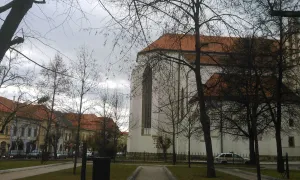
Real photos taken near the monument


Source and licence are given for each image.
Visitor Tips
No tips yet. Be the first!
Log in and add your tip.
Location on Map

Visitor photos
No photos yet. Be the first to add a photo from your visit!
Log in and add your photo or leave a rating.
You get more points for a visit verified in the app — we can tell from the GPS that you are there.
Reviews and comments