

stanislava Philial Church Church
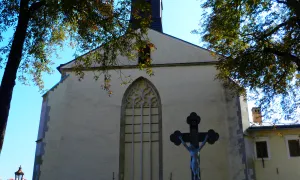
The philial church of St. Stanislava in the village Pongrákovce in Prešov region is a national cultural monument. Gothic building comes from the second half of the 13th century, namely it dates back to 1300.
The complex, which records the Monument Office of the Slovak Republic under the number of ÚZPF 695, forms the Roman Catholic Church of St. Stanislav. The building with address number 21 is included in the list of national cultural monuments of the Slovak Republic and is an example of Gothic construction from the turn of the 13th and 14th centuries.
Tehdy a dnes
Drag the slider and compare how the monument might have looked when it was built with the view today.
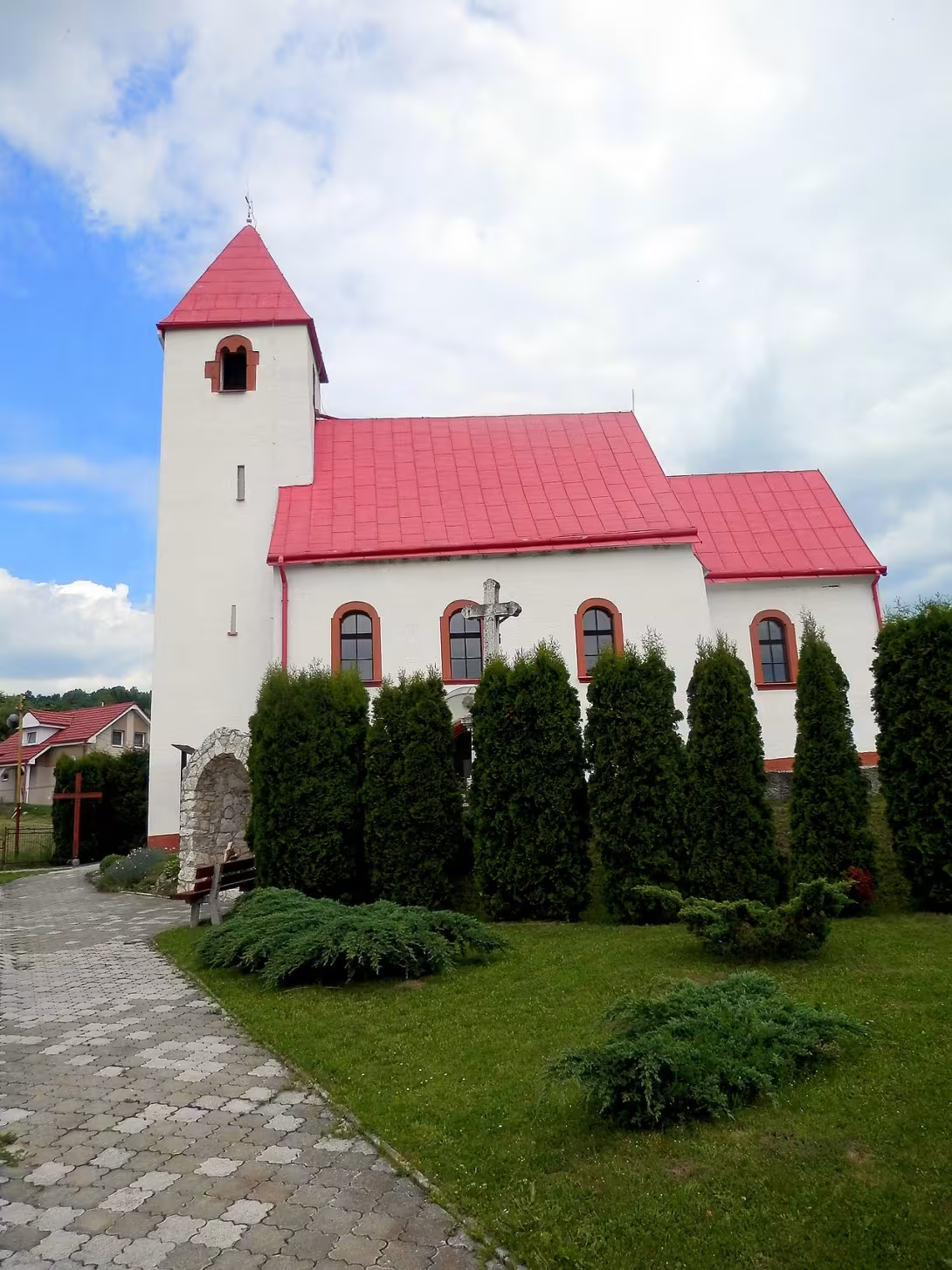
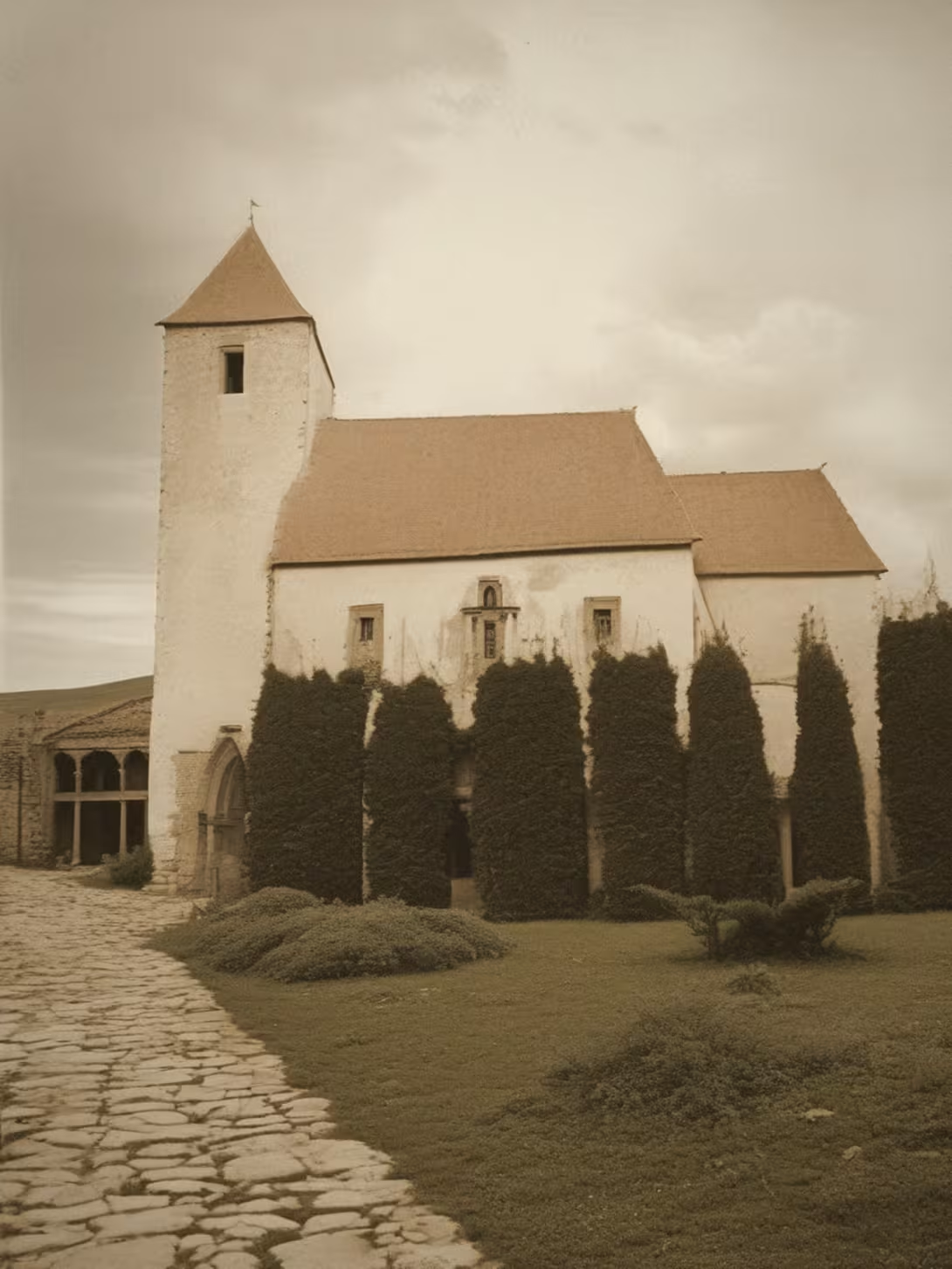
The historical view on the left is a visualisation generated by artificial intelligence and serves as inspiration.
Historical Milestones
- 1300
- Construction of the Gothic church of St. Stanislava in the village Pongrákovce.
- 1300
- Inclusion of the building into the turn of the 13th and 14th centuries.
- 2000
- Enrollment of the church in the list of national cultural monuments of the Slovak Republic.
Interesting facts
- The philial church of St. Stanislava in the village Pongrácovce is a national cultural monument. - It is a Gothic building from the turn of the 13th and 14th centuries, namely dated to 1300.
Guide
The guide was voiced by a synthetic voice created by artificial intelligence.
Show guide text
The text was prepared by artificial intelligence and has not been editorially reviewed. It may contain inaccuracies.
Welcome, dear visitors. You are standing in front of the filial church of St. Stanislava in Pongrákovce, in the heart of Prešov region. Before you lies a simple but honorable building, which for centuries complements the village space with its presence. When you look at her facade, you see the peace that radiates from the stone walls, and you feel that there is a piece of history waiting for us to discover it together.
Look up and note the main entrance that invites you inside. Although detailed information about the construction period, architecture or authors remains unknown, the very presence of this church speaks of the importance it had for the local community. The philial churches, such as this one, served as smaller religious centers, complementing the main parish church in the area and allowing residents to gain access to worship closer to their homes. In Pongracovce this church thus represented an important point of encounter, where people could pray, celebrate holidays and share shared joys and concerns.
When we think about when this church could have been built, we have to rely on general knowledge about the development of philiative churches in the region. In the past, such structures were often established at a time when Christian faith was spreading and villages grew and needed their own spiritual center. Thus, we can assume that this church could have been created sometime during the later Middle Ages or in the early modern era, when the starting points for such buildings spread throughout Slovakia. Although we do not know the exact year, it is obvious that its origin was related to the need to provide believers in Pongrácovce with the opportunity to participate in the liturgy without the need to travel to the more distant main church.
The architecture of this philatelic church is simple and functional, reflecting its original purpose - to serve as a practical place for worship. When you look at his outer face, you notice that the facade is made of stone blocks that form a solid and stable foundation. The portal through which you enter is a central element, and although it is not decorated with complex statues or ornaments, its simple shape and proportions exude peace and respect. Around the front door you can notice small windows that bring fine light to the interior while maintaining the atmosphere of respect and silence. Given that the architectural style is not precisely defined, you can notice that the lines of the building are straight and not extended, which is typical of many philiative buildings that focus on practicality and resilience.
When moving to the window and to other details, note that the stone lining is even and well preserved. In some parts you can see fine traces of wear, which testify to the long period of use and the fact that this church has passed through many generations of inhabitants. These clues remind us that although we do not know the names of the builders or the exact year of creation, the very presence of this place is evidence of a long-term relationship between people and their faith.
Who were the people who built this church and what stories tie to its walls remains shrouded in mystery. However, local oral traditions often mention that philatelic churches served as places where families met during important life events - baptism, marriage, funerals. It is likely that there were similar moments in Pongracovce that formed the community and strengthened its sense of belonging. Although the specific names of historical figures are not recorded, we can imagine that generations of local parishioners, residents, and volunteers participated in the maintenance and care of this church, thus maintaining its spiritual and social function.
An interesting fact that can impress your imagination is that the exact origin and history of this church remain undiscovered. In many cases, archival documents have been lost or never recorded, so researchers rely on archaeological findings and studies of building materials to get at least an approximate picture of the age and development of similar structures. In the case of the philiative church of St. Stanislava in Pongrákovce, future research work could reveal more information that would explain why this saint was chosen as a patron and what importance it had for the local community in various historical periods. This unknown provides space for your own curiosity and raises questions that may find answers in the future.
Now that you have overlooked the outer part and thought about the historical context, we invite you to stop and see the atmosphere of this place for a while. Feel the silence surrounding the stone walls, and imagine years ago the voices and prayers of believers. If you have the opportunity, you can spread around and notice how the church fits into the village environment - between fields, forests and houses that form a characteristic image of the Prešov region. This harmony between nature and spiritual space is one of the most beautiful aspects of philiative churches that serve not only as religious centers but also as cultural and social nodes.
Finally, we want to encourage you to keep this church in your heart and to see it as an important legacy of the past that still lives in the present. Even if we do not know all the details of its origin, we know that its presence is a testimony to the perseverance and determination of local inhabitants to preserve their spiritual heritage. If you like, you can continue to discover other historical monuments around Pongrácovic, where stories, traditions and architectural gems intersect. Let this walk inspire you to a deeper knowledge of the region and respect those who have built and maintained these places before us.
Thank you for taking the time for this short trip to the past and for focusing with us on the philiative church of St. Stanislav. We wish you a pleasant rest of the day and many other discoveries on your travels in beautiful Prešov region. Say goodbye to this peace and let the memories of this moment accompany you in other adventures. On the green.
Tips for visitors
We recommend a visit in the spring and summer months, when the architecture of St. Stanislava's Philial Church stands out in natural light. The Pongrács can be reached by car or public transport; check the specific links in the internet search engine.
We recommend shoes suitable for terrain and clothing in accordance with the character of sacral construction. For photographers are suitable moments before sundown, when light highlights details of the facade and surrounding meadows.
In the interior of the church keep quiet and be considerate of other visitors. Families with children can explore the exterior of the building and surroundings of the village.
Frequently asked questions
Can the monument be visited?
Religious buildings are usually open mainly during services; at other times a visit is normally arranged with the parish or the operator. We have not verified specific times.
Where is the monument?
Location: č. 21, Pongrácovce, Prešovský kraj. The map on this page shows the exact spot.
Why is the monument protected?
It is listed in the Central List of the Monuments Fund of the Slovak Republic as a national cultural monument (ÚZPF no. 414-695).
For children
Imagine sitting on an old rock and closing your eyes. Count how you breathe, and with every breath, time starts spinning backwards. Not in ten years, not in a hundred. No, we'll be right back in 726 years.
Where are you now? You stand in the picturesque village of Pongrákovce in Prešov region. The air smells like wet ground and freshly mowed grass. There is something in front of you that looks like a giant stone giant who decided to stand in one place forever. It's St. Stanislav's filial church.
Nearby
🏰 Historic sites (48)
- Kaštieľ Bijacovce 2.2 km web
- Spišský hrad 4.7 km web
- 100 rokov ochrany Dreveníka 4.9 km
- Mariánsky stĺp 5.6 km
- Panna Mária s Ježiškom 6.2 km
- Doc. MUDr. Albín Kipikaša CSc. 6.2 km
- Michal Olejár 6.2 km
- Mini-skanzen 6.2 km
- Ľudové múzeum 6.3 km
- sv. Ján Nepomucký 6.3 km
- LáSKa 6.4 km
- Archeologické nálezisko na Pažici 6.5 km
- Kaštieľ Spišské Vlachy 7.7 km Partizánska 117/2
- Pomník obetiam SNP 8.1 km
- Generál M.R.Štefánik 8.1 km
- František Tondra 8.2 km
- Mariánsky stĺp 8.2 km
- Pamätník padlým v 1. a 2. svetovej vojne 8.2 km
- Partizánske boje 8.6 km
- Lipovce 9.2 km
🍽️ Restaurants and dining (63)
- Eso Club 1.9 km
- Na Rázcesti 3.0 km Hlavná 30/23
- Giulia 3.1 km Hlavná 33/26 web
- Sport club 4.3 km
- Branisko 4.4 km
- Spiš Castle 4.6 km
- Pod hradom 5.4 km
- Reštaurácia Dreveník 5.5 km +421 949 339 789
- U kastelána 5.5 km
- Imperio 5.6 km
- U Spišských bratríkov 5.6 km
- Kolkáreň 5.6 km
- St. Martin Restaurant 6.2 km web
- Domino Bar 6.6 km
- Spišský salaš 6.8 km web
- St. Margita Cafe 7.4 km
- Nova 8.2 km
- Zlatý klas 8.2 km
- Bagetka 8.2 km
- Snack Bar 8.2 km
🏨 Accommodation (35)
- Vargas 1.4 km
- Sedemnástka 2.0 km
- Penzión Živa 2.0 km +421 917 796 088
- Privát Milano 3.1 km
- Skautské táborisko Žehrica 3.3 km
- Simona pod Smrekovicou 4.0 km
- Penzion Dreveník 4.3 km
- Motorest Branisko 4.4 km
- Penzion Chalupka 5.3 km web
- A+S Penzion Podzamok 5.3 km
- Pacák 5.6 km
- Penzión St. Martin 6.2 km web
- U Alžbetky 6.3 km
- Sivá Brada 7.7 km Levočská cesta 665/13
- Zlaté kopyto 8.0 km
- Marina 9.2 km
- Penzión Music 9.4 km +421 918 404 147 web
- Hotel Canyon 9.6 km Lipovce 158 158 +421903601973 web
- Zuzana 9.9 km
- Kaštieľ Fričovce 11.0 km +421 51 791 10 67 web
🚲 Rentals and sport (4)
- Soof 8.2 km
- Telocvična 8.8 km
- Obecné športové a oddychové centrum 8.8 km
- Turlíky Spišské Vlachy 9.5 km +421 902 416 379 web
🥾 Hiking and nature (255)
- Diery 0.9 km
- Chrástka 1.6 km
- Chochol 2.2 km
- výver z Diablovej diery 2.3 km
- Prameň kvašná voda pri kríži 2 2.5 km
- Prameň kvašná voda pri kríži 2.5 km
- ponor do Diablovej diery 2.6 km
- Príkre 2.6 km
- Studnička na rázcestí 2.7 km
- nad tunelom Branisko 2.8 km
- Skala 3.1 km
- Rudník 3.3 km
- Sobotisko 3.6 km
- Prameň Veľkej Svinky 3.8 km
- Prameň Svinka 4.0 km
- Rajtopíky 4.0 km
- Rajtopíky 4.1 km
- Jánošiková studňa 4.3 km
- Jazvečia skala 1 4.5 km
- Patria 4.5 km
Thematic route
As there are no other objects in the area of the area, I propose a thematic route in the area of the main objective:
1. The purple church of St. Stanislava - Architecture and interior of the sacral building. 2. Interior of the church - Artwork, altar and interior fittings. 3. Church area - Surroundings of the building in the village Pongrákovce.
Seasonal recommendations
In spring, the surroundings of the philial church of St. Stanislava in Pongrácovce will wake up to life and the country of Prešov region greenery. Fine spring light is suitable for photography the exterior of the building. We recommend shoes to wet terrain and a visit in the morning.
Summer months bring intense lighting and rich colors of vegetation that create contrast with the façade of the church. Due to high temperatures it is advisable to come early in the morning or late in the evening when the surroundings are quieter. Practically easy, breathable clothing and sun protection.
Autumn is characterized by golden tones of leaves. Light is naturally softer in this period and creates deep shadows. Layered clothing adapted to cooler morning temperatures and stable shoes is suitable.
Zimą can be nature around the church covered with snow, which highlights the line of construction. The atmosphere is peaceful in Advent time. When visiting it is necessary to wear warm, waterproof clothing and winter shoes. It is recommended that you come during the day to use enough daylight.
Visualisations and artistic views


The visualisations are generated by artificial intelligence and serve as inspiration.
Visitor Tips
No tips yet. Be the first!
Log in and add your tip.
Location on Map
Visitor photos
No photos yet. Be the first to add a photo from your visit!
Log in and add your photo or leave a rating.
You get more points for a visit verified in the app — we can tell from the GPS that you are there.
Reviews and comments