








st.Urbana church Church
St. Urban church is the oldest preserved historical monument in the village Bystré in Prešov region. It is located in a place where the history of the Soós family and the town of Bystré intersects. Its origin dates back to the second half of the 14th century, probably built by the Soós family.
Architecturally, it represents the neo-Gothic style class, especially in the interior. In 1490 the church was extended to the presbytery and sacristy was built in the first half of the 19th century.
In the 20th century, repairs were made at the church, where in 1914 shingle roof was replaced with metal cover. In the church tower there are two bells: the larger St. Urban and the smaller St. John the Baptist, coming from 1921. These bells were replaced by the original bells of 1636 that were reclaimed for military use in 1917.
On the main altar there is a late-Gothic relief scene of the Coronation of the Virgin Mary with the sculptures of Saint Peter and Paul in the side niche. This natural woodcut, made around 1500, is attributed to the Prešov carver Ján Weiss.
The church of St. Urban is registered by the Monument Office of the Slovak Republic under number ÚZPF 273 and consists of one object. His historical and cultural significance is reflected not only in the architectural structure, but also in the sources that provide us with information about the past of the village Bystré.
Today the church is open to the public and it is worth visiting in terms of its historical importance and as an example of heritage conservation. Its architecture and artistic elements offer visitors insight into the past, thus becoming part of the cultural panorama of Slovakia.
Tehdy a dnes
Drag the slider and compare how the monument might have looked when it was built with the view today.
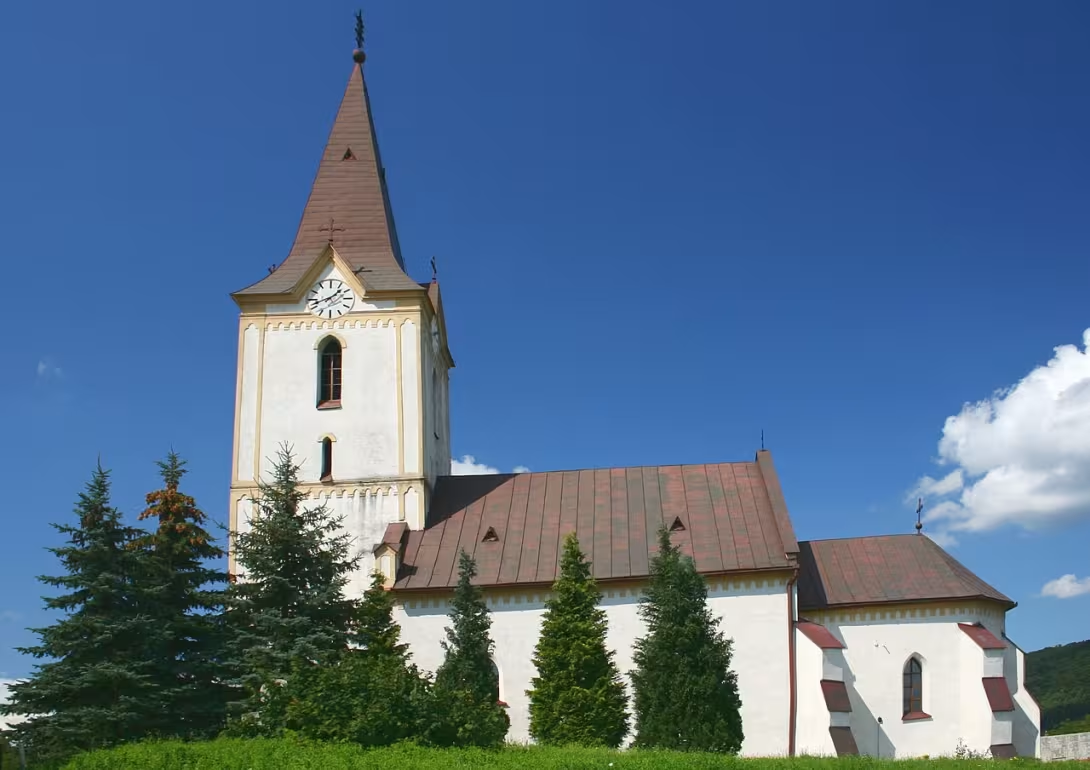
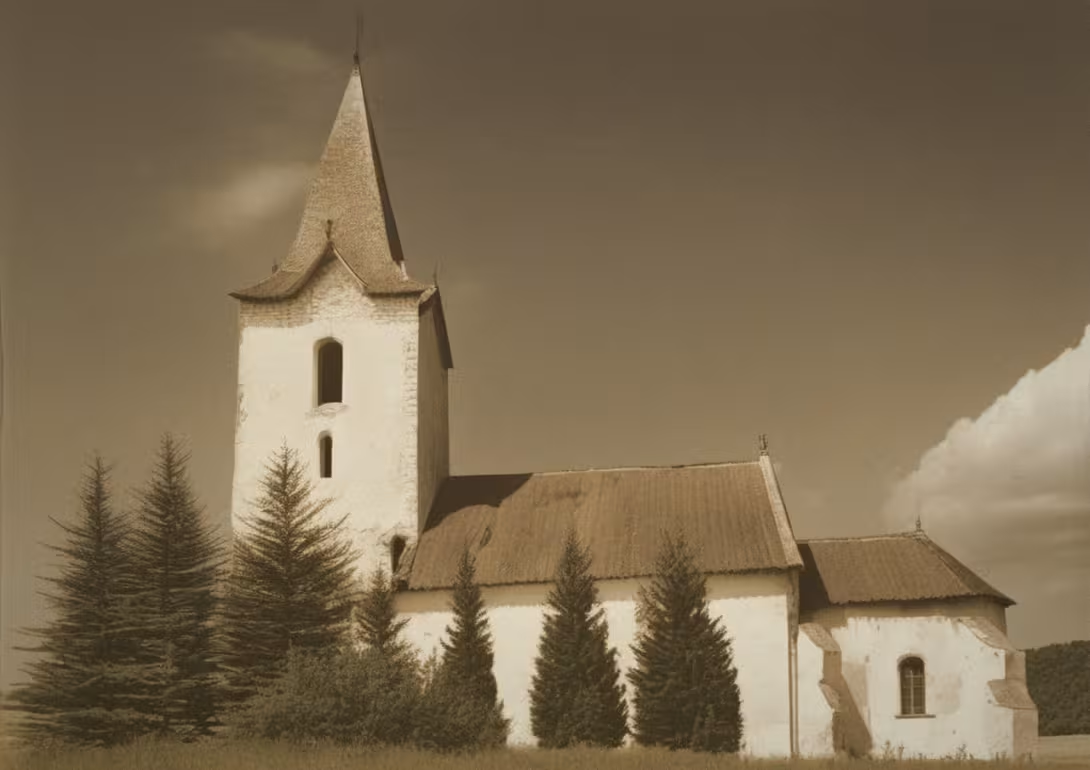
The historical view on the left is a visualisation generated by artificial intelligence and serves as inspiration.
Historical Milestones
- st. Urban, smaller St. John the Baptist
- late Gothic relief scene with sculptures of St. Peter and Paul
Heritage surveys
-
2018/01 — Architektonicky-historícký výskum
Čiastkový pamiatkový výskum
Interesting facts
- St. Urban church is the oldest preserved historical monument in the village Bystré. - Its origin dates back to the second half of the 14th century and was probably built by the Soós family. - Architecturally represents the neo-Gothic style class, especially in interior. - On the main altar there is a late-Gothic relief scene of the Coronation of the Virgin Mary with sculptures of St. Peter and Paul, made around 1500, attributed to the Prešov carver Ján Weiss. - The church is registered by the Monument Office of the Slovak Republic under number ÚZPF 273 and consists of one object.
Guide
Show guide text
The text was prepared by artificial intelligence and has not been editorially reviewed. It may contain inaccuracies.
Welcome to Bystré. Right now you are facing one of the most valuable monuments of the entire Prešov region, which is the church of St. Urban. When you look at it, you may at the first moment experience the peace and quiet surrounding the temple, but behind its walls lies a fascinating story that reaches deep into the past. Feel the atmosphere of this place and let it blow you up until these walls witnessed the changes that shaped our country.
Let's take a look at when and how this church was established. You stand in front of the building, which is the oldest preserved historical monument in the whole village Bystré. Its roots date back to the second half of the 14th century. Imagine what events have had to take place in this region since the first stones of this object were laid. Although the exact details of the construction are not fully documented today, historical resources point to one particular family. Probably this church was built by the Soós family. In that period context, it was not only a religious center but also a symbol of the power and status of the family, which in this space - its spiritual refuge and at the same time demonstrated its influence in the area.
Now I want you to take note of the architecture itself. When you look at the overall look and then you look at the details, you notice something interesting. Although the foundation of the building is very old, in the interior you can meet elements that represent the neo-Gothic stylish class. New Gothic was a direction that tried to revive the form of Gothic, which is reflected in specific shapes and details that you will see in the church. Note how these elements are associated with the overall nature of the building. It is a fascinating contrast between the medieval foundation and the later aesthetic interventions that the temple should have updated according to its tastes and religious needs.
If you now focus on interior equipment, you will see the main altar in particular. He is the key point of the whole interior and represents the center of the spiritual life of this place. Look at his work and see how dominant he controls the space. It is a place where history meets faith and where generations of Bystré and surroundings prayed over the centuries.
Although today we do not know exactly the names of all architects who worked on the building, or the specific stories of individual personalities who worked in this church, the very existence of this object is a story in itself. It's a survival story. The preservation of the church from the second half of the 14th century today is exceptional. Imagine all the storms, wars, and natural disasters that hit this region, and before that, realize that this church of St. Urbana stood firm and protected all who entered it.
You might be interested in one interesting thing that makes this monument more than just an old building. It is precisely in the fact that it is the oldest preserved monument in the village that the facts will come together with a certain secret. Why did this church survive and other buildings from then on not? Why did the Soós family decide to build the temple here? These issues remain largely open and add a certain depth to the place. When you look at the walls of the church, try to imagine how many secrets they hide and how many unseen stories they could tell us if they could just talk.
Now that you've gained a basic overview of the history and architecture of St. Urban's Church, I'll let you examine the place yourself in peace. Go around, feel the silence, and try to imagine life in Bystré a few centuries ago. Let yourself be guided by your curiosity and give yourself a moment of meditation on what this monument carries.
Thank you for a walk in history together. I hope that your visit to this church has enriched you and that you have felt connected to the history of this beautiful region. I wish you a pleasant rest of the day and a pleasant journey with other attractions that The Bystré and Prešov region still offer. Goodbye.
Tips for visitors
St. Urbana is suitable to visit after spring bloom or late summer. In the evening light highlights the details of the facade. It is recommended to take comfortable shoes, water, sunglasses and a backpack for a walk in the area. To photograph the stone towers and stains is a suitable period of golden hour - morning or evening. Outdoors can capture the silhouette of the church, from the interior of the altar space and stone ornaments. There are no other monuments around Bystrý, so you can use the time to walk around the village and near the church.
Frequently asked questions
Can the monument be visited?
Religious buildings are usually open mainly during services; at other times a visit is normally arranged with the parish or the operator. We have not verified specific times.
Where is the monument?
Location: Šarišská 81/41, Bystré, Prešovský kraj. The map on this page shows the exact spot.
Why is the monument protected?
It is listed in the Central List of the Monuments Fund of the Slovak Republic as a national cultural monument (ÚZPF no. 41D-273).
For children
Imagine having a secret button in your hand on time. You press it, and you move it into the past in a bow. It's not just a few years after you. It's been a long time! Exactly 536 years ago, around 1490, the world around you has completely changed.
Nearby
🏰 Historic sites (53)
- padlým v SNP 0.0 km
- Kúria 2.8 km
- Pamatník SNP 3.4 km
- Ivan Baľuta 3.4 km
- Ľudovít Kukorelli 3.4 km
- Šoóšovský kaštieľ 3.5 km Zámocká 150/2 web
- Partizánska jednotka Čapájev 3.5 km
- Kaštieľ Hanušovce nad Topľou 3.6 km Zámocká 160/5 web
- Kaštieľ Hanušovce 3.6 km +421 57 445 2371 web
- Archeopark Hanušovce 3.6 km web
- Kaštieľ Vyšný Žipov 4.3 km web
- Medziansky hrádok 5.2 km
- Lesná železnica 5.5 km
- Ľudovít Kukorelli 6.0 km
- Partizánska skupina Čapajev 6.1 km
- Partizánskej jednotke Čapajev 6.3 km
- sv. Cyril a Metod 7.2 km
- Riško 8.7 km
- Na pamiatku partizánskej skupiny "Čapajev" 9.0 km
- Lesnícke múzeum 9.3 km
🍽️ Restaurants and dining (58)
- Piccolo 0.5 km Prešovská 161/5
- Coffee & bar 0.5 km Prešovská
- Dreveňák 0.8 km
- Dreveňák 0.9 km
- Colonia bar 1.2 km Poštová
- Pizzeria Barca 2.8 km
- Fresh Corner 3.0 km
- Pratolina pizza 3.4 km +421 915 450 115 web
- U Hricka 3.5 km +421 915 128 778 web
- Daisy Bar 4.4 km
- Lietadlo 6.5 km web
- Bar pod višňou 6.8 km
- Škorpion 7.0 km web
- chata Koniareň 8.0 km
- Sofija 9.4 km
- Plecháč 9.5 km
- Cream Caffé 9.5 km
- Terasa u Sisi 9.5 km
- Reštaurácia Dobrá 9.5 km +421 903 634 670
- Rumpeľ 10.2 km web
🏨 Accommodation (34)
- Chata Kopany Skrabské 5.3 km
- Zajacová chata 5.9 km
- Kukorelliho chata 6.1 km web
- Chata na Doloch 6.3 km
- Škorpión 7.0 km +421 919 291 706 web
- chata za Oblíkom 7.2 km web
- Štrední hrunok 7.8 km
- Snežienka 7.9 km web
- Javorová 8.3 km
- Zlatá studňa 8.3 km web
- chata Petrovce 8.4 km
- Sofia 9.4 km
- SOFIA Yacht Club 10.0 km +421 907 242 745 web
- Garden Hotel Domaša 10.0 km +421 908 854 807 web
- Valkov 10.1 km
- Tatra 10.3 km
- Hotel Šport 10.4 km
- Autokemp Domaša Tíšava 10.4 km +421 911 299 843 web
- Jodo 10.6 km
- Jami 10.7 km
🥾 Hiking and nature (136)
- Poloma 1.9 km
- Šľachtín 2.7 km
- Barvienky 3.1 km
- Vrch hory 3.8 km
- Lehotkov 4.1 km
- Byrotka 4.4 km
- Kunova hora 4.5 km
- Dobrá voda 4.9 km
- Rozhladňa Zlatník 5.0 km
- Krajná hora 5.0 km
- Hermanovská studnička 5.2 km
- Studnička pod dubom 5.6 km
- Legan 5.7 km
- Bučky 5.9 km
- Húšťavy 6.0 km
- Obria noha 6.4 km
- Oblík 6.6 km
- Veľká hora 6.8 km
- Na Šolavej 6.9 km
- Hrb 6.9 km
Thematic route
As there are no other objects listed in the area of the area, I propose a thematic route aimed at getting to know the monument itself and its immediate area in detail.
Route in St. Urban church area
1. Courtyard and exterior - Type: Outdoor space. The visit begins with a shop around the building, where you can witness the architecture and facade of this historic temple. 2. Church of St. Urbana - Type: Sacral building. The main destination of the trip in which you can admire the interior, altar and spiritual atmosphere of the room. 3. Layers of history and details - Type: Exposure Detailed view. Focus on artistic elements, decorations and historical elements that testify to the period of creation and maintenance of monuments.
Seasonal recommendations
Spring visit to this sacral monument house brings an extraordinary atmosphere of the fading nature. The surroundings of the church come alive thanks to flowering greenery and fresh air, which creates a peaceful environment for contemplation. The light in this period is often soft and diffuse, especially in the middle of the day, allowing you to capture the details of the facade without sharp shadows. Practical advice mainly relates to unforeseeable weather; spring temperatures can change rapidly, so it is advisable to take a light jacket or jacket with you. Footwear should be comfortable and moisture-resistant, as the roads around them may be flashy after rains. The best time to visit is in the morning when the area is quietest and nature freshest.
Summer brings bright sun and long gout to Bystrý, which highlights architectural elements of the building. Intense light can create strong contrasts, so it is best for shooting early in the morning or late retaliation when colors become warmer and softer. Nature around is in full bloom, with rich green vegetation that provides a pleasant visual contrast to the stone walls of the church. When planning a trip, it is important to take into account the higher temperatures; it is recommended to wear light, breathable clothes made of natural fibres and to protect yourself from the sun hat or hat. Due to the summer season, there may be more tourists and local residents around, so it is advisable to choose less busy hours, for example, before lunch, to enjoy the atmosphere cool and without unnecessary interference.
The background atmosphere around the church of St. Urbana is characterized by warm, golden tones of leaves and colder air. This period offers a unique opportunity to admire historical construction within the changing landscape picture, where nature slowly prepares for sleep. Light is often lower and warmer, giving the scene a melancholic and peaceful mood. Practical tips include layering clothes, as mornings and evenings are significantly cooler than noon. Warm jacket, sweater, and strong shoes are a necessity. The winter days are shorter, so it is advisable to plan the visit by noon, when the warmest and most welcoming light is. The quiet and pleasant atmosphere of this season is ideal for deeper reflection and admiration of the details of the monument without summer rouge.
The winter visit brings to the area of Bystrý quiet and often snow landscape, which dramatically changes the appearance of the surrounding church. White snow cover and bare trees create a minimalistic and peaceful environment that focuses solely on historical construction. The light in winter is sharp and white, which can highlight the textures of stone and wood, but at the same time can be cold. Practical advice is focused on protection from frost; it is essential to wear layered, thermal clothing, including warm trousers, sweaters, gloves and caps. Footwear must necessarily be winter, with good grip, because the trails can be slippery from the ice. The visit is best planned until noon, when the temperature is the highest and the day longest light. Winter silence and isolation offer a unique experience of history in an environment that is often empty and peaceful.
Visualisations and artistic views


The visualisations are generated by artificial intelligence and serve as inspiration.
Visitor Tips
No tips yet. Be the first!
Log in and add your tip.
Zdroje a literatura
The factual basis for this text was the article na Wikipedii, whose authors are Wikipedia contributors. The article is available under the licence CC BY-SA 4.0.
Location on Map
More monuments – Bystré
Show all in the town
Visitor photos
No photos yet. Be the first to add a photo from your visit!
Log in and add your photo or leave a rating.
You get more points for a visit verified in the app — we can tell from the GPS that you are there.
Reviews and comments