

ventilation shaft of the main hereditary shed Chimney
Ventilation shaft of the main hereditary shed is a technical object of the type of chimney from the first half of the 19th century in the village Stará Kremnička. It is a national cultural monument with registration number ÚZPF 2728.
The building was built in 1842, some sources indicate the period 1842 to 1843. The Shaft served as a ventilation part of Ferdinand's hereditary shed and lies on the route of the Main Heritage Hall.
It is a chimney without specific essays. The building is 7 meters high and has a diameter of two meters.
Currently, the ventilation shaft is located in the garden of the house with the number 112 in the village Stará Kremnička.
Tehdy a dnes
Drag the slider and compare how the monument might have looked when it was built with the view today.
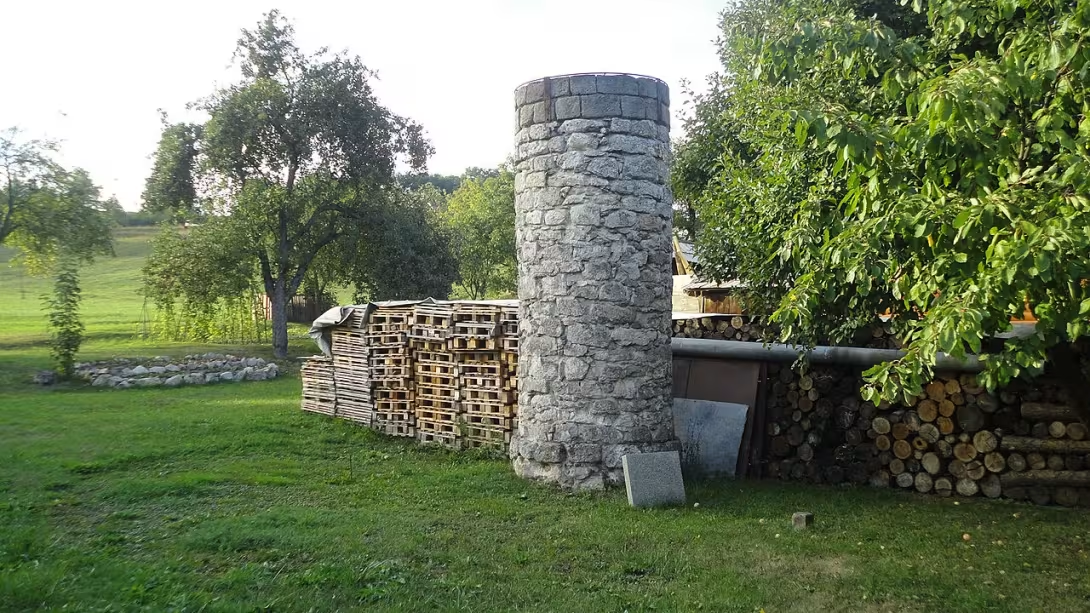
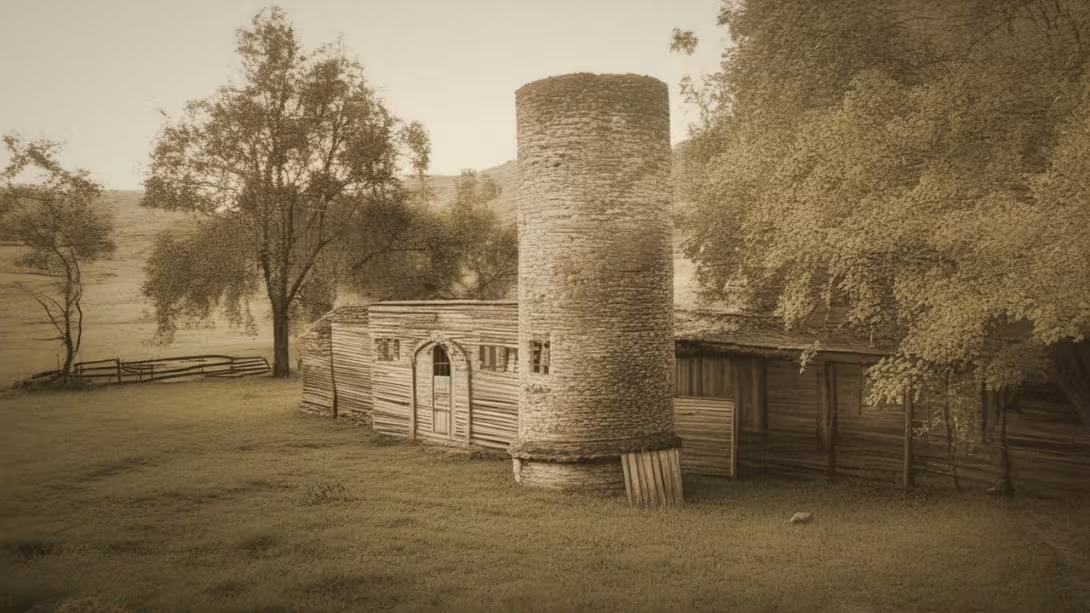
The historical view on the left is a visualisation generated by artificial intelligence and serves as inspiration.
Historical Milestones
- 1842
- Building ventilation shafts of the main hereditary shed
- 1842-1843
- The period of construction of the chimney according to some historical springs
- 19th century
- Expansion of deep mining in the Kremnica Mountains
Interesting facts
- It is a technical object of the type of chimney from the first half of the 19th century, which is declared a national cultural monument. - The construction was built in 1842, with some resources indicating the period 1842 to 1843. - The Shaft served as a ventilation part of Ferdinand's hereditary shed and lies on the main hereditary shed. - The chimney is 7 meters high and has a diameter of two meters. - Currently the building is located in the garden of the house with number 112 in the village Stará Kremnička.
Guide
The guide was voiced by a synthetic voice created by artificial intelligence.
Show guide text
The text was prepared by artificial intelligence and has not been editorially reviewed. It may contain inaccuracies.
Welcome to Stará Kremnička, in the heart of Banská Bystrica region, where history of precious metal mining is linked to nature. Right now, you are facing an object that may seem subtle at first glance, but in fact it is a key element of ancient industrial architecture. In front of you, the vent shaft of the main hereditary shed, which locals and visitors simply call Komin. It is a fascinating witness to the time when a tireless battle of miners with depths of the earth took place under your feet.
Stop for a moment and see the atmosphere of this place. What you see is not an ordinary building, but a technical object that was designed to ensure the survival of people in the depths of mines. To understand the meaning of this chimney, we must rush back into the 19th century. It was during this period that deep mining in the Kremnica mountains experienced its great expansion. It was the time when technology developed and mining became the engine for economic development of the whole region.
Who exactly designed this object remained secret in time because the names of architects are not preserved in historical records. However, we know exactly when it originated. Most springs lead us to the year 1842 when the ventilation shaft was built. However, some historical sources mention a slightly wider period of construction, namely the years 1842 to 1843. Imagine, then, that this object has been standing on this site for almost two hundred years and has been following the changes of the country, the arrival of new generations and the gradual withdrawal from these sites.
Now take a closer look at the construction itself. Note its form and functionality. At that time, there were no modern electric fans or complex air conditioning systems that we know today. However, moisture, gas, and temperature piled up in deep tunnels, making it life - threatening conditions for miners. The right here before you is the solution to this problem. This chimney served as a ventilation part of Ferdinand's hereditary shed. Its main task was to create a natural flow of air that would float fresh oxygen deep into the shaft while draining polluted air out into the atmosphere.
See this object as the breathing lungs of ancient mines. Without such ventilation shafts, mining at depths such as those achieved by the Kremnické vrchy miners would be almost impossible. It is fascinating to think that this chimney lies directly on the route of the Main Heritage Hall, making it the strategic point of the whole drainage and ventilation system.
Although we do not know the names of the specific personalities that helped to build, this chimney is the embodiment of the work of thousands of unknown miners and technicians. Every stone and every detail talks about their endurance and expertise. It was not aesthetics at the time, but pure functionality and safety. That is why this object is declared a national cultural monument today. It is acknowledged that technical buildings have the same historical value as locks or churches because they tell a story of how mankind evolved and how the people adapted to the harsh conditions of the underground.
Perhaps you will now wonder why this chimney is right here and not at another point in the hallway. The answer lies in the precise calculations of nineteen hundred-year-old engineers, who had to take into account the terrain, the depth of the shaft and the natural air currents. It's basically a big natural machine that worked without a single cap of electricity, just because of physical laws and proper architecture.
But the mystery remains how many secrets these depths still hide. Although the chimney is above the ground, its true nature lies deep beneath your tracks. It's a connection of the surface to an unknown world of darkness where precious metals were looting. When you look at it, try to imagine the contrast between the silence that now surrounds you and the noise that had to reign in the shafts during the boom in the nineteenth century.
This technical detail from 1842 is a silent witness to the heist power of nature and human efforts to tame it. It is a symbol of the technical progress of its time and a memento of the hard work carried out by miners to secure the region's wealth.
Now that you've learned the meaning and history of this unique object, invite you to move on and continue to discover the Old Kremnica. The surroundings of this monument offer many other places to help you better understand the genius of ancient mining. Let yourself be guided by paths that will lead you to further traces of the past.
Thank you for spending this short moment with us at the main hereditary chamber vent. We wish you a pleasant next walk and plenty of new experiences in this historic region. See you at the next stop.
Tips for visitors
We recommend a visit in spring and autumn, when temperatures around the village of Stará Kremnička are favourable for movement in the field.
Photography is suitable in mild natural light, especially during the golden hour, when the structure of the ventilation shaft and its fitting into the ground stands out.
Families with children are advised to use the visit to explain the principles of mining ventilation and functioning of hereditary sheds. This can be a practical lesson in mining history.
Frequently asked questions
Can the monument be visited?
This is a technical monument. Some are open as exhibitions, others are out of use or on private land. We have not verified whether this one is accessible.
What are the opening hours and admission?
We have not verified the opening hours or admission. Current information is published by the operator.
Where is the monument?
Location: Stará Kremnička, Banskobystrický kraj. The map on this page shows the exact spot.
Why is the monument protected?
It is listed in the Central List of the Monuments Fund of the Slovak Republic as a national cultural monument (ÚZPF no. 32D-2728).
For children
Close your eyes and imagine pressing a secret button on a time machine. Boom! It'll take you right back 184 years. The year is 1842. There are no cars or phones around you, but dense forests and sounds of metal instruments that hit hard rocks. Welcome to the Old A crematorium where a huge underground secret lies right under your feet.
Thematic route
I propose a thematic route in the area of the main objective:
1. Ventilation shaft of the main hereditary shed (Komin) - Technical monument. The building was used for ventilation of mine halls. 2. Chest area - Outdoor space. Walking around in the village Stará Kremnička allows to observe tracks of mining and the location of shaft in the field. 3. Exposure and information boards - educational part. There are supporting documents that explain the principle of the functioning of the hereditary shed and its role in the local industry.
Seasonal recommendations
In spring, the surroundings of the main hereditary hall in the Old Kremnica greenery. The ventilation shaft, known as Komin, is surrounded by nature in this period. Due to unstable weather, sudden rain or wind, layered clothing, waterproof top and solid shoes suitable for mud are recommended. It is advisable to visit the Memorial in the morning when temperatures are lower, making it easier to observe technical details. Summer brings bright sun and long days that highlight the lines of the ventilation shaft and its contrast with vegetation. Higher temperatures require sufficient hydration and sun protection. Light, breathable clothing, a hat and sunglasses are recommended. A visit is better planned for the early morning or late afternoon to avoid the warmest hours of the day. Autumn changes the colors of the landscape, creating visual contrast with the gray stone or concrete of the ventilation shaft. Lower and warmer light changes the appearance of the scene, while cloudy days highlight textures of materials. Due to the cold and humidity is suitable layered clothing with thermal insulation and waterproof coating. A good time is the afternoon when the low sun creates long shadows and highlights the height and shape of the shaft. Winter brings silence and snow that covers the surroundings of the monument. The light is short and pale. Freezing temperatures affect the condition of pavements and terrain. Clothing should be layered, heat insulated, windproof and completed with shoes with a good grip. The best time is noon when light is brightest and temperatures are relatively highest. Due to short days and rapid darkening, careful preparation is necessary.
Visualisations and artistic views

The visualisations are generated by artificial intelligence and serve as inspiration.
Visitor Tips
No tips yet. Be the first!
Log in and add your tip.
More monuments – Stará Kremnička
Show all in the town

Visitor photos
No photos yet. Be the first to add a photo from your visit!
Log in and add your photo or leave a rating.
You get more points for a visit verified in the app — we can tell from the GPS that you are there.
Reviews and comments