








burgher's house Burgher house
Townhouse on the street Andrej Kmeťa 5 in Banská Štiavnica is a terraced building from the 17th century. It represents the type of townhouse from the late Renaissance and Baroque period. The monument office of the Slovak Republic records it under number ÚZPF 3360.
The building comes from 1700. Its origin is related to the historical development of the city, where in the Baroque period the interest of nobility in residence increased due to the county and military administration. Townhouses in Banská Štiavnica were often built into unorganized buildings, while narrow streets remained between the buildings.
The house is situated in micronámestie as an end corner object. This fixes the original urban situation in relation to the main and side communication. Architecturally preserved the overall expression and ground plan-space composition. The facade has undergone a partial modification of the parter and the material expression interferes with the removal of part of the side wing.
Houses in this location are located in a violent terrain. On one side can be three- to four-storey, while the last floor serves as the ground floor in the rear alley. In some buildings, cellars were dug into the rock subsoil directly into the sheds.
In the city there were various variations of burgher houses: from towers and chambers to houses with passage or height to store goods. Later, city palaces were also established with a landscaped front courtyard and representative staircases.
The house currently retains the function of housing. Parter objects of this type have been upgraded over time and business premises have started to focus on advertising.
Tehdy a dnes
Drag the slider and compare how the monument might have looked when it was built with the view today.
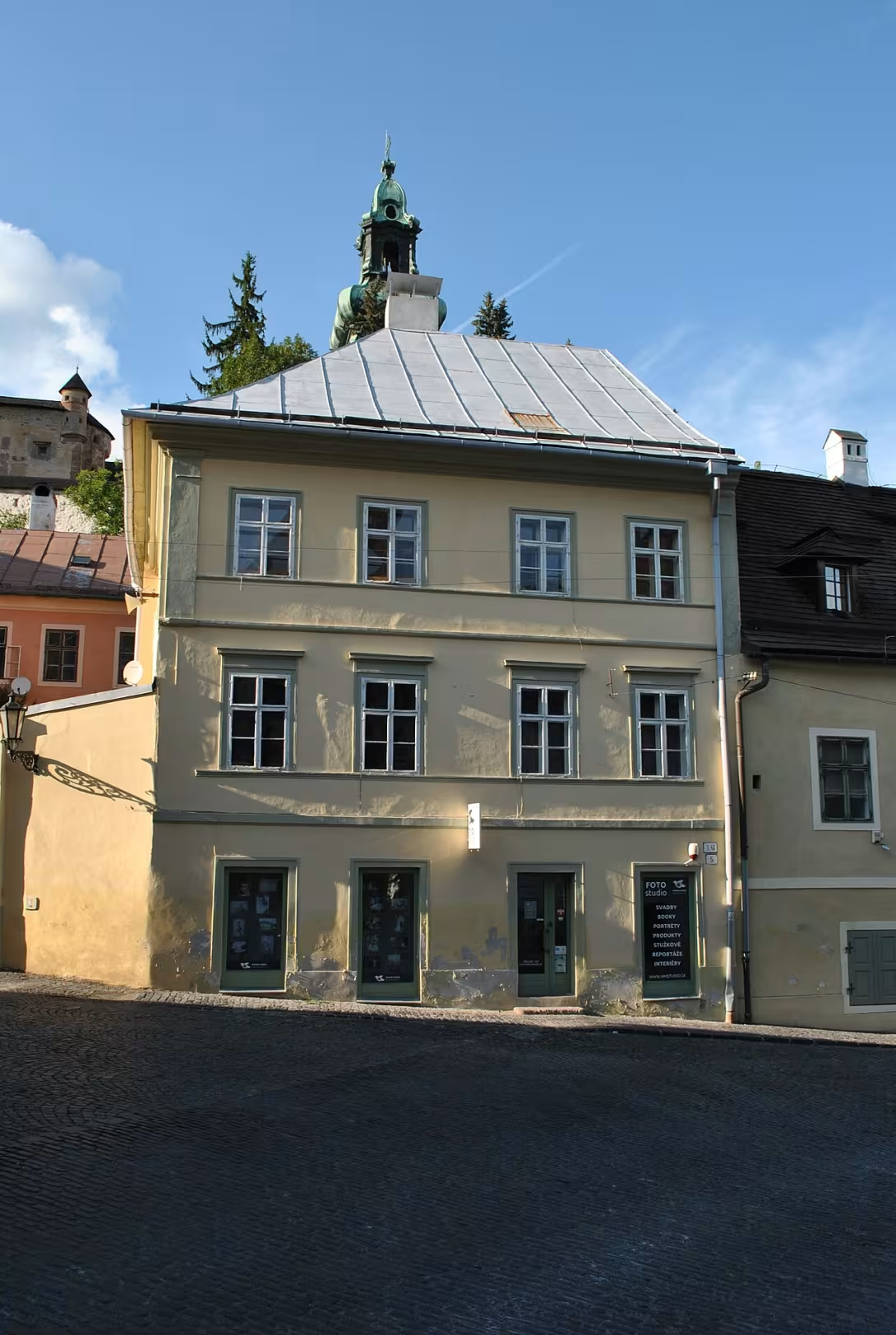

The historical view on the left is a visualisation generated by artificial intelligence and serves as inspiration.
Historical Milestones
- 1700
- the creation of a burgher house in the period of late renaissance and baroque
- 1700
- urban development related to county and military administration
- 1800
- gradually modernising the parter and creating business premises
- 1900
- change in mass expression to remove part of side wing
Interesting facts
- It is a terraced building from the year 1700 which represents the type of burgher house from the period of late Renaissance and Baroque. - The house is situated as an end corner object in micronámestie, thus fixing the original urban situation. - The building retained the overall architectural expression and ground plan-space composition. - Houses in this location are located in a rough terrain, while the last floor can also serve as a ground floor in the rear alley. - In some buildings in the area, cellars were moved into the rocky subsoil directly into the galleries.
Guide
Show guide text
The text was prepared by artificial intelligence and has not been editorially reviewed. It may contain inaccuracies.
Welcome to Banska Stiavnica, a city that is a lively museum under the sky. Right now, you are standing in front of a building that may seem subtle at first glance, but in fact, it is a dire witness to the changes that this city has seen in the last three hundred years. In front of you, the burrow burgher's house, the typical representative of his time, which by his presence defines the space in which you are now located. Feel the atmosphere of this place and look at the facade of the house, which carries a trail of several epochs. Now let's crash in time and see when and why this house was created. Let's write a thousand seven hundred years. During this period Banská Štiavnica was situated in the dynamic stage of its development. It was not just a mining town, but it became an important centre of county and military administration. It was this administrative boom that brought about the need for new housing for influential families and functionariore. The townhouse you're standing before was created in this context, at a time when the architects of the late renaissance and the emerging baroque interspersed. It is a time when a balance was sought between functionality and representativeness, which is visible on this construction. Nyni pay attention to the architecture itself and to what you see right in front of you. First of all, note the location of the house. The building is situated as an end corner object in a small micron square. It's not a coincidence. It is thanks to this location that the house fixes the original urban situation of this place. If you look at how the house closes the space, you will see how the city was planned in the past to create natural centers of communication and social life. Although we do not know the names of the specific architects who proposed this project, it is clear that they worked with typical principles of burgher housing then. When you overlook the facade, think about how the building changed over the centuries. Although the house preserved its overall architectural expression and ground plan-space composition, time left its mark. If you look at the ground floor, you will see the result of the 19th century changes. During this period there was a gradual modernisation of the partition. Business premises were created, reflecting the growing business in the city. The townspeople were doing this to adjust their homes so that the lower floor could serve trade and craft, while the upper floors remained reserved for family privacy. Let's go a little further in time until the twentieth century. If you perceive the material stability of the house today, you may not realize that it looked slightly different in the past. In the 19th and 20th centuries, the material expression of the building changed to remove part of the side wing. This means that the house you see today is essentially a compacted version of its original form. It is fascinating how one building can adapt its shape to the needs of new generations and economic conditions. Although there are no specific names of known personalities known to the general public in this house, this house tells a story about thousands of nameless people. Imagine generations of townspeople, administrative workers, and merchants who passed through this door. Imagine morning hustle in the commercial premises of the ground floor in the nineteenth century, when people from all over the region met here to trade goods that were then valued in Banská Štiavnica. One of the most interesting things about this house is its authenticity within the urban plan. In many cities, the original structure of streets and squares was lost due to new constructions. But here is this townhouse as an anchor. By standing on this particular corner, it enables us today to determine exactly where one road ended and the other began more than three centuries ago. It's like an architectural compass that shows us the way to the past. While many buildings in the city are known for their magnificent details or royal history, this house represents something else - the daily life of mosque. He is a representative of the type burgher house, which combines the rationality of the Renaissance and elegance of the Baroque. It is at this central point between luxury and functionality that its value lies. Now that you have gone through the history and architectural development of this house, I recommend you for a little while to perceive the silence of this micronámestie. Look again at the corner of the building and imagine how hundreds of years ago the roads of the people who built the glory of Banská Štiavnica started here. This house is a silent witness to everything that happened in town, from military orders to business deals. We hope this short trip to the past has helped you to better understand the meaning of this building. Banská Štiavnica has many other hidden treasures waiting to be discovered. We invite you to continue to explore the surrounding streets and to enjoy the feeling of wandering around this unique urban area. Thank you for your attention and we wish you a pleasant rest of the day in discovering the beauty of our common history.
Tips for visitors
Visit the house during spring or autumn. In Banská Štiavnica there is pleasant weather and less tourists, which allows a quiet walk.
The building is not a museum, but a residential house. We recommend taking only basic needs and comfortable shoes to historical streets. Facades and architectural elements of the house best stand out in natural light early in the morning or before sunbathing.
For families with children we recommend a walk around, during which you can convey ideas about the life of the townspeople in the former mining town. We recommend exploring the historical centre of Banská Štiavnica.
Frequently asked questions
Can the monument be visited?
This is a residential or farm building, not a museum with opening hours. Please view it from public space and respect the owners' privacy. We have no information about access to the interior.
Where is the monument?
Location: Radničné námestie 46/5, Banská Štiavnica, Banskobystrický kraj. The map on this page shows the exact spot.
Why is the monument protected?
It is listed in the Central List of the Monuments Fund of the Slovak Republic as a national cultural monument (ÚZPF no. 322-3360). It is part of a UNESCO World Heritage Site.
For children
Imagine having a secret button in your hand on time. You press it and the world will spin around you until you return exactly 326 years later. It is the year 1700 and you have just landed in the heart of Banská Štiavnica. It's not a boring museum, but a lively, noisy and fascinating place where history was just born.
Nearby
🏰 Historic sites (232)
- sv. Ján Nepomucký 0.0 km
- SNP 0.0 km
- Mariánsky stĺp 0.1 km
- Galéria Schemnitz 0.1 km
- Cesta v čase 0.1 km web
- Starý zámok 0.1 km web
- Morový stĺp 0.1 km
- Dom Maríny 0.1 km
- Vzbura baníkov v roku 1852 0.1 km
- Galéria Jozefa Kollára 0.2 km +421 918 990 449 web
- Židovská synagóga 0.2 km
- Sándor Petőfi 0.2 km
- Emil Grillusz 0.2 km
- Lajos Fekete 0.2 km
- Andrej Sládkovič 0.2 km
- Kalmán Mikszáth 0.2 km
- Hugo Heincz 0.2 km
- Július Farbaky 0.2 km
- Samuel Porubszky 0.2 km
- Anton Kerpely 0.2 km
🍽️ Restaurants and dining (162)
- Lemberg 0.0 km Radničné námestie 10 +421 911 220 126 web
- Coburg coffee & burger 0.1 km
- U Jašteríc 0.1 km
- Archanjel Cafe Bar 0.1 km web
- Bansky Dom 0.1 km
- Reštaurácia Monarchia 0.1 km web
- RUINbar 0.1 km web
- OPERA Prosecco Bar 0.1 km
- Pasta per-te v opere 0.1 km +421 907 841 794
- Reštaurácia Pizzeria Marína 0.1 km +421 0911 533 337 web
- Čajovňa Klopačka 0.1 km +421 905 980 499 web
- Reštaurácia Gallery 0.1 km +421 45 692 12 52
- Svätá Barborka 0.1 km
- Pivovar ERB 0.2 km +421456921147 web
- Barcadam 0.2 km
- Gavalier 0.2 km +421 903 802 226 web
- Stará škola 0.2 km
- Eleuzína 0.2 km web
- Divná pani 0.2 km +421 45 679 09 45 web
- Na Trojici 0.2 km
🏨 Accommodation (106)
- Skautský dom 0.1 km Antona Pécha 69/2 +421905382885 web
- Skautský dom 0.1 km web
- Boutique Hotel ERB 0.1 km +421 456 789 555 web
- BARCADAM 0.2 km Námestie sv. Trojice 17/13 +421 908 965 202 web
- Penzión Resla 0.2 km
- Gavalier Design Rooms 0.2 km +421 903 222 309 web
- Penzión Rozália 0.2 km +421 948 221 213 web
- Penzión Na trojici 0.2 km Námestie sv. Trojice 21/17
- Subyt 0.2 km
- Bristol 0.2 km Andreja Kmeťa 123/11
- Apartmán Zlatý dvor 0.2 km
- Penzión Cosmopolitan II 0.3 km web
- Black M 0.3 km Kutnohorská 603/1 +421 910 947 187 web
- Penzión Matej 0.4 km
- Hotel Grand Matej 0.4 km
- Penzion Nostalgia 0.4 km Ing. Štefana Višňovského 208/3
- Penzión Tomino 0.4 km
- Salamander 0.5 km
- Villa Botanica 0.5 km web
- Ubytovanie Tatiana 0.6 km
🚲 Rentals and sport (18)
- Diana poľovnícke potreby 0.8 km
- Ortler sport 0.8 km
- BS-Rent 1.0 km +421 948 908 737 web
- Pontónová plaváreň na Klingeri 1.0 km
- MK bike service 1.2 km +421 904 494 573
- Tanad sport 1.4 km
- Bikepro - Hotel Salamandra 2.8 km web
- ŠK Lesy Banská Belá 4.3 km
- Požičovňa vodných bicyklov 6.5 km
- Sedací bazén 7.8 km
- Detský bazén 7.8 km
- Rekreačný bazén 7.8 km
- Jaskynný parný kúpeľ 7.9 km
- OFK Štart Prenčov 11.0 km
- Lodenica Hliník nad Hronom 12.6 km
- Cyklosport 3000 13.1 km Májová 280/3
- Bazén Ďuricov majer 14.2 km
- Plážové kúpalisko Žiar nad Hronom 14.3 km
🥾 Hiking and nature (591)
- História mesta (reliéf) 0.1 km
- Banskoštiavnicky betlehem 0.1 km web
- Banka lásky 0.1 km web
- Kaufhaus šachta 0.1 km
- Michal štôlňa 0.1 km
- Na centrum 0.2 km
- Z Lichardovej 0.3 km
- Od Červeného kríža 0.3 km
- Z Hornej ružovej 0.3 km
- Z Dolnej ružovej 0.3 km
- Z Vodárenskej 0.3 km
- Cherubín dedičná štôlňa 0.3 km
- Z Katovej 0.4 km
- Na kalváriu 0.4 km
- Z Vodárenskej 0.5 km
- Nad Reslou 0.5 km
- Glanzenberg dedičná štôlňa 0.6 km web
- Park SNP 0.6 km
- Žigmund šachta 0.7 km Na Zigmund šachtu 1647/15
- Nad Šmintorínom 0.7 km
Thematic route
The proposed thematic route within the area:
1. Townhouse (exposure) - tour of historical interiors and way of life in the former town house. 2. Courtyard - space with architecture and organization of the home area from the time of its creation. 3. Internal construction - tour of rooms and exhibits documenting the history and culture of Banská Štiavnica.
Seasonal recommendations
In spring Banská Štiavnica blooms and the townhouse surrounds the greenery, which contrasts with the historical facade. The sun shines gently during this period, making it easier to photograph the details of architecture without sharp shadows. It is recommended that shoes with a firm sole, as spring rains can make the aisles slippery.
Summer months bring intense light and atmosphere of the high season. The building is in full sunlight most visible. Due to high temperatures it is advisable to arrive early in the morning or late in the evening when the air in the city is refreshing. During walks around the building, easy clothes and a hat to protect from the sun are practical.
The autumn period is characterized by golden tones of leaves around the house. The air is softened and visibility excellent, which makes it possible to better perceive the composition of the building in the city panorama. A layered clothing that can handle morning cold and afternoon heat is suitable.
Zimą is the atmosphere around the townhouse peaceful and snow often highlights the contours of historical elements. In Advent time, the city is cozy, although the short day limits the time to observe the exterior. Warm, waterproof shoes and thick winter clothing are essential.
Visualisations and artistic views


The visualisations are generated by artificial intelligence and serve as inspiration.
Photographs from the area
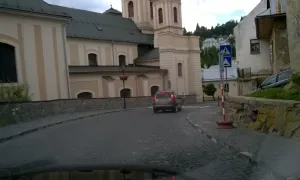
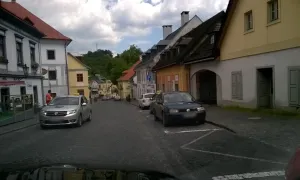
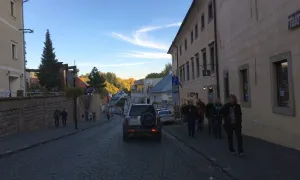
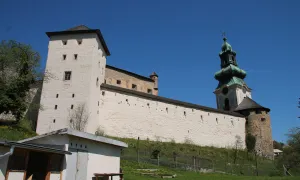
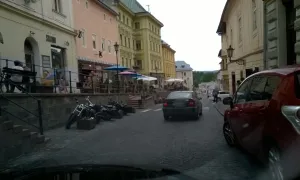
Real photos taken near the monument

Source and licence are given for each image.
Visitor Tips
No tips yet. Be the first!
Log in and add your tip.
Location on Map
More monuments – Banská Štiavnica
Show all in the town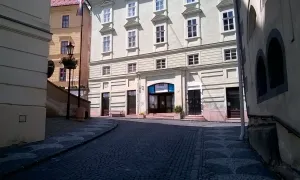
Visitor photos
No photos yet. Be the first to add a photo from your visit!
Log in and add your photo or leave a rating.
You get more points for a visit verified in the app — we can tell from the GPS that you are there.
Reviews and comments