

evangelical tolerance church Church
In the village Veličná in the Žilina region there is an evangelical toleration church. This monument dates back to 1785 and its architectural style represents late classicism.
The area, which records the Monument Office of the Slovak Republic, consists of one object. It is a church from 1785, which is made in the style of classicism.
Building with address number 166 in the village Veličná is declared a national cultural monument. It is entered in the list under the number SEZPF 256.
Church in the village The great example of the construction from the second half of the 18th century is illustrated. The building is part of the monument fund of Žilina region.
The building is located in the village Veličná. Interested in the architecture of classicalism can visit this site.
Tehdy a dnes
Drag the slider and compare how the monument might have looked when it was built with the view today.
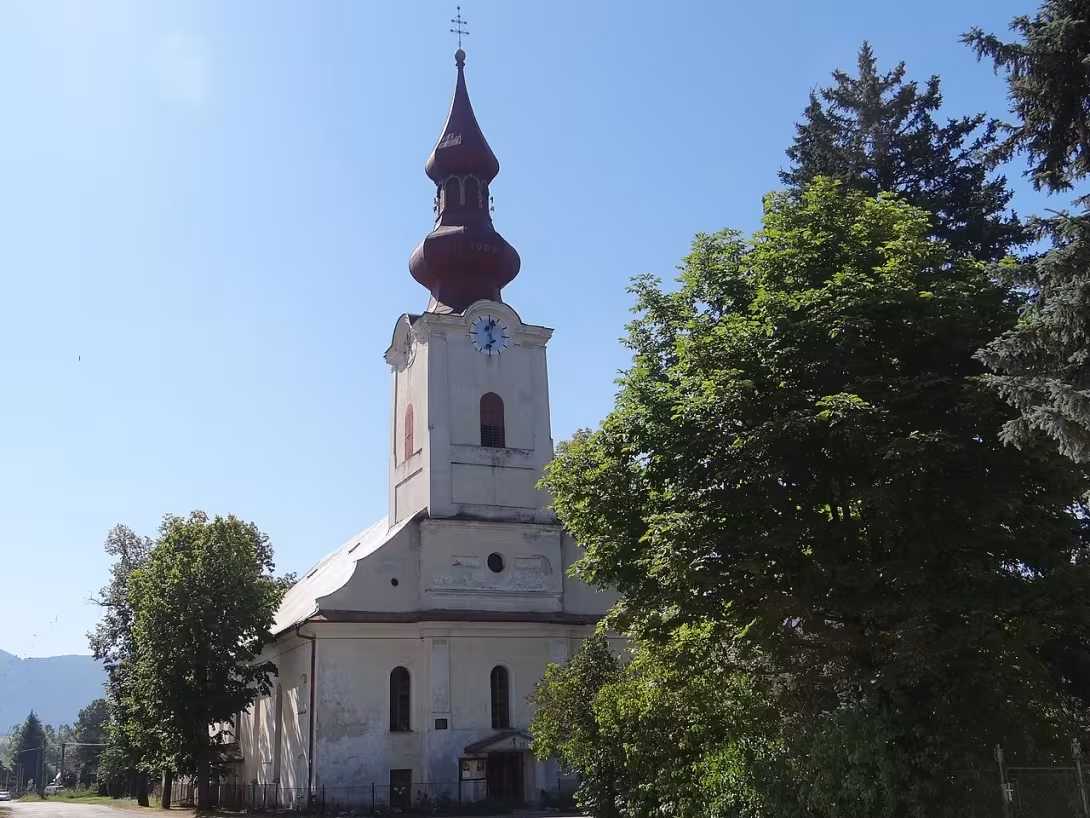
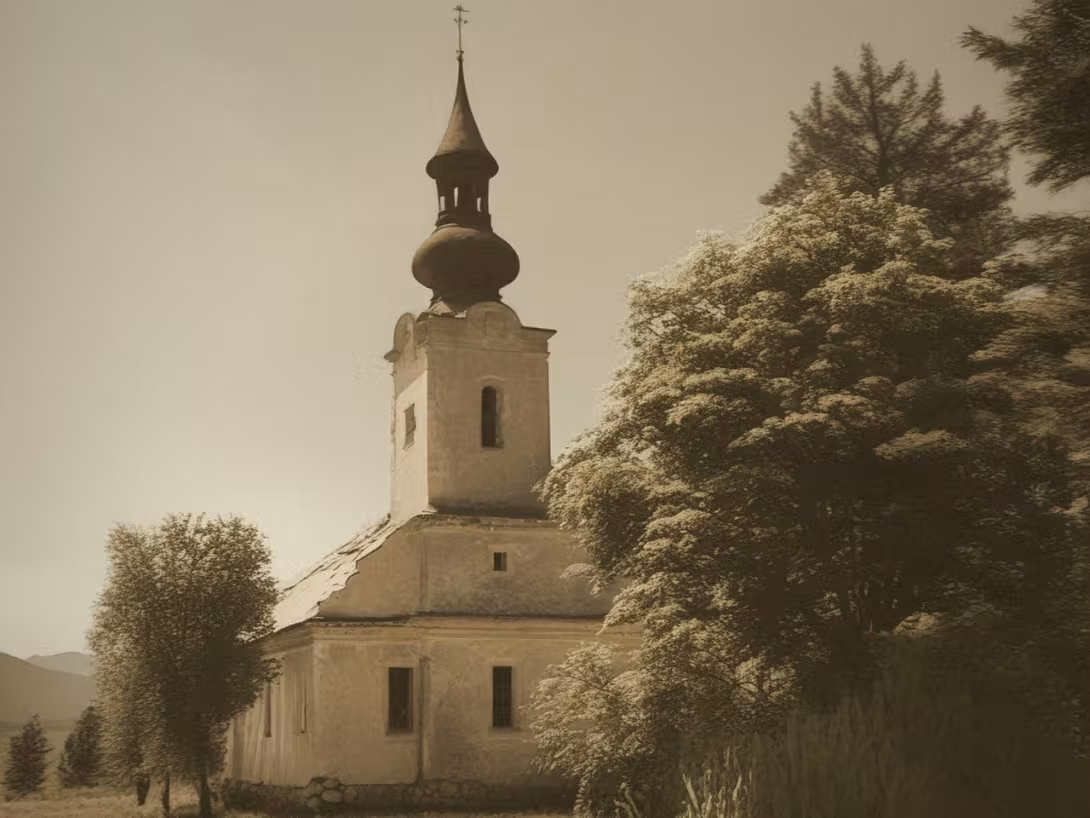
The historical view on the left is a visualisation generated by artificial intelligence and serves as inspiration.
Historical Milestones
- 1785
- The status of the evangelical church in Veličné
- 1750
- Classicism in architectõre in Slovakia
Interesting facts
- The church comes from 1785. - The architectural style of the building represents late classicism. - The building is declared a national cultural monument and listed under number ÚZPF 256. - This is a documented example of construction from the second half of the 18th century.
Guide
Show guide text
The text was prepared by artificial intelligence and has not been editorially reviewed. It may contain inaccuracies.
You can see in the picturesque village of Veličná, where time seems slower than in the surrounding cities. You are standing in front of one of the most interesting historical monuments in this region, in front of the evangelical tolerance church. When you put your headphones on and let yourself be carried by this story, first try to stand still and perceive the atmosphere of the surroundings. This building is not just a stone and wood but a living witness to the harsh history that has crossed this territory. Her presence here is not accidental, but the result of a long-standing struggle for religious freedom and identity, which shaped the lives of generations of inhabitants of this part of the region of Žilina.
When you look at the building in front of you, you may not notice all of its little things at the first moment, but the overall impression is clear. It is a building that tries to fit into the country, but at the same time it guarantees some dignity and permanence. Tolerance churches, which were established in the 18th century after the abolition of the evangelical churches in Hungary, were often specific. They were not built as monumental Gothic cathedrals, but as practical and often more modest buildings that met the needs of believers at a time when their worship services were officially banned. The great one was one of the places where this history was fulfilled, although the exact giving of the creation of this particular building and the names of the architects who designed it have been preserved only to a limited extent or are still subject to further research.
The historical context of this place is crucial for understanding what you are seeing. After the wine uprising in 1703 and the subsequent abolition of the evangelical churches in Hungary in 1781, evangelical faith was officially forbidden. But the believers did not give up. Thanks to an intermediate solution, the so-called tolerance edict, they were allowed to perform services, but under strict conditions. Churches could not have bell towers, they could not have a cross on the roof, and they had to be built outside the village, often on the edge of the forest or in the area that was not directly part of the village. This restriction led to the creation of a unique architecture that was different from traditional Catholic churches. Great was no exception. Residents, who were predominantly evangelical religions, created their prayer places, which were a vital center of the community for them.
Now look at the construction itself and perceive its proportions. Tolerance churches often had a simple, rectangular floor plan. Without a bell tower that rises to a height, the structure appears compact and grouped. Note the roof, which is often steep and covered, which is typical for wooden or mixed buildings in this area. Although the exact architectural details and names of the builders are not specified in the available documents, we can assume that local materials and techniques that were common at the time were used in construction. Wood was a key building material in this part of Slovakia, and therefore it is very likely that this building, or at least its original form, had a strong wooden character, or was later treated or lined with other material to withstand the teeth of time.
One of the most interesting things you can notice is the very location of the church. If you look around you, you will see that the building is not located in the very centre of the village, as it is usual at the parish churches. This location was a direct consequence of a ban that prevented the construction of evangelical churches in municipalities. Believers had to attend church services to these special premises, often distant from their homes. At the same time, this distance has created strong community ties. The trip to worship was a social event, a place where people met, discussed and strengthened their relationships. The church in Veličná was not only a place of prayer, but also a centre of social life for the evangelical community.
Although the names of specific historical personalities directly associated with this place are not listed in the documents, we can imagine the lives of the people who walked here. They were ordinary people, farmers, craftsmen, and merchants who lived under the difficult conditions of the 18th century. For them, this church was a symbol of hope and freedom. Despite bans and restrictions, they maintained their faith and identity. Their determination and willpower are now visible in the very survival of this building. Every board, every stone you see here, bears the story of these people who have not given up.
Interestingly, this type of construction is also their interior equipment. Although we can't look inside here, we can imagine what it might look like. Tolerance churches often had simple benches that were arranged so that as many believers as possible could witness worship. The altar was usually simple, without rich decorations that were typical of Catholic churches. The main point of attention was the word, preaching, and singing. The voice of the sermon and singing of the congregation sounded in an area designed to promote acoustics and free sound distribution. This simplicity was not only the result of economic constraints, but also of theological belief that the essence of faith is not in external decor, but in the spiritual life of believers.
When you look at the church facade, note its color and texture. Time and weather conditions left their mark on the building. Maybe you'll see signs of repairs made at different times. These repairs are part of the history of the construction and show that the community has taken care of this area and has taken care to remain preserved for future generations. Great is today the place where history meets the present. Tourists and visitors come to enjoy the beauty of the country while learning more about this unique type of architecture.
This church is also witnessing a change in social conditions. After the abolition of the tolerance edict and the introduction of complete religious freedom in the 19th century, the situation changed. The Gospels were no longer forced to go to special tolerance churches and could build their parish churches in municipalities. This meant that many tolerance churches lost their original function. Some have been rebuilt, others left as monuments, and some have unfortunately disappeared. But the great one preserved this monument, which is proof of the price the community gave and its respect for its history.
Now look around the church. Country around Veli
Tips for visitors
The best time to visit the Evangelical tolerance church is early in the morning or late in the afternoon, when sunlight falls on the facade and creates a pleasant shading. In spring and autumn the weather is often mild, allowing comfortable walks around.
Cars and bikes are welcome.
Take with you comfortable shoes, water and possibly a small snack bag. If you like to read or write notes, bring your notebook and pen. It is appropriate for families with children to have a picnic blanket and several games in the fresh air.
Photography is most interesting during the golden hour - around the sunrise or sunset - when light highlights architectural details of the church and the stain. The best places to take pictures are in front of the main gate and from the east side, where light is reflected on the tower. If you use a tripod, make sure to place it on a flat surface and respect other visitors.
There are no other monuments in the surroundings of the church, so we recommend walking around the village Veličná, where you can discover local architecture and natural scenery within 30 minutes walk.
Frequently asked questions
Can the monument be visited?
Religious buildings are usually open mainly during services; at other times a visit is normally arranged with the parish or the operator. We have not verified specific times.
Where is the monument?
Location: č. 166, Veličná, Žilinský kraj. The map on this page shows the exact spot.
Why is the monument protected?
It is listed in the Central List of the Monuments Fund of the Slovak Republic as a national cultural monument (ÚZPF no. 313-256).
For children
Close your eyes and imagine pressing a secret button on a time machine. Boom! It carries you back in 241 years. The year is 1785. The air smells like smoke from fireplaces and around you hear just the noise of trees and the drowning of horses on dusty roads.
Nearby
🏰 Historic sites (138)
- Kaštieľ Veličná 0.2 km
- Šibenica 1.8 km
- Kaštieľ Istebné 1.9 km
- Hradisko Trniny 3.6 km
- Janko Matúška 3.6 km
- Oravská galéria 3.6 km Hviezdoslavovo námestie 1690/11
- Pavol Országh Hviezdoslav 3.7 km
- Rodný dom Pavla Bujnáka 4.0 km
- Dobákovský kaštieľ 4.5 km
- Rodný dom Martina Kukučína 4.7 km +421 908 130 841 web
- Martin Kukučín 4.7 km
- Kúria Jána Bencúra 4.7 km web
- Martin Kukučín 4.7 km
- Kubínyiovský kaštieľ 4.9 km Mjr. Archipova 196/25 web
- Pamätník matke Pavla Országha Hviezdoslava 4.9 km
- Žaškovský Šíp 5.0 km
- Pomník padlého partizána 1944 5.1 km
- Kubínyiovský kaštieľ 5.4 km Hviezdoslavova 117/5 web
- Kúria vyšnokubínskeho komposesorátu 5.6 km Vyšnokubínska 35/64 web
- Kaštieľ Mokraď 5.6 km Mokraďská 603/58
🍽️ Restaurants and dining (203)
- Veličniansky raj 0.3 km +421 905 965 322 web
- Krčma U Lenky 1.7 km
- Pod Zvonicou 1.7 km
- Pizzeria MONČA 2.0 km +421 951 467 077
- Piváreň Horná krčma 2.2 km web
- Penzión kúria 2.3 km
- Aquavia 2.8 km
- Reštaurácia Kopačka 2.8 km
- Cofree & Bar 2.9 km
- Escobar Burgers 3.1 km web
- Penzion Koliba 3.4 km Gäceľská cesta 2667/4 web
- Cafe Bar Severan 3.5 km
- Oáza 3.5 km Radlinského 1733/33 +421 908 999 900 web
- Cabana Coffee 3.6 km Radlinského 1719/54 web
- Pizza Mama 3.6 km
- U novinára 3.6 km
- Moja Kaviarnička 3.6 km Gäcelská cesta 1754 +421918064170 web
- Krčma U Gitky 3.6 km
- Miesto 3.6 km +421 911 288 218
- Bistro Ária 3.6 km
🏨 Accommodation (108)
- Perníková Chalúpka 2.5 km +421 908 275 738 web
- Ubytovňa Kopačka 2.8 km
- U Sovy 3.2 km Beňovolehotská 2144/39
- Minikemp Šíp 3.2 km web
- Chata Kuzmínovo 3.2 km
- Rozprávková dedinka 3.3 km
- Penzión Koliba ** 3.4 km
- Hotel Park**** 3.5 km +421 918 913 012 web
- Ubytovanie Kováč 4.0 km
- Penzión Kika 4.2 km
- Ubytovanie Radka 4.2 km
- Hotel Belez 4.3 km
- Ubytovanie Valika 4.4 km
- Chalupa Víkend 4.8 km Družstevná 376/19 web
- Kaštieľ Kubínyi 4.9 km +421 948 000 634 web
- Chata Pinus 5.3 km +421905944253
- Chata Natalie*** 5.5 km web
- Penzión Zemianska kúria 5.6 km +421 903 399 500 web
- Hotel Green 5.6 km
- Chata Triangel 6.3 km +421 948 949 949 web
🚲 Rentals and sport (22)
- Zimný štadión 3.0 km
- Elitebike 3.8 km
- Intersport 4.0 km
- Lezecká stena Zázrivá 10.6 km web
- Telocvičňa základnej školy 11.1 km
- Termal 13.4 km
- Dvoranka 13.5 km +421 948 948 113
- Fitness California 13.6 km +421 44 432 26 04 web
- Sokolovňa 13.9 km
- TOP Sport 14.0 km
- Šport bazár 14.1 km
- Bycikle a sport Melek 14.1 km
- TuriecBike 14.1 km +421 951 454 277 web
- ITOCA 14.3 km
- ebike share 14.3 km +421650777888 web
- Javorka 14.3 km
- Poľovníctvo pod Chočom 14.7 km
- Koniareň 14.7 km Zarevúca 7/7
- SPORT shop 14.8 km
- Sportisimo 14.9 km
🥾 Hiking and nature (658)
- Zajačie 1.6 km
- Vajcovka pri potoku (DK-09) 2.0 km web
- Jazdecký klub Saledos 2.1 km Gacelská cesta +421948794997 web
- Lopušné 2.2 km
- Pečkov 2.5 km
- Dúbrava 2.7 km
- Párnické jazerá 3.1 km
- Zemiansky diel 3.1 km
- Paliočko 3.3 km
- Kuzminovo 3.3 km
- Vrchy 3.4 km
- Park Martina Kukučína 3.4 km
- Trniny 3.6 km
- Lidočko 3.6 km
- Park Dejateľov 3.7 km
- Brezovec 4.0 km
- Diel 4.1 km
- Žiar 4.3 km
- Repiská 4.4 km
- Dúbrava 4.5 km
Thematic route
1. Evangelical tolerance church (sacral object) - Visiting the interior allows you to know the architecture of the building. 2. Church Tower (architectonic point) - Element of the building that allows you to observe its solution. 3. Courtyard in front of the church (areal) - A place to rest around the monument.
Seasonal recommendations
In spring there is a neighborhood of evangelical tolerance church in Veličná green and light highlights architecture. Due to variable spring weather in Žilina region, layered clothing is recommended. The best time to visit are early mornings when the air is cleanest.
In summer there is a green vegetation and strong sunlight around the church. Light, breathable clothing and sun protection are recommended for walks. The best time to visit is before or after the afternoon when the sun is not directly above your head.
Colorful leaves and morning fog appear in the autumn around Veličná. The light is golden and soft, which highlights the facade of the church. Waterproof footwear and a warmer sweater for cold and wet air are recommended.
In winter the surroundings of the church are covered with snow, which, along with silence, changes appearance. Short days and blue light before dusk change the appearance of the building. To visit during this period, you need thermal clothing, gloves and cap.
Visualisations and artistic views


The visualisations are generated by artificial intelligence and serve as inspiration.
Photographs from the area
Real photos taken near the monument

Source and licence are given for each image.
Visitor Tips
No tips yet. Be the first!
Log in and add your tip.
Location on Map


Visitor photos
No photos yet. Be the first to add a photo from your visit!
Log in and add your photo or leave a rating.
You get more points for a visit verified in the app — we can tell from the GPS that you are there.
Reviews and comments