








Kaštieľ Bytča s areálom Manor house with grounds
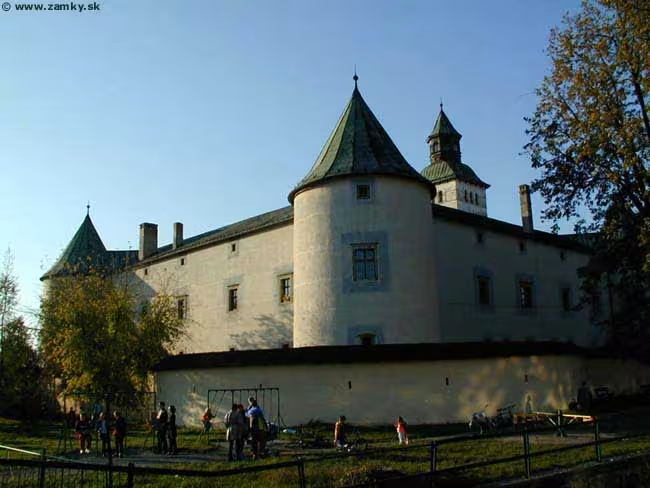
Bytča Mansion in the district Bytča in Žilina region is a Renaissance building from the 16th century. The area, which consists of the main manor house, the Palace of Sobišne and other economic and residential buildings, was built on the site of an older castle. Since 1970 it has been listed in the list of national cultural monuments.
The manor house dates back to 1571-1574. František Turzo, an important entrepreneur of the Turz family, had a new fortified manor house built on the site of the Gothic castle. The castle belonged to the Nitra bishopric and was previously owned by various families, such as the Pongracs or Podmanicks. František Turzo called the Italian master Giovanna Kilyán from Milan, who designed the construction. On the circular staircase on the ground floor, the fresco with its character was preserved. The inscription above the main portal mentions the year of the beginning of construction and the imperial titles of Maximilian II, which demonstrates the importance of the Turz family in the imperial court.
Architecturally, the Bytča manor house is distinguished by a four-wing layout with an arcade courtyard and massive corner bastions. The main building has a central entrance tower in the north wing. Marriage palace, built in 1601 is a one-storey building with rectangular floor plan and rich sgraffit ornament. The facade is decorated with plant and figurative motifs around the windows and portal. The largest hall in the area is a large hall in the marriage palace with dimensions of 34.5 × 12.5 metres.
The area of the manor house Bytča was the family residence of the Turz family, who managed here not only residential estate, but also other property, such as flying and Orava. After the extinction of the family Turz in 1624 he passed the manor house into the ownership of the Esterhazi family. But they used it primarily for economic purposes. In the 18th century frescoes were inserted into the manor house depicting Hungarian and European rulers, generals and heroes from ancient mythology. In the 19th century, the manor house moved into the ownership of the Popper family, who rebuilt it into apartments and court, which changed its original appearance.
Today, the main building of the manor house is the State District Archive, while the Sobášny palace serves as an exhibition area of the Považské Museum. The area is gradually restored to restore its original appearance from the 16th and 17th centuries. The marriage palace is already in its original form. Bytča Mansion is an example of Renaissance architecture, which connected the fortification with representative housing. The area consists of six objects, including a 19th century mansion park.
The manor house Bytča preserved Renaissance frescoes, sgraffito decorations and arcades, which covered older frescoes from the construction period. Above the portals are the coat of arms of Turz and their wives, such as the coat of arms of František Turza and Katarína Zrinská or the coat of arms of Juraj Turz and Elizabeth Czoborová. The area is open to the public.
Tehdy a dnes
Drag the slider and compare how the monument might have looked when it was built with the view today.

The historical view on the left is a visualisation generated by artificial intelligence and serves as inspiration.
Historical Milestones
- 13. century: original castle with a residential tower and courtyard owned by nitra bishopric
- 1563: František I. Turzo bought Bytčianske manor and castle
- 1571-1574: construction of Renaissance mansion on the site of the old castle according to the project of Italian master Giovanni Kilian
- 1601: Construction Marriage Palace by order of Hungarian Palatin George Turz
- 1605-1612: destructive invading the forces of the men of the Lord, subsequent repairs under the direction of A.
Restoration history
| Years | Type | Extent | Condition after restoration |
|---|---|---|---|
| 2008–2009 |
Obnova a reštaurovanie
Sobášny palác |
Komplexná | dobrý |
Source: Monuments Board of the Slovak Republic — open data, licence CC BY 4.0
Interesting facts
- Bytča Mansion was built between 1571 and 1574 on the site of an older castle, which belonged to Nitra bishopric and previously to various families such as Pongrác and Podmanick.
- The Renaissance manor house was built by an important businessman František Turzo of the Turz family, who called the Italian master Giovanna Kilyán from Milan to build.
- On the ground floor of the manor house was preserved fresco with the character Giovannu Kilyána on the circular staircase.
Guide
Show guide text
The text was prepared by artificial intelligence and has not been editorially reviewed. It may contain inaccuracies.
You can see in front of the beautiful manor house in Bytča, which in front of you breaks down like a candle from the past. You stand in front of one of the most important Renaissance manor houses in Slovakia, which has been squeezed into the history of the city and country. Let's go hang out together for a second and dive into his secrets.
The view of this manor house is like a view of the past, which is preserved here in stones and walls. In front of you is a building that replaced the older castle, which stood here centuries ago. The castle belonged to the Nitra bishopric and before various families, such as Pongrác and Podmanick. However, their footprints were no longer preserved, but their presence is seen in the very nature of this place.
The manor house you see today was built between 1571 and 1574. His builder was an important businessman and nobleman František Turzo of the genus Turz. The Turzos were one of the most influential families in Slovakia in the 16th century, and their mansion in Bytča should be not only a residence but also a symbol of their power and wealth. Let's go see what this manor house has done for us today.
The first thing you might be interested in is the facade mansion itself. Take note of his renaissance architecture, which has manifested itself here in the harmonious connection of walls, windows and details. The manor house was built on the site of an older castle, which was manifested in its available. Let's move on to its surrounding area, which is equally rich in history.
In the vicinity of the manor house there are remnants of older fortifications that suggest that this place has been a popular residence since the Middle Ages. The Turzos had the manor house built here, but they also modified the surrounding area to fit their lifestyle. Feel the atmosphere of this place, which is full of history and secrets.
We will return to the castle itself and its interior. In addition to the exterior, it is also rich in historical details. Despite the fact that some parts of the manor house have been modified over the centuries, there are preserved elements that suggest its original Renaissance form. Let's go see some of them.
One of the most important elements is the interior of the manor house, which was richly decorated in the past. Although some details have not been retained, we can imagine how frescoes, wallpapers, and other art excelled here in the past. The Turks were patrons of art and science, and their mansion was one of the places where this art could be manifested.
In the manor house there are also historical documents and objects that tell about life in the past. For example, original portals, stairs and vaults are evidence that this manor house was more than just a residence. It was where fates were decided, where important personalities met, and where several historical events took place.
One of the attractions of the manor house is its connection with the family Turz. František Turzo was not an entrepreneur but also an important politician and diplomat. His mansion in Bytča was not only a residence, but also a center of his activity. Here he recruited guests, decided on political issues, and organized social events.
The manor house was also a testament to the important events that took place here. For example, in the 17th century the manor house was besieged and damaged during the war. However, the Turks had the manor house repaired and restored its original beauty. This event suggests that the manor house was not a residence but also a symbol of resistance and strength.
One of the secrets of the manor house is its surroundings. There are remnants of older fortifications and other historical buildings nearby that suggest that this place has been a popular residence since the Middle Ages. Let's go look at some of them and see what they can tell us about the past of this place.
In the vicinity of the manor house there is also an old chapel, which is part of its area. The chapel is one of the few preserved elements that tell about the religious history of this place. The Turks were known for their religious activities and supported the construction and modification of religious structures.
The Manorhouse in Bytča is also connected with several historical personalities that lived or visited here. For example, in the 18th century there was a prominent Slovak writer and philosopher John Kollár. Kollár was one of the most important representatives of Slovak culture and his presence in the manor house suggests that this place was an important center of culture and education.
Let's take a look at some of the details that were preserved in the manor house. For example, in the interior of the manor house there are original vaults and portals, which are proof of its Renaissance form. Note their beauty and harmonious architecture, which has manifested itself here in every detail.
One of the attractions of the manor house is also its garden. The garden was richly decorated in the past and was part of the manor complex. The Turks had the garden adapted to be suitable for their lifestyle and for the guests who were admitted here. Today only remains of it have been preserved, but we can imagine how fountains, statues, and other beauty excelled here in the past.
The Manorhouse in Bytča is not a historical monument, but also a place full of secrets and stories. Let's go look at some of them and see what they can tell us about the past of this place.
One interesting fact is that the manor house was built on the site of an older castle. This suggests that this place has been a popular residence since the Middle Ages. The older castle belonged to various families and institutions, which suggests its importance in the past.
Let's take a look at some of the details that were preserved in the manor house. For example, in the exterior of the manor house there are original Renaissance details, which are evidence of its original form. Note their beauty and harmonious architecture, which has manifested itself here in every detail.
The Manorhouse in Bytča is one of the most beautiful examples of Renaissance architecture in Slovakia. Its original form has been preserved in many details that we can admire today. Let's go look at some of them and see what they can tell us about the past of this place.
The view of the manor house is a view of the past, which is preserved here in stones and walls. Every detail you see has a story and a history. Let's go and look at some of them and see what they can tell us about how life looked like in the past.
The Manorhouse in Bytča is not a historical monument, but also a place full of life and energy. Let's take a look at some of its current uses and see how this manor house is manifested in the life of the city and country today.
Today the manor house in Bytča is part of the cultural heritage of Slovakia and is open to visitors. You can look for its interiors, watch historical objects and find out more about its history. The manor house is also a place where various cultural and social events are held that contribute to its life.
Before we say goodbye, I'd like to say a few words about what the Bytca mansion means to us today. It is a place that brings us back to the past and allows us to understand how it looked like living in the past. It is a place full of stories and secrets that bring us to a world where destinies have been decided and where several major events have taken place.
Take a moment to stay in front of this manor house and see its beauty and history. The Manorhouse in Bytča is not a historical monument, but also a place full of life and energy. Go admire him and let his stories lead you to the world of the past.
As we say goodbye, I would like to tell you that the mansion in Bytča is one of the most beautiful examples of Renaissance architecture in Slovakia. Its original form has been preserved in many details, and today you can see how this beauty is reflected in every stone and wall. Go admire him and let his stories lead you to a world of past, full of secrets and beauty.
Have a good trip and let the mansion in Bytča open and show you its secrets.
Tips for visitors
Bytča mansion with area
Best visit time Ideal to visit the manor house in May or September, when the climate and surroundings are pleasant and green. In June and August there may be a large number of visitors, which is manifested by longer waiting at the entrance.
In the summer months it is advisable to receive in time because it can be occupied. Check the current connections and departure times in the traffic information system.
What to take with you Weatherwear, comfortable shoes for walks along the mansion complex and sufficient space in backpack for photographic equipment are recommended. There are older trails in the area, so prepare for terrain irregularities. In the summer months, take on sunscreens and hats, prepare for the cold climate in the winter months.
Photography The best photographic sites are in front of the manor house (total view of the building) and around the manor park (old trees, views). The ideal light is in the morning or afternoon. When shooting in interiors, avoid flashing cameras to avoid damage to surfaces.
What to Visit Around There are few attractions in the vicinity of the Bytča manor house. It is recommended to visit the town of Žilina, which is located approximately 30 minutes from Bytča.
Tips for families with children The Kastiel Park offers space for games in the wild. There are old trees in the area that can interest children. It is recommended to come with children's toys.
Frequently asked questions
Can you visit the monument?
Some such objects are made available by searches, others serve another purpose or are private. Whether and when this monument is accessible, we have not verified - check with the administrator.
What are opening hours and entrance hours?
Opening hours and entry hours are not verified. Current data is published by the monument administrator.
Where is the monument located?
Location: Castle 47/3, Great Bytča, Bytča, Žilina Region. The exact location shows the map on this page.
Why is the monument protected?
It is registered in the Central List of Monument Fund of the Slovak Republic as a national cultural monument (ÚZPF number 311-1322).
For children
Bytča Mansion with the area is one of the most important Slovak cultural monuments. Its origin can be traced from the 11th century when the castle stood there. In 1571 František Turzo, an important businessman, started building the manor house, which became one of the most beautiful Baroque buildings in Slovakia.
Nearby
🏰 Historic sites (134)
- Bytčanský zámek 0.0 km Zámok 106/3
- Stará pošta 0.1 km
- Sobášny palác 0.1 km Zámok 107/4 +421 41 5523 027 web
- Stanislav Biroš 0.1 km
- Alexander Lombardini 0.1 km
- Palatín Juraj Turzo 0.1 km
- Rodný dom Jozefa Tisa 0.2 km web
- Generálmajor. v.v. Ivan Otto Schwarcz 0.3 km
- Milan Rastislav Štefánik 0.4 km
- sv. Ján Nepomucký 0.4 km
- František Švec 0.5 km
- Jozef Adámik 0.6 km
- Ave Maria Gratia Plena 1.1 km
- Ave Maria Gratia Plena 1.1 km
- sv. Hubert 1.1 km
- Gloria Dei 1.1 km
- sv. Jozef 1.1 km
- Jozef Tiso 2.4 km
- Kaštieľ Predmier 3.1 km
- Jozef Ignác Bajza 3.3 km
🍽️ Restaurants and dining (426)
- La Storia 0.1 km
- Baba 0.1 km
- U Záhradkárov 0.1 km
- Volans 0.1 km
- PIPI GRIL 0.3 km
- Perún 0.3 km
- Base camp 0.3 km
- LittleAsia 0.4 km
- City Hall Bytča 0.4 km +421 940 728 272
- Formula klub 0.4 km
- LA:CAFE 0.4 km
- Pohostinstvo 0.4 km
- Dolce Cafe 0.5 km
- mestská kaviareň 0.5 km
- Gallery 0.5 km web
- Mc Burger 0.5 km
- V uličke 0.5 km web
- V uličke 0.5 km web
- Lunario 0.5 km web
- Gazdovská reštaurácia 0.5 km +421 41 381 18 96 web
🏨 Accommodation (69)
- Penzion Royal 1.7 km +421907323645 web
- Penzión Súľov 5.5 km web
- Chata Súľovčanka 6.1 km web
- Chata Súľov 6.1 km web
- Na Kopečku 6.5 km web
- Borina 6.7 km
- Penzion Štefanik Autokemp 6.8 km web
- Dúbravy 7.2 km
- Koliba Papradno 9.5 km +421 905 749 859 web
- Camping Manínska tiesňava 9.6 km +421 907 185 377 web
- Penzión Manín 10.2 km web
- Chata Patúch 10.2 km +421 904 802 192 web
- Agropenzión Grunt 10.8 km web
- Športhotel SP resort 10.8 km +421414204021 web
- Ubytovacie zariadenie Mária Bullová 10.9 km +421 41 562 2505 web
- Penzión Pod Drieňovkou 11.4 km +421 905 421 128 web
- Chata pod Klape 11.7 km
- Hotel Podhradie 11.7 km web
- G hotel 11.8 km
- Drevenica 11.9 km
🚲 Rentals and sport (86)
- RC CYKLO SPORT 0.3 km
- Bikedu 9.2 km
- Žilina Oko Trails 9.2 km web
- MotoQuad 9.5 km +421 41 563 10 41 web
- Cykloservis 11.0 km +421 902 302510
- Námestie mladosti 11.0 km web
- Dual Sport 11.2 km web
- Argi Academy 11.4 km Bytčianska 927/121A web
- DPMŽ Kvačalova 11.7 km web
- Sportisimo 12.0 km
- Somro 12.2 km web
- Lezecká stena K2 Žilina 12.3 km +421 948 255 307 web
- Považský Chlmec KD 12.3 km web
- OC Idea 12.3 km web
- Stanica Žilina - Záriečie 12.5 km web
- Poliklinika Krankas 12.7 km web
- Daxnerova - Jednota 12.7 km web
- Veľká Okružná 12.8 km
- Hlinská 12.8 km web
- Pole dance center 12.8 km +421 904 597 730 web
🥾 Hiking and nature (296)
- Gaštanová alej 0.5 km
- Mestský park 0.8 km
- Lípie 1.6 km
- Nad Skalkou 2.2 km
- Dúbrava 2.4 km
- Ostrý vrch 2.7 km
- Bačova Hora 3.0 km
- Prašnice 3.0 km
- Veľký Ostrý vrch 3.2 km
- Studánka 3.4 km
- Ostrý vrch 3.5 km
- Nehajov prameň 3.5 km
- Vrchbor 3.6 km
- Dúbrava 3.7 km
- Hričovská skalná ihla 4.0 km
- Vrchová 4.0 km
- Benková 4.1 km
- Holý vrch 4.1 km
- Saksova 4.2 km
- Stará stráž 4.2 km
Thematic route
Bytča mansion with area
The Baroque mansion in Bytča with an area of 12 hectares is part of the exposition dedicated to the Chopkovci family, who rebuilt it in the 18th century. The area complements the park with historical trees and a small water surface.
Pond in the castle area There is a pond in the area, which serves as a nature reserve of aquatic animals. It is a good place to observe nature and relax.
View of the river Vah From the surroundings of the manor house it is possible to climb to the outskirts of the village and watch the flow of the river Váh. The view of the watercourse and surrounding hills is pleasant.
Garden manor house In addition to the manor house there is also a large garden with historical alleys leading to the building. It is a suitable place to walk and observe plants.
Local center Bytča In the centre of the village there are a number of historical buildings. Visiting local cafes or patrols is a suitable end of the trip. The apartment also offers quality restaurants and the possibility to buy local specialties.
Seasonal recommendations
Bytča Manor in different years
Jaro In March and April, the manor house Bytča is built after winter sleep. Fasades are illuminated by gentle sunlight, firstfruits - poppy, narcissists, and thorns - flourish around. The park is quiet, but it brings back the songs of the patties. There is a climate in the area, suitable for photography. The spring light undermines the details of architecture: stucco decorations, stone balustrades and shooting holes. It is best to visit the manor house early in the morning or in the noon hours when avoiding the crowds of tourists. Clothing should be layered - warm, but not severe, as temperatures change rapidly.
Leto In the summer months the manor house Bytča becomes a living space. Sunlight emphasizes the colorfulness of facades, the park turns into a green oasis with fountains. The atmosphere is lively but not busy - concerts, theatre performances or exhibitions are held in the main areas. It is best to arrive early in the morning or after 16:00 when the crowds are diluted. Clothing should be supple, but with sunscreen protection - hat, sunglasses, and comfortable long walking shoes are unique.
Podzim In September and early October, the manor house and its surroundings turn into a palette of brown, gold and red colors. Cold, bright days highlight the details of architecture - statues, stucco reliefs and ancient stone walls. The atmosphere is quiet and meditative, suitable for quiet walks or photography. It is best to visit the mansion at this time when the weather is more stable. Clothes should be warmer than in summer, but still comfortable - sweater, jinns and unpromoted shoes are the foundation.
Winter Winter visit to the manor house Bytča revived a clear and mysterious atmosphere. The snow covers medieval walls, and the trees in the park become black silhouettes. Sunny winter days highlight architecture - towers, dome and slim profile of the manor house. It is best to visit it in December or January when the snow cover is thickest. Clothing should be warm, layered and unpromoted. In winter months there are no mass events in the area, so the visit is authentic.
Visualisations and artistic views


The visualisations are generated by artificial intelligence and serve as inspiration.
Photographs from the area
Real photos taken near the monument

Source and licence are given for each image.
Visitor Tips
No tips yet. Be the first!
Log in and add your tip.
Zdroje a literatura
The factual basis for this text was the article na Wikipedii, whose authors are Wikipedia contributors. The article is available under the licence CC BY-SA 4.0.
Location on Map
More monuments – Bytča
Show all in the town


Visitor photos
No photos yet. Be the first to add a photo from your visit!
Log in and add your photo or leave a rating.
You get more points for a visit verified in the app — we can tell from the GPS that you are there.
Reviews and comments