








horse-drawn well Well
The horse-powered well in the village of Domadice in the Nitra Region is registered with the Monuments Board of the Slovak Republic as a national cultural heritage monument under the ÚZPF number 2503. The structure dates from the 19th to the 20th century and belongs to folk architecture. In the register, the year of origin is recorded as 2000.
The site consists of a single structure designated as 2503/1, which is the well itself. Further details regarding its structural characteristics, material composition, floor plan, or number of floors are not specified in the registry documents.
The monument is located in the village of Domadice. The registry data do not contain detailed information about the exact cadastral area, the condition of the monument, its current use, or its protective zone.
The structure represents the 19th- to 20th-century folk architecture of Domadice and is included in the list of national cultural monuments.
Historical Milestones
- 1900
- The emergence of the folk building in the 19th and 20th centuries
- 2000
- Inscription in the registry as a national cultural monument
Interesting facts
– The horse-powered well is registered as a national cultural monument under the ÚZPF number 2503. – The structure dates back to the 19th and 20th centuries and belongs to folk architecture. – The year of origin is recorded in the register as 2000. – The structure represents the 19th- and 20th-century folk architecture in Domadice. – It is included in the list of national cultural monuments.
Guide
Show guide text
The text was prepared by artificial intelligence and has not been editorially reviewed. It may contain inaccuracies.
Welcome to the picturesque village of Domadice in the Nitra Region. You are currently standing before an interesting historical monument: a unique horse-powered well. As you look around, your attention will surely be drawn at once to this remarkable technical structure, which stands here in silent testimony to the ingenuity of our ancestors and the ways in which past residents had to overcome the daily challenges of securing that most precious liquid—water. Let's move closer to this structure and take in the overall atmosphere of the place where you are now standing. Although the exact chronology of this well's creation remains shrouded in mystery and we do not know its exact year, its presence here resonates strongly. The historical context of such structures, however, speaks clearly about the needs of village life. In the past, when modern water pipes did not exist, the availability of water was a matter of survival for the entire community—not only for the people, but also for the farm animals that were the villagers' main source of livelihood. The horse-driven mechanism was a clever system that made it possible to draw water from a great depth without relying solely on human muscle. Now, pay attention to the construction itself and what you have right before your eyes. Although the architects and builders of this work remain anonymous in history, their work speaks for itself. Look closely at the details that are part of this horse-powered well. Can you see the structural elements that were once used to hitch the horses? It was the animals walking in circles whose movement powered the device positioned above the shaft, setting in motion the mechanism that drew water from the depths of the earth. Notice the ingenuity of this system, where the strength of draft animals was efficiently converted into mechanical work. It is admirable to observe how simple physical principles could solve huge everyday problems without any electricity or modern technology. When we think about everyone who visited and used this place, we touch upon the realm of human stories. While specific historical figures associated with this structure have not been preserved in written sources, the story of the village community itself is all the stronger. Imagine ordinary Domadice farmers coming here every day. For them, this well was the center of life and an important social hub. While horses pulled the mechanism and creaking wood or iron filled the air with rhythmic sounds, people gathered here, exchanged village news, and worked together. Every activation of the horse-powered mechanism meant that nearby homes would have a secured supply of fresh water. Close your eyes for a moment and imagine the bustle that prevailed here many, many years ago. Today, there is peace, quiet, and an atmosphere of the past that you can fully enjoy. It is this everyday life combined with technical ingenuity that constitutes the greatest value of this entire place. Although we do not have the pompous stories of kings or nobles at our disposal, the story of this well is powerful precisely because it belonged to ordinary people and their daily reality. It is a silent witness of times past that has survived to the present day to remind us of where we come from and the path humanity has traveled toward technological progress. We believe this stop has enriched you and given you a new perspective on the history of Domadice. Now you can continue strolling around the area, soak up the atmosphere of this distinctive village, and discover other corners that the Nitra Region has to offer. Thank you for listening, and we wish you a pleasant rest of your trip. Goodbye.
Tips for visitors
The best time to visit is autumn when the weather is most pleasant and there's a lower chance of rain. The forest environment at this time offers beautiful colors.
Remember to wear suitable footwear, as the terrain can be uneven and paths are not always reconstructed. Take along protective sunglasses to shield yourself from sunny days.
Fotography is best done early in the morning or in the evening when the light is soft. Try to find a good perspective to capture the historical character of the monument.
In the vicinity of Domadice, you can visit picturesque forest trails and refresh yourself in the town. For families with children, a short walk on nearby paths is suitable where children can explore the natural environment.
Frequently asked questions
Can the monument be visited?
This is a residential or farm building, not a museum with opening hours. Please view it from public space and respect the owners' privacy. We have no information about access to the interior. According to the heritage register the structure is in poor condition – do not enter it and take care nearby.
Where is the monument?
Location: Domadice, Nitriansky kraj. The map on this page shows the exact spot.
Why is the monument protected?
It is listed in the Central List of the Monuments Fund of the Slovak Republic as a national cultural monument (ÚZPF no. 232-2503).
For children
Imagine finding yourself in a quiet village courtyard where time has suddenly stood still. The year is two thousand, and right before your eyes, something truly incredible is taking shape. It was about fifty years ago when the people of the village of Domadice in the Nitra Region longed to build something unlike anything seen here before. It wasn't an ordinary house or a stable. What emerged here was a magnificent horse-powered well! Step into this story and come discover the secret hidden within this remarkable structure.
Thematic route
1. Horse-Driven Well (Technical Monument): A historical system for pumping water using horses.
2. Circular Track for Horses (Architectural Element): The principles of horse movement that powered the well's mechanism.
3. Well Area (Outdoor Space): The layout and operation of the technical complex within the landscape.
Seasonal recommendations
Spring: In spring, the horse-powered well in Domadice is adorned with lush greenery. The leaves on the trees reach their peak and blooming plants take on vibrant colors. We recommend wearing clothing suitable for sunny days, but also bringing a jacket for cooler moments. The best time to visit is in the morning or on a Sunday.
Summer: In summer, the well is surrounded by lively vegetation, providing a great backdrop for photography. Longer days allow for extended visits. When planning your trip, we recommend sun protection and drinking water for warm days. The best time to visit is early in the day or on a Monday.
Autumn: In autumn, the surroundings of the well transform into shades of grey and orange. This time of year is ideal for quieter visits without large crowds. Prepare warm clothing and perhaps protective gear against dust. The best time to visit is in early autumn.
Winter: During the winter season, the well offers a different atmosphere when covered in snow and illuminated by lights. Access may be limited, so please check current information before visiting. Prepare warm clothing and suitable footwear for the freezing weather. The best time to visit is early in the day.
Visitor Tips
No tips yet. Be the first!
Log in and add your tip.
More monuments – Domadice
Show all in the town
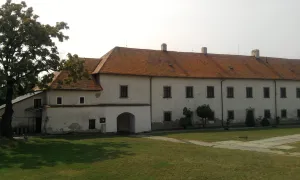
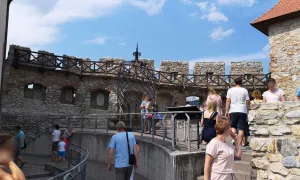


Visitor photos
No photos yet. Be the first to add a photo from your visit!
Log in and add your photo or leave a rating.
You get more points for a visit verified in the app — we can tell from the GPS that you are there.
Reviews and comments