

Palphy Park Park
Pálfyovský park in the village Smolenice in Trnava region is a national cultural monument. It dates back to the second half of the 19th century, the year of creation being mentioned as 1900.
The site records the Monument Office of the Slovak Republic under number ÚZPF 11387. It consists of a manor and natural-lander park.
The monument is located at SNP in Smolenice. It is an example of landscape architecture from the turn of the 19th and 20th centuries.
Historical Milestones
- 1900
- The creation of the Pálphy Park in Smolenica
- 1850
- The beginning of the creation of the complex - mansion and natural-landscape park
Interesting facts
- Pálfyovský park in Smolenice is declared a national cultural monument. - It dates back to the second half of the 19th century, while the year of establishment is 1900. - The area consists of a manor house and a natural landscape park. - The monument represents an example of landscape architecture from the turn of the 19th and 20th centuries.
Guide
The guide was voiced by a synthetic voice created by artificial intelligence.
Show guide text
The text was prepared by artificial intelligence and has not been editorially reviewed. It may contain inaccuracies.
We welcome you to Smolenice, in the heart of the Trnava region, where you will stop today from a place that carries peace and quiet witness about ancient times. You stand in front of Pálfy's Park, a space that surrounds you with its natural beauty and atmosphere of distance from everyday bustle. When you look around you, you will see above all a vast green area that serves as an oasis tranquility around the village. Feel this first impression of nature, which gradually took over the scepter and created a place suitable for meditating on the atmosphere that we so often seek in today's busy world.
Let us now go deeper into the context of this place. Although the exact chronology of the park's creation is not detailed in the available records, its name immediately takes us to one of the most important noble families in the territory of the former Hungarian kingdom, namely the Palphy family. It was this family that left a deep mark in the region, and this park is part of a wider historical whole, which was supposed to represent the status, taste and need for privacy in the then aristocraty. The creation of such parks in the past was not random; they were to serve not only as a place of rest, but also as a link between the architecture of the dwelling and the natural landscape, creating a harmonious whole in which the owner of the city could calm his mind.
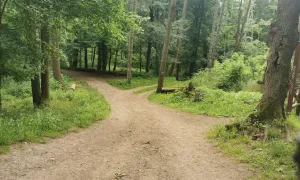
Now, as you slowly move along the area, note the overall composition of this area. Although we do not know exactly who the architects or the compatriots who designed the park, it is clear that the aim was to create a natural sense of stability and balance. See the distribution of trees and plants that surround you today. Watch carefully how the light passes through the leaves and creates a game of shadows on earth. It is in these details, in the very structure of vegetation, and in the sense of space that now bends over you, that the essence of this place hides. You don't have to look for magnificent monuments, because in this case nature itself is the main element and the way it defines the boundaries of this historic area.
As for the personalities associated with this place, the name of the Palphys is key here. This family was known for its political ambitions, military services and patronage over culture and art. Although the specific stories from every corner of this park are not documented in detail today, the very existence of this area in Smolenice shows what role this family played in regional development. Imagine the way people in period clothing walked through these paths centuries ago, discussing Kingdom politics, or simply seeking comfort in the shade of trees, which may now be in the full form of their offspring.
Every place like this has mysteries. At Pálphy Park, perhaps the greatest mystery is what time wiped out. When exactly was it established? What details originally adorned him? Which plants are here from the very beginning and which came later? It is this unknownness that gives the place a certain charm and forces us to show our own imagination. When you walk on this surface, try to imagine what this park looked like in different seasons decades ago. Perhaps there were plant species that we can no longer see, or in the autumn period they were surprised by the colors that were then fascinated by visual regretters and guests.
Now that you have perceived the atmosphere and history of this place, I will allow you to move freely in it. Let yourself be guided by your feelings and feel the silence surrounding you. The Pálphy Park is not just a set of trees and lawns, it is a living organism that has survived many epochs and today offers you a place to relax. Look around you again, feel the clear air and the feeling of peace that emerges from this area.
Before we say goodbye and you go further in your journey along Smolenice, I recommend you spend a few minutes quietly walking. Try to find your favorite place within the park where you can stop for a while and think about how time is changing the landscape, but at the same time keeps track of those who lived before us. Thank you for sharing this moment with us in the Palphy Park. We wish you a pleasant sequel to discovering the beauty of the Trnava region and we believe that this short stop has enriched you with a feeling of peace and history. See you next time.
Tips for visitors
It is recommended to visit in spring when the park blooms or in autumn when the leaves change color. For photos, use the hour of gold shortly before sunset. Focus on the details of trees and the game of light in the crowns. The park is a suitable place for short hikes with children, which connect movement with history.
Frequently asked questions
Can the monument be visited?
Parks and gardens are often open to the public, but some have opening hours or are part of a closed site. We have not verified the entry conditions.
What are the opening hours and admission?
We have not verified the opening hours or admission. Current information is published by the operator.
Where is the monument?
Location: SNP, Smolenice, Trnavský kraj. The map on this page shows the exact spot.
Why is the monument protected?
It is listed in the Central List of the Monuments Fund of the Slovak Republic as a national cultural monument (ÚZPF no. 217-11387).
Thematic route
The proposed thematic route in the monument area:
1. Pálfyovský park - Natural area with plants. 2. Expositions in the area - Thematic exhibitions about the history and architecture of the place. 3. Courtyard - Space connecting parts of the complex, where the building details are visible. 4. View tower - Point with a panorama of Smolenice village and surrounding landscape.
Seasonal recommendations
In spring, the Pálphy Park will wake up to life, the leaves will become intense green color and the first vegetation will bloom. Fine light creates suitable conditions for photographing nature. It is recommended to wear shoes with firm soles into wet terrain and visit in the morning.
The summer season is characterized by a dense treetop that provides shade and cools the surroundings. It is advisable to choose early morning or late evening time to avoid strong sun. Light, breathable clothing and insect repellent are recommended.
Podzim in Smolenice brings a change in the colors of the leaves to golden and red tones. October and November are a good time. Practical is layered clothing and waterproof footwear, as leaves on the ground can be slippery.
Winter in the park are visible bare branches of trees. The landscape is quiet in the snow. Due to the low temperature and humidity, warm clothes and footwear with anti-slip sole are essential. It is advisable to visit the park in daylight, as winter days are short.
Visitor Tips
No tips yet. Be the first!
Log in and add your tip.
Visitor photos
No photos yet. Be the first to add a photo from your visit!
Log in and add your photo or leave a rating.
You get more points for a visit verified in the app — we can tell from the GPS that you are there.
Reviews and comments