

parish church of St. Peter and Paul Church
The parish church of St. Peter and Paul is located in the village of New Life in Trnava region. It dates back to the second half of the 15th century, with 1500 as the basis. According to the memorial register, the building is in the style of early classicism. The Monument Office of the Slovak Republic records the area under the number of ÚZPF 107. The church in part of Elijah stands at No. 9 and is protected as a national cultural monument.
Tehdy a dnes
Drag the slider and compare how the monument might have looked when it was built with the view today.
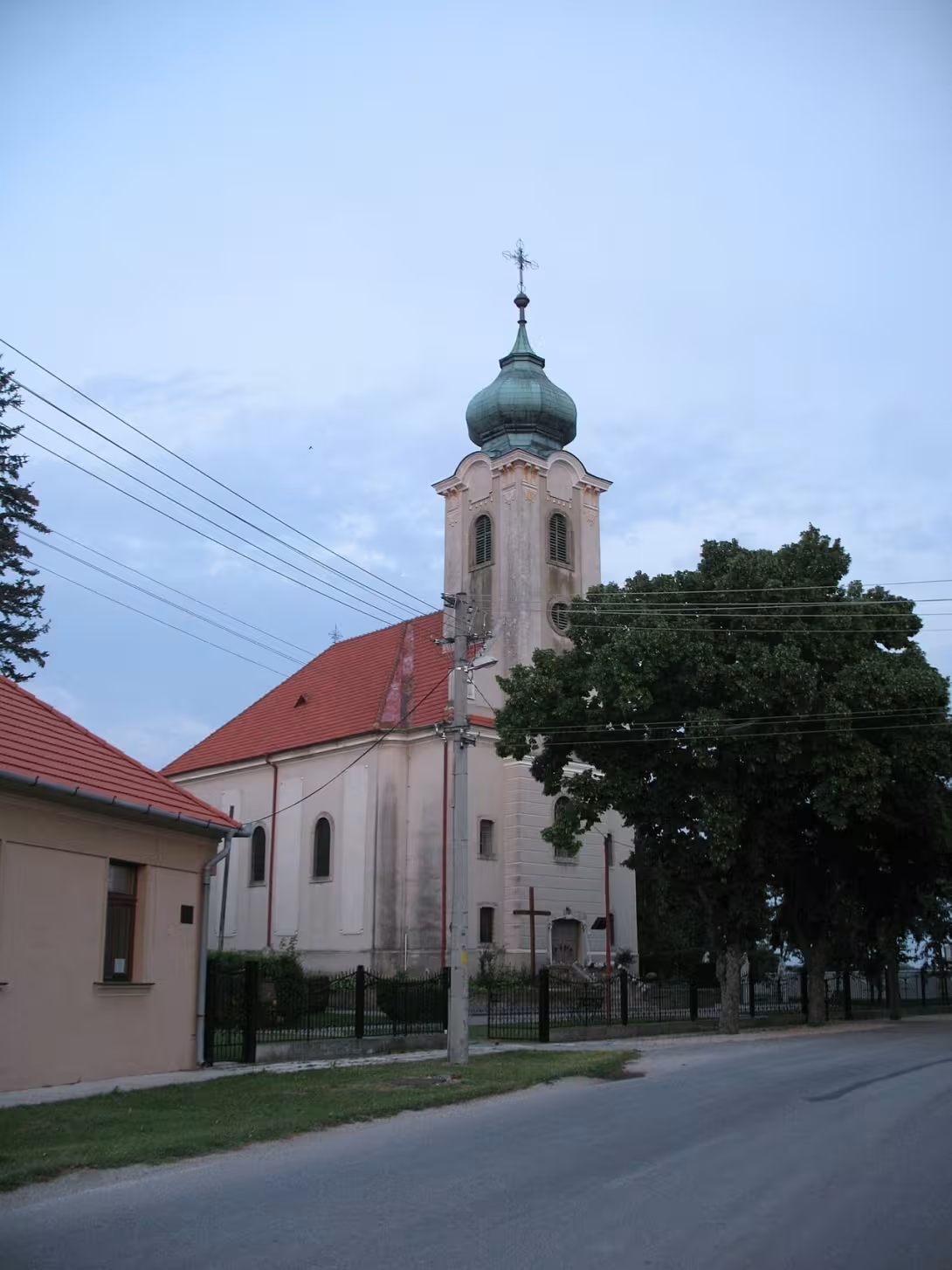
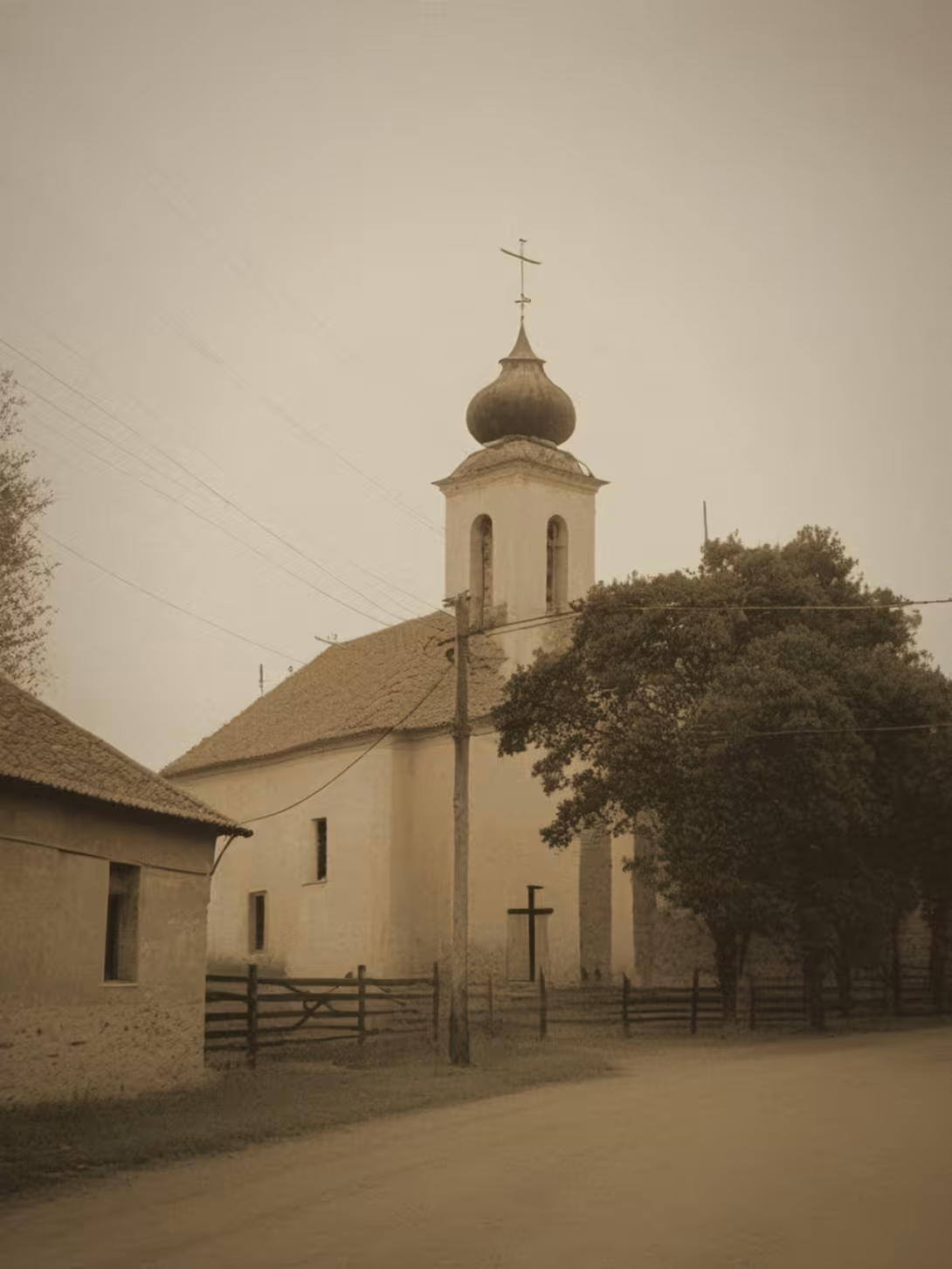
The historical view on the left is a visualisation generated by artificial intelligence and serves as inspiration.
Historical Milestones
- 1500
- Construction of the parish church of Saint Peter and Paul in the village of New Life.
- 1750
- Reconstruction of the church in the style of early classicism.
- 1963
- Entry of an object on the list of national cultural monuments under number 107.
Restoration history
| Years | Type | Extent | Condition after restoration |
|---|---|---|---|
| 2018 |
Obnova
kostol sv.Petra a Pavla |
Časť obnovená komplexne | dobrý |
Source: Monuments Board of the Slovak Republic — open data, licence CC BY 4.0
Artistic features
-
vitráž figurálna s dekorom — sv.Ján Krstiteľ
sklo, vkladanie do siete · historizmus · 1911-1920 -
vitráž figurálna s dekorom — sv.Jozef Pestún s dieťaťom
sklo, vkladanie do siete · historizmus · 1.pol.20.st. -
vitráž figurálna s dekorom — Panna Mária Ružencová
sklo, vkladanie do siete · historizmus · 1.pol.20.st. -
vitráž figurálna s dekorom — sv.Michal Archanjel
sklo, vkladanie do siete · historizmus · 1.pol.20.st. -
vitráž figurálna s dekorom — sv.Vincent z Pauly
sklo, vkladanie do siete · historizmus · 1.pol.20.st. -
vitráž figurálna s dekorom — sv.Rodina v tesárskej dielni
sklo, vkladanie do siete · historizmus · 1.pol.20.st. -
vitráž figurálna s dekorom — sv.Ján Evanjelista
sklo, vkladanie do siete · historizmus · 1.pol.20.st. -
vitráž figurálna s dekorom — sv.Anna vyučuje Pannu Máriu
sklo, vkladanie do siete · historizmus · 1911-1920 -
vitráž figurálna s dekorom — sv.Veronika
sklo, vkladanie do siete · historizmus · 1911-1920 -
vitráž figurálna s dekorom — Panna Mária Kráľovná nebies
sklo, vkladanie do siete · historizmus · 1911-1920
Source: Monuments Board of the Slovak Republic — open data, licence CC BY 4.0
Interesting facts
- The church dates back to the second half of the 15th century, with 1500 being mentioned in the documents. - According to the memorial register, the building is in the style of early classicism. - The monument office of the Slovak Republic records the area of the church under the number ÚZPF 107. - The building is located in the part of Elijah at No. 9 and is protected as a national cultural monument.
Guide
The guide was voiced by a synthetic voice created by artificial intelligence.
Show guide text
The text was prepared by artificial intelligence and has not been editorially reviewed. It may contain inaccuracies.
Welcome to the village of New Life, in a quiet corner of the Trnava region, where the plain of the fertile Žitný ostrov island meets the quiet passage of time. You are now facing a parish church dedicated to two key figures of Christian history, Saint Peter and St Paul. Take a moment off the rush of today, take a deep breath and let the atmosphere of this place affect you. The church you stand before is not just a building of bricks, stone and mortar. He is a silent witness to the life of many generations, at the heart of the joys and worries of local people and a landmark in both the country and human souls.
Look ahead to the overall silhouette of the building. Before you there is a temple that dominates the immediate surroundings with its firm presence. The architecture of this country church carries a magnificent simplicity. Don't wait here for the spectacular decoration of the large city cathedrals. Just in simplicity and harmonious integration into the surrounding flat landscape lies its true charm. Note the proportions of the main facade, the lines of walls, and the way the building rises to heaven. Although archival records often remain silent about the exact names of builders or specific dates when the foundation stone was laid, each part of the building tells its own story.
Consider for a moment the creation of this temple. In the history of our villages and parishes, the building of the church always represented an enormous work that required the effort of the entire community. It was not just the decision of the church authority or the local landlord. It was primarily the self - sacrificing work of ordinary people. It was the villagers, farmers, and craftsmen who often gathered material on their own shoulders, mixed mortar, and laid individual stones. The church was created because people wanted to have a safe harbor, a place where heaven touches the earth, where they could thank for their crops, ask for rain in dry times, and find comfort in times of war, plagues, and insecurity.
Slowly walk through the facade of the church. Feel the calm rhythm of the window openings through which daylight flows into the inner space. It was the light that has had a profound symbolic meaning in sacral architecture since time immemorial. It was not only a practical element but represented the presence of divine grace and truth that dispels every darkness. Look at the entrance portal, the main gate of this tabernacle. It is a symbolic threshold between two worlds, between everyday, profane street life and the sacred silence of the interior. How many legs have crossed this threshold in all these years. Here came newlyweds starting a journey together with life, parents carrying their newborn children in their arms, but also mourners who said goodbye to their dearest.
When you look at the church as a whole, take note of the importance of its patrons. The dedication to Saint Peter and Saint Paul is one of the oldest and most important traditions. These two men were completely different, yet they are inseparable in history. Peter, originally a simple fisherman named Simon of Lake Galilee, was a man of impulsive, emotional, yet firm, rock of faith. Paul, an originally educated Roman citizen and persecutor of Christians, underwent dramatic conversion and became a tireless apostle of nations and a deep thinker. The union of Peter and Paul in one patronage symbolizes unity in diversity, the strength of a solid foundation coupled with the courage to cross borders. For a rural community that lived from the work of its own hands on earth, Peter, a fisherman with his palms bent, was a particularly close figure, while Paul brought insight and depth of faith.
For centuries, the daily life of the local people was unfolding around this temple. Residents of Today's Village New Life lived in close connection with nature, watercourses around the Little Danube and a plane that required immense patience and work. At a time when there were no modern means of communication, the rhythm of the day determined the very voice of the church. In the morning, the voice of the bells invited to prayer and the beginning of the work in the fields, at noon it reminded the time for a short rest, and to dinner he preached the sunset and the return home. The bells warned of fires, approaching storms, or enemies, and their sound accompanied man from cradle to grave.
One of the most fascinating mysteries of this place is what remains unwritten. History is not just a list of battles, rulers and signed contracts. The deepest history is hidden in the memory of these walls. The names of the masons who cut off the stone, the carpenters who bound the mighty shrubs, and the painters who adorned the interior took time. We don't know exactly what kind of thoughts they had in their heads when they put the last tile on the roof. Yet, it is this anonymity that bears a deep message of humility. These people were not building a monument to their own glory, but they were creating a space that would last their own lives. And they did. Generations have gone away, borders of estates and states have changed, but St. Peter's parish church and Paul are still standing here as a fixed anchor in the middle of the flow of history.
Now step a little closer or walk slowly around the outer perimeter of the building. Feel the texture of the plaster, the strength of the corner and the integrity of the whole composition. From every angle of view, the building offers a different experience. You can admire the length of the main ship and the way the building opens towards the presbytery, the place where the altar is located. From behind you will see the closure and peace of the sanctuary, which serves as the innermost core of the entire sacral space.
Note also the surrounding area, greenery and peace that surrounds the church. Churches in the past were not isolated islands, but the natural center of village life. They were a meeting place where neighbors spoke after Sunday's service, exchanged news, and strengthened community relations. Even today, in a time of constant haste, digital news and noise, this place retains its original ability to slow down our step and make us quiet.
Before you continue your journey, let yourself stay here for a few moments. If the temple is open, do not hesitate to enter the atrium or the temple ship to experience the distinctive smell of wood, wax, and centuries - old silence. If the door is closed, let your view rest on the outer lines and feel the pride of the people who have protected and maintained this structure for generations.
Thank you for stopping by the parish church of St. Peter and Paul in New Life. May the peace and quiet perseverance of this place guide you in your other ways by knowing our common cultural and spiritual heritage. I wish you a pleasant and rewarding rest of the day.
Tips for visitors
Visiting the Parish Church of St. Peter and Paul in the village of New Life is best planned for spring or autumn months when the weather is pleasant to walk around. For photographers we recommend early morning or late afternoon when soft sun rays nicely highlight the silhouette of the building and details of the facade.
When shooting, focus on the exterior of the church, especially the tower and architectural elements of the facade. Interesting pictures can be captured from different angles in the space around the building, where historical architecture combines nicely with surrounding greenery.
The village of New Life can be reached by car or public transport from nearby towns of Trnava region, while the current connections are recommended to search in traffic search engines. Comfortable footwear is suitable for the journey and it is always appropriate to choose appropriate and respectful clothing when visiting sacral places.
For families with children, this location is a quiet and safe place to stop and learn about regional history. The surroundings of the church offer a quiet rural environment ideal for an easy walk in the fresh air.
Frequently asked questions
Can the monument be visited?
Religious buildings are usually open mainly during services; at other times a visit is normally arranged with the parish or the operator. We have not verified specific times.
Where is the monument?
Location: č. 9, Eliášovce, Nový Život, Trnavský kraj. The map on this page shows the exact spot.
Why is the monument protected?
It is listed in the Central List of the Monuments Fund of the Slovak Republic as a national cultural monument (ÚZPF no. 211-107).
For children
Imagine you jump into a time machine and it blows you back in 526 years! The year is 1500. At the time, there were no cars, cell phones, computers, and even electricity. There were dense forests, swamps, and silence all around. And it was in this wild time that a majestic parish church of Saint Peter and Paul was established in the village of New Life. It was the biggest and most important place in the whole wide area. As if in a favorite computer game you built your first huge base in unexplored territory!
Nearby
🏰 Historic sites (190)
- Sv. Ján Nepomucký 0.1 km
- Pamätník padlých 1.1 km
- Kúria Pállfyovcov 1.6 km
- Sv. Ján Nepomucký 1.8 km
- Vertetics Péter 1.8 km
- Sv. Ján Nepomucký 2.0 km
- Kaštieľ Tonkovce 2.2 km
- sv. Ján Nepomucký 2.5 km
- Vodný kolový mlyn a skanzen v Jelke 2.9 km +421 905 133 095 web
- Pamätník padlých v II. svetovej vojne 2.9 km
- Pamätník padlých v I. svetovej vojne 2.9 km
- Sv. Florián 2.9 km
- Sv. Florián 3.0 km
- Monika 3.3 km
- Sv. Florián 3.8 km
- sv. Florián 3.8 km
- Sv. Anton Paduánsky 3.9 km
- sv. Vendelín 3.9 km
- Rómsky holokaust 3.9 km
- Ježiš, Mária a Jozef 3.9 km
🍽️ Restaurants and dining (158)
- Reštaurácia TRÓFEA 1.4 km +421 31 5691806 web
- 24 Lakes 2.6 km
- U Ernesta 2.8 km web
- MALOM 2.9 km web
- Pauza 3.7 km +421915857263
- Ister 3.9 km web
- Fényes 4.2 km Hlavná 539/81
- Fényes 4.2 km
- Hostinec Bonita 4.2 km
- STAR centrum Oľdza 4.4 km +421 948 330 588 web
- Bar 150 5.9 km
- Old School 6.0 km +421 915 640 810 web
- Maxim Club 6.3 km
- pizzeria 6.4 km
- Pepo Fish Csarda 6.5 km +421 31 558 62 75
- Hostinec u Svätého Jána 6.8 km
- Červená ruža 8.0 km
- IMI 8.8 km
- Zbrojnoš 9.3 km
- Na štadióne 9.4 km
🏨 Accommodation (40)
- Táborisko Vodný mlyn 2.9 km
- Táborisko PomoRanč 3.4 km +421 940 636 602 web
- Táborisko pod Krížom 3.6 km +421 949 009 488 web
- Hotel Máger 3.7 km Prievozská cesta 41/2
- Ister 3.9 km Dunajská 1266/36
- (backcounty) 4.2 km
- Castel Pension & Restaurant 7.8 km
- Táborisko Potônske Lúky 9.0 km +421 910 324 881 web
- Penzión pri rybníku 9.7 km +421 905 446 969 web
- Ring 9.9 km +421 917 193 643 web
- Malkia Park 10.0 km web
- Vlčanská lúka 10.1 km
- MOTO 10.3 km
- AQUArea Čierna Voda 10.3 km +421 902 673 675 web
- Lúka Tomášov 10.7 km
- Penzión U zlatej rybky 10.7 km web
- Formula 10.8 km
- Medea 11.1 km
- Art Hotel Kaštieľ 11.4 km +421 2 209 093 00 web
- Hotel Fortuna 12.0 km +421 2 45 915 194 web
🚲 Rentals and sport (16)
- Člny nože.sk 8.3 km +421 910 658 040 web
- Slovakia Ring 9.5 km +421 917 544 227 web
- Cykloservis Polákovič 9.9 km +421 903 850 587
- Slovenské motokárové centrum 10.0 km web
- Opustené kúpalisko 10.1 km
- Telocvična 10.9 km
- Bazén Art Hotela Kaštieľ 11.3 km +421220909300 web
- Aqualina klub baby plávania 11.6 km +421 915 992 783 web
- Relaxačno-športové centrum 12.0 km
- splavma.sk 12.2 km +421 905 224 253 web
- Areál RC Šport Model Klub 12.3 km web
- Jazdecký areál Anna majer 12.4 km
- Zóna oddychu a relaxácie 13.0 km
- Elfo club - športové stredisko 13.6 km
- Jazdecký areál Davidov 14.9 km
- Dronte 14.9 km web
🥾 Hiking and nature (30)
- Tonkovský park 2.2 km
- Vodný kolový mlyn Jelka 2.9 km web
- Borina 6.1 km
- Šibeničný kopec 9.0 km
- Hapota 11.3 km
- Alžbetin park 12.1 km
- Rozhľadňa Slnečné jazerá 12.3 km
- Park Sadová 12.3 km
- Rozhľadňa Slnečné jazerá 12.5 km
- Park oddychu 12.7 km Hečkova
- Lipový park 12.8 km
- Anna park 13.1 km
- Kaštieľsky park 13.8 km
- Pamätná studňa 13.9 km web
- Rekreačné stredisko 14.0 km
- Kaštieľsky park 14.2 km Obchodná
- Pútnické miesto Sedembolestnej Matky 14.2 km
- Zelená oáza 14.5 km
- Žilíp 14.5 km
- Totemová lúka 14.6 km
Thematic route
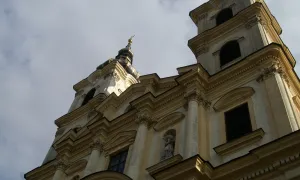
Facade and historical portal of the church Type: architectural detail At the entrance there is a visible connection of several architectural styles and a detailed portal. The exterior of the building reflects the long development of the parish church of St. Peter and Paul in the village of New Life.
Interior of the parish church of St. Peter and Paul Type: sacral space The interior contains a historic altar and decoration with artistic value, which creates a peaceful environment for meditation and observation of architectural details.
Church Tower Type: construction part The tower in which the bell tower is located is a significant element of the building. From a close perspective, construction solutions of different construction periods can be observed.
Church yard area Type: modified space The surrounding area of the church consists of a landscaped courtyard with greenery, which provides a place to relax and allows an overview of the overall architecture of the monument.
Seasonal recommendations
The arrival of spring brings fresh greenery and flowering vegetation to the surrounding flat landscape of the village. The parish church of St. Peter and Paul is covered in pleasant spring light during this period, which highlights the lines of its exterior especially during the bright mornings. The atmosphere around the monument is peaceful, accompanied by a swinging bird in the surrounding trees. To visit the exterior it is appropriate to choose layered clothes, as spring weather on the Danube is variable and accompanied by fresh wind. The best time to walk around the building is early morning or late afternoon, when soft sunlight creates ideal conditions for photographing and admiring architecture.
In the main summer season, intense sunlight and high temperatures typical for Trnava region dominate the region. The sharp midday rays create striking contrasts and shadows on the church facade, while the warm evenings cover the entire object in warm golden tones. Due to the hot lowland climate, light and breathable clothing, head cover and plenty of fluids are recommended. The best time to explore the exterior of the monument is the morning hours until the air reaches the daily maximum, or the late evening just before sunset, when the surrounding village atmosphere calms down and summer heat subsides.
The autumn months transform the surroundings of the church in the village of New Life into warm shades of yellow, orange and brown. The morning mist in the lowland country adds a mysterious touch to the historical building, which turns into a damp and evenly dispersed light as the day progresses. The inspection during this period fits warmer, windproof clothing and solid shoes, because the terrain around the building can be wet after rain. The best time to visit is around noon and early afternoon, when temperatures are the most pleasant and sunshine dawning through the falling leaves creates a captivating atmosphere for a quiet walk near the building.
The winter season brings to the church of St. Peter and Paul a minimalistic and quiet atmosphere. The low winter sun depicts the sharp silhouette of the building opposite the sky and the possible icing or snow cover gives the whole place a special charm. The most appropriate time to admire the exterior are the noon hours, when natural light reaches its daily maximum, which makes it possible to perceive the architecture of the church best during short winter days.
Visualisations and artistic views


The visualisations are generated by artificial intelligence and serve as inspiration.
Photographs from the area
Real photos taken near the monument


Source and licence are given for each image.
Visitor Tips
No tips yet. Be the first!
Log in and add your tip.
Location on Map
Visitor photos
No photos yet. Be the first to add a photo from your visit!
Log in and add your photo or leave a rating.
You get more points for a visit verified in the app — we can tell from the GPS that you are there.
Reviews and comments