








pottery workshop Pottery workshop
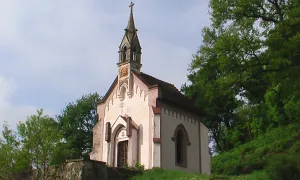
Pottery workshop is located in the village Šivetice, Banská Bystrica region. It is a protected national cultural monument.
Tehdy a dnes
Drag the slider and compare how the monument might have looked when it was built with the view today.


The historical view on the left is a visualisation generated by artificial intelligence and serves as inspiration.
Interesting facts
- The national cultural monument in Šivetice represents a pottery workshop dating back to the first half of the 20th century. - The building is registered in the Central List of Monument Funds (ÚZPF) of the Monument Office of the Slovak Republic under the number 4692 and is located at the address No.
Guide
Show guide text
The text was prepared by artificial intelligence and has not been editorially reviewed. It may contain inaccuracies.
Welcome to Shivetice. You're standing in front of a building that at first glance looks like an ordinary, perhaps a few decades old house with an economic part, but its walls are keeping an echo of craft, which has stood here for hundreds of years. Before you is a pottery workshop - a monument to folk production, which combines the work of clay with the daily life of this village in Horehron. Look at the facade: simple, functional, without unnecessary decorations. The windows are smaller, the doors to the workshop larger, so that pots can be carried in the trolleys and raw matter. The roof is covered with shingles or later bricks - depending on when it was repaired - cut the area where the clay was changed in the containers in which it was cooked, stored and celebrated. Let's move closer to the entrance. Notice the threshold. It is wiped out not only by wind and rain, but also by thousands of feet of mist, apprentices, children who have been running around on assignments. The stone or hard brick tile remembers the speed with which it worked here. The clay doesn't wait. When it is flown, it must be processed. When it's dry, it's wet. The workshop's rhythm was given by natural cycles, not by hours of winter. Although the exact dates of the creation of this particular workshop are missing in the archives - chronology remains unknown, architects unknown, the names of owners have been lost in a minute of time - we know that the pot has been cooked in Šivetice for centuries. This building is a physical trace of this tradition, its last, physically preserved witness. They don't look inside, through doors that are closed today, but in the spirit they are always open to your imagination. You don't see any golden ceilings, no frescoes, no statues. There is a raw aesthetic of purpose. There would be a furnace in the center - the heart of every pottery workshop. Although the furnace may physically no longer be here today, or is just a ruin after a chimney, her spirit is here. It was a massive construction made of a baked brick built directly into the ground to keep the temperature a thousand two hundred degrees. Around it would be arranged work tables, wheels, shelves for drying. No official would clean the floor, but dirt, ashes, sand. The air would be cleared with ground, smoke, dry wood and moist clay. It's a fragrance that never produces a perfume -- it's a fragrance of work. The architecture of this workshop is the architecture of the need. The shape language was not dictated by fashion in the city, but by the physics of hot clay and the logistics of raw materials. Thick perimeter walls of quarry stone or brick, plastered with clay plaster, which breathed along with the wall. Ceiling structures made of wood, bearing columns that lasted generations. If you touch the wall now, you feel the coldness of thick material. It's not smooth concrete. It's a material that has its character, its cracks, its shrapnel from trucks, from the impact of a shovel, from time to time. Who worked here? Names are unknown. We don't have any signed works, no credit cards, no portraits of the masterminds. Anonymity is the rule here, not the exception. There was a master who could control the wheel so that a thin, even wall of the mug rose from the clay ball. There were teachers who learned to feel the matter with their fingers, who struggled with the center, with a uniform wall thickness, so that their work would not spoil their drying. There were women and children who prepared clay - wiped it, stirred it with a sand or chamotte, so that it would not become blurry in the fire. There were men who drove wood to the ovens, who guarded the fire for three days and three nights without stopping, fed it with dry beech or oak so that the temperature would rise evenly. Whole families lived here in symbiosis with a workshop. They were sleeping in a neighboring room, getting up before dawn, lying down in the dark. The workshop wasn't just a workplace. She was a house, a school, a border between family and the world. Šivetice was known for its pottery far beyond the surroundings. Markets in Banská Bystrica, in Brezno, in Zvolen - where to import bowls, pots, coffee sets, flower pots, as well as building ceramics - bricks, roof shingles, chimney pipes. The products from this workshop traveled. They had not only the usefulness but also the identity of the place. The ornamentics that were there - simple lines, dots, lines ordered by a pen or comb to a still moist pot - were like a written signature. Each master had his own variety, his own way to load the glaze, how to achieve that specific greenish-gold or brown-green shade that gave natural clay from the surroundings and leaded glaze. Although we do not have documented specific patterns from this particular workshop, we know that the chivetic pot had its face. It was thicker, more resistant, designed for hard work in the field, in the forest, in the kitchen where beans and sour potato soup were cooked. Look at the surroundings. The workshop wasn't in isolation. Around it would be a yard, a drying field, where pots and bowls stood in rows like small soldiers before the battle - a battle with fire in the ovens. There was a storehouse of clay, perhaps a hole where the clay was intertwined, rumbled, improved by characteristics. There was a wooden pile for water, because water is life in ceramics. And there were trees - maggots or oaks - giving shade in July, when the oven up, and the workshop turns into a wreck. Today, maybe there's only grass, once, newer houses. But you're gonna try to disappear now. Listen to the noise of the letters. Count the heat from the stone that soaked the sun all day long. Count the humidity of the air near the river that flows near, giving life to the matter. Here comes the mystery I was talking about at the beginning. Why did this workshop survive before others disappeared? There were several workshops in Šivetice. Some have burned - the furnace is a dangerous neighbor. Others fell because the family moved into the city because the children did not want to learn craft because of factory ceramics, plastics, aluminum. This one stood. Maybe because she was the biggest. Maybe because it was best built. Perhaps because someone put in it a love that is more durable than a brick. We don't know. And this ignorance is a gift. It allows you to fill this workshop with your own paintings. To become the apprentice who's afraid to touch the wheel. To be the master who comfortably heats the furnace at night, listening to how the clay sings in the fire - the typical quiet scratch, when the water changes in a pair, when the structure changes in stone. Note the detail you don't see, but you feel. It's continuity. The hand that touched the same brick today that touched the hand a hundred years ago. Legs that track the same stairs to the attic where the raw materials were dried. Looking through the window at the same top, at the same church in the middle of the village, at the same fields. Time didn't flow linearly. Here
Tips for visitors
A good time to visit is spring and early summer. Mild weather and daylight allow comfortable walks and outdoor photography. The location is available by car. We recommend comfortable shoes, water and jacket, because the workshop is partially outdoor and terrain uneven. For photography is suitable morning or late afternoon light, which highlights the texture of the cigar walls and wooden structures. Photo from the corner that captures the whole object and details of the ovens. There are no specific points within 30 minutes of the journey in the supporting documents. For trips to the surrounding area, consult the local information centre or use the map. It is appropriate for families with children to prepare a short story about the pottery craft and let children look for traces of handwork on ceramics. When moving around the older parts of the building, take care of safety.
Frequently asked questions
Can the monument be visited?
This is a technical monument. Some are open as exhibitions, others are out of use or on private land. We have not verified whether this one is accessible.
What are the opening hours and admission?
We have not verified the opening hours or admission. Current information is published by the operator.
Where is the monument?
Location: č. 61, Šivetice, Banskobystrický kraj. The map on this page shows the exact spot.
Why is the monument protected?
It is listed in the Central List of the Monuments Fund of the Slovak Republic as a national cultural monument (ÚZPF no. 328-4692).
For children
Imagine that you are pursuing a world where it smells like dry land, smoke, and something that reminds of rain on earth. The year is sometimes in the past, specifically in Shivetice, and you are a small apprentice in a potter's workshop. There's a big wheel humming around you, the clay slips through your fingers like a living organism, and you're just a little master who learns how to control that incomparable material. You're not in school, you're in a study where the bombs are made of vessels that survive centuries.
Nearby
🏰 Historic sites (62)
- Šivetický hrad 1.6 km
- Kaštieľ Hucín 2.9 km
- sv. Florián 6.1 km
- Kövi malom 6.1 km
- Mestské múzeum Jelšava 6.2 km web
- SNP 6.2 km
- Starý Jelšavský hrad 7.7 km web
- Obecné múzeum Leváre 7.7 km
- Dr. Ujváry Zoltán 7.8 km
- Turul 7.8 km
- Kubinyi Geza 9.7 km
- Železničné múzeum Lubeník 9.8 km +421905435895
- Plešivský hrad 10.1 km
- Rákoš 10.2 km
- Blum Samuel Istitute hospital condita 10.2 km
- Synagóga v Plešivci 10.2 km
- Petőfi Sándor 10.2 km
- Tichy Kálmán 10.3 km
- Samu Kati 10.3 km
- František Rákoczi II. 10.3 km
🍽️ Restaurants and dining (26)
- Bella Piazza 5.5 km +421 907 804 854
- Pohostinstvo u rusa 6.2 km
- Cent-Rum 8.3 km
- U Barbory 8.8 km
- Krčma 9.2 km
- Kongó 9.3 km
- Bus bufet 10.2 km
- Kebab Plešivec 10.2 km
- Micio 10.2 km +421905993311
- Bistro 10.3 km +421 918 033 305
- Pizza Piazza Grill Bar 10.3 km +421 911 214 033 web
- Poniklec 10.3 km
- Acapulko 10.3 km
- Daxnerka Burger 10.4 km +421 911 865 265 web
- Penzión HOSTINEC U VINTNERA 10.6 km
- PizzaCaffe za kostolom 10.7 km +421 949 657 654 web
- Aragonit 10.7 km
- Retro pub 10.9 km
- Hostinec Psota 11.9 km web
- Flipper 11.9 km
🏨 Accommodation (13)
- Penzión Poľovný dom 5.5 km Kúpelná 196/7
- Hotel Hrádok 8.8 km +421584860220 web
- Penzión Skalná ruža 9.2 km +421 587 921458;+421 905 718 046 web
- Hôrka 9.2 km
- Diana vadászház 10.0 km
- Bed & breakfast Hugo 10.2 km
- chata Ondrejka 10.3 km
- Rarmen 10.7 km
- poľovnícka chata Rusnák a Maďari 11.3 km
- Erika 11.4 km
- Flipper 11.9 km +421 907 114 004 web
- Chalupa Ida 14.0 km +421 907 047 280 web
- Kemping Gombasek 14.3 km web
🚲 Rentals and sport (1)
- Veronika 9.2 km
🥾 Hiking and nature (269)
- Muteň 1.3 km
- Markuškiná 1.5 km
- Prihradzianska Hradná 2.1 km
- Malkiná 2.7 km
- Stráň 3.0 km
- Skalný vrch 3.0 km
- Bartov vrch 3.4 km
- Skalka 3.4 km
- Stredný vrch 3.5 km
- Nad Hlbokou dolinou 3.5 km
- Viničník 3.6 km
- Krčma 3.8 km
- Slovenská skala 4.1 km
- Strieborník 4.2 km
- Orlová 4.2 km
- Veletínka 5.1 km
- Slaný vrch 5.3 km
- Skalka 5.4 km
- Mrškovka 5.4 km
- Tri chotáre 5.5 km
Thematic route
The main workshop - the workplace where the secret of the pottery craft is passed on; visitors can watch the work on the collaborator and try its own ceramics. The baking chamber - a historical furnace for burning ceramics; shows the traditional baking process and the influence of temperature on the colour of products. Exposition space - Gallery of finished products from utility dishes to artificial plastics; allows to buy chivetic ceramics. Courtyard with water source - space to relax and observe the preparation of the clay; water from its own source is important for the quality of the pottery material.
Seasonal recommendations
Jaro
Spring season in Šivetica offers a unique view of the pottery workshop, when the surrounding area is filled with flowering plants and green. Shining sunlight illuminates the more ancient parts of the building, highlighting its historical details. It is practically appropriate to visit the workshop at the beginning of spring days when there are not yet such big crowd matches and you can enjoy a calm view. It is recommended to wear browsing clothes to help you protect against sun papers.
Leto
In summer, the potter's workshop in Šivetica is particularly attractive because of the warm and clear weather that allows longer visits. On bitter days, however, it is recommended to visit the workshop early in the morning or at the end of the day to avoid the greatest crowds and enjoy a peaceful view. The practical advice is to wear lightweight clothing and sufficient protective equipment from the sun's papers.
Podzim
In the podium Šivetice turns into a place with rich appearances, when the leaves of the trees barren to the rose and orange cuttings. This cold reflects the atmosphere of the pottery workshop, complemented by mild sunlight. It is advisable to visit in the morning or evening when temperatures are more pleasant and less visitors. It is recommended to wear top clothes to change the weather, and perhaps also a hand blanket to be ready.
Winter
In winter, the potter's workshop in Šivetica is surrounded by a peaceful winter atmosphere. Less visitors and short days are characteristic of this time when you can enjoy a more pleasant view of the historical object. In the proposed visit, it is important to keep in mind warm clothes and frost protection, as the workshop can only be open for limited hours due to winter conditions. Also bring a handy light to enjoy the view even in the darker times of the day.
Visualisations and artistic views


The visualisations are generated by artificial intelligence and serve as inspiration.
Photographs from the area
Real photos taken near the monument

Source and licence are given for each image.
Visitor Tips
No tips yet. Be the first!
Log in and add your tip.
Location on Map
More monuments – Šivetice
Show all in the town
Visitor photos
No photos yet. Be the first to add a photo from your visit!
Log in and add your photo or leave a rating.
You get more points for a visit verified in the app — we can tell from the GPS that you are there.
Reviews and comments