








roľnícka usadlosť Farmer's farmstead
The court peasant in the village Ducové in Trnava region is a national cultural monument, which represents an example of folk architecture. The whole object dates back to the second half of the 19th century.
The area, which the Monument Office of the Slovak Republic registers under the number ÚZPF 2266, consists of two separate objects. The first one is under the number 2266/1 registered folk house, which comes from the 1990s. The second building within the area is under number 2266/2 registered barn.
In terms of construction characteristics both buildings have brick construction. The house is made in the style of folk construction. In the registration data the year of the establishment of the monument is listed as 1990.
This monument is located in the cadastral territory of the village Ducové at the address with number 83. It is officially declared a national cultural monument and registered in the register under number ÚZPF 214-2266.
Farmyard in the village Ducové is within the village interesting as a preserved demonstration of historical countryside. By its material nature, it documents technical solutions and the way in which it operates from the late 19th century. Visiting this place provides the opportunity to see authentic elements of folk architecture.
Tehdy a dnes
Drag the slider and compare how the monument might have looked when it was built with the view today.
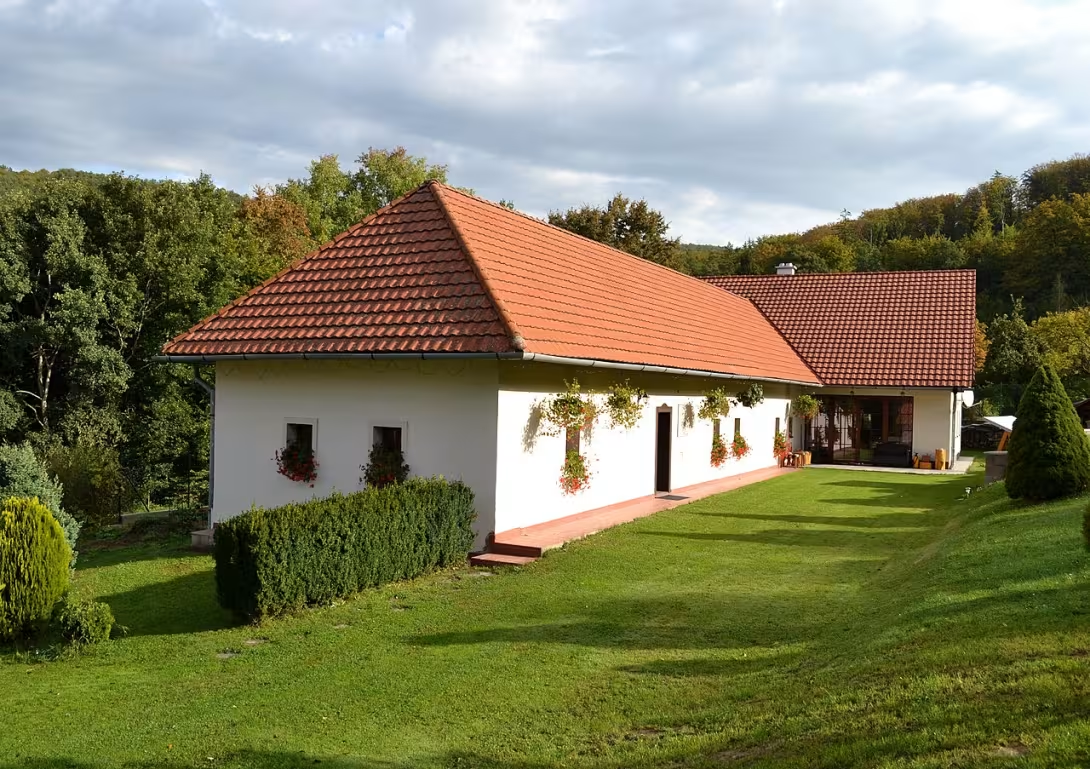
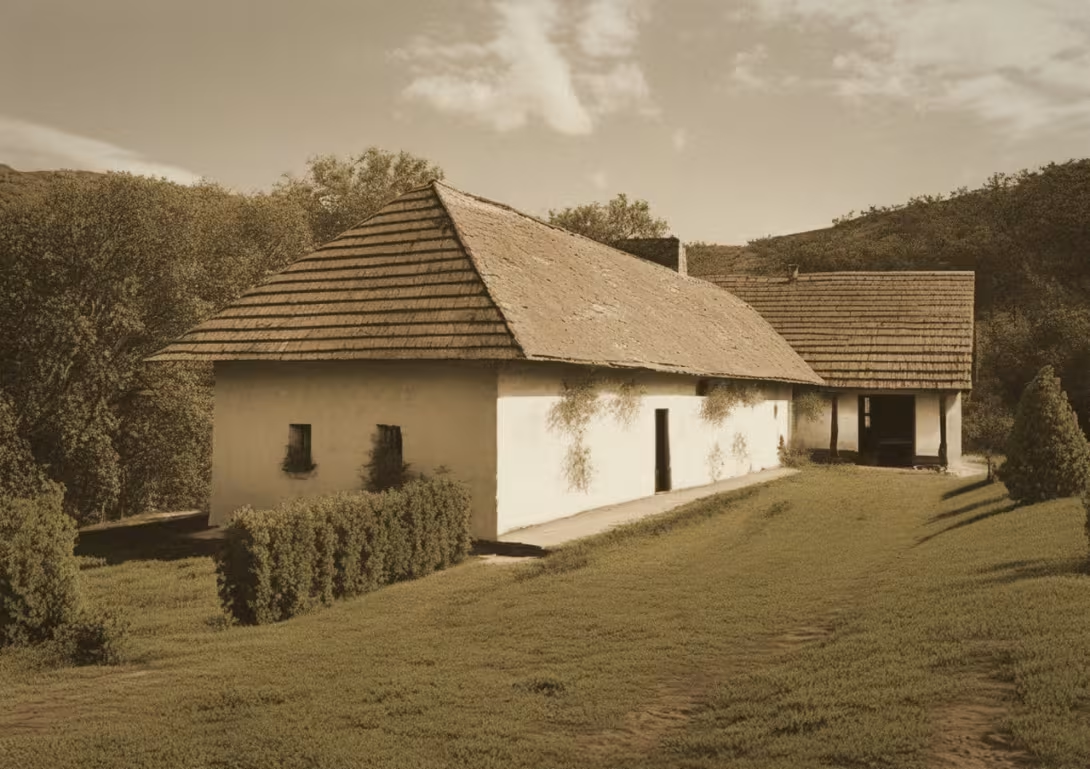
The historical view on the left is a visualisation generated by artificial intelligence and serves as inspiration.
Historical Milestones
- The area records the Monument Office of the Slovak Republic under number ÚZPF 2266 and consists of 2 objects: 2266/1 - Folk House (mural construction, folk construction, 90.r.19.st.)
- 2266/2 - Stodola (walled construction)
Interesting facts
Monument office of Slovakia under number ÚZPF 2266
Guide
Show guide text
The text was prepared by artificial intelligence and has not been editorially reviewed. It may contain inaccuracies.
Welcome to the village of Duco. You stand by one of those places that, although they do not have spectacular Renaissance palaces or monumental cathedrals, still bear the immense value of our cultural identity and historical heritage. Before you lies the peasant settlement, known as the Dvor peasant. Try to stop for a while before you start going through the parts of this place. Look around you and see the atmosphere that combines human efforts and the natural environment. Perhaps in this silence you feel the legacy of ancient times that shaped life in this part of the Trnava region. This yard is not just a set of buildings; it is a living witness of the past telling us a story about how people lived, worked, and built their existences in a narrow symbiosis with soil.
Now that you look around, you might wonder exactly when this court was formed. It is a question to which history does not give us an immediate answer. The exact chronological data on the origin of this settlement are not clearly preserved in our archive records. However, this ignorance does not mean that the place has no meaning. On the contrary, it is this confusion that gives this place some depth and mysticism. The settlement is likely to have worked for centuries, as has been the case in this area, and its existence is the result of gradual building and adaptation to local conditions. Although we do not know the exact year when the first foundation stone was laid, we can imagine that this court was the heart of the local microcommunity, the place where work, the family, and the day - to - day struggle to revive.
Now pay attention to the architecture you have right in front of your eyes. When you move around buildings, we will not look for complex artistic decorations or luxurious elements that would require special artistic training. Rather, feel the practical, functional beauty. Everything is focused on purpose in the farmhouse architecture. Every building, every angle, and every arrangement of space had a clear goal - to serve the farmer, his family and their economy. Look at how individual objects are distributed within the whole. Feel their closeness to one another and the way they create the space that has been designed to be effective for everyday tasks. Even if we do not know the names of the specific architects who designed these buildings, you can see in their work a deep knowledge of local materials and the need to create a resilient home that can withstand the dangers of time and weather. View this architecture as an expression of human sense and reason, which sought to dominate the environment for the good of the family.
Looking at these buildings, you might start asking who really lived here. This is one of the biggest challenges this place offers us. We do not have the names of historical personalities associated with this court. Their voices, their joys, and their sorrows are unknown. But it is in this anonymity that the power of this place lies. This court is not a monument to one king or one nobleman, but a monument to thousands of unknown people. They were farmers who went out to the field every morning, they were fathers and mothers who were building the future in the care of their children, they were people whose hard work quietly shaped the country you see today. When you now look at the individual parts of the settlement, try to imagine their daily life. Imagine the morning waking up, the sound of instruments, the movement of animals and the rhythm of the season, which in the past set the pace of every day. These unknown personalities are the real owners of this history.
Without accurate data and names, the history of this place may seem incomplete, but there lies one fascinating mystery. What does this court tell us about us? What tells us about how our relationship with the earth and our work changed? This ignorance forces us to interpret ourselves and to reflect more deeply. At the same time, there is a fact that reminds us that this place is not just an old building but a part of national cultural heritage. This is confirmed by the fact that this monument is protected by the State itself and is registered in the Register of the Monument Office of the Slovak Republic under number ÚZPF 2266. This number is a symbol that even this modest settlement has its weight and that its protection is the duty of all of us to remember our roots.
Before you go on the next part of your journey, we suggest you just stand here for a while. Feel the silence, perceive the light as it hits these historical shapes, and try to be absorbed by the atmosphere of this place. The court of the peasant in the Duco is not only a stopped time; it is a connection between what was and what we are today. It is a challenge to respect simple things and to understand that true history is often hidden in the quiet, unknown corners of our country.
Now we leave you with your own thoughts and invite you to continue to discover the surroundings. Perhaps at the next step you will find another detail or story that will help you to understand better this world that surrounds us. Thank you for being with us, and we wish you a pleasant and inspiring further stay in this historical area. Goodbye.
Tips for visitors
The recommended visit time is spring due to flowering orchards. All farm buildings are open in the summer.
The place is accessible by asphalt road. Buses stop in the nearest village, there is a 500 - meter - long road.
We recommend shoes with fixed soles due to unreinforced roads in the area. In summer, select a hat and repellent.
Take pictures in the morning when light falls on the facade of buildings. Details can be found in wooden structures and in the interior of the main room.
For families with children there are space for running and stations with tools.
Frequently asked questions
Can the monument be visited?
This is a residential or farm building, not a museum with opening hours. Please view it from public space and respect the owners' privacy. We have no information about access to the interior.
Where is the monument?
Location: č. 83, Ducové, Trnavský kraj. The map on this page shows the exact spot.
Why is the monument protected?
It is listed in the Central List of the Monuments Fund of the Slovak Republic as a national cultural monument (ÚZPF no. 214-2266).
For children
Imagine having a secret key to the time machine in your hand. But it's not the glowing and noisy machine you know from movies. It's something quieter, but much more exciting. You set it for 1990, and suddenly you find yourself in a time that was only about 50 years ago. Then in the country The Ducs began to change important things. Right here, in the Trnava region, there is a place that has its own unique story. It's the Court of Farmers.
Nearby
🏰 Historic sites (177)
- Kostolec 0.7 km
- Kaštieľ Moravany nad Váhom 2.7 km Kostolecká 161/10
- Obetiam I. a II. svetovej vojny 2.8 km
- Padlým v 2. sv. vojne 2.9 km
- sv. Donát 3.0 km
- Classic car museum 3.0 km
- Vznik ČSR 3.2 km
- Padlým rumunským vojakom 3.4 km
- sv. Ján Nepomucký 3.4 km
- Kaštieľ Lúka 3.5 km
- Ježiš Kristus 3.6 km
- Jozef Marek 3.6 km
- Vojenské historické múzeum 3.7 km +421 33 791 3802 web
- Trojičný stĺp 3.9 km
- sv. Vendelín 3.9 km
- Panna Mária Ružencová 3.9 km
- sv. Florián 3.9 km
- sv. Ján Nepomucký 3.9 km
- Pieta 3.9 km
- Trojičný stĺp 3.9 km
🍽️ Restaurants and dining (319)
- Pohostinstvo 0.1 km
- Bar u námorníka 0.1 km
- Pohostinstvo 1.9 km
- Majami 2.3 km
- Hostinec 2.4 km
- Pohostinstvo Modrová 2.6 km
- Mona bar 2.7 km
- Cukroska 2.8 km
- Stop Cafe 2.9 km
- Gazdovský dvor 3.0 km
- Ap bar 3.1 km
- Tematín 3.1 km
- Pohostinstvo Martina 3.6 km
- Vrtuľa 3.6 km
- Chilli Caffe 3.6 km web
- Rio taverna 3.7 km
- Delfin club 3.8 km
- Dami 3.9 km
- Stuart's Pub 3.9 km
- Na Dvore 3.9 km Kúpeľná 1333/2 +421 948 007 782
🏨 Accommodation (65)
- Penzión Tematín 3.1 km Krížna 350/4 web
- Balnea Grand 4.1 km
- Magura 4.1 km Pod Párovcami 1317/58 web
- Balnea Splendid 4.2 km
- Hotel Park 4.2 km +421 337 951 111 web
- Športhotel 4.2 km
- Penzión Fuete 4.3 km web
- Alameda 4.4 km
- Balnea Esplanade 4.5 km
- Penzión Danninger 4.5 km Bananská 3826/70 +421 908 536 810 web
- Astra 4.5 km
- Chaty RAWA 4.6 km +421 915 867 518 web
- Abako 4.7 km
- Park Avenue 4.8 km
- Leier Apartments 4.8 km web
- Penzión Annavila 4.9 km web
- Hotel Pavla 4.9 km Sad A. Kmeťa 1785/76 web
- Villa Veres 4.9 km
- Vila Trajan 4.9 km
- Pro Patria 5.0 km
🚲 Rentals and sport (39)
- Oprava bicyklov Peter Rebro 3.9 km
- Diplomat aréna 4.1 km Kuzmányho 7820/19
- Atletický štadión Piešťany 4.2 km
- StrapoBikes 4.5 km Žilinská cesta 16A +421 908 953 478 web
- Detský bazén 4.6 km
- Kúpalisko Eva 4.7 km +42133775 24 06
- Topšport 4.8 km
- Montana sport 4.9 km
- F4F športové trofeje, gravírovanie 4.9 km
- Plavecká škola 5.0 km A. Hlinku 113A web
- Bicycle Rental 5.1 km +421 915 270 556
- Extrem šport 5.1 km
- EXIsport 5.1 km +421337740507 web
- V-Šport 5.2 km
- Welo, s. r. o. 5.6 km
- Spinning 5.8 km
- Team Bike 6.1 km +421908616326 web
- Sportisimo 6.5 km web
- Servis bicyklov Cyklošport 6.5 km Adama Trajana web
- Zimný štadión Piešťany 6.6 km
🥾 Hiking and nature (109)
- Kostolec 0.7 km
- Skalka 2.0 km
- Panská záhrada 2.7 km
- Park Alexandra Šindelára 3.8 km
- Grnica 4.0 km
- Park na Hoštákoch 4.3 km
- Mestský park 4.6 km
- Akupresúrny chodník 4.7 km
- Zacharov prameň 4.8 km
- Zlatý vrch 5.0 km
- Rovence 5.3 km
- Zlatý vrch - južný vrchol 5.4 km
- Hlavina 5.5 km
- Bôrovište 5.6 km
- Hradlová nivka 5.8 km
- Kyselka Modrová 5.8 km
- Staroprameň 6.1 km
- Ahoj 6.2 km
- Veľká dolnosokolská jaskyňa 6.3 km
- Malá dolnosokolská jaskyňa 6.4 km
Thematic route
1. Courtyard settlements (Type: Entrance part) - Traditional courtyard, which allows you to familiarize yourself with the layout of the complex.
2. Exhibition in a residential building (Type: Interior show) - Interior of traditional dwelling with exposed objects of everyday use and furniture from past centuries.
3. Farm buildings (Type: Technical part) - Buildings showing traditional farming, crop storage methods and soil processing tools.
4. Garden and area (Type: Outdoor space) - Space with traditional cultivation, which shows peasant life in the village Ducové.
Seasonal recommendations
The spring return of life to the country around the court in Ducov brings a peaceful atmosphere. The first sun rays penetrate the young shoots of trees and flowering orchards. The air is fresh and full of aromas of flowering meadows. Spring season is suitable for visitors looking for silence and nature without crowds of tourists. Temperatures are variable, we recommend layered clothing with light wind. A good time to visit is the late afternoon when the low sun lit the historical elements of the settlement.
Summer brings the full strength of nature to the surroundings of the farmyard, trees are flowered in the leaf and meadows. In the main summer season the number of visitors is increasing. Long sunny days allow for a later tour, although it is too warm in the afternoon. For a more comfortable visit we recommend coming early in the morning when it is cooler and light bright. It is essential to have enough drinking water, a hat, and sunglasses. Clothes should be light and breathable, suitable for walks around the settlement.
Podzim in Duco is a period of golden tones. Falling leaves and cooler air create quiet, suitable for walking and observing the details of architecture. The light is soft and warm in this period. We recommend layered clothing with warm jacket and scarf. Visiting is lower in the winter. It is best to choose a bright day when the sun penetrates the treetops and illuminates the facade of buildings.
Winter brings silence, snow, or frosty dew to the landscape around the farmyard. There is a contrast between white snow and dark contours of historical buildings. Winter days are shorter, which requires planning a visit in the morning or early afternoon. Warm clothing, including winter jackets, gloves and hats, is essential. The winter season is suitable for those seeking privacy. Beware of slippery surfaces in the case of snow or ice; recommend footwear with good underpass.
Visualisations and artistic views


The visualisations are generated by artificial intelligence and serve as inspiration.
Photographs from the area
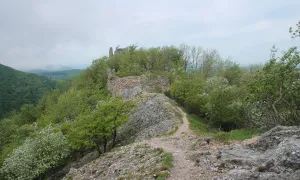
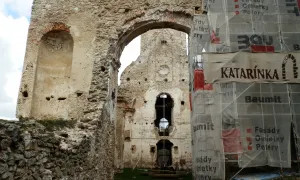
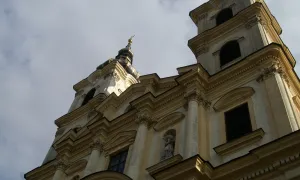
Real photos taken near the monument


Source and licence are given for each image.
Visitor Tips
No tips yet. Be the first!
Log in and add your tip.
Location on Map
Visitor photos
No photos yet. Be the first to add a photo from your visit!
Log in and add your photo or leave a rating.
You get more points for a visit verified in the app — we can tell from the GPS that you are there.
Reviews and comments