

st. George's Church Church
The church of St. George in the village Jur nad Hronom in the Nitra region is a Romanesque building. It dates back to 1300. It is a national cultural monument with a Romanesque core, which is registered by the Slovak Monument Office under the number ÚZPF 232-1608.
Originally it was a one-ship romance building with a semicircular apsida and a western empora, above which was the tower. Experts date the Romanesque core of the building to about the second quarter of the 13th century.
Several events affected the development of the temple. In 1499 the building was restored after the fire. In 1558 the church was plundered by Turks, and the priest was dragged away. Catholics finally recovered the temple in 1712. After the flood in 1815 was repaired damaged static construction. In 1937 a large-scale rebuilding took place, adding a new ship on the south side to increase the room for believers.
The church is located on a slight elevation on the northwest outskirts of the village of Jur nad Hronom and belongs under the parish Žemliare. A visit to the monument must be arranged in advance.
Tehdy a dnes
Drag the slider and compare how the monument might have looked when it was built with the view today.
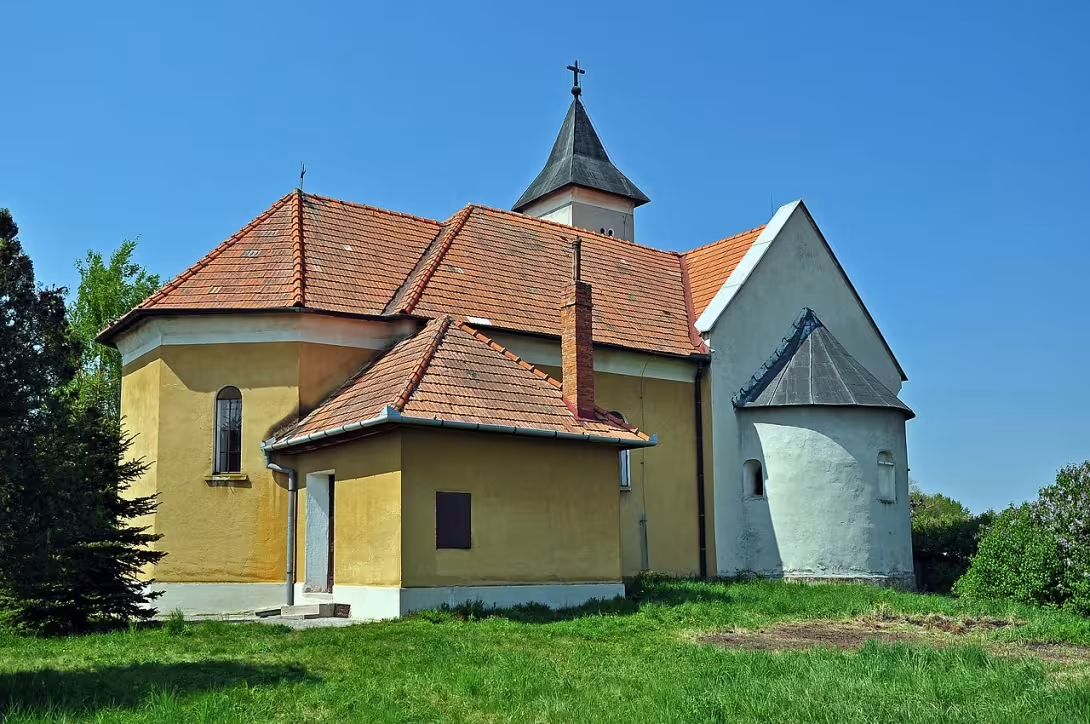

The historical view on the left is a visualisation generated by artificial intelligence and serves as inspiration.
Historical Milestones
- 1499: Recovery after fire
- 1558: Filling the Turks and dragging away the priest
- 1712: The final acquisition of the temple by the katliks
- 1815: Solving waterborne disturbances
- 1937: Extensive reconstruction with the addition of a new ship
Interesting facts
- Romance core of the building comes from about the second quarter of the 13th century. - In 1558 the church was plundered by the Turks and taken off the parish priest. - After the flood in 1815 was repaired damaged static building. - During the extensive reconstruction in 1937 a new ship was added on the south side. - Originally it was a one-ship building with a semicircular apsid and a western empora with a tower.
Guide
The guide was voiced by a synthetic voice created by artificial intelligence.
Show guide text
The text was prepared by artificial intelligence and has not been editorially reviewed. It may contain inaccuracies.
Welcome to Jur nad Hronom. You stand right in front of one of the most important historical points of this place - St. George's Church. Before you start your tour, try to stop for a moment, take a deep breath and just feel the atmosphere resonating here. Do you feel the same power of time? This space is not only a set of stone walls, it is a living chronicler of history that has survived periods of great glory, but also moments of deep fear and uncertainty. Look at this building and try to imagine how much peace and turbulent moments it has kept in itself over the centuries. If you now look at the very essence of this construction, we must go back deep into the past in our ideas, to the very roots of this site. Although the exact names of the architects who designed the church remained lost in the flashes of history, and their names are unknown, its Romanesque core tells us more than we might think. This part of the building comes from about the second quarter of the thirteenth century. Imagine this era - the time when these first stones began to be taken out of the earth. At that time, the world was different, slower, and this building was to be a strong support for the community, a spiritual center that persists despite everything. It is on that Romance basis that the greatest strength of this place lies in its durability. Let us now move on to what you see before you today. When you pay attention to the overall shape and dimensions of the church, you will see a fascinating combination of different time periods. This church is not a static object that remained trapped in time, but it is a building that has been constantly changing and adapting. Notice how his face transformed over the centuries. The most significant change that you can see when looking at the entire structure has brought a large-scale reconstruction in the year thousand nine hundred thirty-seven. At that time, a new ship was added to the south side of the church, extending the space and building gained its present, more complex character. This new part tries to fit together harmoniously, but at the same time reminds us that each epheh had its own need to adjust and adapt this holy space to its new needs and growing communities. The history of this place, however, is not just a story about stones, little ones, and architecture. It is primarily a story of human destiny, courage and survival. Let us try to return to a thousand five hundred fifty and eight in our imaginations. At that time, a shadow of great danger was drawn into the area. In a thousand five hundred and fifty-eight, the Turks plundered this church. It was not just an ordinary idea, but a drastic act that brought chaos and fear. As part of this idea, they also took away the local priest, which was an enormous blow to the community. It is fascinating how this building survived such tragic and violent moments that tried to destroy its sanctified purpose and its existence completely. But it's not just about human violence, history shows us the power of nature that can be just as unpredictable. Note how this building faced the forces of elements. In the year thousand ønskersto fifteen, after a devastating flood, the static of this building was seriously disturbed. It was then that the real resilience of this place was shown. Major repairs had to be made to restore the damaged stability of the church and to prevent its walls from falling under water pressure and altered terrain. In fact, any repair that you see today is evidence that people have never given up trying to preserve this church for future generations. What's the most interesting thing about this place? Perhaps it is this constant transformation and the fact that St. George's church is like a layered story, where there are centuries and centuries. From the Romanesque foundation in the thirteenth century, through the cruel times in the sixteenth, to modern adjustments in the twentieth century. Every layer, every change and every repair you can see here is a reflection of how the people in this region have adapted to the circumstances of the world - whether it be wars, natural disasters, or humanity's desire to grow. It is a fascinating dialogue between the past and the present that takes place right in front of your eyes. Now I won't defend you for another peaceful discovery. We invite you to enjoy the area around the church once again, to perceive its silence and try to find a piece of the history that we have just talked about. May this visitor experience bring you peace and new ideas about how durability and change are what we call history today. Thank you for being with us and wishing you a pleasant rest of the day in further exploring the beauty of this site.
Tips for visitors
The late spring or autumn is suitable for visiting the church of St. George, as mild temperatures allow a walk around the village of Jur nad Hronom.
During the visit, firm footwear and clothing appropriate to the nature of the sacral structure are recommended. Suitable locations for outdoor photography are in the immediate vicinity of the church, while details of the facade stand out especially in the morning or afternoon.
Families with children can connect the visit with walks around the village, which are also suitable for strollers.
Frequently asked questions
Can the monument be visited?
Religious buildings are usually open mainly during services; at other times a visit is normally arranged with the parish or the operator. We have not verified specific times.
Where is the monument?
Location: č. 208, Jur nad Hronom, Nitriansky kraj. The map on this page shows the exact spot.
Why is the monument protected?
It is listed in the Central List of the Monuments Fund of the Slovak Republic as a national cultural monument (ÚZPF no. 232-1608).
For children
Imagine having a magic key in your hands from time to time. If you turned him around, you'd have sailed to ancient times immediately. Exactly 726 years ago, about 1300, everything started here. Back then, there were no computers, cars, or the Internet. Everything was completely different, weirder and full of secrets that were just waiting to be revealed.
Nearby
🏰 Historic sites (52)
- Sovietskej armáde 6.4 km
- Svet Slovanov 6.4 km
- Kúria 6.8 km
- Kaštieľ Kalinčiakovo 8.4 km web
- sv. Ján Nepomucký 8.6 km
- sv. Florián 8.8 km
- Milan Rastislav Štefánik 8.8 km
- Obetiam holokaustu 8.9 km
- Augustín Fischer-Colbrie 8.9 km
- F. Schubert 9.3 km
- Mestské múzeum a pamätná izba Franza Schuberta 9.4 km web
- Atlantis Levice 9.6 km Hronská 4 +421 917 985 450 web
- Ľudovít Štúr 9.7 km
- Milan Rastislav Štefánik 10.0 km
- Kaštieľ Esterházyovcov 10.1 km
- ROS Levice 10.1 km
- Panna Mária 10.4 km
- LEVA BERENCZ 10.4 km
- Levická mestská pivnica 10.4 km +421 903 165 776 web
- SNP 10.5 km
🍽️ Restaurants and dining (133)
- La Cantína 0.3 km
- Krčma u Sedliaka 6.8 km
- Hostinec 7.0 km SNP 434/187
- Hostinec Mlyn 7.2 km SNP 389/137
- Koliba 7.3 km
- Lambada 7.5 km
- Bufetík 7.6 km
- Pohostinstvo E +R 8.6 km
- Pizza Kino Mikloško 8.8 km
- Sun cafe & bar 8.8 km
- Corgoň Pub 8.9 km
- Bystro u Doda 8.9 km
- Amarti 8.9 km Pradiarska 3049/2 +421907720240
- Bistro NGON 9.0 km +421 944 700 887
- Laki pizzeria & bar 9.0 km Tržná 236/3
- RESET PUB 9.1 km
- Orinoco 9.1 km +421 366 314 567
- BéBé Kebab 9.1 km +421 944 200 223 web
- e-Burger 9.1 km +421 948 782 150 web
- Royal Café 9.1 km +421 908 506 633
🏨 Accommodation (20)
- Vodník 0.3 km web
- Vodník 0.3 km web
- Penzión Rekrea 7.3 km web
- Chata Rekrea 7.4 km
- Kemp Margita-Ilona 7.6 km web
- Schubert 8.9 km
- Levi Dom 9.8 km web
- Ubytovňa Rozkvet 9.9 km +421 915 427 451 web
- Hotel Dastan 10.0 km +421 36 631 7137 web
- Hotel Atóm 10.2 km web
- Penzión Tilia 10.3 km web
- Hotel Lev 10.3 km
- Hotel Astrum Laus 10.4 km
- Golden Eagle 10.5 km Námestie hrdinov 9/12
- Penzión KIKA 11.3 km web
- Petit hotel Santé 11.3 km
- Penzión Dalmad 12.7 km
- Penzión Daniela 13.3 km web
- Chata Haluzačka 14.0 km
- Lodenica 14.4 km
🚲 Rentals and sport (23)
- Speed Kart Center Dolná Seč 6.8 km +421 918 923 895 web
- Speed Kart Center Dolná Seč 6.9 km +421 918 923 895 web
- Eva 7.5 km
- Ilona 7.5 km
- Adam 7.6 km
- Tereza 7.6 km
- Sports Garden 8.4 km +421 918 506 374 web
- Bicykle Turček 9.9 km +421 36 631 06 68 web
- Fishpol 10.2 km
- Sportisimo 10.3 km +421232179841 web
- Astra 10.3 km
- Merida bikes 10.3 km
- Strelnica Fénix 10.4 km web
- V Sport 10.4 km
- Dom športu 10.5 km Ľ. Podjavorinskej 2344/3 web
- Športová Hala 10.6 km Turecký rad 4886/3
- Plaváreň 10.7 km Turecký rad 3918/5 web
- Rafuta Arena 10.7 km +421 903 803 626 web
- Wellness Kalná 11.0 km web
- SportART 11.0 km web
🥾 Hiking and nature (70)
- Vodný mlyn 4.7 km
- Zákopy z 2. svetovej vojny 5.4 km
- Zákop z 2. svetovej vojny 5.5 km
- Tisícročná záhrada 6.2 km
- Rozhľadňa Šiklóš 6.4 km
- Zákop z 2. svetovej vojny 6.4 km
- Vápnik 6.4 km
- Zákop z 2. svetovej vojny 6.4 km
- Zákop z 2. svetovej vojny 6.6 km
- Margita 7.4 km
- Za bufetom 7.4 km
- Ilona 7.5 km
- Okrúhlica 7.6 km
- Ďurkov 8.0 km
- Káčik 8.2 km
- Dolná hora 8.2 km
- Ivanka 8.3 km
- Kamenec 8.4 km
- Kostol Reformovanej kresťanskej cirkvi 8.5 km web
- Zajačí vrch 8.6 km
Thematic route
1. St. George's Church - Type: Outdoor space. Suitable place to start the visit and to inspect the exterior of the building. 2. The interior of St. George's Church - Type: Sacral space. Place with artistic details, altar and interior equipment. 3. Church Tower - Type: Architectural element. A significant part of the building and surrounding landscape. 4. Church yard - Type: Outdoor space. Area for rest and completion of the tour area.
Seasonal recommendations
Spring return to life in the vicinity of Jur nad Hronom brings fresh green color to the country around the church of St. George and the fading nature. At this time, the atmosphere is quiet and peaceful, as large groups of tourists have not yet come in, allowing for deep contact with history and surrounding nature without disturbing influences. The lighting is still changing in the spring days, morning and evening light is soft and diffuse, creating ideal conditions for photography sights in contrast with flowering nature. Practical advice focuses on variables of weather conditions, as spring days can bring both sun and transient rain and cold mornings. Clothing should be layered so that you can adjust to temperature fluctuations during the day. The best time to visit is in the midday, when the temperature is most pleasant and nature around the church is most blooming, which will give the whole experience a special magical touch.
Summer brings to the Nitra region long days and bright light, which highlights architectural details of sacral construction and surrounding environment. The atmosphere is full of energy and life, as the landscape is full of flowers and green vegetation creates a pleasant contrast with the stone structure of the church. Although it is the main summer season that can bring more visitors to the area, the sacral monument itself often remains in a quieter zone, allowing for peaceful admiration of the work. Lighting in the summer is intense, especially in the noon hours, when the shadow parts of the building are gaining depth and dramaticity. Practical advice is aimed at protecting against strong sun and high temperatures, so it is essential to wear lightweight, airy clothing, a hat, and sunglasses. It is best to visit the monument either early in the morning when the air is fresh and light soft, or late in the afternoon when temperatures begin to decrease and the light acquires a golden shade that is ideal for shooting.
Podsim transforms the country around Jur nad Hronom into shades of gold, red and brown, creating a unique atmosphere of nostalgia and silence. The leaves of the trees that fall add poetic and meditative character to the environment around St. George's church, which is different from summer vitality. Lighting in podsium is often soft and blurry, especially in cloud weather, which creates dramatic contrasts and depth in the visual perception of the monument. Practical advice is focused on colder temperatures and possible precipitation, so it is advisable to have a waterproof jacket and comfortable shoes that can handle any mud or wet trails. The best time to visit is in the noon hours when the temperature is the highest and light brightest, allowing comfortable walks around and admiring autumn colors without discomfort from the cold.
Winter brings to this part of Slovakia a quiet, often snow-covered landscape, which supplies the church of St. George majestic and remote operation. The atmosphere is cool and clean, with sharp air, which highlights sensory sensations and silence surrounding nature. Winter lighting is short and low, creating long shadows and dramatic light effects, especially in the noon hours when the sun is highest. Practical advice is focused on extremely cold temperatures and possible snow or ice surfaces, so it is essential to wear warm layers, winter shoes with good grip and helmet or cap. It is best to visit the monument in the noon hours when the temperature is most pleasant and light brightest, allowing safe and comfortable admiration of the winter landscape around the sacral structure without the risk of hypothermia or slipping on the ice.
Visualisations and artistic views


The visualisations are generated by artificial intelligence and serve as inspiration.
Photographs from the area
Real photos taken near the monument


Source and licence are given for each image.
Visitor Tips
No tips yet. Be the first!
Log in and add your tip.
Location on Map
More monuments – Jur nad Hronom
Show all in the town



Visitor photos
No photos yet. Be the first to add a photo from your visit!
Log in and add your photo or leave a rating.
You get more points for a visit verified in the app — we can tell from the GPS that you are there.
Reviews and comments